The study analysed the effects of gender on the performance in Advanced Level Business Studies in rural secondary schools in Zimbabwe. The study employed a quantitative descriptive research design. The randomly selected sample of the study was made up of 105 respondents selected from five rural secondary schools in Mwenezi District in Masvingo Province. Self-administered questionnaires were used to collect data. Multiple regression analysis techniques were to analyse the data in the study. The research found that there was no significant relationship between gender and performance in Advanced Level Business Studies. However, it was found that the socio-economic background is what mostly affects the performance of female learners than their male counterparts. The study also established that poor performance by female learners in Advanced Level Business Studies is a result of poor parental support, absence of female Business Studies teachers to act as role models and inadequate study time since they are more occupied with household chores compared to male pupils. The major recommendations for rural secondary schools drawn from the analysis of the findings and literature were that parents and relatives should be educated to give female learners ample study time and that there should be a balance in terms of the number of male and female Business Studies teachers in schools to encourage female learners to do well in Business Studies and other business education learning areas.
Keywords
Gender
Socio-Economic Status
Performance
Advanced Level
Business Studies
INTRODUCTION
Several studies globally [1,2,3] have shown that there are disparities and inequalities between men and women, boys and girls in all spheres of life that is, economic, educational, social and political. In almost every sector, boys dominate girls. Gender inequalities remain a perennial problem in education on a global scale [3]. Davies, indicates that several studies on gender disparities in the education sector have been carried out in many countries of the world with a particular focus on student performance, with a particular interest… “in terms of under-achievement of girls, differences in access at various levels of schooling, dropout rates in subjects taken and these have evoked a range of explanations and policies around gender gaps in educational outcomes”.
In respect of education in Zimbabwe, the Nziramasanga Commission [4] and Mapfumo et al. [5] assert that there are disparities between the genders at secondary and tertiary education level. The academic performance of rural schools in Zimbabwe has been significantly low in comparison to mission and urban schools and high schools in Mwenezi District are no exception [6]. Most of the female learners taking Business Studies at Advanced Level are obtaining low pass grades, thereby failing to garner enough points to enrol into accounting, business, economic and management studies at tertiary level. This level of performance has been a cause for concern for schools, parents, universities and other Further Education and Training (FET) institutions alike, hence the need for an empirical investigation to suggest possible solutions.
Wharton, defines gender as a system of social practices that produces and reproduces differences and inequalities between men and women. Gender is a sociological concept which focuses attention on men and women as social rather than natural categories and it emerged out of debates which sought to challenge the ‘naturalness’ of differences between men and women. Domosh and Seager, define gender as “a culture’s assumptions about the differences between men and women; their ‘characters’, the roles they play in society and what they represent”. According to Kabeer, gender is seen as the process by which individuals who are born into biological categories of male or female become social categories of men and women through the acquisition of socially defined attributes of masculinity and femininity.
This study is underpinned by the Social Role Theory which was propounded by Eagly and Diekmen [7,8]. According to this theory, the sexual division of labour and societal expectations which is based on gender stereotypes are the ones that produce gender roles. The theory assumes that the gendered roles ascribed to each gender has a direct influence on academic performance and student achievement. This theory applies to the present study in that it explains how gendered roles influence the performance gap between males and females [9].
Gender difference in academic and achievement performance has been examined in several studies such as Jegede and Inyang [10], Manwa [11], Mordi [12], Mustafa et al. [13] and Mwiigi [14]. These studies have given conflicting findings. In a study by Gibbs, it was found that boys talk more than girls in the classroom at a ratio of three to one. Thus, boys see that as an encouragement in taking risks. For example, when boys call out, teachers seem to accept boys answer or action whereas when a girl calls out, she is reprimanded and told that calling out is ‘inappropriate behaviour’. This strongly sends a powerful message that boys should be more assertive and girls should be passive which leads to hostility, alienation, poor school performance and failure in girls.
Hoskins, Newstead and Denis, conducted study on students at University of Plymouth and found out that variables; age, gender, prior qualifications and discipline studied influenced their performance as cited in Cheesman et al. In another study by Nyikahadzoi et al. [15] the role of individual characteristics such as age and gender, some family socio-economic background variables like available resources including residential space, type of school attended and whether Principles of Accounting was ever done at junior secondary school level were found to have a significant effect on the performance of students in accounting.
A student’s age was established to be associated with degree performance by Barrow et al. [16] where it is found that those mature students marginally achieve better degree outcomes. Win and Miller [17] said that previous instructional quality received by student, the student’s household environment and education of parents are factors that influence the academic performance of students hence the variables member in family with a degree and type of school attended. Jacobs, made a study which established that finances affect university students’ performance. Evans and Farley, showed that grades in high school mathematics and Accounting are positively and significantly related to student performance, therefore in this study entry qualifications and exposure to accounting as a subject were taken as determinants of success. Dayioglu and Turut-Asik [18] and Cheeseman et al. [19] found that for Caribbean students, females outperformed their male counterparts. Gender was thus considered as a variable affecting students’ performance and success at university level.
Cook and Evans [20] studied students from disadvantaged groups and established that they had poor academic performance. In this study a big household was taken as a proxy for disadvantage. The bigger the household size the more strained the resources, so owning textbooks becomes restricted as indicated by the UNDP. Bae [21] found that in schools where majority of the parents had white collar jobs students had more motivation when compared to students from schools where most parents had no white-collar jobs. Having a member with a degree in immediate family implies a formal job if not white collar hence the variable was found to be important.
Jeong in Bae [21] found that use of internet and the contents viewed influence students’ academic performance hence access to internet was taken as an important variable. Teachers have been shown to have an important influence on students’ academic achievement and they also play a crucial role in educational attainment [15], therefore reference is made to access to teachers outside class as a measure of resources available to students. Some researchers believe that gender inequality occurs in the classroom because of instructional design. Many teachers unconsciously slip into stereotypical routine or practice that separates boys and girls. Knupfer [22] stated “… teachers still persist in the practice of performing lines, determining groups and award-winning prizes by gender”.
Spender, argued that teachers throughout the school gave boys and girls different types of attention. According to her, girls are praised for appearance, good behaviour and neat work. She further looked into the argument of gender inequality in education and said, “What is considered inherently interesting is knowledge about men. Because men control the records and the value system, it is generally believed that it is men who have done all the exciting things, it is men who have made history, made discoveries, made inventions and performed feats of skill and courage-according to men. These are the important activities and only men can engage in them, so we are led to believe. And so it is that the activities of men become the curriculum."
Studies by O’Connor, found that as boys and girls grow up, the differences in achievement are insignificant except for mathematics where boys perform better. On the other hand, Holmlund and Sund, argue that there is evidence that girls perform increasingly better than boys in school. For example, they postulate that it is a well-established fact that girls score significantly higher than boys on for example reading tests, there is now increasing evidence that the gender gap in school performance is closing in math and science, subjects thought of as being dominated by boys. Betz [23], unlike other scholars, found that girls perform much better than boys in many school subjects including Sciences, Technology, Mathematics and Engineering (STEM).
Adigun et al. [24], in their study on the effects of gender on performance in computer studies found that even though the male students had slightly better performance compared to the female students, it was not significant. In a study, Castagnetti and Rosti, found that women were more successful, may be because of increased effort they put into their academic work. In that study the Ordinary Least Squares (OLS) technique was employed to a sample of students at Italian universities studying specialisations. The findings were consistent with the findings by Mutchler et al. who conducted their study in accounting.
Figure 1: Conceptual Framework for the Effect of Gender on the Academic Performance in Business Studies
Source: Authors’ conceptualisation
In another study, Byrne and Flood, failed to find statistically significant differences in the performance of students according to their gender. Yet, in other studies such as Kherfi, Lopus, significant differences were found in the academic performance of university students, with men being more successful.
Manwa [11] identified the following factors as having a great effect on the academic performance of girls: gender codes; student's family socio-economic status; teachers’ attitudes; and the availability of resources. On the other hand, Mwiigi [14] identified self-efficacy; teacher attitudes and behaviour; school facilities; ability; parental and family attitudes; and gender biases and stereotypes. From the extant literature and the authors’ conceptualisation, the following conceptual framework was developed for the study, with variables that were adopted from the studies by Manwa [11] and Mwiigi [14].
The Figure 1 illustrates that the academic performance of learners in Business Studies (which is the dependent variable of the study) is affected by gender biases and stereotypes (the independent variable of the study). However, the study is moderated by the socio-economic status and background of the family, self-efficacy and ability of the learners, teacher attitudes and behaviour towards boys and girls respectively and collectively and the availability of resources at the schools to facilitate learning and teaching.
Despite recognising gender as a serious concern in almost every sector in the Zimbabwean context, there are very limited studies focussing on the issues of gender differentials on academic performance of school going children especially in the commercial learning areas and Business Studies in particular. There are several issues of gender inequalities in education and the academic performance based on the gender of the learners in the commercials learning areas in the Zimbabwean context. Thus, this study sought to answer the following research questions in the Zimbabwean context:
Does gender matter in the academic performance of learners in Business Studies public examinations at A Level?
What is the effect of the socio-economic background of the learners on their academic performance in Business Studies at A Level?
Does the attitude of teachers have a significant effect on the academic performance of learners in Business Studies at A Level?
MATERIALS AND METHODS
Research Design
The study employed a quantitative descriptive research design. The descriptive survey was chosen as the research design because of its suitability in obtaining the required quantitative data which will be interpreted by means of descriptive and inferential statistics. Cooper and Schindler [15] assert that the survey method is used when large quantities of data must be obtained from a sizeable sample in an economical way. Sekaran and Bougie [26] opined that descriptive survey data survey data is normally standardised, which allows for easy comparison. The descriptive survey is generally considered reliable and it is relatively simple to explain and to understand.
Sample and Sampling Procedure
The sample for this study was drawn from a population of 5 rural secondary schools that offered A Level classes in Business Studies (or Management of Business) in Mwenezi District of Masvingo Province. The five rural secondary schools had an average enrolment of 40 learners at A Level. A sample of 132 respondents was derived from the population using the Krejcie and Morgan, formula. The sample was drawn using the simple random sampling technique. It comprised both boys and girls who were doing A Level and a combination that included Business Studies or Management of Business at the five rural secondary schools.
Instrumentation
The study used a self-administered questionnaire to collect data from the sample. The self-administered questionnaire, designed by the researchers, was personally hand delivered by the researchers to each of the respondents at the respective five schools. The questionnaires were easy to administer and responses were obtained there and then. The questionnaires were designed in such a way that responses obtained best addressed the research questions and objectives of the study. The questionnaire comprised open-ended and closed-ended questions. Open ended questions were meant to allow respondents to give their opinion without being biased towards what the researcher want.
Statistical Treatment of Data
Multiple regression analysis was used to determine the effects of gender on the academic performance in Business Studies at A Level. According to Sekaran and Bougie [26], multiple regression analysis is used where there is one dependent variable and at least two independent variables. Data were first checked for completeness, then coded and captured into the Statistical Package for Social Sciences (SPSS) version 24 for data analysis. Data was analysed using descriptive statistics, Pearson’s co-efficient of correlation and the Analysis of Variance (ANOVA). The p-value was used to ascertain whether there was a relationship between the two variables. In this study, the dependent variable was academic performance. The independent variables were gender biases and stereotypes, self-efficacy and ability, family socio-economic status and attitudes, teacher attitude and behaviour and availability of resources. The regression model for this study is given below:
TAB: Teacher attitude and behaviour; and Resources-availability of teaching and learning resources
β0, β1, β2, β3, β4 are the regression parameters of the model
εi: The error term-that is, it measures all the other variables that were not considered in the model
The variables in the study were checked for reliability using Cronbach’s alpha. The alphas for the four variables were 0.72; 0.78; 0.68; and 0.86 respectively. An acceptable Cronbach’s Alpha, according to Cooper and Schindler [25] should be a minimum of 0.6.
Ethical Considerations
In carrying out this study, the researchers sought permission from the school authorities to undertake the study in the respective schools. Once permission was obtained, the informed consent of the respondents was sought and granted. The researchers ensured matters of confidentiality and anonymity of the respondents by ascribing an alpha-numeric code for each respondent. It was only the researchers who had a record of the respondent and their corresponding alpha-numeric code. Each respondent had to voluntarily participate in the study. To do so, the respondents had to confirm their willingness to participate in the survey and completing the questionnaire. Thus, all respondents who participated in this study did so voluntarily.
RESULTS AND DISCUSSION
The study analysed the effects of gender on the performance in Advanced Level Business Studies in rural secondary schools in Zimbabwe, with a specific focus on Mwenezi District in Masvingo Province. This section presents the findings from the study in line with the research questions.
Research Question 1: Does gender matter in the academic performance of learners in Business Studies public examinations at A Level?
From the survey conducted, it was found that 55% of the respondents disagreed (35% strongly disagreed and 20% disagreed) with the assertion that gender influenced the performance of learners in Business Studies at Advanced Level. It was found that 10% were undecided while the remaining 25% agreed (15% strongly agreed and 10% agreed) that gender influenced the performance of learners in Business Studies. An important finding by the study is that gender does not necessarily influence the performance of learners in Advanced Level Business Studies. This implies that gender had no effect on the educational outcomes and academic achievement of female and male learners. The findings corroborate those by Ampofo and Osei-Owusu, who conducted a study at senior high school level in Ghana to determine whether gender was a mediating factor in the academic performance of students in Mathematics and English Language as well as Oppong, on the effect of gender on performance in History. Both studies found that gender did not have a significant effect on learners’ academic performance. The findings also agree with Okafor and Egbon, who found no difference in the performance of male and female learners in accounting in a study conducted in Nigeria with undergraduate university students. This result agrees with the findings of Jacobs, who submitted that girls get higher grade and complete high school at a higher rate compared to boys. Also, Smith [27] found that women consistently outperformed men in a geography course. Similarly, Sheard, submitted that female students significantly outperformed their male counterpart.
It was found that the gender biases and stereotypes influenced the academic performance in Business Studies. The study found that 75% of the learners agreed (45% strongly agreed and 30% agreed) that gender biases and stereotypes affected the performance of learners in Business Studies. It was found that 10% disagreed with the assertion while the remaining 15% strongly disagreed. Thus, it was found that gender biases and stereotypes affected the performance of This was found to be so because of the general belief that Arts and Humanities learning areas are generally considered feminine subjects, while Commercial learning areas and Science, Technology, Engineering and Mathematics (STEM) learning areas are mainly considered masculine subjects.
Gender biases and stereotypes also influenced the perception of learners towards the learning area and their choice of learning area to choose at A Level. Given that gender biases and stereotypes ascribed gender roles to female and male learners, the learners took their ascribed gender roles seriously. Therefore, that led to learners to take roles that were in line with that perception in mind. Thus, it was found that the perception of learners towards a learning area that is motivated by the gender biases and stereotypes affect the academic performance of the learners. In this regard, learners especially female learners, worked hard to prove critics wrong. This finding was in line with findings by Castagnetti and Rosti, in a study conducted in Italy who found that female learners exerted more effort in their academic work. The study also concurred with Mutchler, Turner and Williams, who got similar findings in a study on learner performance in accounting.
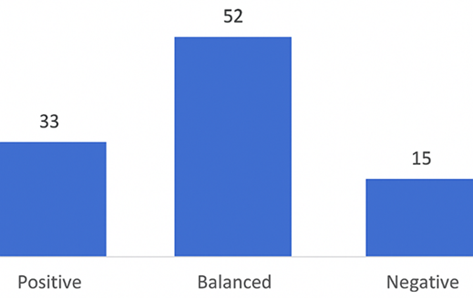
Figure 2: Gender Biases and Stereotypes and their Effect on Academic Performance
Source: Survey results, 2019
The finding that girls were less intelligent was in line with the findings by Delamont and Duffin cited in Kiptumet al. [28], that proved that differences in behaviour between the sexes emanated from innate biological differences between girls and boys. As per these studies, men were found to be physically stronger, had greater spatial, numerical and mechanical abilities and tended to see the world in terms of objects, ideas and theories.
Women on the other hand mature physically and psychologically at an earlier stage and have higher and more precocious verbal skills and see the world in personal, aesthetic and moral terms. Thus, from this conservative perspective on sex differences, education is seen as a means of socialising and educating boys and girls into their ‘natural’ roles as men (breadwinner, work-oriented, head of the family) and women (nurturer, carer, family-oriented).
It was also found that the female learners performed well in essay type questions, while the male learners did well in the numerical section of the Business Studies syllabus at A Level. Given that the essay type questions and structured questions comprised the bulk of the Business Studies A Level syllabus, female learners outperformed the male learners. Thus, the ascribed gender biases and stereotypes were such that female learners wanted to prove that they did well in the essay type questions. This finding was in line with findings by Adigun et al. [24] in their study on the effects of gender on performance in computer studies found that even though the male students had slightly better performance compared to the female students, it was not significant. The study found also that teaching and learning materials are designed in favour of male pupils and this has adverse effects on the performance of female pupils. From the research findings it can be concluded that female pupils are strong in verbal skills whereas male pupils have strong analytical skills. The findings are depicted in the Figure 2.
Research Question 2
What is the effect of the socio-economic background of the learners on their academic performance in Business Studies at A Level?
The second question sought to find out the effect of the socio-economic background of the learners on their academic performance in Business Studies at A Level. It was found that 85% of the respondents (50% strongly agreed, while 35% agreed) felt that the socio-economic status and background of the learners had an influence on their performance. It was found that 15% of the respondents disagreed (5% disagree and 10% strongly disagreed). Thus, the study found that it was the socio-economic background of the learners that mainly affected learner performance in Business Studies.
The study found that there were several socio-economic factors that influenced the performance of learners in Business Studies. The factors included parental involvement and encouragement, parental support, availability of role models in the family and society, household chores and availability of teaching/learning resources in the family and school. The respondents indicated that parental involvement and encouragement were important in shaping their perception towards learning in general and Business Studies in particular. The study also found that parental support in rural schools was biased toward male pupils. This implies that parents in rural schools encouraged male learners to do better in school. As a result, male learners who likely to do better than female learners given that parents gave all the material and moral support to the male learners. Thus, where parents were supportive and encouraging, learners performed well in Business Studies.
The study further found that parents or older siblings who were working in the commercial field provided sufficient role models for the learners thereby encouraging them to take Business Studies at A Level and perform well in their studies. Thus, irrespective of gender, the performance of learners was influenced by the availability of positive role models who encouraged learners to do well in the learning area. Learners therefore performed better when they had a role model in the family, or other role models they looked up to, who had experience in the learning area.
It was further found that the performance of girls was also affected by the Socio-Economic Status (SES) of the family especially in rural areas where girls were expected to perform household chores at home such as sweeping, cleaning, fetching water and firewood and such other activities. Thus, these household chores seriously affected the girl child performance as compared to the male child, as much work is left for the female child to do. The research study found that female pupils do not have role models since most of the Business Studies teachers are males and this reduces their confidence in the subject.
Another factor that affected the academic performance of learners that was also related to the socio-economic background was the availability of learning resources. It was found that the learners felt that their socio-economic status affected their academic performance in Business Studies at A Level as availability of learning resources was a function of the SES of the learners. The study found that learners from middle income families had access to the learning resources, especially in the present situation where schools have been closed as a response to the containment of the Covid-19 pandemic. It was found that most learners from the rural areas did not have the necessary online resources to facilitate learning. Thus, learners were likely to perform poorly especially the girl child, given the gender stereotypes and biases where the male child will be prioritised in the allocation of family resources in general and learning resources in particular.
Research Question 3
Does the attitude of teachers have a significant effect on the academic performance of learners in Business Studies at A Level?
The attitude of the teachers play an important role in the academic performance of both female and male learners in Business Studies at Advanced Level. It was found that if teachers had a positive attitude towards girls as they had for boys, the girls performed just as well as the boys. However, it was found that where teachers had a negative attitude towards female learners, the learners disliked the subject and hence they were likely to perform poorly in the learning area. The study found out that a positive attitude and high aspirations plays a pivotal role in performance of a student. Thus, for girls to perform poorly in Business Studies it implies that they would have held low educational aspirations than boys. Therefore, boys are likely to outperform girls because of perceived low educational aspirations of the girls. This happened because of the gender stereotypes and biases where girls are socialised to prepare for marriage than to pursue educational goals. Thus, the girls did not perform well in respect of Business Studies due to lowered academic aspirations and performance. This result agrees with the findings of Adebayo [29], Philias and Wanjobi [30], Okon and Archibong [31]. The research study also found that teachers viewed girls as physically and academically not stronger than to boys. This result further agrees with the findings of Jegede and lyang [10], Fabunmi [32] and Dania [33] that students’ performance is not determined by gender in terms of the interaction of gender and treatment on students’ academic achievement, but other control variables.
The study also found out that the performance of girls was also affected by other problems such as ability, attitude of peers and parents. There were a variety of factors that affected one’s sense of belonging to a particular domain. A lot of it has to do with one’s theory of intelligence. One theory of intelligence is that intelligence is fixed and a person was either born with natural ability and talent or they did not. Others believe that intelligence is more malleable and can grow and improve as one advances in their education. Thus, the finding agrees with the finding by Good, Rattan and Dweck, who argued that “students who hold the mindset that ability is a malleable quality are less focused on measuring and proving their abilities and more focused on learning. They seek challenges that can result in better learning and they remain highly strategic and effective in the face of setbacks even showing enhanced motivation and performance”.
CONCLUSION
From the findings of the study, it can be concluded that gender, per se, does not influence the performance of learners in Business Studies at Advanced Level. However, it can be concluded that the gender stereotypes and biases affected the academic performance instead lack parental support, gender stereotyping by parents and teachers, lack of ample study time and also socio-economic factors are the ones that have an impact on academic performance of learners in Business Studies at A Level.
Recommendations
The study recommends that parents and relatives should be educated to give pupils ample study time especially female pupils.
The study also recommends that there should be a balance in terms of the number of male and female accounting teachers at school. Also, female teachers should be made to facilitate field trips, practical to motivate female students.
The Ministry of Education should, before approving textbooks, ensure that the content therein to include pictures do not perpetuate gender stereotyping.
REFERENCES
Organisation of Economic Cooperation and Development (OECD). Gender Equity: Education, Employment and Entrepreneurship. EPEC, USA, 2011.
Rao, V.K. Education System. APH Publishing, New Delhi, 2004.
UNESCO. Gender and Education for All: The Leap to Equality. UNESCO Publishing, France, 2003.
Nziramasanga, C.T. Report of the Presidential Commission of Inquiry into Education and Training (in Zimbabwe). Government Printers, Harare, 1999.
Mapfumo, J. et al.Career Perceptions and Visions of Boys and Girls in Secondary Schools in Zimbabwe: Some Implications for Teachers and Parents.Zambezia, vol. 29, no. 11, 2002, pp. 156–172.
Mutekwe, E. et al. Female Students’ Perceptions of Gender and Academic Achievement: A Case of Sixth Form Girls in Zimbabwean Schools.Journal of Social Sciences, vol. 32, no. 1, 2012, pp. 111–120.
Eagly, A.H. and Diekman, A.B. “Stereotypes as Dynamic Constructs: Women and Men of the Past, Present and Future.” Personality and Social Psychology Bulletin, vol. 26, 2000, pp. 1171–1188.
Eagly, A.H. et al. “Social Role Theory of Sex Differences and Similarities: A Current Appraisal.” The Developmental Social Psychology of Gender, edited by T.E. Okes and H.M. Trauter, 2000, pp. 123–174.
Arndt, S. The Dynamics of African Feminism: Defining and Classifying African Feminist Literature. African World Press, Eritrea, 2002.
Jegede, O.J. and Iyang, N. The Effect of Meta Cognitive Strategy on Student’s Anxiety and Achievement in Biology.Abstract International, vol. 143, 1990.
Manwa, L. Determinants of Academic Performance of Female Students at a University in Masvingo Province, Zimbabwe. PhD thesis, University of South Africa, Pretoria, 2014.
Mordi, C. “Sex Differences in Science Achievement.” Bensu Journal of Education, vol. 3, no. 2, 1992, pp. 1–11.
Mustafa, J. et al. “Investigating Students’ Achievement in Mathematics through Non-Technological Game-Based Teaching.” International Journal of Scientific Research in Education, vol. 4, nos. 3–4, 2011, pp. 151–164.
Mwiigi, J.W. The Impact of Gender Differences on Students’ Academic Performance in Secondary Schools in Ndumberi Division, Kiambu County, Kenya in Science Subjects and Languages. PGDE Research Project, University of Nairobi, Nairobi, 2014.
Nyikahadzoi, L. et al. “Determinants of Students’ Academic Performance in Four Selected Accounting Courses at University of Zimbabwe.” Research Journal in Higher Education, 2013, pp. 1–9.
Barrow, M. et al. “The Determinants of Undergraduate Degree Performance: How Important Is Gender?” British Educational Research Journal, vol. 35, no. 4, 2009, pp. 575–597. https://doi.org/10.1080/01411920802642322.
Win, R. and Miller, P. “The Effects of Individual and School Factors on University Students’ Academic Performance.” Australian Economic Review, vol. 38, no. 1, 2005, pp. 1–18.
Dayioglu, M. and Turut-Asik, S. “Gender Differences in Academic Performance in a Large Public University in Turkey.” Higher Education, vol. 53, 2007, pp. 255–277.
Cheeseman, J. et al. Determinants of Students’ Performance at University: Reflections from the Caribbeans. UWI, Mana Registry, Campus of the West Indies, 2006.
Cook, M.D. and Evans, W.N. “Families or Schools? Explaining the convergence in white and black academic performance.” Journal of Labor Economics, vol. 18, no. 4, 2000, pp. 729–754.
Bae, Y. “A Study on the Effect of Internet Use and Social Capital on the Academic Performance.” Development and Society, vol. 35, no. 1, 2006, pp. 107–123.
Knupfer, N.N. “Gendered by design.” British Journal of Educational Technology, vol. 37, no. 2, 1997, pp. 31–37.
Betz, N. “The Role of Mathematics Self-Efficacy in the Choice of Math-Related Majors of College Women and Men: A Path Analysis.” Journal of Counselling Psychology, vol. 32, 1994, pp. 47–48.
Adigun, J. et al. “Effect of Gender on Students’ Academic Performance in Computer Studies in Secondary Schools in New Bussa, Borgu Local Government of Niger State.” Journal of Education and Practice, vol. 6, no. 33, 2015, pp. 1–7.
Cooper, D.R. and Schindler, P.S. Business Research Methods. 12th ed., McGraw-Hill Companies, New York, 2014.
Sekaran, U. and Bougie, R. Research Methods for Business: A Skill Building Approach. 7th ed., John Wiley & Sons, West Sussex, 2016.
Smith, F. “It’s Not All about Grades: Accounting for Gendered Degree Results in Geography at Brunei University.” Journal of Geography in Higher Education, vol. 28, no. 2, 2004, pp. 167–178.
Kiptum, J.K. et al. “Effects of students’ gender on mathematics performance in primary schools in Keiyo South District, Kenya.” International Journal of Scientific & Technology Research, vol. 2, no. 6, June 2013, pp. 247–252.
Adebayo, F.A. “Parents’ Preference for Private Secondary Schools in Nigeria.” International Journal of Education Science, vol. 1, no. 1, 2009, pp. 1–6.
Philias, O.Y. and Wanjobi, W.C. “Performance Determinants of Kenya Certificate of Secondary Education (KCSE) in Mathematics of Secondary Schools in Nyamaiya Division, Kenya.” Asian Social Science, vol. 7, no. 2, 2011, pp. 107–112.
Okon, C.E. and Archibong, U.I. “School Type and Students’ Academic Performance in Social Studies in Junior Secondary Certificate Examination (JSCE).” Academic Journal of Interdisciplinary Studies, vol. 4, no. 2, July 2015, MCSER Publishing, Rome-Italy.
Fabunmi, M. “The Role of Gender on Secondary School Students’ Academic Performance in Edo State, Nigeria.” West African Journal of Education, vol. 24, no. 1, 2004, pp. 90–93.
Dania, P.O. “Effect of Gender on Students’ Academic Achievement in Secondary School Social Studies.” Journal of Education and Practice, vol. 5, no. 21, 2014, pp. 78–84.
Advertisement
Recommended Articles
Research Article
Pedagogic Competencies Provided To Student Teachers through Biology Teacher Education in Universities in Kenya In Light of Classroom Practice
Download PDF
Research Article
Outcome of COVID-19 in Patients with Myasthenia May Not Only Depend on the Immunologic Disease
Josef Finsterer,
...
Ana C Fiorini
Published: 31/10/2020
Download PDF
Research Article
Enhancing Research Scholarship and Publications: Creating a Positive and Productive Research Culture through Comprehensive Collaborations
Daya Singh Sandhu,
Jeffrey Crane
Published: 30/08/2022
Download PDF
Research Article
A Study To Understand Research Into The Formation of Educator Profiles for Use by Institutions Whose Primary Mission is The Preparation of Future Educators
Jin Xianzhao,
...
Aminul Islam
Published: 29/07/2024
Download PDF
PO Box 101, Nakuru
Kenya.
Email: office@iarconsortium.org
Editorial Office:
J.L Bhavan, Near Radison Blu Hotel,
Jalukbari, Guwahati-India
Beans, H., Muza, C. & Maireva, C. (2021). Does Gender Affect The Performance Of Learners In Business Studies At A Level? Evidence from Rural Secondary Schools in Zimbabwe. International Academic Journal of Education & Literature, 2(2), 1-7.
MLA
Beans, Hessie, Cecilia Muza and Chrispen Maireva. "Does Gender Affect The Performance Of Learners In Business Studies At A Level? Evidence from Rural Secondary Schools in Zimbabwe." International Academic Journal of Education & Literature 2.2 (2021): 1-7.
Chicago
Beans, Hessie, Cecilia Muza and Chrispen Maireva. "Does Gender Affect The Performance Of Learners In Business Studies At A Level? Evidence from Rural Secondary Schools in Zimbabwe." International Academic Journal of Education & Literature 2, no. 2 (2021): 1-7.
Harvard
Beans, H., Muza, C. and Maireva, C. (2021) 'Does Gender Affect The Performance Of Learners In Business Studies At A Level? Evidence from Rural Secondary Schools in Zimbabwe' International Academic Journal of Education & Literature 2(2), pp. 1-7.
Vancouver
Beans H, Muza C, Maireva C. Does Gender Affect The Performance Of Learners In Business Studies At A Level? Evidence from Rural Secondary Schools in Zimbabwe. International Academic Journal of Education & Literature. 2021 Jul;2(2):1-7.



 Download PDF
 Download XML