Integrating Local and Indigenous Ecological Knowledge (IEK) Systems into Climate Change Policies for Resilience Building, and Sustainability in Agriculture ‘A Case Study of Barisal Southern Bangladesh’
Stephen Chitengi Sakapaji
1
1
Graduate School of Global Environmental Studies, Sophia University, Tokyo Japan
With the inception of global climate change and its related risks, impacts, and challenges many rural and indigenous communities across the globe are today facing tremendous cultural, economic, and environmental change which is likely going to weaken their adaptability and resilience capacities to climate change. Indigenous and local people have for centuries been known to possess the capacity to adapt to environmental change within their ecological environment. However, in the face of profound and continuous global environmental change, some scholars have argued and projected that cultural, biological diversity, as well as local resilience capacities to environmental change, will likely be severely impacted leading to the ultimate loss of these valuable sources of livelihood and survival of the many remote, rural, and local communities across the world. Despite this popular notion that local and Indigenous Ecological Knowledge (IEK) systems will disappear, the academic vision of local and IEK has progressively shifted from being viewed as a static body of knowledge to one of dynamism. Today, this knowledge is being hybridized through the accommodation of new forms of information or its exposition to external socio-economic drivers. Therefore, its relevance and the role it plays in disaster risk management, natural resource conservation, and management, and now in climate change adaptation must be clearly understood, acknowledged, and given the utmost attention, it deserves if we are to fully address the impacts emanating from a warming climate. In understanding the role and relevance of local and IEK systems in climate change adaptation and disaster risk management policies this paper analyzes present climate change-related impacts on agriculture in Barisal Southern Bangladesh and identifies effective local and indigenous ecological knowledge adaptation mechanisms being utilized by the local people in this region for climate change adaptation, resilience building, and sustainability. Through literature reviews, fieldwork research, interviews and focus group discussions (FGDs) the findings of this research indicate that local and indigenous adaptation strategies to climate change impacts are striving and are enhancing the adaptability and resilience capacities of the many poor local people in this region. This research therefore, recommends that the usefulness and relevance of local and IEK must be acknowledged and incorporated into the mainstream developmental and climate change policies, particularly at the local and community level where resources are scarce, and the adaptability capacity, is weak.
Keywords
Climate
Local
Knowledge
Indigenous
Sustainability
Agriculture
Resilience-Building
Adaptation
Bangladesh
INTRODUCTION
In today’s changing climate, indigenous and rural people have been identified as highly vulnerable to the negative impacts of climate change, however, it is worth mentioning that these groups of people are believed to possess specific knowledge that can be of use to the fight against climate change specifically in the pursuit for effective adaptation mechanisms [1-4]. Many researchers, environmentalists, and scholars across the globe have framed indigenous and local peoples’ vulnerability in terms of a mixture of biophysical and contextual terms including their exposure to climatic hazards and the direct impacts of climate change [2,4-8]. Their vulnerability also stems from their complete reliance on climate-sensitive, resource-based livelihoods such as agriculture, fishing, and hunting. This is also coupled with their limited financial, technological, and political resources [1,4,9,10]. And yet other scholars and researchers have drawn attention to procedural vulnerability, where climate vulnerability in indigenous and local communities is traced to the consequences of ‘‘disaster of colonization’’ for indigenous societies and the secondary disasters of ill health, poverty, environmental dispossession, and sociopolitical marginalization [2,11-13]. However, indigenous, and local communities are not simply passive victims of environmental hazards and climate change [4,14] Today, many indigenous scholars argue that instead of emphasizing the indigenous and local people’s vulnerabilities to a changing climate there is a need for researchers and practitioners to focus on indigenous resilience and their capacities to adapt, as evidenced by their adapting histories of coping with and responding to a changing social, cultural, political, economic, and environmental conditions over millennia [2].
For centuries indigenous, rural, and local people and their local knowledge has helped in informing them of their day-to-day decision-making and encompasses language, resource use and management, systems of classification (including biota and biophysical conditions), social interactions, cultural practices, and spirituality [15-17]. The value of local ecological knowledge (LEK) also referred to as indigenous and traditional ecological knowledge (IEK or TEK) to mainstream conservation, began in the early 1990s when various researchers showed the cost-effectiveness and fairness to indigenous people’s territorial rights of integrating LEK into development and conservation projects [2]. In the last three decades, multiple terms are currently being used to define indigenous traditional knowledge (ITK). These include indigenous ecological knowledge (IEK), traditional ecological knowledge (TEK), local ecological knowledge (LEK), and traditional knowledge (TK) [18-20]. The lack of a clear consensus on the right terminology is partly reflective of the different academic traditions (such as among anthropology, ecology, and indigenous studies) and geographical and sociopolitical differences between what types of indigenous communities are being examined [2,4,21]. For instance, the terms IEK or TEK are more frequently used regarding the indigenous peoples of settler societies, such as Australia, Canada, New Zealand, and the United States, who are ethnic minorities in their traditional lands and are subject to ongoing colonial rule, while TK and TEK are more commonly applied in reference to indigenous peoples who comprise the ethnic majorities of their countries but are former colonies [2]. LEK is used to refer to local people who may or may not be indigenous but hold detailed environmental knowledge that is based on personal and collective experiences of their local environments [1-3,21]. Reference [26], emphasize that IEK is both a process and a subject and define it as ‘‘The capacity to generate and apply knowledge and not the knowledge itself that contributes to the resilience of the system.’’ Therefore, one can deduce that it is flexible, fluid, and dynamic, as it is continuously being updated and reviewed [2,21-22]. In the Australian context, reference [15] demonstrate that IEK is dynamic and cumulative and comprises knowledge of the local environment held collectively, with specific aspects only known to certain individuals or groups (such as different genders, ages, or occupations) within that community.
In this research paper, the terms IEK and LEK will be used interchangeably to refer to the way indigenous and the local people have obtained their knowledge systems through longstanding interactions with ancestral territories [2,21-22]. IEK and LEK can also be understood as the understandings, beliefs, and practices that human societies develop longitudinally in relationship with their natural environment, and which are dynamic and co-evolving with social and ecological changes [21,23]. Today, many communities in Small Island Developing States (SIDS), particularly in rural areas, still employ IEK and LEK extensively in their day-to-day activities, given their high dependence on natural resources [2]. At the global level, the United Nations Framework Convention on Climate Change (UNFCCC) and the Intergovernmental Panel on Climate Change (IPCC) both acknowledge the importance of IEK and LEK to climate adaptation [4,17,24-25]. In the last two decades, IEK and LEK have been acknowledged and considered to be crucial in climate change adaptation in particular community ecological based adaptation (CEBA), which is generally defined as “initiatives and practices that local and rural communities across the developing world are adopting and implementing sometimes in partnership with their local government and non-governmental organizations to adapt to a changing climate” [4,26-29]. Therefore, it is vital to note that IEK and LEK forms an essential but underappreciated significance in natural resource management and can play an important role in climate change adaptation particularly at the local and community level [2,4,26,28].
It is from this background that this research paper seeks to examine the role that IEK and LEK can play when integrated into climate change adaptation policies, disaster risk management, and sustainable development as acknowledged in other studies around the globe. The goal of this research is to examine IEK practices that have the potential to reduce vulnerability, enhance resilience, and promote multiple benefits for local and indigenous communities in Barisal Bangladesh and recommend how these can be replicated in similar geographical and climatic regions across the developing world.
Contextual Background
Agriculture is Relevance to Rural, Local and Indigenous Communities: Today, it is well acknowledged and documented that a healthy, sustainable, and inclusive food system is critical if we are to achieve the United Nations Sustainable Development Goals (SDGs) [30-33]. Therefore, the sustainability of the agriculture sector is critical if we are to end poverty, boost shared prosperity, and feed a projected 9.7 billion people by 2050 [79]. The growth of the agriculture sector is two to four times more effective in raising incomes among the poorest rural and remote communities compared to other sectors [31-33]. In rural, local, and indigenous communities’ agriculture and in particular traditional food systems remain the mainstay of the economy and without it, many rural, local and indigenous communities will go hungry. Most local and indigenous people solely depend on the agriculture sector to survive and a majority of these are in remote parts of the world. A world bank report of 2020 found that 65% of the poor working adults made a living through the agriculture sector and the majority of these are from the remote and rural communities in the developing world [79]. In these countries, the local agriculture sector remains vital for food security by mainly producing the food that people consume. Nevertheless, food security remains a huge challenge for many people in these regions, particularly in southeast Asia and sub-Saharan Africa, and this challenge is likely going to be exacerbated with the intensity and magnitude of global warming and climate change-related extreme events [4,30-36].
In recent years, the agriculture sector has been threatened by a changing climate that has seen a decline in agricultural productivity in many parts of the globe, especially in developing countries, and this decline has been projected to be severe by 2050 and beyond [31,36-39]. As discussed earlier, indigenous, and local people have the capacity to adapt to a changing environment something they have done for generations. Therefore, it is imperative that innovative solutions are found through rigorous research that involves understanding the functioning and dynamism of the local and indigenous people and their ecological knowledge. The key is the incorporation and integration of their knowledge into viable adaptation solutions that can enhance their resilience and adaptability capacity to a changing climate particularly at the local and community level. Learning from them and building on their existing knowledge particularly on adaptation can help in enhancing a resilient and sustainable agriculture sector in the face of a changing climate. This is the reason why this research is focused on understanding local and indigenous knowledge in disaster risk management, adaptation, resilience building, and sustainability policies in agriculture.
Local and IEK’s Relevance in Climate Adaptation, and Resilience-Building in Agriculture
As mentioned earlier, for generations indigenous and local people everywhere have always adapted to climatic variability using their local ecological knowledge (LEK) and these coping technics have existed and have tremendously helped these people to live side by side with a changing environment. Today, this knowledge has been seen to have the potential to enhance people’s ability to develop effective adaptation responses to Global Climate Change (GCC) because this knowledge is closely embedded within the local norms and culture of the people [22]. LEK by its very nature is very relevant at the local community level and heavily contributes to building resilience and capacity building at the community and household levels and can also help in adjusting to the constantly changing climatic system and disaster risk management [2,4,21]. LEK has also been seen to successfully contribute and build social capital that can keep and enhance the social life and local economy afloat [2,21-22,40]. Recent studies across the globe indicate that local ecological knowledge practices can be the cheapest way for problems of environmental wellbeing and can play a vital role in promoting sustainability issues particularly in the agriculture sector [2-3,21,40-42].
Furthermore, LEK on the natural ecosystem helps the local people to be able to adjust shift their practices in animal husbandry, water, land, agriculture, forestry, and natural systems making it possible for them to build resilience in a changing climate [21]. Below are some practical examples indicating how relevant LEK or IEK based practices are particularly in enhancing the adaptability, resilience, and sustainability capacity of the local people in agriculture in different regions around the globe. In Nepal, farmers who live in the hills have developed different agroforestry mechanisms or models to overcome, landslides, high rates of soil erosion, and frequent drought in the area [43]. In the Tarai region in Northern India and Northern Nepal, farmers have adopted strategies to combat recurrent floods by constructing Bamboo houses that are time and cost-effective. The two examples are given here demonstrate how LEK can help different communities to effectively adapt and remain resilient to the impacts of a changing climate [43]. Agroforestry today is one of the key issues being discussed in the sustainability and climate change discourse and in balancing the food crops and forests. Some local smallholder farmers in the Sahel have planted their crops for generations side by side with very common trees such as the Baobab and Acacia trees as these trees are well known to be resilient and under different ecological conditions [23].
Today, researchers and scientists have come to acknowledge the importance and role these trees can play for agriculture in the region and are now encouraging communities across the Sahel to plant these trees alongside their crops than cutting them down [23]. This is yet a unique example of how the integration of LEK and science can be able to enhance the adaptability and resilience capacities of the many poor local and indigenous people across the developing world. LEK in Malawi [37] and the Sahel [23] have also for generations developed sophisticated ways to predict, gather and interpret weather conditions which have proved to help them adapt well to a changing climate over the last 2 decades. In both regions (Malawi and the Sahel) farmers have been able to use their knowledge in the reading of the weather conditions for decisions making which include when to plant, when to harvest and when to prepare the land for the next farming season [23,33]. Furthermore, the use of pesticides is widely used especially in developing countries to control pests, and these have a huge impact on our environment and us as the caretakers of the environment. Among such toxic pesticides are those containing chlorinated compounds, these pose serious effects on the environment and these impacts are persistent causing real lasting damage to the ecological system [44]. However, local farmers in remote Udaipur Rajasthan in India using their IEK have used local plants called bruchid (Callosorbruchus Chinensis) and the oil from Mentha spicata to control pests and these have proved very effective [44]. Such IEK-based practices have had the potential to facilitate our quest for a sustainable agriculture sector that is resilient especially in a changing global weather pattern. Furthermore, due to the increase in a drought situation in Zimbabwe smallholder farmers using their LEK have found a way to conserve water for their farming as most of their crops are rain-fed.
According to the International Water Management Institute (IWMI) using small planting basins to 'harvest' water, the local smallholder farmers in Zimbabwe have been able to boost maize yields, whether rainfall is abundant or scarce [45]. And in Niger, the same method has led to three or fourfold increases in millet yields [46]. From these, case studies discussed it can be deduced that LEK is very important especially in this era where the push for a sustainable society is vital. Therefore, it can be stated that the need to acknowledge and take into consideration the crucial role that IEK or LEK can play in adaptation must be acknowledged by all well-meaning global citizens. Because if recognized, used effectively and efficiently, this knowledge has the potential to help the many smallholder farmers to continue to produce their food for consumption and selling which will, in turn, provide them with income which will then better their livelihoods in an unpredictable climatic system [9]. Incorporating key elements of LEK or IEK into developmental and climate policies is also very crucial at this moment and this needs to be taken seriously by governments particularly those in developing countries [47-49]. Furthermore, local knowledge and its coping strategies must be maintained and strengthened, otherwise, the adaptive capacity of the local people may be weakened as local knowledge of the environment is lost [44]. Strengthening these local techniques and building upon them also makes it more likely that adaptation strategies will be adopted, as it creates more community ownership and involvement in the process [4,23,28]. However, it must be noted and acknowledged that LEK alone will not be enough to adapt to new conditions that are outside the range of those previously experienced, and new techniques will be needed. This is because the incremental adaptations which were being implemented are now insufficient as the vulnerabilities and risks of temperature variability have increased, this causes the need to implement or transform adaptations that are much larger and costlier. Current development efforts are increasingly focusing on community-based climate adaptation, seeking to enhance local and indigenous people’s participation and ownership of adaptation strategies. Thus, the need to acknowledge, advance, incorporate and integrate effective LEK practices with scientific knowledge and into adaptation policies is crucial if we are to continue to produce food and sustain the lives and livelihoods of those who are poor and in remote parts of the globe.
The Role of Local and IEK in Disaster Risk Management
Local and indigenous ecological knowledge is not new in the area of human sciences. Since the early 1930s and 1940s Sociologists and Anthropologists have developed theories to define and explain what this invaluable knowledge is all about [21]. In recent years local and IEK have been taken into account and are now being considered valuable in climate variabilities such as the severe floods, droughts, tsunamis, and hurricanes happening all around the globe. In the same vein, there has been an increase in research studies that have sought the integration of local and IEK with scientific knowledge in disaster risk management [21,50-51]. Disaster risk management is the systematic approach to identifying, assessing, and reducing the risks of disaster. It solely aims at reducing the socio-economic vulnerabilities to disaster as well as dealing with the environmental and other hazards that trigger them [50-51]. Thus, the need to incorporate local and IEK into disaster risk management especially in this era of a changing climatic system has been seen as very crucial and has well been researched and documented by [51] in their study of the 1999 tsunami that occurred in Vanuatu a country in the South Pacific Ocean. In their research study, it was found that the responses towards the tsunami by the local people were not credited to the early warning system rather to the local knowledge that they have accumulated over generations [51]. The aftermath of the tsunami showed that there were extremely few victims of the tsunami, and this was because of the local people's ability to recognize the signs of the tsunami using their LEK (Custom stories) and myths rather than the early warning systems [21]. Yet many other research studies have also focused more on LEK and its insights and perception of hurricane risks [52-53]. Other scholars have also researched IEK adaptation strategies for flood drought-induced impacts emanating from a changing climate [45]. Furthermore, [50] have also supported the integration of local and IEK into disaster risk management or reduction policies especially in this era of a changing climate. In their study in small island communities in Indonesia, it was discovered that the local communities in these areas have a robust local and IEK to predict hydro-metrological threats through the mere observation of the sky, clouds, plants, animals, and insects [50]. Furthermore, [41] indicate that in Bangladesh for example, the LEK perceptions of climate variability-induced catastrophes in agriculture have enabled the local rural communities to be able to adjust their agriculture calendar for harvesting and planting due to the observed changes in the rainfall patterns and rise in temperatures. In the same vein, [45] has observed various local and IEK practices for drought prediction in the Msingwane catchment region of Zimbabwe where the local communities use trees, insects, birds, wind direction, clouds the moon, the sun, and temperature in predicting drought or intense rainy season.
From the above discussed research findings, it can be concluded that even though not all local and IEK practices can be effective and beneficial for adaptation, resilience, and sustainability purposes under variability in the climate system, the inclusion and integration of the observed innovative and effective local and IEK practices with scientific knowledge and in climate change policies and further into disaster risk reduction and management policies is key if we are to fully increase the adaptability and resilience capacities of the many poor and vulnerable communities across the developing world.
Local and Indigenous Smallholder Farmers Vulnerability to a Changing Climate
Recent studies have shown that rural local and indigenous smallholder farmers represent 75% of the world’s farms [54], comprises 60% of the world’s agricultural workforce [55], and provide over 80% of the food that is consumed in developing countries [56]. Currently, there are no known definitions of smallholder farmers, however, what distinguishes them from other farmers is that they mostly depend on their agricultural produce for both food and income and they usually cultivate their produce in a piece of land not more than 10ha and often use family labor [57-58]. Despite the importance of this group in providing food for the majority in developing countries, these face a lot of challenges which range from (a) limited resources to maintain or increase agricultural productivity (b) residing in remote and environmentally fragile and remote locations and constantly marginalized from social and development assistance and programs [59-60]. These groups of people are also affected by the fragmentation of landholdings, unpredictability in the prices of many agricultural commodities, and the existence of regionalized and globalized markets which brings them into direct competition with industrial-scale or commercial farmers [57]. Thus, with a changing climate the already precarious conditions these farmers endure will now be exacerbated making life dire for the majority of them. This group of people has been considered as the most vulnerable when it comes to a changing climate [57]. Thus, the climate change vulnerability associated with the local and indigenous smallholder farmers ranges from (a) their heavy reliance on ecosystem and services that are still under increasing pressure as a result of a changing climate (b) their low capacity to adapt to changes (c) their dependence on rainfed crops and (iv) their location in marginal landscapes such as deserts, hillsides, and floodplains where their farms are exposed to various climatic hazards [48,56,61].
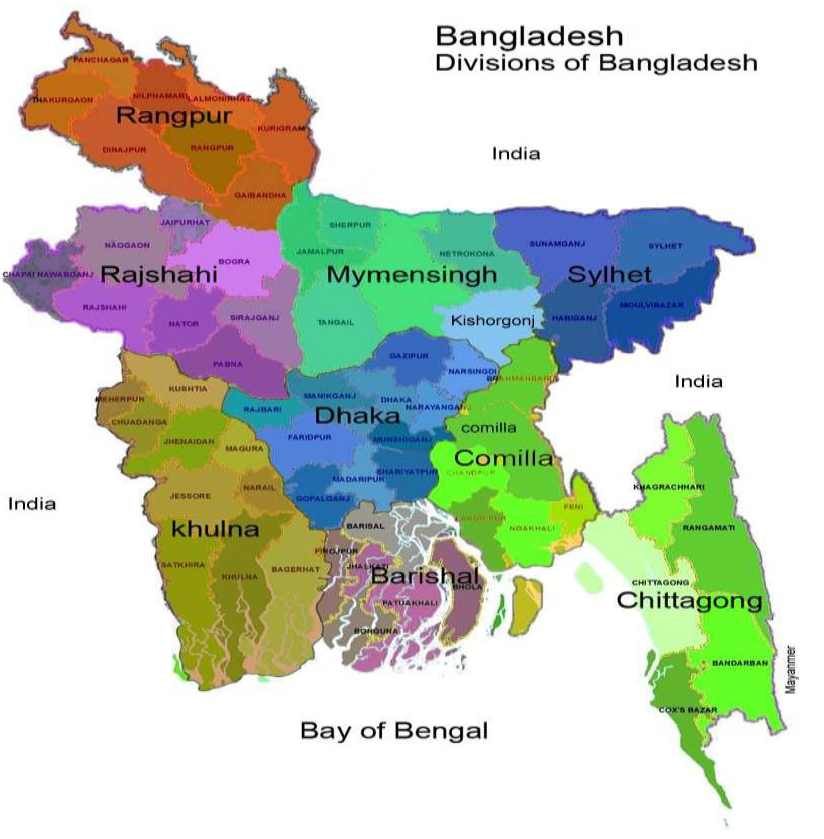
The acknowledgment of the imminent impacts of a changing climate on the agriculture sector and those who rely on it (local and indigenous smallholder farmers) has gained momentum over recent years. This has forced some governments to formulate policies and adaptive mechanisms that are aimed at enhancing the adaptive and resilience capacities of the many local and indigenous smallholder farmers. However, doing this requires that there is adequate information on the imminent impacts of a changing climate on the agriculture sector. In the last decade, there has been inadequate information on the impacts that a changing climate possesses especially on the local and indigenous smallholder farmers. Therefore, finding effective and innovative adaptation practices must be in line with information on (a) who are the most vulnerable smallholder farmers and where are they located, (b) what is driving this vulnerability of these smallholder farmers to climate change in the selected areas or regions, (c) what could be the most effective, costs and benefits of the adaptation measures to be recommended [48] (Figure 1).
Climate Change and Agriculture a Case Study of Barisal Southern
Bangladesh is a country that lies in the South of Asia with the Bay of Bengal in the South, Myanmar in the Southeast, and India in the West, North, and Northeast. It is a small country with a land area of 147,570 square KM and a population of more than 160 million [62-63]. Bangladesh is a low-lying riparian country formed by a deltaic plain at the confluence of the Ganges, Brahmaputra, and Meghna Rivers, which accounts for its vulnerability to climate change impacts such as floods and sea-level rise. It has a coastline of 710 kilometers (440 miles) on the northern littoral of the Bay of Bengal, and the coastal areas are subject to frequent tropical cyclones. The floodplains occupy about 80% of the country and 10% of the country is less than a meter above sea level while 1/3 of the country experiences tidal excursions. Furthermore, 32% of the country is along the coastal belt susceptible to sea rise and floods [64]. These underlying geographical and physical conditions have made the country to be among the most vulnerable countries to climate change impacts.
Agriculture in Bangladesh is the mainstay of the economy supporting livelihoods and employing over 60% of the population and is the main source of income for most of the people. However, over the last two decades, the country has witnessed a continuous decline in agriculture productivity and employment with the latest collected data putting the country’s employment in agriculture at around 39% the lowest ever [29,62] This continuous decline in employment in the agriculture sector has been mainly associated with the extreme negative climatic events that have continued to ravage the country over the years and to some extent due to the impact of globalization [28,63]. As mentioned earlier, Global Climate Change (GCC) will affect everyone and everything but the most to be hit hard will be the vulnerable and extremely poor, and marginalized communities in developing countries and Bangladesh has a huge share of them [28,62,64]. In many cases, these have no control over the political decisions that are made by their governments as they are often seen as recipients and passive and hence, their concerns are always undermined especially in this era of a changing climate that is full of uncertainties. Nevertheless, research has shown that this group of people has the potential to meaningfully contribute to the fight against climate change if properly engaged.
Figure 1: Map of Bangladesh [65]
MATERIALS AND METHODS
Methodology of the Study
Barisal city as a study location was purposively chosen because of the region’s vulnerability to GCC related impacts such as extreme flooding which is causing waterlogging and also a rising sea water level which is continuously bringing in salinity into the local soil and water making it extremely difficult for agricultural activities to take place and hence, exacerbating the already hunger and poverty situation in the region. Purposive sampling was utilized in the selection of the participants in this research study. As defined by [42] and [65]. Reference 47 indicates that purposive sampling involves identifying respondents that are deemed to have the required information relevant to the research study. In this research study face to face, interviews were used in data collection. Interviews were conducted on a one-to-one basis with manly researchers at the Bangladesh Center for Advanced Studies (BCAS), the Bangladesh Rice Research Institute (BRRI), NGOs, and Government officers in the Dhaka division, and focus group discussions (FGDs) and interviews were further conducted in Barisal division southern Bangladesh. Key stakeholders in the field of agriculture, environment, climate, and food security were engaged in interviews to obtain their views, experiences, expertise, and opinions on the happenings on the ground. The questionnaire interview comprised both open-ended and closed-ended questions which had a list of questions regarding climate change impacts and the local or indigenous ecological adaptive priorities being implemented to a changing climate. In this study focus group, discussion (FGD) was key in addressing the research questions and objectives of the study. During the FGD the seasonal calendars and risk mappings were the key instruments that were used to address the objectivities and the questions of this study. The two research tools were mainly used to observe the past climatic trends and climate catastrophes and the priorities being taken to prepare for future ones. Based on the objectives of this research study and the limitations four FGD were conducted with the local smallholder farmers in the study region with each FGD comprising 8 participants of equal gender (Male and Female) which included one government official and a climate change expert for validation of the answers given. Due to some logistic challenges, this research study was only conducted for three weeks in two locations in disaster-prone south-central Bangladesh.
The Study Location (Barisal)
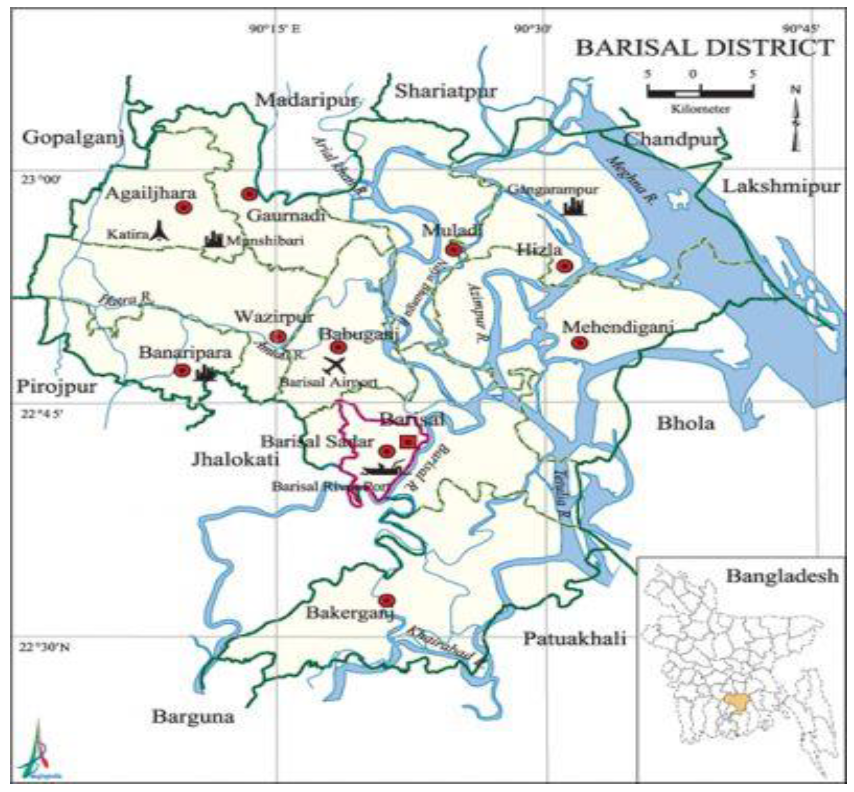
Barisal is one of the nine administrative divisions of Bangladesh. Barisal division is in the central-southern part of Bangladesh with an area of 13,644.85sq km and with a population of 8,325,666 as of the 2011 Census [62]. It is surrounded by Dhaka Division on the north, Chittagong Division on the east, Khulna Division on the west, and the Bay of Bengal on the south. Barisal Division is crisscrossed by numerous rivers and its administrative capital the Barisal city lies in the Padma River delta on an offshoot of the Arial Khan River [66] (Figure 2). The region lies 10m above sea level with a tropical climate and experiences lots of rainfall in summer than in winter. Barisal’s annual temperature is 25.9 degrees Celsius/78.7 F with an annual rainfall of 2184mm/86.0 inches. Over the air Barisal Division is a beautiful sight to see with its many rivers that crisscross it however, these rivers are making life and livelihood unbearable. Barisal and its surrounding districts are highly prone to many climatic-related hazards such as rising sea level which is bringing in salinity water making farming activities difficult.The many rivers that crisscross the district are also a hazard to the local people as they get extremely flooded making life difficult for the locals. The extreme floods lead to waterlogging which is disrupting agricultural activities which are exacerbating food insecurity issues in the area.
Unemployment and inadequate food become the song of the day forcing many local people to migrate. In the last decade, for example, there has been a sharp decline in agriculture activities and nature-based activities due to the continuous impacts of climate change. With the persistence of extreme events emanating from global climate change (GCC) the local peoples, adaptive capacity is being threatened to a point whereby some local people are now migrating to the capital Dhaka Division and other nearby districts and divisions in search of labor-based employment in factories and day to day labor work such as rickshaw puller for survival.
Figure 2: Map of Barisal Division [62]
RESULTS
In this study, it was revealed that GCC is indeed harming the agriculture sector due to the persistence of climate-related extreme events such as waterlogging, seawater rise, river erosion, flash floods, cyclones, storm surges, and extreme temperatures. According to the respondents in this study region, these negative GCC events have increased over the years in both magnitude and intensity, and this is tremendously affecting the livelihood of most poor local people in the region. Because of the vulnerability of the people to the underlying impacts emanating from GCC, persistent local issues such as a lack of employment opportunities, low income, poor health, and malnutrition have now been exacerbated by these prevailing events making life very dire and unbearable for many especially the women, children and the marginalized communities in the study area. GCC is mainly affecting activities in agriculture such as homestead vegetable cultivation, fish culture, crop cultivation which in turn is affecting the nutrition and health of the people in this region. In both the one-on-one interviews and the Focus Group Discussions (FGDs) respondents were able to identify the major climate change phenomenon which is negatively affecting the agriculture sector which is their source of employment, income, and survival. Erratic rainfall, waterlogging, seawater level rise, salinity in local water and soils, floodwater inundation, and extreme temperatures were identified as the main climate-related problems that are affecting their agricultural activities and their way of life.
The findings of this research further revealed that unavailability of fish, riverbank erosion, waterlogging due to siltation, lack of irrigation water, flash floods, pest and diseases, and a lack of fresh drinking water were the main issues the local people were faced with, and these are tremendously changing and affecting their livelihoods including the crop and vegetable production that they solely depend on to survive. For example, in the last two decades, the region has seen its main rivers silting to an extent that waterlogging is trapping the local people and making it very difficult for them to survive and in some cases, this trend could last at least for 6 months in a year affecting the many women and children in this region. Key sources of livelihood and survival such as tree fruits and domesticated animals crop production are all being destroyed by the GCC-induced catastrophes. The vegetable production which is one of the main sources of food in the region is completely dormant during flash floods and waterlogging exacerbating the food insecurity issues that the region is known for. The demand for food that is quality and that is in quantity is becoming a hustle during these critical and unpredictable times. Food prices become unbearable for much of the flood and waterlogging periods. In addition to this are the frequent cyclones and above normal floods which are coupled by the salinity of the soils and water. These are tremendously affecting the agriculture sector especially crop production which is yet exacerbating the vulnerability of these local communities. Furthermore, the problem of flash floods, waterlogging, and salinity are destroying home latrines, homes, crops, and freshwater which is completely disrupting the way of life in this region and weakening the adaptability capacity of these people. However, despite the low adaptive capacity being experienced by the local people in this region, this study was able to identify some indigenous and local adaptation activities that are being adopted and implemented by the local people to withstand the pressures from GCC impacts. Key to mention is that the adaptation activities that are being implemented in this region are in two categories; those done specifically by the local people using their local and indigenous ecological knowledge and those that are solely planned and supported by the NGOs and the government of Bangladesh. Some of the adaptation responses by the local people in this region include floating bed agriculture or floating gardening, a shift from vegetable cultivation to fruits, crop diversification, homestead gardening, change in planting and harvesting time, planting in a heap, mulching, conversion of water-logged agriculture land into fishponds, duck rearing, cage aquaculture, and re-digging of rivers and canals. The following are some of the government, donor community, and local NGOs-led adaptation measures that are being adopted and implemented in this region.
Construction of Walls to protect Farms and Households from Strong River Waves
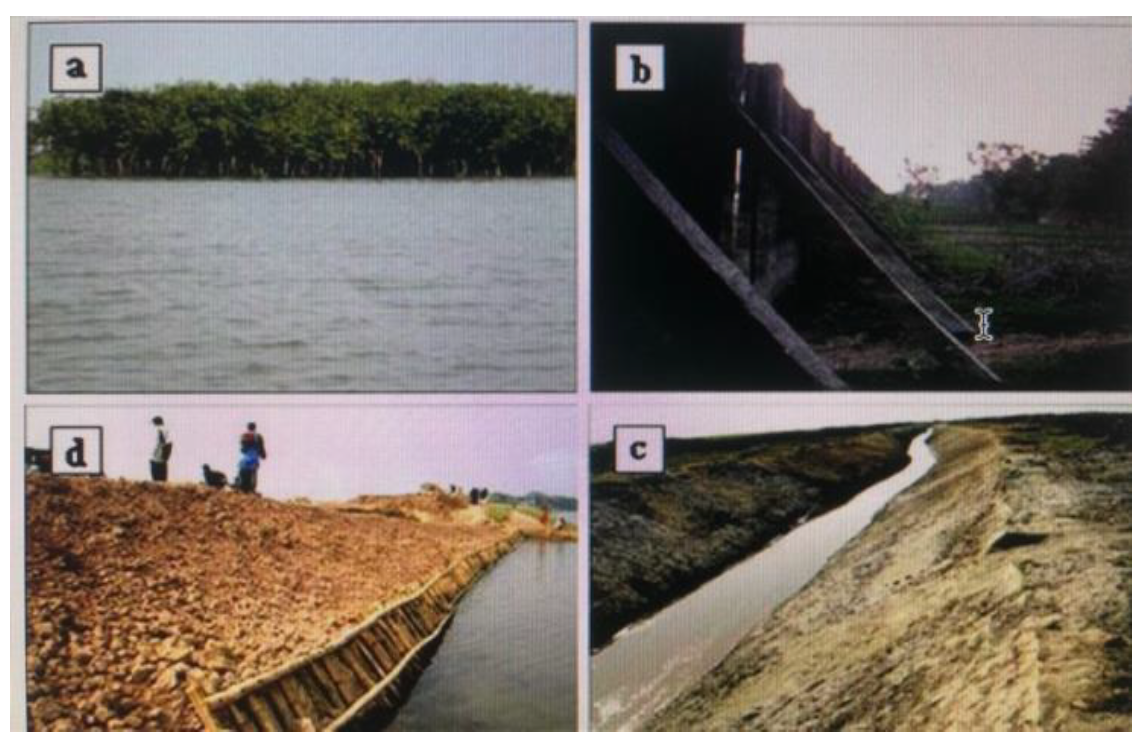
With the help of the government and in cooperation with NGOs such as CARE and USAID the local smallholder farmers are being helped to effectively adapt to severe erosion by constructing walls to protect their farms and homes. The construction of these walls is due to the severe erosion caused by waves, especially during the monsoon season. This adaptation practice is very effective at the local level and is greatly helping the local people in the study region to adapt even though it is very expensive to fully implement.
The Construction of Shelters
In this study region, severe floods are common and most prevalent, and these floods displace the local people and cause a lot of damage to the many farming communities within and the surrounding districts of Barisal. The government of Bangladesh working together with its international partners has constructed shelters that house the local people with their animals and essential farming tools and products during severe floods that are very prevalent in this region especially in the last two decades.
Figure 3: Government and NGOs Adaptation Programs [41]
Digging and Re-Digging of Rivers and Canals
Another government and non-governmental organizational adaptation program that is helping the local people to adapt to a changing climate in the study region is that of digging and re-digging of canals and rivers with the help of the local people to ease up the movement of water especially during the monsoon season. As a result of siltation which later is the cause of waterlogging government agencies and its patterners have embarked on the digging and re-digging of rivers and canals to allow the easy flow of water and this has not only given the local people a new source of employment, but it is helping the poor households to adapt too.
Figure 3Photo Description
Mangrove plantation to protect farms and households
Traditional wave protection wall
Digging of canals for easy water movement and rainwater harvesting
Construction of an embankment for the protection of the agricultural field and houses from flash floods and river erosion
The Construction of Embankments
Lastly, the government of Bangladesh and its development partners have embarked on the construction of embankments to protect the local people and their farms from seawater and river water waves, cyclones, and strong winds (Typhon). This adaptation practice has proved effective in this region and many other regions in Bangladesh as it protects crops grown in the fields from flash floods and protects the soils from severe floods, water, and soil salinity that is prevalent in the area. According to the participants of this research study, the government and NGO-led mechanisms are tremendously helping the local people in this area to adapt from flash floods and waterlogging which are the most prevalent in this region. The planting of mangroves along the coastal line is yet another adaptation practice that is being promoted by the government and its developing partners to protect the local communities from climate change-induced catastrophes that have increased in magnitude and intensity over the years. In addition to these government and NGOs funded mechanisms, the local people and communities in this region using their own local and indigenous knowledge have also adopted their adaptation mechanisms to reduce their vulnerability to the impacts emanating from a rapidly changing climate particularly in agriculture sector.
The following are some of the identified local and indigenous-based practices that are being initiated and adopted by the local people in this study region.
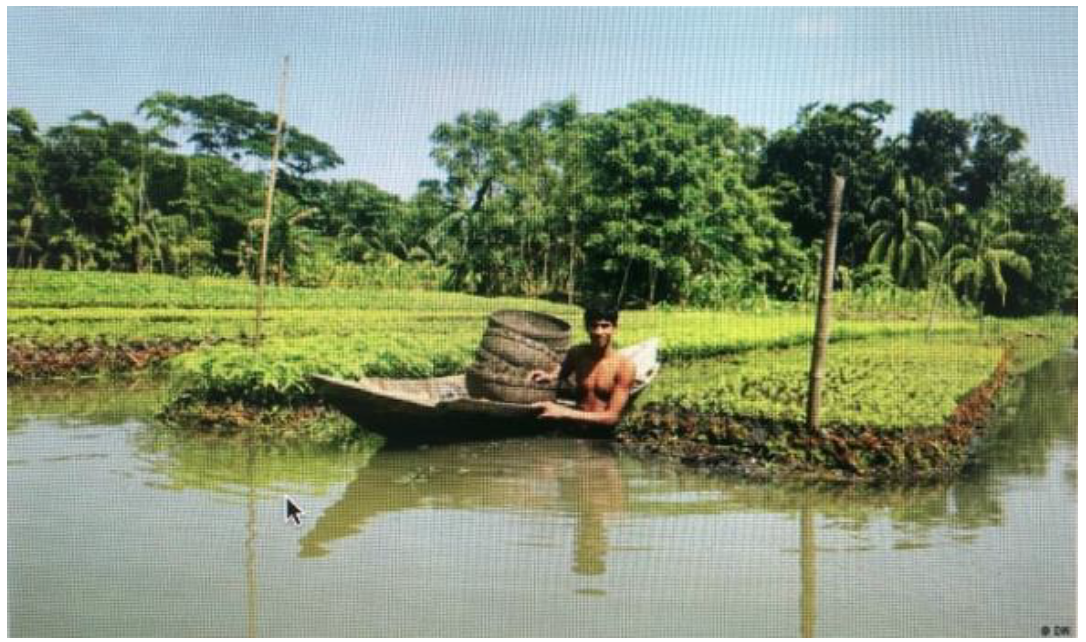
Figure 4: Floating Garden Agriculture in Southern Bangladesh [64]
Floating Bed Garden or Floating Bed Agriculture
Due to the persistent flash floods, waterlogging, and water congestion caused by faulty drainage which has severely restricted the amount of land for farming activities the local smallholder farmers in the study region just like many other surrounding regions have resorted to the adoption of a 200-year-old agriculture IEK practice called the floating garden (locally known as Baira). This is constructed using the local hyacinth and bamboo trees. To fully prepare this floating bed requires bamboo poles with layers of aquatic weeds, mainly water hyacinth, and some other aquatic plants like water lettuce, organic materials like paddy stubs, straw, and coconut husk. The floating beds are primarily planted where water hyacinth is available, and the beds can be prepared in any depth water and these beds can be moved by dragging them behind a boat. Decomposing plant residues are a key source of organic matter and crop nutrients in a floating garden.
It must be noted that in places where the waterlogging is permanent cultivation of crops can be done all year round and, in some places, where water subsides these floating beds can be left to decompose on the agricultural land. This practice has given the local communities hope and enhanced their resilience capacity in an area that is vulnerable to natural disasters and in the face of a changing climate. Furthermore, this practice has been now recognized by the government and other non-governmental organizations as effective on the local scale as such funding has been allocated to help the local farmers to be able to build such beds in flood-prone areas for farming which is tremendously enhancing their resilience, and which is generating monthly income for the locals especially when they plant and cultivate vegetables for sale in the nearby towns (Figure 4).
Conversion of Submerged Farmlands into Fishponds
During the transect walk in the study region, it was found that due to the persistent flood situation in the area that sometimes lasts for about six months making them unsuitable for crop cultivation the local people have resorted to the conversion of their agricultural land for fish farming. Small sometimes large ponds or cages are made in which fish farming is done which is tremendously bringing in the needed income to feed their families. This practice is playing a significant role in increasing the local people's ss adaptability capacity and enhancing their resilience in a region that is vulnerable to natural disasters and prone to climate change impacts.
Homestead Gardening
Some local smallholder farmers whose farming land has been covered due to flash floods and waterlogging have resorted to converting their small land within their homestead or home premises into small gardens. Many local people in the study region were during this study practicing homestead gardening and are still holding on to this practice as it is bringing in the needed supply of food and needed income when the cultivated vegetables and tree species are sold at the markets.
Diversifying of Crops and Shifting in Planting and Harvesting Time
In this region just like many other regions in Bangladesh, the local people are now diversifying their crops and changing their planting and harvesting time due to a changing climate. Horticulture crops such as mustard, yam, and linseed are now commonly being cultivated which was not common some years ago. Furthermore, due to the many impacts emanating from climate change that has been discussed already the local smallholder farmers in the study region are now changing their crop planting time and harvesting time due to climate change issues such as erratic rainfall and excessive rainfall which are making it difficult for them to be able to successfully do their farming. With the new early maturing, drought, and flood-tolerant varieties of rice that have been developed by the Bangladesh rice research institute (BRRI), smallholder farmers are now able to grow their rice crop in a short period and flood or drought situations. This enhances their adaptability capacity and resilience building in a volatile and vulnerable disaster-prone region.
Heap Plantation or Sorjan Plantation
The heap plantation practice is a result of heavy rainfall and persistent water logging that has increased with intensity and magnitude over the years. The local and indigenous people in this region have resorted to raising their plantation in heap for easy drainage and to prevent root damage from decay. Plantation heaps are arranged in roles and on which crops are successfully grown to shield and protect them from erosion that can be caused by water runoff. In this way, smallholder farmers can grow their crops mostly vegetables for sale and consumption even in an area that is waterlogged all year round. This local adaptation practice is tremendously enhancing the local people's adaptability capacity, resilience building, and sustainability. This practice is also making it possible for them to have food on their table in a continuously changing and unpredictable climate.
Diversifying of Income Sources
Due to the severe flash floods and waterlogging that is prevalent in this region and which can last up to about six months the local and indigenous people in this study region have now resorted to diversifying the sources of their income as they can no longer cultivate in their submerged farmlands. Many are now into duck rearing which is a traditional practice that has been practiced for many years in this region. However, due to the impacts emanating from GCC, this practice has become a common and alternative source of income for the many poor local and vulnerable people of this region. The cottage industry is yet another alternative income-generating activity that the local people in this area are practicing adapting to a changing climate (floods and waterlogging) that has made it very difficult for the local smallholder farmers to continue farming. Women are largely involved in the weaving and preparing of mats and other related items and men would transport them to the markets for sale. Yet others are migrating to the city (Dhaka) and nearby divisions for employment in factories and other day-to-day money-making activities such as rickshaw pullers for survival.
In assessing the effectiveness of the adaptation options discussed in this research study it is important to mention that indigenous and local knowledge practices have the potential to enhance resilience and adaptability capacities of a people, particularly the remote and rural communities in the developing world within a certain threshold as observed in this study. However, the key to point out is that the effectiveness of these mechanisms comes with some challenges and limitations which need to be understood by all policymakers and all stakeholders particularly those in the developing world who are advocating and pushing for the advancement of IEK in climate policy and sustainable development discourse. The challenges and limitations associated with local and IEK have been discussed in the next paragraph.
Challenges and Gaps of Local and IEK in the Fight against Global Climate Change
IEK and its significance in the sustainability practice and climate variability discourse has been acknowledged, and its content is believed to have the potential to be applied in various disciplines. In the same vein, the role of LEK as a driver of sustainable development and a tool to fight global warming and GCC has over the years garnered immense global attention particularly on environmental issues. This has prompted a thorough examination of current human-environment relationships and their impacts [21,41,68]. Such is emphasized to a greater extent in discussions on biodiversity conservation and natural resource management compared to, for example, discussions on climate change [5,61]. However, the implementation and utilization of local and IEK for local adaptation programs face a lot of challenges on the ground. Reference [69], has stated that while the use of local and indigenous ecological knowledge has gained a lot of support over the years and has been regarded as; “an alternative way of promoting sustainable development in poor rural communities, several challenges remain and have hindered the assumed and aspired outcomes of applying such knowledge due to several challenges.”
According to [69], the five key obstacles that can make it difficult for the incorporation of local and IEK into developmental and climate change policies are:
A focus on the (arte) factual
Binary tensions between western science and local and indigenous knowledge systems
The problem of differentiation and power relations and the romanticization of local and indigenous knowledge
The all too frequent decontextualization of local and indigenous knowledge
In addition to the above-mentioned obstacles or challenges overstating the value of local or IEK has also been seen to reduce the effectiveness of participatory approaches to development [30]. Failing to consider that members of a social group have varying levels of access to and control of resources and experience the effects of development interventions differently even if they share the same knowledge system and cultural heritage, can have a similar outcome [8]. It’s possible to have workable solutions arising from the combination of local or IEK and scientific knowledge that has the potential to build resilience, but it is important to first determine in which aspects such knowledge systems are mutually consistent and compatible [70]. Also, if the top-down standardization approaches of governments cannot be harmonized with the bottom-up approaches of local and indigenous communities that rely on customary laws, transmitting and retaining local and IEK will be hampered. Consequently, the advantages of incorporating local and IEK in sustainable development and climate change policies may not be fully realized. Hence, it is crucial to not only acknowledge the value of local and indigenous knowledge but also increase opportunities for the local and indigenous communities to acquire knowledge that will help them deal with current global challenges [9]. Another aspect that has been a challenge for IEK to fully be acknowledged and get the recognition it deserves in the climate adaptation efforts has been the lack of financial and institutional support that the modern scientific and other non-scientific knowledge system has received and keeps receiving for innovation, testing, and promotion. There has been a lack of knowledge on LEK and how that knowledge can be modified for adaptation, the promotion of resilience-building efforts, and a lack of finances for further research into the many local and indigenous practices that are there and that have been practiced by the local communities from generation to generation [9,45,2,32]. In addition to the concern above is the need to win the confidence and trust of those that hold this knowledge (local and indigenous people).
Today, it’s a common truth that the people that hold or rather that have the know-how of local and IEK have different views and hold different cultures and are detached from the mainstream society and live-in poor communities from those that hold the scientific knowledge and from developed communities. This can make it hard to be able to willingly give up their knowledge. Therefore, if the two communities are to work together effectively, there is a need for them to build that mutual trust, understanding, and confidence. For example, in cases where intellectual property rights are involved holders of LEK or IEK may be very reluctant to give it up or share it if they don’t trust the person who wants it. In line with this is the integration of the two knowledge systems of LEK and scientific knowledge [2,32]. Integration has been a huge challenge for decades and it is just recently that it is getting that recognition it deserves. There is a need for LEK communities to open up and learn with their scientific knowledge partners in seeing to it that the two knowledge systems are integrated into one system of knowledge that can be effective in the climate change adaptation efforts and efforts towards a sustainable future for all [2,32,45]. Thus, to do this, LEK communities need to be availed with the right information on the approaches to and mechanisms for engaging in progressive dialogue. Most of all there should be motivation from the two groups of people if they are to work together.
It must be further noted that even though LEK has several adaptation and resilience practices that may be effective as can be seen in this study these practices can only be applied to current climate variability and may not be very effective in fighting or addressing future climate variability and its impacts as these future climatic events may be very extreme for LEK and IEK practices to cope [2,9,21]. It is also important to understand that much of IEK practices today correspond to the existing state of stress and the needs emerging in the local context [21]. In the same vein, LEK cannot address all the challenges that climate variability may bring. In many cases local and IEK is region-specific meaning that some of its practices may not be replicated in other areas thus, these practices need to be tested if they are to be replicated in other regions which will require financial and human resources to be effectively assessed and documented [52]. Key to note is the fact that local and IEK is also more effective if taken as a preventive measure rather than as a tool to effectively address extreme damage emanating from GCC [52]. However, it can effectively be used as a starting point for climate change adaptation and disaster risk reduction (DRR) and management.
Recommendations and Direction for Future Research
Just like any other social science research, the results of this study require that some recommendations and proposals for a follow-up or further studies, and below are some of those recommendations.
The first of the recommendations is that rigorous research is needed to find innovative and effective IEK-based practices that can be integrated with scientific knowledge for effective adaptation, resilience building, and sustainability in agriculture. The researcher believes that by rigorous research on innovative and effective local and indigenous knowledge-based practices and integrating them with scientific knowledge an effective adaptation for resilience building, and sustainability will certainly be achieved and replication of the identified innovative and effective practices to other regions affected by climate change will certainly be inevitable. In this era of a changing climate, the implementation of any meaningful developmental program or climate change policy must first and foremost examine the local context because it is by understanding the local context that development that is sustainable, adaptive, and resilience can be attained hence, the emphasis and advancement of rigorous research in local and indigenous communities
Furthermore, it is believed that by understanding and identifying innovative and effective LEK-based practices for climate change adaptation and resilience a clear path can be opened where collaborating it or building on it with scientific knowledge will be inevitable. Therefore, there needs to have a clear understanding of, and insights into existing LEK-based practices if we are to fully address current and future climate change challenges and this should be a prerequisite to the launching and successful implementation of innovative and effective local adaptation practices. In the same vein, LEK should be viewed and recognized as the basis or foundation for the formulation and implementation of any meaningful adaptation and sustainable development policy
Since the application and use of LEK for climate adaptation are relatively new its promotion, advancement, and use must begin with the discarding of policy barriers and provision of monetary support for building the capacities of the traditional and local institutions. Therefore, this research recommends that developing countries and their local and international partners should focus on supporting indigenous and local ecological knowledge institutions and their respective practices as doing so will make it possible for the successful integration of LEK into climate change adaptation and disaster risk management policies
The use and application of participatory approaches is yet another key aspect that this research recommends. Participatory approaches require that the affected communities and users of certain knowledge e.g., LEK are involved in the planning and implementation of policies that may likely affect them negatively or positively. For example, involving the local community in the implementation of any climate change adaptation, mitigation, or sustainability program implies that the levels of motivation to participate in the planning and implementation of such a program increases. This also enables the affected local community to increase their capacity to learn and their feelings of ownership which also enhances the feeling of liberty to make an informed decision or choice to the implemented program. Besides, the application of participatory approaches that involve the users, practitioners, or the affected communities has now been acknowledged and seen as crucial and essential in the sustainable development and climate change discourse. A participatory approach brings together representatives of all local stakeholders and ensures that all concerns are heard, and the priority issues are dealt with especially those that address the immediate needs of the local people. Doing this enhances the chances that the formulated solutions are effectively implemented and effectively addressed and meet the needs of those affected
Developing countries must also be able to formulate policies that ensure that the agriculture sector is fully funded to address emerging and future climate change impacts especially at the local level where many people solely rely on their local ecological-based knowledge to adapt to a changing climate. The identified innovative and effective LEK-based practices must be fully acknowledged and funded as they have the potential to enhance the resilience capacities of these vulnerable and poor local communities in the face of a changing climate within a certain threshold. In this vein, local institutions and local communities, in particular, need to be fully prepared to successfully address issues to do with climate vulnerabilities. This will require that developing country and their developing partners and other stakeholders fund and build on effective and innovative IEK-based adaptation practices so that they are properly armed to address the challenges of building resilience in a changing climate. Therefore, by supporting and funding the identified innovative and effective LEK-based adaptation practices by governments in developing countries with help from their development agencies and patterners the integration of this invaluable knowledge into disaster risk management and climate change policies will surely be inevitable
The enhancement of the governance capacity by developing countries to improve adaptation and resilience efforts is yet another aspect that this research study would like to recommend. The enhancement of governance capacity at all levels from local, community, sub-national, national, public and private, traditional institutions and the civil societies organizations is very cardinal in improving the effectiveness of adaptation and resilience-building capacities of the many vulnerable and poor local and indigenous communities. In this case capacity building efforts need to consider both autonomous and planned adaptation measures across the board and all sectors. In the same line of thought, the management of local and IEK for adaptation and sustainability efforts needs to be in line with local people's priorities and needs especially the remote and marginalized communities who live in vulnerable regions and who are susceptible to the impacts emanating from a changing climate
This research also recommends that future research studies should involve more extensive comparative research case studies across the globe to be able to identify the innovative and effective LEK based adaptation practices being implemented in other regions especially those dealing with climate change-related impacts such as drought, floods, pest and diseases, rise in temperature and rise in seawater level. The researcher believes that by engaging in such extensive global research studies and identifying key and effective LEK adaptation methods being utilized for resilience building and integrating them with scientific knowledge the replication of such knowledge in similar regions experiencing the same climate change impacts will be possible and a resilience agriculture sector for all will be inevitable
Lastly, because the concluding findings of this research study indicate that local and IEK-based climate change adaptation practices being implemented and practiced in this study are responding to stresses within a certain threshold and can function in a multi-sectorial context. This research recommends that future research must utilize a multidimensional approach to the study of local and IEK as this can open up new avenues that can enhance the discovery of new effective IEK-based practices that can help in dealing with vulnerability issues because vulnerability itself is multi-dimensional
CONCLUSION
This research paper attempted to analyze present climate change-related impacts on agriculture in Barisal Southern Bangladesh and further sought to identify effective local and indigenous ecological knowledge adaptation mechanisms being utilized by the local smallholder farmers for resilience building and sustainability in this region. The focus on climate adaptation in agriculture using local and indigenous knowledge systems was borne out of the realization that what most local and indigenous people in developing countries need in today’s warming climate is donor and government support that can enhance their local efforts, ways, and means in which they can adapt and build resilience in the face of a changing climate as they are the ones whose population solely depend on nature-based income-generating activities to survive. The key in this research was to assess how local and IEK can be integrated into climate change and disaster risk management policies for resilience building and sustainability purposes, particularly in the agriculture sector. Through document reviews, fieldwork research, interviews, focus group discussions with smallholder farmers, NGOs, and researchers, the findings of this research indicate that indigenous and local adaptation strategies to climate change in this area are striving hence, their use and importance must be acknowledged and included in the mainstream developmental and climate change policies, particularly at the local and community level where resources are scarce and the adaptability capacity is weak. Furthermore, the findings of this study indicate that climate change is and will continue to cause a series of negative impacts on the agriculture sector in this region and this will tremendously impact the social and economic status of the poor and rural people in this region and will further exacerbate the already high poverty and hunger situation prevalent in the area.
In this research climate, change-related impacts such as flash floods, waterlogging, seawater rise, river erosion, salinity water intrusion, cyclones, storm surges, and extreme temperatures were found to be prevalent in this region and will continue to devastate the livelihoods and lifestyles of the many poor people in this region who solely depend on nature-based activities for survival. Although these climate-induced impacts are having a profound impact and challenge on the local people in this region, this research was able to identify some effective indigenous and local adaptation options which are being adopted and implemented by the local and indigenous smallholder farmers in the region. These include the floating gardens, planting in heap, diversifying of income sources and crops shifting in planting and harvesting time, converging of submerged farmlands into fishponds, and homestead gardening. These local adaptation practices were found to be playing an important role in enhancing the adaptability, resilience, and sustainability capacities of the indigenous and local smallholder farmers in the study region. Significant to note is that despite the recorded success and effectiveness of some of the local and indigenous options in the quest for adaptation and resilience-building, there are some challenges as discussed in this paper that needs to be acknowledged and addressed and whose existence may hinder the integration of local and IEK into developmental, disaster risk management and climate change policies. It is in this vein that, there is a need for proper coordination between all stakeholders (donor community, funders, local governments, local communities, and local NGOs) in policy designing, implementation, adoption, and monitoring of these locally initiated activities as they are in most cases cost-effective and action oriented. In doing so the livelihood of the many rural and poor communities across the developing world would be safeguarded and their quest for development that is sustainable, adaptive, and resilient, and which addresses their immediate needs would be achieved. It must be, therefore, acknowledged that the need to formulate climate change policies that have elements of both local and indigenous ecological knowledge systems is very crucial particularly at the local and community level where the adaptability capacity is weak, and resources are scarce.
Lastly, it can be stated that this research and its findings support the notion that local and indigenous people have for centuries supported their diverse capacities and have adapted to change within their local environment using local tools and resources therefore, what is needed is collaborated support to enhance these local efforts that they know too well. It can be further said that even though not all local and IEK practices can be effective and beneficial for adaptation, resilience, and sustainability purposes under variability in the climate system, the inclusion and integration of the observed innovative and effective local and IEK systems with scientific knowledge and into climate change and disaster risk reduction and management policies is key if we are to fully increase the adaptability and resilience capacities of the many poor and vulnerable communities across the developing world.
Acknowledgment
I would like to thank and show my sincere appreciation to all the stakeholders that participated in this research especially the researchers, and the smallholder farmers in the study region. Special thanks also go to the University of Dhaka Graduate School of Geography and the Environment, the Bangladesh Rice Research Institute (BRRI), the Bangladesh Bureau of Statistics (BBS), and the entire management of the Bangladesh Centre for Advanced Studies (BCAS) for their unequivocal help in data collection and guidance on where, how, and what materials were necessary for the execution of this research.
REFERENCE
Nakashima, D.J. et al. Weathering uncertainty: traditional knowledge for climate change assessment and adaptation. UNESCO and UNU, 2012.
Nalau, Johanna et al. “The role of indigenous and traditional knowledge in ecosystem-based adaptation: a review of the literature and case studies from the Pacific Islands.” Weather, Climate and Society, October 2018, pp. 851–865. https://doi.org/10.1175/WCAS-D-18-0032.1.
Nalau, J. et al. “Mapping tourism stakeholders’ weather and climate information-seeking behavior in Fiji.” Weather, Climate and Society, vol. 9, 2017, pp. 377–391. https://do i.org/10.1175/WCAS-D-16-0078.1.
Sakapaji, Stephen Chitengi. “Advancing local ecological knowledge-based practices for climate change adaptation, resilience-building and sustainability in agriculture: a case study of central and southern Zambia.” The International Journal of Climate Change: Impacts and Responses, vol. 13, no. 2, 2021, pp. 61–83. https://doi.org/10.18848/1835-7156/CGP/v13i02/61-83.
Ford, J.D. “Supporting adaptation: a priority for action on climate change for Canadian Inuit.” Sustainable Development Law and Policy, vol. 8, 2007, pp. 25–29.
Ford, B. et al. “Vulnerability to climate change in the Arctic: a case study from Arctic Bay, Canada.” Global Environmental Change, vol. 16, 2006, pp. 145–160. https://doi.org/10.1016/j.gloenvcha.2005.11.007.
Green, D. et al. Risks from climate change to indigenous communities in the tropical north of Australia. Department of Climate Change, Commonwealth of Australia, 2009.
Green, D. et al. “An assessment of climate change impacts and adaptation for the Torres Strait Islands, Australia.” Climatic Change, vol. 102, 2010, pp. 405–433. https://doi.org/10.1007/s10584-009-9756-2.
Lebel, L. “Local knowledge and adaptation to climate change in natural resource-based societies of the Asia-Pacific.” Mitigation and Adaptation Strategies for Global Change, vol. 18, 2013, pp. 1057–1076. https:/ /doi.org/10.1007/s11027-012-9407-1.
Williams, T. et al. “Culture, law, risk and governance: contexts of traditional knowledge in climate change adaptation.” Climatic Change, vol. 120, 2013, pp. 531–544. https://doi.org/10.1007/s10584-013-0850-0.
Cameron, E.S. “Securing indigenous politics: a critique of the vulnerability and adaptation approach to the human dimensions of climate change in the Canadian Arctic.” Global Environmental Change, vol. 22, 2012, pp. 103–114. https://doi.org/10.1016/j.gloenvcha.2011.11.004.
Parsons, M. “Continuity and change: indigenous Australia and the imperative of adaptation.” Applied Studies in Climate Adaptation, edited by J.P. Palutikof et al., Wiley, 2015, pp. 281–288. https://doi.org/10.1002/97811 18845028.ch31.
Veland, S. et al. “Procedural vulnerability: understanding environmental change in a remote indigenous community.” Global Environmental Change, vol. 23, 2013, pp. 314–326.
Warrick, O. et al. “The ‘Pacific Adaptive Capacity Analysis Framework’: guiding the assessment of adaptive capacity in Pacific Island communities.” Regional Environmental Change, vol. 17, 2017, pp. 1039–1051. https://do i.org/10.1007/s10113-016-1036-x.
Leonard, S. et al. “The role of culture and traditional knowledge in climate change adaptation: insights from East Kimberley, Australia.” Global Environmental Change, vol. 23, 2013, pp. 623–632. https://doi.org/10.1016/j.g loenvcha.2013.02.012.
Mackey, B. and D. Claudie. “Points of contact: integrating traditional and scientific knowledge for biocultural conservation.” Environmental Ethics, vol. 37, 2015, pp. 341–357. https://doi.org/10.5840/enviroethics2015373 32.
UNFCCC. Best practices and available tools for the use of indigenous and traditional knowledge and practices for adaptation. UNFCCC Technical Paper FCCC/TP/2013/11, 2013.
Becken, S. et al. “The cultural context of climate change impacts: perceptions among community members in the Annapurna Conservation Area, Nepal.” Environmental Development, vol. 8, 2013, pp. 22–37. https://doi.org/ 10.1016/j.envdev.2013.05.007.
Huntington, H. et al. “Matching traditional and scientific observations to detect environmental change.” Ambio, vol. 13, 2004, pp. 18–23.
Parsons, M. et al. “Alternative approaches to codesign: insights from indigenous/academic research collaborations.” Current Opinion in Environmental Sustainability, vol. 20, 2016, pp. 99–105. https://doi.org/ 10.1016/j.cosust.2016.07.001.
Audefroy, J.F. et al. “Integrating local knowledge for climate change adaptation in Yucatán, Mexico.” International Journal of Sustainable Built Environment, vol. 6, 2017, pp. 228–237.
Berkes, F. et al.Rediscovery of traditional ecological knowledge as adaptive management. Routledge, 2000.
Nyong, A.F. et al. “The value of indigenous knowledge in climate change mitigation and adaptation strategies in the African Sahel.” Mitigation and Adaptation Strategies for Global Change, vol. 12, 2007, pp. 787–797. https://doi.org/10.1007/s11027-007-9099-0.
Adger, W.N. et al. “Assessment of adaptation practices, options, constraints and capacity.” Climate Change 2007: Impacts, Adaptation and Vulnerability, Cambridge UP, 2007, pp. 717–743.
Chanza, N. and A. de Wit. “Enhancing climate governance through indigenous knowledge.” South African Journal of Science, vol. 112, 2016. https://doi.org/10.17159 /sajs.2016/20140286.
Forsyth, T. “Community-based adaptation: a review of past and future challenges.” WIREs Climate Change, vol. 4, 2013. https://doi.org/10.1002/wcc.231.
Mercer, J. et al. “Ecosystem-based adaptation for food security in the AIMS SIDS.” Sustainability, vol. 6, 2014, pp. 5566–5597. https://doi.org/10.3390/su6095566.
Rahman, A. et al.Community-based adaptation: early learnings from CBA conferences. BCAS, 2012.
World Bank. Convenient solutions to an inconvenient truth. World Bank Publications, 2009.
FAO. Climate-smart agriculture: policies, practices and financing for food security, adaptation and mitigation. FAO, 2008.
FAO. ClimAfrica—climate change predictions in sub-Saharan Africa: impacts and adaptations. FAO, 2016.
Wiebe, K. et al. “The effects of climate change on agriculture and food security in Africa.” A thriving agricultural sector in a changing climate, edited by A. De Pinto and J.M. Ulimwengu, IFPRI, 2017, pp. 5–21.
Zondiwe, M.B. Henry. The use and role of indigenous knowledge in small-scale agricultural systems in Africa: the case of farmers in northern Malawi. PhD thesis, University of Glasgow, 2010.
Beddington, J. “Food security: contributions from science to a new and greener revolution.” Philosophical Transactions of the Royal Society B, vol. 365, no. 1537, 2010, pp. 61–71.
Onyutha, C. “African food insecurity in a changing climate: the roles of science and policy.” Food Energy Security, vol. 8, 2019, e00160. https://doi.org/10.1002/fes3.160.
Shafiee-Jood, M. and X. Cai. “Reducing food loss and waste to enhance food security and environmental sustainability.” Environmental Science & Technology, vol. 50, no. 16, 2016, pp. 8432–8443.
OECD–FAO. Agricultural outlook 2017–2026. OECD Publishing, 2017.
Stern, N. The economics of climate change. Cambridge UP, 2007.
Makondo, C. and D. Thomas. “Climate change adaptation: linking indigenous knowledge with western science for effective adaptation.” Environmental Science & Policy, vol. 83, 2018, pp. 91–101. https://doi.org/10.1016/j.en vsci.2018.06.014.
Anik, S.I. and M.A.S.A. Khan. “Climate change adaptation through local knowledge in the northeastern region of Bangladesh.” Mitigation and Adaptation Strategies for Global Change, vol. 17, no. 8, 2012, pp. 879–896.
Aregu, R. Market and price decision enhancement services for farmers in Uganda. PhD thesis, University of Groningen, 2014.
ICLMOD. Local knowledge for disaster preparedness. ICLMOD, 2007.
Pandey, D.N. Ethnoforestry: local knowledge for sustainable forestry and livelihood security. Himanshu/Asia Forest Network, 1998.
Mavhura, E. et al. “Indigenous knowledge, coping strategies and resilience to floods in Muzarabani, Zimbabwe.” International Journal of Disaster Risk Reduction, vol. 5, 2013. https://doi.org/10.1016/j.ijd rr.2013.07.001.
Map of Bangladesh. Media Bangladesh, November 2021, www.mediabangladesh.net/map-of-bangladesh/.
Bardati, D. “Participatory agroecological assessment of farmer’s capacity to adapt to climate change in Malawi.” On Climate, vol. 11, no. 3, 2019.
Donatti, C.I. et al. “Vulnerability of smallholder farmers to climate change in Central America and Mexico.” Climate and Development, vol. 11, no. 3, 2019, pp. 264–286. https://doi.org/10.1080/17565529.2018.1442796.
Smith, J.B. and S.S. Lenhart. “Climate change adaptation policy options.” Climate Research, vol. 6, 1996, pp. 193–201. https://doi.org/10.3354/cr006193.
Hiwasaki, L. et al. “Process for integrating local and indigenous knowledge with science for hydro-meteorological disaster risk reduction and climate change adaptation.” International Journal of Disaster Risk Reduction, vol. 10, 2014, pp. 15–27. https://doi.org/10 .1016/j.ijdrr.2014.07.007.
Walshe, R.A. et al. “Integration of indigenous knowledge and disaster risk reduction: a case study from Baie Martelli, Pentecost Island, Vanuatu.” Disaster Risk Science, vol. 3, no. 4, 2012, pp. 185–194.
Krishnamurthy, K. et al. “Mainstreaming local perceptions of hurricane risk into policymaking.” Global Environmental Change, vol. 21, 2011, pp. 143–153.
Sanchez-Cortés, M.S. et al. “Indigenous perception of changes in climate variability and its relationship with agriculture in Chiapas, Mexico.” Climatic Change, vol. 107, 2011, pp. 363–389.
Lowder, S.K. et al. “The number, size and distribution of farms, smallholder farms and family farms worldwide.” World Development, vol. 87, 2016, pp. 16–29. https://doi.o rg/10.1016/j.worlddev.2015.10.041.
Roser, M. “Employment in agriculture.” Our World in Data, 2020, ourworldindata.org/employment-in-agriculture.
UNEP. Smallholders, food security and the environment. UNEP and IFAD, 2013.
Morton, J.F. “The impact of climate change on smallholder and subsistence agriculture.” Proceedings of the National Academy of Sciences, vol. 104, no. 5, 2007, pp. 19685–19690.
Nagayets, O. “Small farms, current status and key trends.” Proceedings of the Research Workshop on the Future of Small Farms, IFPRI, 2005.
Harvey, C.A. et al. “Extreme vulnerability of smallholder farmers to agricultural risks and climate change in Madagascar.” Philosophical Transactions of the Royal Society B, vol. 369, 2014, 20130089. https://doi.org/ 10.1098/rstb.2013.0089.
Vorley, B. et al.Small producer agency in the globalized market: making choices in a changing world. IIED and HIVOS, 2012.
Fischlin, A. et al. “Ecosystems, their properties, goods and services.” Climate change 2007: impacts, adaptation and vulnerability, Cambridge UP, 2007, pp. 211–272.
Bangladesh Bureau of Statistics. Bangladesh statistical yearbook. BBS, 2019.
Bangladesh Center for Advanced Studies. Climate compatible development in agriculture and food security in Bangladesh. BCAS, 2012.
Mirembe, D.P. The threat nets approach to information systems security risk analysis. PhD thesis, University of Groningen, 2015.
Banglapedia. National encyclopedia of Bangladesh. Banglapedia, 2011.
Awal, M.A. “Waterlogging in the southwestern coastal region of Bangladesh.” Science Postprint, vol. 1, no. 1, 2014, e00038. https://doi.org/10.14340/spp.2014.12A0001.
IPBES. Guide on production and integration of assessments from and across all scales. IPBES, May 2021.
Briggs, J. “The use of indigenous knowledge in development: problems and challenges.” Progress in Development Studies, vol. 5, no. 2, 2005, pp. 99–114. https://doi.org/10.1191/1464993405ps105oa.
Rochet, M.J. et al. “Ecosystem trends: evidence for agreement between fishers’ perceptions and scientific information.” ICES Journal of Marine Science, vol. 65, no. 6, 2008, pp. 1057–1068.
Recommended Articles
Research Article
Biotechnology and Its Impact on the Microbial Decomposition of Plastics and Achieving Environmental Sustainability: A Review
Sahar Adnan Sheet,
...
Anas Saad Hatem
Published: 30/06/2026
Download PDF
Research Article
Efficacy of Different Maturity Stages of Indian almond Tree Leaves as Anaesthetics in African Catfish (Clarias gariepinus) Fingerlings
O.A. Akinrotimi,
...
J.B. Anyanwu
Published: 30/11/2021
Download PDF
Research Article
Haematological Responses in Sarotherodon melanotheron Exposed to Linear Akylbenzene Sulfonate in the Laboratory
Okenwa U,
...
Otene B.
Published: 30/11/2021
Download PDF
Research Article
Appraisal of Challenges and Solutions for a Sustainable and Resilient Agriculture Sector in a Continuously Changing Climate
Stephen Chitengi Sakapaji
Published: 31/01/2022
Download PDF
PO Box 101, Nakuru
Kenya.
Email: office@iarconsortium.org
Editorial Office:
J.L Bhavan, Near Radison Blu Hotel,
Jalukbari, Guwahati-India
Sakapaji, S. C. (2022). Integrating Local and Indigenous Ecological Knowledge (IEK) Systems into Climate Change Policies for Resilience Building, and Sustainability in Agriculture ‘A Case Study of Barisal Southern Bangladesh’. IAR Journal of Agricultural Science and Food Research, 2(1), 1-12.
MLA
Sakapaji, Stephen C.. "Integrating Local and Indigenous Ecological Knowledge (IEK) Systems into Climate Change Policies for Resilience Building, and Sustainability in Agriculture ‘A Case Study of Barisal Southern Bangladesh’." IAR Journal of Agricultural Science and Food Research 2.1 (2022): 1-12.
Chicago
Sakapaji, Stephen C.. "Integrating Local and Indigenous Ecological Knowledge (IEK) Systems into Climate Change Policies for Resilience Building, and Sustainability in Agriculture ‘A Case Study of Barisal Southern Bangladesh’." IAR Journal of Agricultural Science and Food Research 2, no. 1 (2022): 1-12.
Harvard
Sakapaji, S. C. (2022) 'Integrating Local and Indigenous Ecological Knowledge (IEK) Systems into Climate Change Policies for Resilience Building, and Sustainability in Agriculture ‘A Case Study of Barisal Southern Bangladesh’' IAR Journal of Agricultural Science and Food Research 2(1), pp. 1-12.
Vancouver
Sakapaji SC. Integrating Local and Indigenous Ecological Knowledge (IEK) Systems into Climate Change Policies for Resilience Building, and Sustainability in Agriculture ‘A Case Study of Barisal Southern Bangladesh’. IAR Journal of Agricultural Science and Food Research. 2022 Jan;2(1):1-12.


 Download PDF
 Download XML