Averrhoa bilimbi commonly known as bilimbi, is starchy and nutritious fruit rich in ascorbic acid and minerals. The study was aimed for the development of pasteurized bilimbi syrup, a value added and shelf stable product from bilimbi and thereby increase its market value. The heat penetration characteristics during pasteurization of the syrup packed in polypropylene bottles were studied. 29% of bilimbi syrup diluted using potable water to a concentration of 21ºBrix was selected by the sensory panel to serve as ready to drink after dilution. Animal studies to detect histological changes in cardiac, renal and hepatic tissues of experimental rats fed with bilimbi syrup did not show any changes in morphology. Shelf life of the product at ambient conditions (25 to 28ºC) was determined by analyzing the physiochemical changes in the product during storage for a period of 10 months. pH increased from 3.23 to 3.75, titratable acidity decreased from 2.54 to 1.07% of oxalic acid, total sugar increased from 59.59 to 65.07g/100g and ascorbic acid decreased from 44.61 to 34.25mg/100g on the eleventh month. The color of the product showed a rapid change affecting the L* value which decreased from 49.19 to 28.25. The sensory acceptability of the product also decreased which was below the acceptable level on the 11th month. Hence shelf life of pasteurized bilimbi syrup was estimated as ten months at ambient conditions.
Bilimbi is an evergreen tree commonly found in India, Malaysia, Jamaica, Cuba, SriLanka, USA, Australia and different parts of the world. It belongs to the family Oxalidaceae and is scientifically known as Averrhoa bilimbi. In India the tree is common in Coastal areas of Kerala, Karnataka, Maharashtra and Goa where the climate prevailing is humid in nature. [1-4].
Bilimbi fruits are acidic in nature, thus having a low pH and the predominant acid present is reported as oxalic acid. The fruits have a high moisture content along with crude proteins, lipids, ash, fiber and carbohydrates. They are rich in Vitamin C and D and also contain carotene, thiamine, riboflavin and niacin. It is low in fat content and is reported to have high antioxidant activity [5,6].
There are reports that can be evidenced for the use of bilimbi fruit for medicinal purposes. The fruit syrup is used for treating fever and inflammation, coughs, beri-beri, to stop rectal bleeding and to reduce the severity of internal hemorrhoids [7].
Taste, nutritive value, flavour, storage stability etc. are the factors that determine the consumer acceptability of a product. Apart from that consumers are also increasingly health conscious which makes them prefer natural fruit juices over synthetic beverages. Fruit squash is one such value added product that has gained great consumer acceptance. It is a concentrated form of fruit juice along with water and added sugar which can be consumed only after dilution [8]. There are also reports were fruit juice beverages are defined as unfermented liquid developed from sweet watery sap that is removed from live fruits. The beverage is then processed and packed for future use, which is known as fruit squash. [9]. Development of fruit based value added products have become a necessity due to their perishability. Value added products also ensure the availability of seasonal fruits round the year and reduce its postharvest losses [10].
Chilling, freezing, water activity reduction, pasteurization, etc. are some techniques employed to increase the shelf life of fruit juices. Among these methods pasteurisation is the most commonly used method to inactivate microorganisms and enzymes and thereby increase the shelf life [11,12].
Bilimbi is a fruit that is largely cultivated in Kerala and is available in plenty but it does not have any market value or even does not have a place in the market despite its medicinal properties. In view of this an effort has been made to develop a value added product, Pasteurised bilimbi syrup using fresh bilimbi extracts.
Materials
Bilimbi (Averrhoa bilimbi L.) was procured from local suppliers (Cochin, Kerala, India). Sugar was purchased from a local supermarket (Cochin, Kerala, India). Potassium metabisulfite (food grade) was purchased from local market (Baker and Bakers Super Market, Cochin, Kerala, India). Other analytical grade chemicals used in the experiments were obtained from HiMediaÒ and Sigma-AldrichÒ (Cochin, Kerala, India). Distilled water was used for the experiments.
Preparation of Bilimbi Syrup
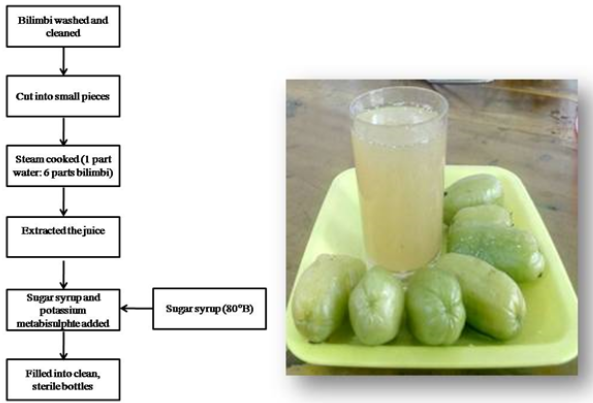
Fresh ripe bilimbi (Averrhoa bilimi L.) of length 5.4±2cm and weighing 15.69±2.1g were cleaned and washed thoroughly. These were cut into small pieces and steam cooked (1 parts water: 6 parts bilimbi) for 15min and juice was extracted manually using Stainless Steel juice extractor. Sugar syrup (80°Brix) was prepared separately and added to the fruit juice in lukewarm condition such that the final total soluble solids concentration was adjusted to 65°Brix. Potassium metabisulphite (70ppm SO2) was added to it and the juice was immediately placed in sterilized polypropylene bottles and pasteurized at 77°C for 1minute, cooled and stored at room temperature (Figure 1), until further analysis. The core temperature and pasteurization temperature was monitored using Ellab instrument and F value was estimated.

Figure 1: Flow Chart Showing the Protocol for The Preparation of Bilimbi Syrup
Physio-Chemical Characterization
The physical and chemical parameters such as pH, acidity, TSS, moisture, ash, protein (KEL PLUS, M/s Pelican Equipments, Tamil Nadu, India) and crude lipid (SOCS PLUS SCS2 R, M/s Pelican Equipments, Tamil Nadu, India) were determined according to AOAC [13]. The total dietary fiber (TDF) was determined using FIBRA PLUS FES 02 E (M/s Pelican Equipments, Tamil Nadu, India). Total carbohydrate and the caloric value of the Syrup was calculated using the Atwater factor formula [14,15].
Total carbohydrate (g/100g) = 100 – (moisture+protein+lipid+ash)
Calorific value (kcal/g) = (5.65 x P + 9.45 x L + 4.20 x C) / 100
Data were collected on reducing sugar and total sugar using Lane and Eynon method [16] and non-reducing sugar was determined using Hortwitz [17].
The Vitamin C was estimated according to ALMahidi and AL-Qubury [18]. About, 10g sample was transferred into 100ml standard flask and homogenized with 50ml of acetic acid solution (10%); 4-5 drops of bromine water were added until the solution became colored. Then few drops of thiourea solution (10%) were added to remove excess bromine. To the clear solution, 2,4-Dinitrophenyl hydrazine solution was added and also with the oxidized ascorbic acid. The samples were made up to mark with acetic acid and absorbance was measured at 520nm using UV-Vis Spectrophotometer.
Evaluation of Mineral Contents by ICP-OES
The sample (1g) was digested (heating mantle ANTECH, AN-MSH 680, India) with 5ml concentrated HNO3 solution at 70°C until clear solution was obtained. 5ml of 30% (v/v) H2O2 solution were added and heating was continued until volume was reduced considerably. This was then made up to 25ml using deionized water. Blanks were prepared and subjected to ICP-OES analysis to evaluated mineral content [19]. The Optima 8000 ICP-OES Spectrometer (PerkinElmer, India) set with RF power of 1500 watts, plasma gas flow rate of 8L/min, shear gas flow rate of 25 L/min and a nebulizer gas flow rate of 0.7L/min, was used. Prepared sample solutions were injected into the plasma using auto sampler. Analytical line of Na 589.021nm, K 766.490nm, Mg 279.081nm, Ca 315.889nm, Fe 259.942nm, Cu 324.756nm and Zn 213.861nm, were selected for the measurement of different minerals.
Color Analysis
The CIE Lab coordinate of bilimbi syrup were determined using Color Flex EZ (Hunterlab, USA) reporting luminosity (L*), redness (a*) and yellowness (b*). Three measurements were done after pouring the sample into the sample holder and mean values were reported.
Sensory Evaluation
The sensory evaluation of bilimbi syrup was carried out in 3 different dilutions of the syrup to determine the best acceptable serving dilution by a panel of 10 members, using a ten-point Hedonic Scale (1 and 10, representing extreme dislike and extreme like, respectively). Coded samples of the same size were served to participants in identical containers. The syrup was diluted to concentrations, 15ºBrix, 17ºBrix and 21ºBrix using 21%, 24% and 29% bilimbi syrup respectively.
Animal Experiment
Rats (body weight 200-250 g) from the breeding colony of Animal house, ICAR-Central Institute of Fisheries Technology, Cochin, Kerala, India, were grouped into three different groups, six in each group. The rats were provided with food (standard diet) and water ad libitum. They were acclimatized for five days at room temperature (22-25˚C) with 12h light/dark cycles prior to the experiment. The experimental rats were maintained and treated as per the guidelines on the regulation of scientific experiments on animals of Committee for the Purpose of Control and Supervision of Experiments on Animals (CPCSEA), Govt. of India. The duration of the experiment was 21 days. The experimental rats were fed with bilimbi juice 3.5 mL/kg body wt/day along with drinking water. Normal control animals were fed with standard diet (M/s Sai Foods, Bangalore, India; the diet contained carbohydrate 56.2 %, crude protein 22 %, ash 7.5 %, total fat 4.2 %, crude fibre 3 %, glucose 2.5 %, vitamin 1.8 %, sand silica 1.4 %, calcium 0.8 %, phosphorus 0.6 % and provide metabolizable energy of 3600 Kcal). The rats were fasted overnight and sacrificed by pentabarbitone anesthesia, i/p administration 0.02 g/kg body weight [20].
Histopathology Analysis
Heart, liver and kidney samples were collected and a portion of the tissues were stored in 10% buffered formalin for histopathology analysis. Thin sections of paraffin embedded tissues were stained using Haematoxylin and Eosin Stain (HandE). The sections were then observed under light microscope.
Storage Studies
The pasteurized bilimbi syrup was stored at room temperature (25 to 28ºC) and samples were drawn at regular intervals of 30 days for determining the changes that occurred in the product with respect to pH, titratable acidity, vitamin C, sugar content and color. Sensory evaluation of the best acceptable dilution was also carried out to determine the changes in acceptability of the product during storage.
Statistics
All results are expressed given as means and standard deviation. Analysis of variance was conducted using one-way ANOVA with significance defined at p <0.05.
Heat Penetration Characteristics
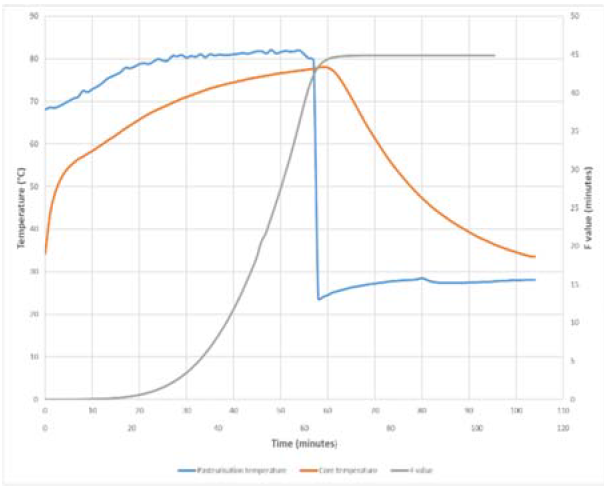
The bilimbi syrup packed in PP bottles were pasteurized at 77ºC for 1 minute. The heat penetration characteristics of the pasteurization with respect to F value is given in Figure 2. An F value of 44.85minutes was attained by the product. Cooling was carried out until the core temperature of the product reached 28ºC.

Figure 2: Heat Penetration Characteristics of Bilimbi Syrup with Respect to F Value
Physiochemical Characteristics
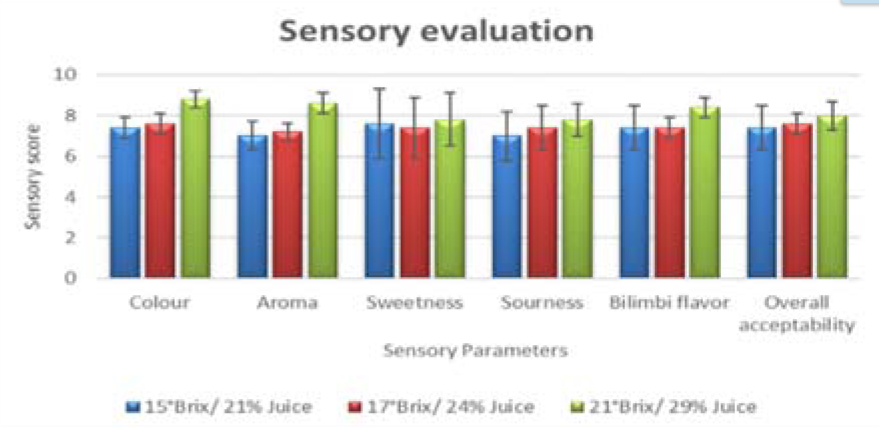
The different physiochemical characteristics of bilimbi syrup and that of raw bilimbi is given in Table 1. Variations in each parameter was observed when compared to the raw fruit which can be due to the processing conditions. pH of the fruit shows that it is acidic in nature and the addition of sugar syrup has not much altered the acidic nature. This shows that pasteurization is sufficient for the preservation of the the product [11]. Oxalic acid is reported to be the main acid in bilimbi. The quantity varies with season of harvest and degree of maturity of the fruit. A decrease in the percentage of oxalic acid was observed when converted to syrup which can be due to the addition of concentrated sugar syrup [21]. The degradation of ascorbic acid during pasteurization might have led to the decrease in ascorbic acid content of the syrup when compared with that of the fruit [22]. The sensory scores obtained for the different dilutions of the syrup is given in Figure 3. It shows that the dilution 21ºBrix having 29% Syrup was most acceptable for the sensory panel with respect to the parameters like colour, aroma, sweetness, sourness, bilimbi flavor. Thus this composition with the highest overall acceptability was chosen for dilution to ready to serve form.
Table 1: Physiochemical Parameters of Raw Bilimbi Fruit and Bilimbi Syrup * [5]
| Variables | Raw Bilimbi | Bilimbi syrup (65ºBrix) |
| Physical parameters | ||
| pH | 2.16±0.1* | 3.0±0.0 |
| Titratable acidity (% of oxalic acid) | 8.5±0.05 | 2.5±0.0 |
| Total soluble solids (°Brix) | 5 | 68 |
| Chemical parameters | ||
| Moisture (g/100g) | 94.8±0.4* | 27.9±1.1 |
| Ash (g/100g) | 0.3±0.02* | 0.1±0.01 |
| Fat (g/100g) | 0.3±0.1* | 0.4±0.1 |
| Protein (g/100g) | 0.9±0.1* | 0.7±0.1 |
| Carbohydrate (g/100g) | 9.8±0.1* | 70.9±0.1 |
| Fiber (g/100g) | 3.5±0.3* | 3.8±0.2 |
| Reducing sugar (g/100g) | - | 49.58±0.0 |
| Non-reducing sugar(g/100g) | - | 9.52±0.0 |
| Total sugar (g/100g) | - | 59.59±0.0 |
| Ascorbic acid (mg/100g) | 52.13 | 44.61 |
| Minerals (mg/100g) | ||
| Potassium | 10.8 | 3.6 |
| Magnesium | 1.3 | 0.3 |
| Calcium | 0.4 | 0.7 |
| Copper | 0.02 | 2.6 |
| Iron | 0.2 | 0.1 |
| Calories (kcal/100g) | 135.0 | 302.2 |
| Color analysis | ||
| L* | 71.42±2.12 | 49.19±0.18 |
| a* | -6.8±0.51 | -3.64±0.03 |
| b* | 47.06±1.98 | 33.46±0.36 |

Figure 3: Sensory Score Assigned for Different Dilutions of Bilimbi Syrup
Histopathological Studies
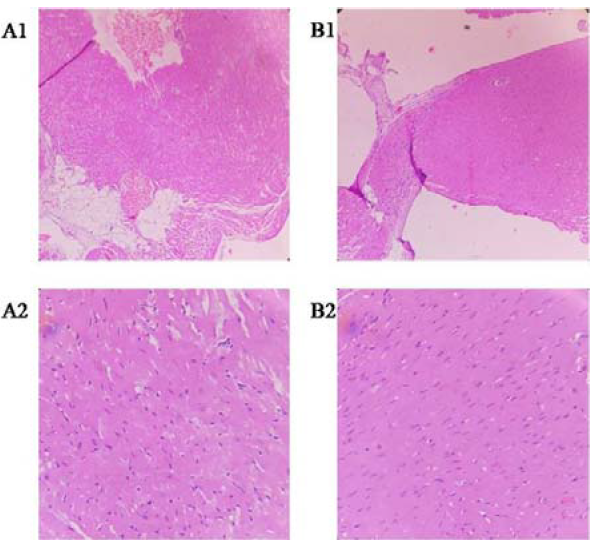
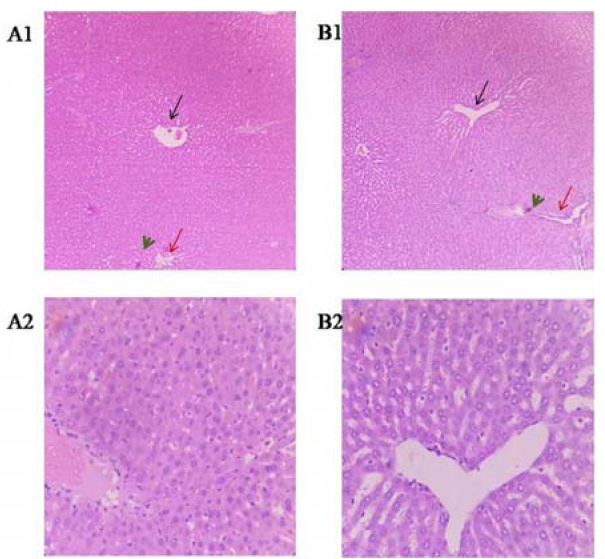
Histological changes in cardiac, renal and hepatic tissues of experimental rats were observed by two blinded pathologists. The microscopic observations of the HandE stained tissue sections under low and high magnification were demonstrated in Figure 4.

Figure 4: A Microscopic Observation of Heart Tissues at Different Magnifications [10X (A1 and B1) and 40X (A2 and B2)] (HandE Staining). (A) Normal Control and (B) Treated Group
Figure 4 represents the cross sections of heart tissue of experimental rats showed normal morphology with centrally located nuclei. No hyperplasia or hypertrophy was appreciated in both normal control and bilimbi juice fed rats. The cross sectional images of the rat kidney demonstrated normal renal parenchyma composed of cortex and medulla in both normal control and bilimbi juice treated animals (Figure 5).

Figure 5: Microscopic Observation Of Rat Liver At Different Magnifications [10X (A1 and B1) and 40X (A2 and B2)] (HandE Staining). (A) Normal Control and (B) Treated Group. Display Central Vein (black arrow), Portal Tract (Red Arrow) And Portal Tract (Green Arrow)
Cortex encompasses mature glomeruli and surrounding tubules of both proximal convoluted type and distal convoluted type. The cells of the tubules illustrate normal morphology of cells. Medulla consists of collecting tubules and ducts extending into renal pelvis. Interstitium of kidney is not expanded and vessels demonstrate normal morphology. Images of the rat liver cross sections exhibited normal liver parenchyma composed of central vein with hepatocytes radiating outwards from the central veins to the portal tract as seen in Figure 4 C. The portal tract shows hepatic artery, portal venule and bile ductules along with sparse inflammatory infiltrate composed predominantly of lymphocytes along with plasma cells.
The toxicity study was designed in order to investigate the toxicological effects of bilimbi juice for continuous intake as a dietary component. The results of the analysis reveal that the continuous ingestion of diluted crude bilimbi extract [2% (v/v) in drinking water] in a dose dependent manner (3.5 mlL/Kg body weight) exerts no toxicity towards vital organs (heart, liver and kidney). The experimental observations can be correlated with that of the previous reports [23].
Storage Studies
Table 2 depicts the chemical changes in the product during storage. The changes were monitored in order to determine the shelf stability of the product when stored at ambient conditions. The trends in changes observed for various parameters.
Table 2: Chemical Changes in Bilimbi Syrup During Storage
| Period of storage (Months) | pH | Titratable acidity (% of Oxalic acid) | Sugar (g/100g) | Ascorbic acid content (mg/100g) | ||
| Reducing sugar | Non reducing sugar | Total sugar | ||||
| 0 | 3.23 | 2.54 ± 0.03 | 49.58 ± 0.03 | 9.51 ± 0.05 | 59.59 ± 0.03 | 44.61 ± 0.08 |
| 1 | 3.29 a | 2.15 ± 0.04 a | 49.75 ± 0.27 | 10.08 ± 0.53 a | 60.36 ± 0 a | 44.08 ± 0.12a |
| 2 | 3.37 a | 2.02 ± 0.01 a | 51.42 ± 0.42 a | 8.66 ± 0.23 a | 60.54 ± 0.03 a | 42.47 ± 0.27 a |
| 3 | 3.39 a | 1.93 ± 0.05 a | 53.23 ± 1.06 a | 7.8 ± 0.01 a | 61.44 ± 0 a | 41.5 ± 0.16 a |
| 4 | 3.39 a | 1.71 ± 0.03 a | 54.31 ± 0.14 a | 7.16 ± 0.13 a | 61.85 ± 0 a | 40 ± 0.16 a |
| 5 | 3.4 a | 1.53 ± 0.05 a | 55.54 ± 0.42 a | 6.76 ± 0.01 a | 62.66 ± 0.41 a | 38.39 ± 0.08 a |
| 6 | 3.42 a | 1.43 ± 0.03 a | 62.05 ± 0.35 a | 6.8 ± 0.62 a | 63.49 ± 0.3 a | 38.03 ± 0.2 a |
| 7 | 3.65 a | 1.26 ± 0.01 a | 57.66 ± 0.36 a | 6.23 ± 0.45 a | 64.22 ± 0.11 a | 37.44 ± 0 a |
| 8 | 3.67 a | 1.18 ± 0.03 a | 58.47 ± 0.17 a | 5.74 ± 0.15 a | 64.5 ± 0.02 a | 36.58 ± 0.2 a |
| 9 | 3.69 a | 1.16 ± 0.01 a | 60.33 ± 0.12 a | 4.16 ± 0.19 a | 64.7 ± 0.08 a | 35.56 ± 0.08 a |
| 10 | 3.75 a | 1.07 ± 0.03 a | 62.05 ± 1.06 a | 2.87 ± 1 a | 65.07 ± 0 a | 34.25 ± 0.04 a |
pH
A significant increase(p<0.05) in the pH values was observed from the 1st month of storage at room temperature. Acid hydrolysis of polysaccharides into monosaccharides and disaccharides can be attributed to be the possible reason for decrease in acidity and thereby increase in Ph [24]. Increase in pH is a result of the decrease in fruit juice acidity during storage [25]. The results are also in accordance with that reported by Alaka et al. [26]. Previous reports also justify the effect of added preservatives and storage conditions on acidity of juice. The synergestic effect of pasteurization, acidification and sodium benzoate treatment on the increase in pH of soursop juice is reported [27].
Titratable Acidity
A decrease in titratable acidity was observed for bilimbi syrup during storage which was significant (p<0.05) from the first month onwards. The results were similar to that reported in the case of Pomegranate squash [28], Jamun syrup [29] and Mulberry Syrup [30]. Copolymerization of organic acids with sugars and amino acids is reported as the possible reason for decrease in titratable acidity during storage [31].
Sugars
Total sugar and reducing sugar in the product showed an increase during storage. The increase in the quantity of total sugar was significant at p<0.05 from the first month of storage. In the case of reducing sugar significant increase at p<0.05 was observed from the second month. Non reducing sugars showed a significant (p<0.05) increase in the first month and started decreasing significantly (p<0.05) from the second month onwards. The increase in total and reducing sugars can be caused by the hydrolysis of starch into sugars or conversion of complex polysaccharides like pectin, cellulose and starch into simple sugars. The increase in reducing sugar and decrease in non-reducing sugar can be justified by the conversion of non-reducing sugars and acids into reducing sugar. Singh and Mathur, Kannan and Thirumaran, Ahmed et al. [32-34], reported an increase in reducing sugar of citrus juice during storage which was caused by the acid hydrolysis of sucrose to glucose and fructose [35,36]. The decline in non-reducing sugars during storage of fruit drinks was also reported by Sandi et al. [37]. Results similar to the observations of this study was reported in the case of cashew apple juice [32], Pomegranate squash [28], Watermelon juice ([38] and Mulberry syrup [30].
Ascorbic Acid
Ascorbic acid is heat sensitive in nature and the degradation is more pronounced in ambient conditions. [30]. The Ascorbic acid content in bilimbi syrup underwent degradation which was significant (p<0.05) from the first month of storage at room temperature. Ascorbic acid is reported to undergo degradation into dehydroascorbic acid or furfural during storage. The degradation of ascorbic acid follows first order kinetics due to which storage time also has a profound effect on the decrease in vitamin C during storage [39]. The results are in accordance with that reported in the case of wild pomegranate syrup with arils [40], Mulberry syrup [28] and Jamun syrup [4].
Colour
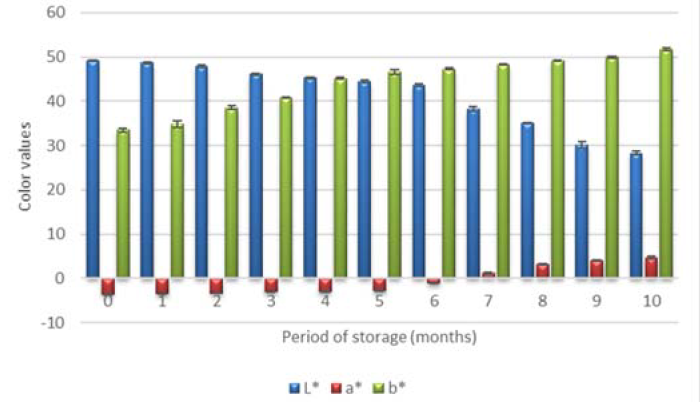
Figure 6 represents the changes in color values of the product during storage. According to Hunter and Harold [41], L* value in the range of 0-50 indicates dark and the range 51-100 indicates a light product. a* value represents red intensity when it is positive and green intensity when it is negative. b* value represents yellow intensity when it is positive and blue intensity when it is negative. During storage the L* value of the product showed significant decrease at p<0.05 from the first month of storage. The product had an initial L* value 49.19±0.18 which shows that it was not too dark. But with increase in storage time the product developed a darker color with the L* value decreasing up to 28.25±0.39. a* value which was initially negative represented the greenness of the syrup but a gradual increase was observed with increase in storage time towards the positive side indicating the development of redness. The increase was significant at p<0.05 from the first month of storage. b* values also increased significantly during storage indicating the yellowness of the product. The results are in conformity with the reports by Sandi et al. [37], in their studies on pasteurized passion fruit juice. Maillard reaction which is a non-enzymatic chemical reaction between amino acids and reducing sugars, copolymerization of organic acids and caramelization i.e. pyrolysis of sugar are causes that leads to browning of juices during storage. Formation of hydroxymethyl furfural, which is a product of these reactions, increases with increase in storage time and temperature [42,43]. Oxidation of ascorbic acid and precipitation of pigments also contribute to the decrease in luminosity of products. [44]. The increase in darkness of the product also contributes to increase in red intensity and yellow intensity of the product [45,46].

Figure 6: Changes in Color Values of Bilimbi Syrup During Storage
Sensory Evaluation
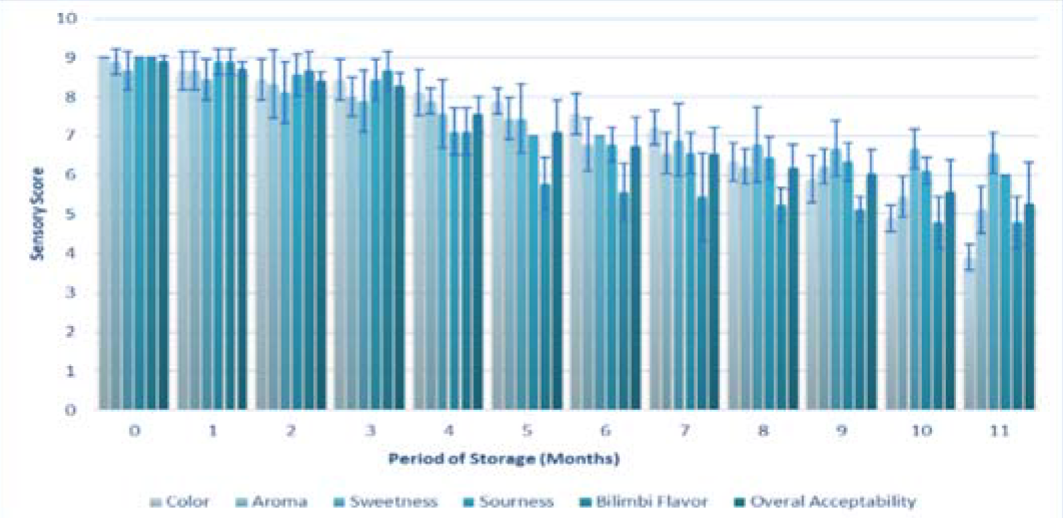
The sensory scores assigned by the sensory panel for bilimbi syrup during storage is given in Figure 7. All the sensory parameters showed a decreasing trend that was significant at p<0.05 from the second, third, third, second, fourth and second month of storage in the case of color, aroma, sweetness, sourness, bilimbi flavor and overall acceptability respectively. The color scores showed a rapid decline and decreased up to 3.89±0.33 on the eleventh month, which is below the acceptable limit. This might be due to browning that occurred in the product as a result of various chemical reactions [30]. Interactions between phenols and proteins and cation complex formation with phenols can lead to precipitation of the product during storage. A loss in the sugar acid blend also occurs that will affect the taste of the product. The aromatic compounds undergo degradation which will affect the aroma of the product [47]. Flavor obtained highest score in fresh conditions. The decrease in flavor scores can be due to changes in the volatile compounds [48]. Similar results were reported by Khurdiya and Roy [4] in jamun syrup and Thakur et al. [40], in wild pomegranate syrup. The loss in color was reported by Muhammed et al. [49], in beverage samples. Flavor loss was reported by Bezmann [50].

Figure 7: Changes in Sensory Acceptability of Bilimbi Syrup During Storage
Pasteurized bilimbi syrup packed in polypropylene bottles was developed as a value added product from Averrhoa bilimbi. The changes in physiochemical parameters were monitored during storage at ambient conditions (25 to 28ºC) and showed a shelf life of ten months. Histopathological studies on experimental rats revealed that the product do not pose any health threats to human body. 29% of bilimbi syrup diluted using potable water to a concentration of 21ºBX was accepted by the sensory panel as the best dilution suitable for consumption. The product is a good source of ascorbic acid and minerals. Bilimbi is a highly underutilized fruit without any market value. The development of this value added product can cause a change to this scenario.
Acknowledgment
The authors are thankful to Kerala University of Fisheries and Ocean Studies for the financial support provided to carry out the work. We acknowledge the whole hearted support and guidance given by The Vice Chancellor and The Director of Research, Kerala University of Fisheries and Ocean Studies.
Morton, J.F. Fruits of Warm Climates. J.F. Morton, 1987.
Orwa, C. et al. Agroforestree Database: A Tree Reference and Selection Guide. Version 4, 2009.
Vera, L. et al. “Physicochemical characteristics of bilimbi (Averrhoa bilimbi L.).” Journal Brasileiro de Fruticultura, vol. 23, no. 2, 2001, pp. 421–423.
Roy, A. et al. “Averrhoa bilimbi Linn – Nature’s drug store: A pharmacological review.” International Journal of Drug Development and Research, vol. 3, 2011, pp. 101–106.
Bhaskar, B. and M. Shantaram. “Morphological and biochemical characteristics of averrhoa fruits.” International Journal of Pharmaceutical, Chemical and Biological Sciences, vol. 3, no. 3, 2013, pp. 924–928.
Dangat, B.T. et al. “Mineral analysis of Averrhoa bilimbi L.: A potential fruit.” Asian Journal of Pharmaceutical and Clinical Research, vol. 7, no. 3, 2014, pp. 150–151.
Goh, S. et al. Malaysian Medicinal Plants for the Treatment of Cardiovascular Diseases. Pelanduk Publications, 1995, pp. 62–63.
Ahmad, M. et al. “Technological studies on citrus and other fruit-based drinks.” Nucleus (Pakistan), 1986.
Gatchalian, M.M. and S.Y. De Leon. Introduction to Food Technology. Merriam and Webster Bookstore, 1992.
Kayshar, M.S. et al. “Formulation, preparation and storage potentiality study of mixed squashes from papaya, banana and carrot in Bangladesh.” Journal of Agriculture and Veterinary Science, vol. 7, no. 2, 2014, pp. 47–51.
Raybaudi-Massilia, R.M. et al. “Control of pathogenic and spoilage microorganisms in fresh-cut fruits and fruit juices by traditional and alternative natural antimicrobials.” Comprehensive Reviews in Food Science and Food Safety, vol. 8, no. 3, 2009, pp. 157–180.
Mosqueda-Melgar et al. “Non-thermal pasteurization of fruit juices by combining high-intensity pulsed electric fields with natural antimicrobials.” Innovative Food Science and Emerging Technologies, vol. 9, no. 3, 2008, pp. 328–340.
AOAC. Official Methods of Analysis. 18th ed., Association of Official Analytical Chemists International, Maryland, 2005.
Dare, P.J. and D.B. Edwards. “Seasonal changes in flesh weight and biochemical composition of mussels (Mytilus edulis L.) in the Conwy Estuary, North Wales.” Journal of Experimental Marine Biology and Ecology, vol. 18, no. 2, 1975, pp. 89–97.
Atwater, W. and A.P. Bryant. “Report (Storrs) agricultural experiment station.” 1899–1900.
“Lane and eynon method.” “Determination of Reducing sugars by means of fehling’s solution with methylene blue as internal indicator.” Journal of the Society of Chemical Industry, vol. 42, 1923, pp. 32T–37T.
Hortwitz, W. Official Methods of Analysis. 8th ed., Association of Official Agricultural Chemists, Washington D.C., 1960.
Al Majidi et al. “Determination of vitamin c (Ascorbic Acid) contents in various fruit and vegetable by UV-spectrophotometry and titration methods.” Journal of Chemical and Pharmaceutical Sciences, vol. 9, no. 4, 2016, pp. 2972–2974.
Welna, M. et al. “A comparison of sample preparation strategies in the multi-elemental analysis of tea by spectrometric methods.” Food Research International, vol. 53, no. 2, 2013, pp. 922–930.
Ganesan, B. et al. “Supplementation of betaine attenuates hcl-ethanol induced gastric ulcer in rats.” International Journal of Biological Chemistry, vol. 4, no. 2, 2010, pp. 79–89.
Joseph, J. and G. Mendonca. “Oxalic acid levels in Averrhoa carambola L. and Averrhoa bilimbi L.” Proceedings of the Interamerican Society for Tropical Horticulture, vol. 33, 1989.
Mosqueda-Melgar, J., Raybaudi-Massilia, R.M. and O. Martin-Belloso. “Microbiological shelf life and sensory evaluation of fruit juices treated by high intensity electric fields and antimicrobials.” Food and Bioproducts Processing, vol. 90, no. 2, 2012, pp. 205–214.
Othman, F.A. et al. “Toxicity evaluation of A. bilimbi L. Fruit Extract on Haematological and histopathological analysis in animal model.” International Journal of Pharmaceutical Sciences Review and Research, vol. 8, 2014, pp. 39–43.
Dhaka, A. et al. “Use of additives to reduce browning, microbial load and quality loss of kinnow juice under ambient storage.” Indian Journal of Science and Technology, vol. 9, no. 14, 2016.
Rehman, M.A. et al. “Study on the storage stability of fruit juice concentrates.” Pakistan Journal of Food Sciences, vol. 24, no. 1, 2014, pp. 101–107.
Alaka, O.O. et al. “Effect of storage conditions on the chemical attributes of ogbomoso mango juice.” European Food Research and Technology, vol. 218, no. 1, 2003, pp. 79–82.
Nwachukwu, E. and C.G. Ezeigbo. “Changes in the microbial population of pasteurized soursop juice treated with benzoate and lime during storage.” African Journal of Microbiology Research, vol. 7, no. 31, 2013, pp. 3992–3995.
Thakur, N.S. et al. “Studies on preparation and preservation of squash from wild pomegranate (Punica granatum L.) fruits and its quality evaluation during storage.” International Journal of Bio-resource and Stress Management, vol. 9, no. 1, 2018, pp. 7–12.
Khurdiya, D.S. and S.K. Roy. “Anthocyanin, a quality index in jamun beverages.” Indian Food Packer, vol. 38, no. 6, 1984, pp. 71–76.
Thakur, N.S. et al. “Development of syrup from mulberry (Morus Alba L.) and its quality evaluation under ambient and refrigerated storage conditions.” International Journal of Bio-resource and Stress Management, vol. 8, no. 1, 2017.
Selvamuthukumaran, M. and F. Khanum. “Development of spiced seabuckthorn [Elaeagnus rhamnoides (L.) A. Nelson syn. Hippophae rhamnoides L.] Mixed Fruit Squash.” 2014.
Singh, K.K. and P.B. Mathur. “Studies in the cold storage of cashew apples.” Indian Journal of Horticulture, vol. 10, no. 3, 1953, pp. 115–121.
Kannan, S. and A.S. Thirumaran. “Studies on storage behaviour of jamun products.” Beverage and Food World, vol. 29, no. 3, 2002, pp. 32–33.
Ahmed, M. et al. “Studies on preparation of ready to serve mandarin (Citrus Reticulata) diet drink.” Pakistan Journal of Agricultural Sciences, vol. 45, no. 4, 2008, pp. 470–476.
Babsky, N.E. et al. “Influence of storage on the composition of clarified apple juice concentrate.” Journal of Food Science, vol. 51, no. 3, 1986, pp. 564–567.
Pruthi, J.S. et al. “Studies on the utilisation of kinnow and malta oranges.” Journal of Food Science and Technology, vol. 21, no. 3, 1984, pp. 123–127.
Sandi, D. et al. “Hunter color dimensions, sugar content and volatile compounds in pasteurized yellow passion fruit juice (Passiflora edulis var. flavicarpa) during storage.” Brazilian Archives of Biology and Technology, vol. 47, no. 2, 2004, pp. 233–245.
Alam, M.K. et al. “Evaluation of watermelon (Citrullus lanatus) juice preserved with chemical preservatives at refrigeration temperature.” Journal of Scientific Research, vol. 5, no. 2, 2013, pp. 407–414.
Heldman, D.R. and R.P. Singh. “Food dehydration.” Food Process Engineering, Springer, Dordrecht, 1981, pp. 261–331.
Thakur, N.S. et al. “Development of wild pomegranate aril-in-syrup and its quality evaluation during storage.” International Journal of Food and Fermentation Technology, vol. 3, no. 1, 2013, pp. 33–38.
Hunter, R.S. and R.W. Harold. The Measurement of Appearance. John Wiley and Sons, 1987.
Arribas-Lorenzo, G. and F.J. Morales. “Estimation of dietary intake of 5-hydroxymethylfurfural and related substances from coffee to spanish population.” Food and Chemical Toxicology, vol. 48, no. 2, 2010, pp. 644–649. https://doi.org/10.1016/j.fct.2009.11.014
Serra-Cayuela, A. et al. Kinetics of Browning, Phenolics and 5-Hydroxymethylfurfural in Commercial Sparkling Wines. Journal of Agricultural and Food Chemistry, vol. 62, no. 5, 2014, pp. 1159–1166. https://doi.org/10.1021/jf404829s
Sistrunk, W.A. and J.N. Cash. “Processing factors affecting quality and storage stability of concord grape juice.” Journal of Food Science, vol. 39, no. 6, 1974, pp. 1120–1123. https://doi.org/10.1111/j.1365-2621.1974.tb07312.x
Fang, T. et al. “Effects of heat treatment and subsequent storage on the quality of passion fruit (Passiflora Edulis) juice.” Symposium of International Federation of Fruit Juice Producers: Proceedings, Den Haag, [sn], 1986, pp. 105–123.
Chen, B.H. et al. “Changes of carotenoids, color and vitamin a contents during processing of carrot juice.” Journal of Agricultural and Food Chemistry, vol. 43, no. 7, 1995, pp. 1912–1918. https://doi.org/10.1021/jf00055a019
Thakur, K.S. and V.S. Barwal. “Studies on preparation and evaluation of squash from unmarketable kiwi fruit.” Indian Food Packer, vol. 52, 1998, pp. 26–29.
Marcy, J.E. et al. Factors Affecting Storage of Orange Concentrate. Journal of Food Science, vol. 49, no. 6, 1984, pp. 1628–1629. https://doi.org/10.1111/j.1365-2621.1984.tb13209.x
Mohammad, R. et al. Ascorbic Acid and Quality Retention in Orange Squash as Related to Exposure to Light and Container Type. Pakistan Journal of Scientific and Industrial Research, 1987.
Bezman, Y. et al. “2-Methyl-3-Furanthiol and Methional are possible off-flavors in stored orange juice: Aroma-similarity, NIF/SNIf GC−O and GC analyses.” Journal of Agricultural and Food Chemistry, vol. 49, no. 11, 2001, pp. 5425–5432. https://doi.org/10.1021/jf010586i