Evolution of blood parameters related to nutrition in women during pregnancy from Yopougon (Abidjan)
Mathieu Nahounou Bleyere
1
,
Rosine Affoué Kouame
2
,
Jean Paul Aristide Amani
2
,
Paul Angoué Yapo
2
1
Senior Lecturer, Animal Physiology and Physiology of Nutrition, Training and Research Unit of Nature Sciences/Laboratory of Physiology, Pharmacology and Phytotherapy, Nangui Abrogoua University, Côte d’Ivoire
2
Laboratory of Physiology, Pharmacology and Phytotherapy, Nangui Abrogoua University, Côte d’Ivoire
Our investigation is a cross-sectional study carried out to measure and evaluate certain biological markers linked to nutrition in women during pregnancy in Yopougon (Abidjan, Côte d'Ivoire), particularly during the different trimesters of pregnancy. This study involved 150 pregnant women, with 50 women per trimester of pregnancy, compared to 50 control (non-pregnant) women between 18 and 35 years old. The results indicated at the haematological level, a drop in all erythrocyte parameters with increasingly high prevalence of anemia depending on the different trimesters of pregnancy (36; 62; 72%). Three types of anemia have been recorded. Normocytic normochromic anemia (ANN) presented much higher proportions during trimesters (16; 22 and 46%) followed by microcytic hypochromic anemia: AHm (10; 22; and 14%) and finally anemia normocytic hypochromic (AHN) with 10; 18 and 10% respectively in the first, second and third trimester. Leukocyte parameters showed hyperleukocytosis (12%) particularly in the second trimester of pregnancy. At biochemical level, lipid parameters revealed hyperlipidemia characterized by an increase in all parameters and particularly an increasing hypertriglyceridemia during pregnancy (24; 58 and 78%). Renal (creatine) and hepatic (total protein, transaminase) parameters were significantly reduced. In terms of minerals, the results reported hypercalcemia (40; 36; 38), decreasing hyponatremia during pregnancy (66; 52; 44%) and greater hypochloremia in the first and second trimesters (70; 76; 52%). In addition, the pregnant women in our study did not present a risk of developing gestational diabetes and cardiovascular disease in terms of their blood sugar levels and atherogenicity indices 1 and 2, for the most part showing normal values.
Keywords
Pregnancy
Anemia
Biochemical Blood Parameters
Nutrition
Yopougon (Côte d’Ivoire)
INTRODUCTION
Pregnancy, also called human gestation, is the condition of a pregnant woman, that is, carrying one or more embryos implanted in the uterus which develop into a human fetus. It follows fertilization, which is the union of the chromosomes of an egg and a sperm [1]. Pregnancy is accompanied by important physiological changes in the maternal organism aimed at developing the growth of the fetus, adapting the mother to pregnancy and preparing her for childbirth [2]. These various modifications strongly influence the blood parameters of the mother which can impact the development of the fetus. Indeed, the evolution of the fetus requires a blood system which establishes exchanges between the maternal circulation and the fetal circulation through the umbilical cord, connecting the ventral surface of the embryo to the placenta and containing a vein and two arteries [3].
During the period of pregnancy, the demand for energy, maternal and fetal food is increased. maternal nutrition and health are also known to impact fetal well-being and predict infant health [4]. Indeed, for well-nourished women, only little additional energy is required, as the body adapts to the increased energy needs [5,6]. On the other hand, the demand for energy is much greater in undernourished women and exposes the newborn to low birthweight followed by stunted growth, causing poor health of the child [7]. It is therefore important to detect any nutritional and physiological dysfunctions earlier, in order to provide the necessary care for good maternal and child health.
To do this, it is possible to evaluate substances called biomarkers considered to be bioindicators present in tissues and fluids. They are biological specimens, objectively measured and evaluated as indicators of normal biological processes, pathogenic processes, markers of exposure to a substance and its metabolism, which can also reflect the characteristics of the host [8,9].
Studies on maternal nutritional status are rare and cannot be transposed from one country to another. In Côte d'Ivoire, the work carried out on the nutritional status of pregnant women has generally focused on iron status [10,11]. Data on nutritional and physiological biomarkers are scarce. This is why the objective of the present study is to measure and evaluate some blood parameters related to the nutrition of a population of pregnant women in Yopougon (Abidjan, Ivory Coast), particularly during the different trimesters of pregnancy.
MATERIALS AND METHODS
Type, Setting and Study Population
This is a cross-sectional study, which took place from August 21 to November 10, 2017 at the General Hospital of Yopougon Attié, located in the commune of yopougon (Abidjan, Ivory Coast). The study population consisted of 150 pregnant women at a rate of 50 women per trimester of pregnancy and 50 non-pregnant women as controls, all aged 18 to 35 years. All the women surveyed who presented with chronic diseases (high blood pressure, diabetes, etc.), abnormal hemoglobin pathologies and those who were recently transfused were not included in the study population. The socio-demographic characteristics of pregnant women in the study population are reported in Table 1.
Blood Samples
In each of the recruited subjects, a blood sample was taken by venipuncture at the crease of the elbow in the morning on an empty stomach. The blood collected in the dry tubes and gray tube (glucose preservative), after centrifugation, made it possible to obtain the serum which was used for the assays of the biochemical parameters using a semi-automatic spectrophotometer (Prietest Touch Robonik, India). That collected in the tubes with anticoagulant (EDTA) was used for the immediate determination of the haematological parameters using an automatic hematological analyzer (Rayto RT 7600S, Guangming, China).
Table 1: Sociodemographic Characteristics of the Selected Pregnant Women
Anthropometric and socio-demographic parameters
Pregnant women N = 150
Trimester 1
N = 50
M±SEM
n (%)
Trimester 2
N = 50
M± SEM
n (%)
Trimester 3
N = 50
M±SEM
n (%)
Age (Years)
25.9±0.8
27.1±0.8
25.9±0.8
BMI (Kg.m-2)
24.8±0.7
26.3±0.6
26.8±0.7
< 18.5
2 (4)
0 (0)
0 (0)
18.5 - 26
35 (70)
27 (54)
25 (50)
> 26
13 (26)
23 (46)
25 (50)
Gravidity
2.04±0.19
2.56±0.18
2.82±0.25
Primigest
24 (48)
14 (28)
14 (28)
Multigest
26 (52)
36 (72)
36 (72)
Parity
0.86±0.18
1.18±0.18
1.34±0.21
Nulliparous
28 (56)
20 (40)
18 (36)
Primiparous
11 (22)
12 (24)
13 (26)
Multiparous
11 (22)
18 (36)
19 (38)
Intergenesic space (Months)
26.4±5.32
32.1±4.62
33.4±5.76
< 36
33 (66)
28 (56)
30 (60)
≥ 36
17 (34)
22 (44)
20 (40)
Study level
No schooling
9 (18)
14 (28)
22 (44)
Primary
9 (18)
10 (20)
6 (12)
Secondary
17 (34)
17 (34)
16 (32)
Superior
15 (30)
9 (18)
6 (12)
Marital status
Brides
3 (6)
2 (4)
9 (18)
Concubines
30 (60)
37 (74)
36 (72)
Singles
17 (34)
11 (22)
5 (10)
Profession
Traders
13 (26)
19 (38)
16 (32)
Housewives
7 (14)
9 (18)
15 (30)
Officials
5 (10)
4 (8)
2 (4)
Pupils
9 (18)
8 (16)
5 (10)
Other
16 (32)
10 (20)
12 (24)
Number of meals per day
2.02±0.11
3.08±0.1
3.14±0.08
< 3
9 (18)
8 (16)
4 (8)
≥ 3
41 (82)
42 (84)
46 (92)
Antianemic medication
Yes
29 (58)
37 (74)
40 (80)
No
(42)
13 26)
10 (20)
N: Total number of each group of subjects; n: Number observed for each variation of the parameters
Determination of Biological Parameters
Blood glucose, total protein, calcium, chlorine, sodium, total and direct bilirubin, total cholesterol, HDL cholesterol and triglycerides were determined by colorimetry with their respective reagents. LDL cholesterol was determined from the formula of Friedewald et al. [12], LDL cholesterol = Total cholesterol -HDL cholesterol - Triglyceride/5. As for the serum potassium concentration, it was determined by turbidimetry, and that of creatinine and transaminases by kinetic method.
Statistical Analysis
Statistical analysis of the determined data values and graphical representations (histograms of means) were performed using GraphPad prism software version 5.01 (San Diego, California, USA). Results were expressed as the mean associated with the standard error of the mean (ESM). The mean values were compared by Student's T test and the proportions by the proportion comparison test (G test or log Likehood ratio test) with R.2.0.1 Windows version software [13], these proportions being presented in three levels: low, normal and high compared to the reference values. The significance threshold used is p less than 0.05).
RESULTS
Changes of Haematological Parameters
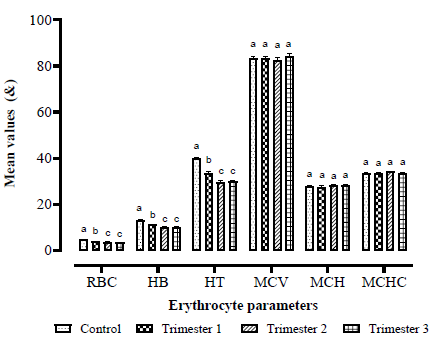
The mean values of the erythrocyte parameters determined during pregnancy are shown in Figure 1. The significant differences were recorded at the level of red blood cells, hemoglobin and hematocrit with mean values significantly lower in pregnant women by compared to that of witnesses. Further the comparison of these parameters during pregnancy revealed significantly higher values in the first trimester compared to the last two trimesters of pregnancy.
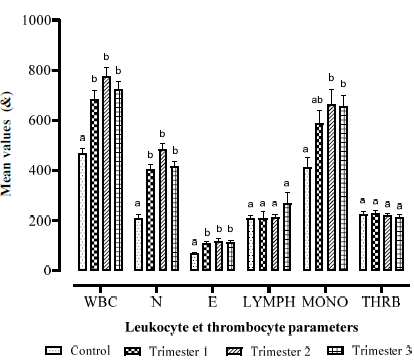
Figure 2 shows mean values of the leukocyte and thrombocyte parameters during pregnancy. Apart from lymphocytes, all other leukocyte parameters (white blood cells, monocytes, polynuclear neutrophils and eosinophils) had significantly elevated mean values during pregnancy compared to controls. As for thrombocyte parameters, there is no significant difference between the two groups (pregnant and non-pregnant).
Proportions of Haematological Parameters
Proportions of Erythrocyte Parameters: The results showing the proportions of hematological status and erythrocyte parameters during pregnancy in Yopougon are shown in Table 2. The results indicated a markedly degraded status in the entire study population. The proportions, however, did not show significant differences (p = 0.136) between pregnant women and controls. In addition, the alteration of hematological status in pregnant women was progressive, going from 76% to 92% and then 98% respectively in women in the first, second and third trimester. Likewise, the proportions of anemia (36, 62 and 72%) and hemodilution (40; 76 and 78%) significantly increased during pregnancy compared to the control (4% and 0%). In addition, the high proportions of hypochromia observed respectively in the first, second and third trimester (34; 54 and 38%), however, without significant difference with the controls (p = 0.07).
Figure 1: Evolution of Erythrocyte Parameters and: Each Parameter Is Expressed in its unit; RBC: Red Blood Cells (106/mm3); HB: Hemoglobin (g/dL); HT: Hematocrit (%); MCV: Mean Corpuscular Volume (fL); MCH: Mean Corpuscular Hemoglobin (pg); MCHC: Mean Corpuscular Hemoglobin Concentration (g/dL) a, b, c: Histograms of a Parameter Surmounted by the Same Letter Do Not Present any Significant Differences, on The Other Hand Those with Different Letters Are Significant
Figure 2: Variation of Leukocyte and Thrombocyte Parameters and: Each Parameter is Expressed in its Unit; WBC: White Blood cells (101cells/mm3); PN: Polynuclear Neutrophils (103/mm3); EP: Eosinophilic Polymorphonuclear cells (103/mm3); LYMPH: Lymphocytes (103/mm3); MONO: Monocytes (103/mm3); THRB: Thrombocytes (103/mm3) a and b: Histograms of a Parameter Surmounted by the Same Letter do not Present Any Significant Differences, on the Other Hand Those with Different Letters Are Significant
Table 2: Proportions of Haematologic Status During Pregnancy
Haematological parameters
Control
N = 25
T 1
N = 50
T 2
N = 50
T 3
N = 50
p
Haematological status
Normal
Abnormal
n (%)
7 (28)
18 (72)
n (%)
12 (24)
38 (76)
n (%)
4 (8)
46 (92)
n (%)
1 (2)
49 (98)
1.04.10-7
0.14
Hemoglobin (g/dL)
Low < 12/11/10.5
Normal 12/11/10.5 - 16
High > 16
1 (4)
24 (96)
0 (0)
18 (36)
32 (64)
0 (0)
31 (62)
19 (36)
0 (0)
36 (72)
14 (28)
0 (0)
< 2.2.10-16
8.18.10-11
-
Hematocrit (%)
Low < 33/32
Normal 33/32 - 47
High > 47
0 (0)
25 (100)
0 (0)
20 (40)
30 (60)
0 (0)
38 (76)
12 (24)
0 (0)
39 (78)
11 (22)
0 (0)
--
< 2.2.10-16
-
MCV (fL)
Low < 80
Normal 80 - 100
High > 100
5 (20)
20 (80)
0 (0)
10 (20)
40 (80)
0 (0)
15 (30)
35 (70)
0 (0)
11 (22)
38 (76)
1 (2)
0.42
0.83
--
MCH (pg)
Low < 27 or > 31
Normal 27 - 31
8 (32)
17 (68)
17 (34)
33 (66)
27 (54)
23 (46)
19 (38)
31 (62)
0.07
0.16
MCHC (g/dL)
Low < 32 or > 36
Normal 32 - 36
2 (8)
23 (92)
8 (16)
42 (84)
9 (18)
41 (82)
8 (16)
42 (84)
0.21
0.88
N: Total number of each group of subjects; n: Number observed for each variation of the parameters; T1: First trimester of pregnancy; T2: Second trimester of pregnancy; T3: Third trimester of pregnancy; MCV: Mean corpuscular volume; MCH: mean corpuscular hemoglobin; MCHC: Mean corpuscular hemoglobin concentration; -: No prevalence is observed; -: No comparison possible
Proportions of the Different Types of Anemia
The different types of anemia recorded in the study population are shown in Table 3. The results reported 50%, 48% and 54% of mild anemia respectively in women in the first, second and third trimester of pregnancy. the pregnancy. For moderate anemia, the results indicated 2%, 12% and 10%, respectively, depending on the trimester during the pregnancy. For severe anemia, women in the first trimester had a rate of 4% while those in the second and third trimester presented 2% and 8% respectively. In addition, three types of anemia were recorded: normochromic normocytic anemia (NNA), hypochromic normocytic anemia (HNA) and microcytic hypochromic anemia (HAm). These results indicated that NNA was the highest type of anemia by quarter (16%, 22% and 46%). Then followed HmA (10%, 22% and 14%) and HNA with respective rates of 10%, 18% and 10% in the first, second and third trimester.
Table 3: Different Types of Anemia During Pregnancy
Types of anemia
Control
N = 1
Trimesters of pregnancy
p
T 1
N = 18
T 2
N = 31
T 3
N = 36
Mild anemia (9 –12/11/10.5)
n (%)
1 (100)
n (%)
15 (50)
n (%)
24 (48)
n (%)
27 (54)
0.18
Moderate anemia (8 – 9)
0 (0)
1 (2)
6 (12)
5 (10)
0.01
Severe anemia (< 8)
0 (0)
2 (4)
1 (2)
4 (8)
0.12
NNA
NMA
NmA
HNA
HMA
HmA
1 (100)
0 (0)
0 (0)
0 (0)
0 (0)
0 (0)
8 (16)
0 (0)
0 (0)
5 (10)
0 (0)
5 (10)
11 (22)
0 (0)
0 (0)
9 (18)
0 (0)
11 (22)
23 (46)
0 (0)
1 (2)
5 (10)
0 (0)
7 (14)
8.1.10-5
-
--
0.138
-
0.06
N: Total number of each group of subjects; n: Number observed for each variation of the parameters; T1: First trimester of pregnancy; T2: Second trimester of pregnancy; T3: Third trimester of pregnancy; (Hb: Hemoglobin; NNA: Normochromic normocytic anemia; NMA: Normochromic macrocytic anemia; NmA: Normochromic microcytic anemia; HNA: Hypochromic normocytic anemia; HMA: Hypochromic macrocytic anemia; HmA: Hypochromic microcytic anemia; -: No prevalence is observed; -: No comparison possible
Proportions of Leukocyte and Thrombocyte Parameters
Table 4 shows the proportions of the different leukocyte and thrombocyte parameters of the study population. These results indicate, respectively, during the three trimesters of pregnancy the proportions of neutropenia (4; 0 and 2%), lymphopenia (28; 14 and 16%) and leukopenia (2; 2 and 0%) which decrease over time. and as the pregnancy progresses. These different proportions were significantly lower than those of the controls presenting respectively 40, 8 and 20% of neutropenia, lymphopenia and leukopenia. Moreover, the proportions of neutrophilia (0; 10 and 2%), monocytosis (8; 14 and 12%) and leukocytosis (4; 12 and 8%) have been reported. The rates of neutrophilia, monocytosis and leukocytosis during pregnancy were significantly elevated compared to controls who did not. In addition, the results showed that during each trimester, more than 70% of the women exhibited normal proportions of leukocyte and thrombocyte parameters.
Table 4: Proportions of Leukocyte and Thrombocyte Parameters During Pregnancy
Leukocyte and thrombocyte parameters
Control
N = 25
Trimesters of pregnancy
p
Trimester 1
N = 50
Trimester 2
N = 50
Trimester 3
N = 50
Neutrophil (103/mm3)
Low < 1700
Normal 1700 – 7000
High > 7000
n (%)
10 (40)
15 (60)
0 (0)
n (%)
2 (4)
48 (96)
0 (0)
n (%)
0 (0)
45 (90)
5 (10)
n (%)
1 (2)
48 (96)
1 (2)
0.0004
2.40.10-5
0.01
Eosinophil (103/mm3)
Low 0
Normal 0 – 500
High > 500
0 (0)
25 (100)
0 (0)
0 (0)
50 (100)
0 (0)
0 (0)
50 (100)
0 (0)
0 (0)
50 (100)
0 (0)
1
0.007
1
Lymphocyte (103/mm3)
Low < 1500
Normal 1500 – 4000
High > 4000
2 (8)
23 (92)
0 (0)
14 (28)
35 (70)
1 (2)
7 (14)
42 (84)
1 (2)
8 (16)
38 (76)
4 (8)
0.02
0.1
0.1
Monocyte (103/mm3)
Low < 100
Normal 100 – 1000
High > 1000
0 (0)
25 (100)
0 (0)
0 (0)
46 (92)
4 (8)
0 (0)
43 (86)
7 (14)
0 (0)
44 (88)
6 (12)
1
0.05
0.01
Leucocyte (103/mm3)
Low < 4000
Normal 4000 – 10000
High > 10000
5 (20)
20 (80)
0 (0)
1 (2)
47 (94)
2 (4)
1 (2)
43 (86)
6 (12)
0 (0)
46 (92)
4 (8)
0.04
0.002
0.03
Thrombocyte (103/mm3)
Low < 150
Normal 150 – 400
High > 400
1 (4)
24 (96)
0 (0)
3 (6)
47 (94)
0 (0)
5 (10)
45 (90)
0 (0)
7 (14)
42 (84)
1 (2)
0.1
0.03
0.4
N: Total number of each group of subjects; n: Number observed for each variation of the parameters
Evolution of Biochemical Blood Parameters
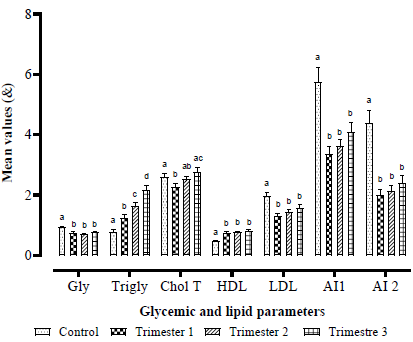
Carbohydrate and Lipid Parameters: Figure 3 shows the evolution of carbohydrate and lipid parameters during pregnancy in Yopougon. The results reported significant differences (p <0.05) between pregnant women and controls in the mean values of all carbohydrate and lipid parameters. The comparison of the average ranks revealed, on the one hand, a significant inferiority of blood sugar, total cholesterol, LDL cholesterol and atherogenic indices 1 and 2 during pregnancy compared to those of controls. On the other hand, this comparison of the average ranks showed a significant superiority of triglycerides, and HDL cholesterol during pregnancy compared to those of the controls. Moreover, the comparison of the parameters between the different trimesters showed a significant and progressive increase in triglycerides (1.25±0.108; 1.65±0.0912 and 2.18±0.122) and total cholesterol (2.27±0.1; 2.53±0.1; 2.77±0.13) from the first to the third trimester of pregnancy.
The results shown in Table 5 indicate the proportions of the carbohydrate and lipid parameters during pregnancy in Yopougon. Analysis of these results revealed significant proportions of hypertriglyceridemia (24%, 58% and 78%) during pregnancy (p<2.2.10-16) compared to controls (8%).
Table 5: Proportions of Glycemic and Lipid Parameters During Pregnancy
Glycemic and lipid parameters
Control
N = 25
Trimesters of pregnancy
p
Trimester 1
N = 50
Trimester 2
N = 50
Trimester 3
N = 50
Glucose (g/L)
Low < 0.6
Normal 0.6 - 1.10
High > 1.10
n (%)
0 (0)
25 (100)
0 (0)
n (%)
0 (0)
50 (100)
0 (0)
n (%)
1 (2)
49 (98)
0 (0)
n (%)
1 (2)
47 (94)
2 (4)
0.136
0.9697
0.011
Triglycerides (mg/L)
Low < 0.4
Normal 0.4 - 1.4
High > 1.4
3 (12)
20 (80)
2 (8)
0 (0)
38 (76)
12 (24)
0 (0)
21 (42)
29 (58)
0 (0)
11 (22)
39 (78)
2.823.10-7
5.298.10-10
< 2.2.10-16
Total cholesterol (g/L)
Low < 1.5
Normal 1.5 - 2.32
High > 2.32
0 (0)
11 (44)
14 (56)
6 (12)
26 (52)
18 (36)
2 (4)
21 (42)
27 (44)
0 (0)
18 (36)
32 (64)
7.992.10-6
0.392
0.025
HDL cholesterol (g/L)
Low < 0.4
Normal 0.4 - 0.75
High > 0.75
7 (28)
18 (72)
0 (0)
4 (8)
20 (40)
26 (52)
4 (8)
21 (42)
25 (50)
5 (10)
21 (42)
24 (48)
0.0004
0.004
< 2.2.10-16
LDL cholesterol (g/L)
Low < 1.08
Normal 1.08 - 1.88
High > 1.88
0 (0)
15 (60)
10 (40)
19 (38)
22 (44)
9 (18)
16 (32)
24 (48)
10 (20)
15 (30)
21 (42)
14 (28)
1.193.10-12
0.274
0.013
Atherogenicity index 1
Normal <4.85 l
High > 4.85
11 (44)
14 (56)
44 (88)
6 (12)
42 (84)
8 (16)
38 (76)
12 (24)
0.0004
1.149.10-8
Atherogenicity index 2
Normal < 3.55
High > 3.55
11 (44)
14 (56)
45 (90)
5 (10)
45 (90)
5 (10)
41 (82)
9 (18)
9.475.10-5
1.448.10-11
N: Total number of each group of subjects; n: Number observed for each variation of the parameters; HDL: High density lipoprotein; LDL: Low density lipoprotein; ASAT: Aspartate aminotransferase; ALAT: Alanine aminotransferase; Atherogenicity index 1: Total cholesterol/HDL; Atherogenicity index 2: LDL/HDL
In terms of cholesterol, the study showed during pregnancy, a progressive increase in total hypercholesterolemia (36%, 44% and 64%) and in LDL hypercholesterolemia (18%, 20% and 28%) during the three quarters. Note that the proportions of LDL hypercholesterolemia recorded in pregnant women were significantly lower than those of controls (40%). As for HDL hypercholesterolemia, pregnant women had significantly elevated proportions over the three quarters (52%, 50% and 48%) compared to controls who recorded no cases. In addition, the proportions of total hypocholesterolemia (12%, 4% and 0%) and LDL hypocholesterolemia (38%, 32% and 30%) were significantly reduced during pregnancy. HDL hypocholesterolemia (8%, 8% and 10%) was significantly low (p = 0.0004) during pregnancy compared to controls (28%). During pregnancy, most women experienced normal atherogenicity indices 1 (88%, 84% and 76%) and 2 (90%, 90% and 82%).
Renal and Hepatic Parameters
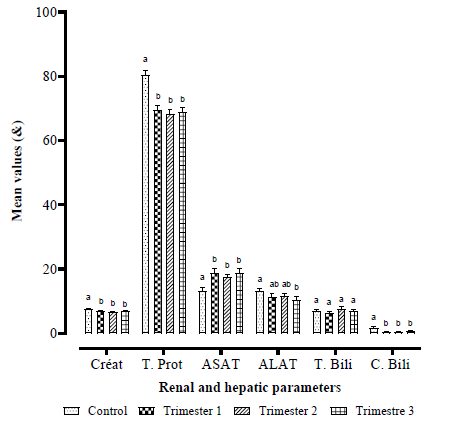
The evolution of the mean values of renal, hepatic and pancreatic parameters during pregnancy in Yopougon is shown in Figure 4. With the exception of total bilirubin, the other parameters indicated a significant variation during pregnancy by report to witnesses. Comparison of the mean ranks showed that creatinine, total protein and conjugated bilirubin were significantly low during pregnancy compared to controls. As for ALT, it was significantly low in the third trimester (10.4±0.993 IU/L) compared to controls (13.2±0.845 IU/L). In contrast, ASAT exhibited significantly elevated mean ranges during pregnancy (18.8±1.28; 17.6±0.776 and 19±1.08 IU/L) compared to controls (13.3±1.03 IU/L). Furthermore, comparing the different quarters with each other revealed no significant variation (p> 0.05).
The results presented in Table 6 indicate the proportions of renal, hepatic and pancreatic parameters during pregnancy in Yopougon. The proportions of values below the norm in terms of total protein (38%, 46% and 30%), ALT (30%, 22% and 30%) and total bilirubin (22%, 20% and 12%) during pregnancy were significantly higher (p <0.05) than controls. Concerning the proportions of the parameters having values higher than the norm, the total protein presented significantly lower proportions (4%, 6% and 4%) than those of the controls (24%) and the total bilirubin significantly high proportions (24 %, 42% and 28%), compared to controls (4%).
Table 6: Proportions of Renal and Hepatic Parameters During Pregnancy
Renal and hepatic parameters
Control
N = 25
Trimesters of pregnancy
p
Trimester 1
N = 50
Trimester 2
N = 50
Trimester 3
N = 50
Creatinine (mg/L)
Low < 6
Normal 6 - 17
High > 17
n (%)
1 (4)
24 (96)
0 (0)
n (%)
3 (6)
47 (94)
0 (0)
n (%)
2 (4)
48 (96)
0 (0)
n (%)
2 (4)
48 (96)
0 (0)
0,891
0,999
1
Total protein (g/L)
Low < 66
Normal 66 - 83
High > 83
0 (0)
19 (76)
6 (24)
19 (38)
29 (58)
2 (4)
23 (46)
24 (48)
3 (6)
15 (30)
33 (66)
2 (4)
7,039.10-15
0,075
1,45.10-5
ASAT (UI/L)
Low < 7
Normal 7 - 37
High > 37
1 (4)
24 (96)
0 (0)
0 (0)
48 (96)
2 (4)
1 (2)
48 (96)
1 (2)
0 (0)
49 (98)
1 (2)
0,029
0,999
0,136
ALAT (UI/L)
Low < 6
Normal 6 - 40
High > 40
0 (0)
25 (100)
0 (0)
15 (30)
35 (70)
0 (0)
11 (22)
39 (78)
0 (0)
15 (30)
35 (70)
0 (0)
1,439.10-10
0,064
1
Total bilirubin (mg/L)
Low < 3
Normal 3 - 10
High > 10
1 (4)
23 (92)
1 (4)
11 (22)
27 (34)
12 (24)
10 (20)
19 (38)
21 (42)
6 (12)
30 (60)
14 (28)
0,001
6,721.10-8
4,045,10-8
Conjugated bilirubin (mg/L)
Normal < 4
High > 4
23 (92)
2 (8)
50 (100)
0 (0)
50 (100)
0 (0)
49 (98)
1 (2)
0,931
0,0005
N: Total number of each group of subjects; n: Number observed for each variation of the parameters; ASAT: Aspartate aminotransferase; ALAT: Alanine aminotransferase
Figure 3: Changes of Glycemic and Lipid Parameters and: Each Parameter Is Expressed in its Unit; Gly: Glycemia (g/L); Trigly: Triglycerides (g/L); T Chol: Total Cholesterol (g/L); HDL: High Density Lipoprotein (g/L); LDL: Low Density Lipoprotein (g/L); AI: AtherogenicityIndice; AI1: Total Cholesterol/HDL; AI2: LDL/HDL a, b, c: Histograms of a Parameter Surmounted by The Same Letter Do Not Present Any Significant Differences, On The Other Hand Those with Different Letters Are Significant
Figure 4: Variation of Renal and Hepatic Parameters and: Each Parameter Is Expressed in its Unit; Creat: Creatinine (mg/L); T. Prot: Total Protein (g/L); AST: Aspartate Aminotransferase (UI/L); ALT: Alanine Aminotransferase (UI/L); T. Bili: Total Bilirubin (mg/L); C. Bili: Conjugated bilirubin (mg/L) a and b: Histograms of a Parameter Surmounted By The Same Letter Do Not Present Any Significant Differences, On The Other Hand Those With Different Letters Are Significant
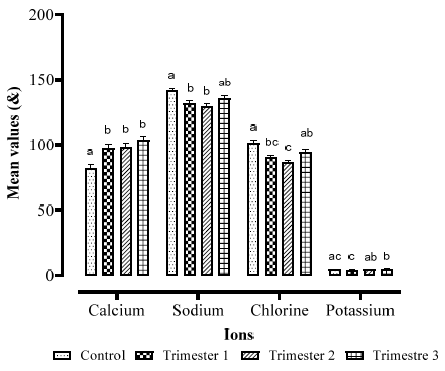
Figure 5: Distribution of Ions and: Each Parameter is Expressed in its unit; Calcium (mg/L); Sodium (meq/L); Chlorine (meq/L); Potassium (meq/L a, b, c: Histograms of a Parameter Surmounted by the Same Letter do not Present Any Significant Differences, On The Other Hand Those with Different Letters Are Significant
Ionic Parameters
The change in ionic parameters in women during pregnancy compared to controls in Yopougon is shown in Figure 5. These results revealed that calcium significantly increased during pregnancy compared to the control. Sodium and chlorine were significantly reduced in women in the first and second trimesters compared to the control. Regarding potassium, the results indicated that its mean value in women in the third trimester was significantly higher than that of controls. In addition, the comparison of parameters between the different trimesters of pregnancy revealed a significant superiority of the chlorine level in women in the third trimester (94.7±2.13 meq/L) compared to those in the second trimester (87±1.43 meq/L). For potassium, this comparison showed a significant superiority of mean potassium values in women in the second (4.72±0.16 meq / L) and third trimesters (5.11±0.13 meq/L) by compared to those in the first trimester (4.27±0.16 meq/L).
Figure 5 shows the proportions of some minerals during pregnancy in Yopougon compared to the controls. The proportions of hypocalcaemia during pregnancy (18%, 20% and 14%) were significantly lower than those of controls (40%). On the other hand, the respective proportions of hyponatremia (66%, 52% and 44%) and hypochloremia (70%, 76% and 52%) during pregnancy, were significantly higher than those of controls (8% and 24%). Moreover, the proportions of hypercalcemia during pregnancy (40%, 36% and 38%) were significantly higher than those of controls (8%). In terms of the normal proportions of sodium (22%, 40% and 46%) and chlorine (18%, 20% and 22%), the study found an increase during pregnancy. However, these proportions during pregnancy were significantly lower than those of controls (88% and 52%).
DISCUSSION
In this study, the evaluation of haematological parameters revealed a markedly degraded hematological status during pregnancy. Indeed, with the exception of VGM, all erythrocyte parameters of pregnant women were significantly reduced during pregnancy compared to non-pregnant women. This could be due to the increase in basal metabolism during pregnancy to cover the nutritional needs of the mother and those of the fetus [3]. These results are similar to those of Bakrim and his colleagues who also reported a significant inferiority of all hematological parameters of pregnant women compared to non-pregnant women in Morocco [14].
In addition, the results report a gradual decrease in the mean hematocrit, red blood cells and hemoglobin values, reflecting high proportions of hemodilution, hypoglobulia and anemia as the pregnancy progresses. The hemodilution recorded in pregnant women could be explained by the increase in plasma blood volume during pregnancy. Indeed, several researchers including Chandra et al. [2], Akinbami et al. [15] and Purohit et al. [16], reported that this plasma blood volume becomes almost double what it was before pregnancy. According to Akinbami et al. [15] and Azab et al. [17], the increase in plasma volume is due to the presence of progesterones and estrogen secreted by the placenta during pregnancy. These cause the release of renin, which stimulates the mechanism of aldosterone-renin-angiotensin, causing sodium retention resulting in increased plasma volume. This hemodilution would be a probable cause of the anemia seen in this study. However, since nutritional requirements are increased during pregnancy, due to the constitution of fetal tissues and organs, a deficiency of iron and folic acid could also be mentioned. Indeed, iron deficiency leads to a disorder of iron metabolism which results in a defect in the production of hemoglobin and the deficiency of folic acid affects the bone marrow, leading to megaloblastic anemia [18,19]. This lack of synthesis of hemoglobin due to iron deficiency is believed to be the cause of hypochromia recorded in pregnant women; hence the types of normocytic hypochromic anemia (HNA) and hypochromic microcytic anemia (HMA) significantly elevated compared to controls. According to Bruyère [20], these iron and folic acid deficiencies are the most common causes of anemia during pregnancy. A parasitic cause due to plasmodium should also be explored due to malaria, which is an endemic infection in Côte d'Ivoire [21]. Care for these anemic pregnant women is essential in that anemia in the mother can lead to serious consequences, namely maternal morbidity, premature delivery, infant mortality and maternal postpartum infections. [22-24].
In addition, the results of the study reported a significant increase in white blood cells, particularly polynuclear neutrophils, eosinophils and also monocytes. This increase in pregnant women is thought to be physiological hyperleukocytosis necessary for the adaptation of the functions of the maternal organism to the development of pregnancy. In this study, it is much more accentuated in the second trimester of pregnancy with high proportions of leukocytosis (12%) particularly of neutrophilia (10%) and monocytosis (14%) during this period. In addition, as pregnancy is a semi-allogenic graft, it results in an increase in the sensitivity of the pregnant woman to infections; hence the hyperleukocytosis [20]. It would also aim to prepare the establishment of the immune system of the fetus [25]. In agreement with our results, Azab et al. [17], Ichipi-Ifukor et al. [26] and Chandra et al. [2], also observed an increase in leukocytes and monocytes during pregnancy.
The study of the distribution of biochemical parameters shows significant variations in these parameters during pregnancy. The lipid parameters such as total cholesterol, HDL and particularly triglycerides increase significantly compared to controls. This hyperlipidemia recorded in the first trimester could be explained by the particular lipid metabolism linked to pregnancy. Indeed, according to Vambergue et al. [27], this metabolism takes place in 2 stages. The first is an accumulation of lipids in maternal adipose tissue, promoted by overeating and increased lipogenesis in the first and second trimester hence the hypertriglyceridemia recorded in 24% and 58% of pregnant women, respectively. The second stage is characterized by the mobilization of reserves, previously constituted, to meet the increased needs of the fetus related to the acceleration of its growth (third trimester). This mobilization therefore makes it possible to direct the nutrients towards the fetal unit, in particular for the lipogenesis of the fetus. Authors have reported similar findings with hyperlipidemia in their work. These include Bartels and O’Donoghue [28], in Cork and Geraghty et al. [29], in Dublin Pregnant women in our study did not have a risk of developing gestational diabetes and cardiovascular disease with regard to their blood sugar and atherogenicity indices 1 and 2 significantly lower compared to controls.
The exploration of renal, hepatic and pancreatic functions of women during pregnancy revealed significant variations compared to the control. Pregnant women had significantly lower serum creatinine. This decrease could be explained by the expansion of plasma volume and the increase in glomerular filtration rate leading to an increase in the clearance of serum creatinine [30]. Furthermore, these results also show a significant drop in total proteins during pregnancy compared to the control. This difference could be justified by an insufficient protein intake compared to the needs. Indeed, according to Stephens et al. [31], Elango and Ball [32], protein requirements during pregnancy are estimated at 1.2 g/Kg/d and 1.52g/Kg/d respectively at the beginning and end of pregnancy.
At the level of transaminases and bilirubin, the concentrations vary very little and remain in conformity with the reference values during pregnancy. This stability is supported by Restellini et al. [33], who showed that the activities of transaminases remain generally within the norms, and that changes must be considered as pathological and therefore be investigated.
Regarding minerals, the results indicate a significant increase in calcium during pregnancy compared to controls, with high proportions of hypercalcemia in every trimester (40; 36; 38). This increase would be mainly related to the rapid mineralization of the skeleton of the fetal skeleton. Indeed, according to Almaghamsi et al. [34], fetal calcium requirements increase gradually and can reach 300 mg/day, especially in the 3rd trimester. The mother therefore responds to this demand by increasing intestinal calcium absorption, decreasing renal excretion of calcium and increasing skeletal calcium stores.
With regard to sodium and chlorine, studies reveal a significant drop in these parameters in the population of pregnant women who have high proportions of hyponatremia (66; 52; 44%) against 8% and hypochloremia (70; 76; 52%) against 24% compared to witnesses. The main cause according to Narelle is the hemodilution caused by the increase in plasma volume. This decrease could also be due to gestational vomiting which according to Maouly [35], is responsible for strong ionic deficiency which can lead to flaccid paralysis during pregnancy.
CONCLUSION
The study of blood biomarkers in pregnant women in Yopougon (Abidjan Côte d'Ivoire) revealed several changes in these biological parameters.
The haematological profile revealed a strongly degraded status during pregnancy with a drop in all erythrocyte parameters reflecting the prevalence of high anemia as the pregnancy progresses (36; 62; 72%). Leukocytic parameters show hyperleukocytosis (12%) particularly in the second trimester of pregnancy.
At the biochemical level, lipid parameters, we recorded hyperlipidemia characterized by an increase in all parameters and particularly hypertriglyceridemia recorded from the first trimester (24%) and remains increasing in the second (58%) and in the third trimester (78%). Most renal (creatine) and hepatic (total protein, transaminase) parameters were significantly reduced. Electrolyte changes reveal hypercalcemia (40; 36; 38), decreasing hyponatremia during pregnancy (66; 52; 44%) and greater hypochloremia in the first and second trimesters (70; 76; 52%).
En dépit de toutes ces modifications, les résultats montrent que les femme’s enceintes de notre étude ne présentaient pas de risque de survenue de diabète gestationnel et de maladies cardiovasculaires au regard de leurs glycémie et indices d’athérogénicité 1 et 2. Cependant, la grossesse reste associée à un risque médical, nutritionnel, social et économique important pour les mères et leurs nourrissons. Elles nécessitent donc un suivi médical dès le premier trimestre de la grossesse, afin de leur assurer une meilleur santé.
Acknowledgment
We would like to thank the managers of the Yopougon Attié general hospital for having accepted the holding of this study in their establishment in collaboration with the Nangui Abrogoua University, in particular the director of the hospital Doctor Thès Dasséko Eulalie and the director of her laboratory Doctor Kadjo Léonie and all his biological technicians. Our thanks also go to all the women who agreed to participate in this study.
REFERENCES
Jacquart, D. et al. Sexualité et savoir médical au Moyen Âge. Presses Universitaires de France, 1985, p. 47.
Chandra, S. et al. “Physiological changes in hematological parameters during pregnancy.” Indian Journal of Hematology and Blood Transfusion, vol. 28, no. 3, 2012, pp. 144–146.
Savignac, B. et al. Guide d’anatomie et physiologie. Nathan, 2008, p. 264.
Wu, G. et al. “Maternal nutrition and fetal development.” The Journal of Nutrition, vol. 134, 2004, pp. 2169–2172.
Ladipo, O.A. “Nutrition in Pregnancy: Mineral and Vitamin Supplements.” American Journal of Clinical Nutrition, vol. 72, 2000, pp. 280S–290S.
Abioye, A.I. et al. “Iron supplementation affects hematologic biomarker concentrations and pregnancy outcomes among iron-deficient Tanzanian women.” Journal of Nutrition, vol. 115, 2016, pp. 1–10.
Allen, L.H. “Anemia and Iron Deficiency: Effects on Pregnancy Outcome.” American Journal of Clinical Nutrition, vol. 17, no. 5, 2000, pp. 1280S–1284S.
Gârban, Z. et al. “Biomarkers: theoretical aspects and applicative peculiarities. Note II: nutritional biomarkers.” Journal of Agroalimentary Processes and Technologies, vol. 12, no. 2, 2006, pp. 349–356.
Combs, G.F. Jr. et al. “Biomarkers in nutrition: New frontiers in research and application.” Annals of the New York Academy of Sciences, vol. 1278, 2013, pp. 1–10.
Kamagate, S. et al. “Alteration of iron stores in women of reproductive age with HIV in abidjan (Côte d’Ivoire).” International Journal of Biomolecules and Biomedicine, vol. 2, no. 2, 2012, pp. 1–12.
Bléyéré, N.M. et al. “Iron status and red cell parameters in pregnant and non-pregnant adolescents in Côte d’Ivoire (West Africa).” International Blood Research and Reviews, vol. 2, no. 1, 2014, pp. 8–22.
Friedewald, W.T. et al. “Estimation of the concentration of low-density lipoprotein cholesterol in plasma, Without Use of the preparative ultracentrifuge.” Clinical Chemistry, vol. 18, no. 6, 1972, pp. 499–502.
Ihaka, R. et al. “R: A language for data analysis and graphics.” Journal of Computational and Graphical Statistics, vol. 3, 1996, pp. 99–314.
Bakrim, S. et al. “Hematological parameters of the blood count in a healthy population of pregnant women in the northwest of morocco (Tetouan–M’diq–Fnideq Provinces).” Pan African Medical Journal, vol. 29, 2018, p. 205.
Akinbami, A.A. et al. “Hematological profile of normal pregnant women in Lagos, Nigeria.” International Journal of Women’s Health, vol. 5, 2013, pp. 227–232.
Purohit, G. et al. “Hematological profile of normal pregnant women in western India.” Scholars Journal of Applied Medical Sciences, vol. 3, no. 6A, 2015, pp. 2195–2199.
Azab, A.E. et al. “Haematological parameters in pregnant women attending antenatal care at sabratha teaching hospital in northwest, Libya.” Pathology and Laboratory Medicine, vol. 1, no. 2, 2017, pp. 61–69.
Bosly, A. Recherche des causes d’anémie. Service d’Hématologie, UCL Mont-Godinne Arlon, 2008.
Süheyl, A. et al. “Detection of vitamin B12 levels with the aid of some hematological and biochemical parameters that are more sensitive.” Marmara Pharmaceutical Journal, vol. 14, 2010, pp. 125–129.
Bruyère, M. “Modifications physiologiques de la femme enceinte.” Pathologies Maternelles et Grossesse, Edition Elsevier Masson SAS, 2014, p. 5.
Kefiyalew, F. et al. "Anemia among pregnant women in southeast Ethiopia: prevalence, severity and associated risk factors."BioMed Central Research Notes, vol. 7, 2014, p. 771.
Sharma, J.B., and M. Shankar. "Anemia in pregnancy." Journal of International Medical Sciences Academy, vol. 23, no. 4, 2010, pp. 253–260.
Chowdhury, H.A. et al. "Factors associated with maternal anaemia among pregnant women in Dhaka city." BioMed Central Women’s Health, vol. 15, 2015, p. 77.
Di Renzo, G.C. et al. "Iron deficiency anemia in pregnancy." Women’s Health, vol. 11, no. 6, 2015, pp. 891–900.
Hanssens, S., M. Salzet et al. "Aspects immunologiques de la grossesse." Journal de Gynécologie Obstétrique et Biologie de la Reproduction, vol. 41, 2012, pp. 595–611.
Ichipi-Ifukor, P.C. et al. "Changes in haematological indices in normal pregnancy." Physiology Journal, 2013, ID 283814, p. 4.
Vambergue, A. et al. "Le métabolisme des lipides au cours de la grossesse diabétique." La Lettre du Gynécologue, no. 393, 2014, pp. 18–24.
Bartels, A., and K. O’Donoghue. "Cholesterol in pregnancy: A review of knowns and unknowns." Obstetric Medicine, vol. 4, 2011, pp. 147–151.
Geraghty, A.A. et al. "Maternal and fetal blood lipid concentrations during pregnancy differ by maternal body mass index: Findings from the ROLO study." BioMed Central Pregnancy and Childbirth, vol. 17, 2017, p. 360.
Biswajit, D. et al. "A study on serum urea, Creatinine and uric acid levels in normal pregnancy (First and Third Trimester) in Rohilkhand region, Uttar Pradesh." Scholars Journal of Applied Medical Sciences, vol. 4, no. 9A, 2016, pp. 3236–3241.
Stephens, T.V. et al. "Protein requirements of healthy pregnant women during early and late gestation are higher than current recommendations." The Journal of Nutrition, vol. 145, 2015, pp. 73–78.
Elango, R., and R.O. Ball. "Protein and amino acid requirements during pregnancy." Advances in Nutrition, vol. 7, no. 4, 2016, pp. 839S–844S.
Restellini, S. et al. "Maladies hépatiques liées à la grossesse." Revue Médicale Suisse, vol. 9, 2013, pp. 1577–1583.
Almaghamsi, A. et al. "Hypocalcemia in pregnancy: A clinical review update."Oman Medical Journal, vol. 33, no. 6, 2018, pp. 453–462.
Maouly, Fall. "Paralysie flasque en début de grossesse: penser à l’hypokaliémie due aux vomissements gravidique, à propos de deux observations dans un pays en voie de développement." The Pan African Medical Journal, vol. 21, 2015, p. 119.
Recommended Articles
Research Article
Valorization of Cofactor-Enriched Whey for Sustainable Lactic Acid Production Using Bifidobacterium bifidum and Lactobacillus acidophilus
Sahar Adnan Sheet
Published: 30/06/2026
Download PDF
Review Article
Rview: Nisin its Importance and Applications
Shaymaa Jawad Mahmood,
...
Sumyia Kh. Badawi
Published: 30/06/2026
Download PDF
Review Article
Review: Nisin its Importance and Applications
Shaymaa Jawad Mahmood,
...
Sumyia Kh. Badawi
Published: 30/06/2026
Download PDF
Research Article
In- Vitro Protein Digestibility, Starch Digestibility and Sensory Property of Fermented and Extruded Blends of Cassava and African Yam Beans
O. Ayomide Omojokun,
...
A. Felix Akinyosoye
Published: 10/09/2021
Download PDF
PO Box 101, Nakuru
Kenya.
Email: office@iarconsortium.org
Editorial Office:
J.L Bhavan, Near Radison Blu Hotel,
Jalukbari, Guwahati-India
Bleyere, M. N., Kouame, R. A., Amani, J.Paul Aristide & Yapo, P. A. (2020). Evolution of blood parameters related to nutrition in women during pregnancy from Yopougon (Abidjan). International Academic Journal of Nutrition & Food Sciences, 1(1), 1-9.
MLA
Bleyere, Mathieu N., et al. "Evolution of blood parameters related to nutrition in women during pregnancy from Yopougon (Abidjan)." International Academic Journal of Nutrition & Food Sciences 1.1 (2020): 1-9.
Chicago
Bleyere, Mathieu N., Rosine A. Kouame, JeanPaul Aristide Amani and Paul A. Yapo. "Evolution of blood parameters related to nutrition in women during pregnancy from Yopougon (Abidjan)." International Academic Journal of Nutrition & Food Sciences 1, no. 1 (2020): 1-9.
Harvard
Bleyere, M. N., Kouame, R. A., Amani, J.Paul Aristide and Yapo, P. A. (2020) 'Evolution of blood parameters related to nutrition in women during pregnancy from Yopougon (Abidjan)' International Academic Journal of Nutrition & Food Sciences 1(1), pp. 1-9.
Vancouver
Bleyere MN, Kouame RA, Amani JPaul Aristide, Yapo PA. Evolution of blood parameters related to nutrition in women during pregnancy from Yopougon (Abidjan). International Academic Journal of Nutrition & Food Sciences. 2020 Jul;1(1):1-9.


 Download PDF
 Download XML