Breast milk is the safest and most common natural food for an infant. Despite efforts by the county and national government as well as non-governmental organizations, breastfeeding uptake in Garissa County was low. This study therefore assessed attitudes towards breastfeeding and the relationship between women’s attitudes and breastfeeding practice. The study adopted a descriptive cross-sectional survey design. The target population for the study included lactating mothers in Bulla Adaan, Garissa County. A sample size of 373 was calculated using the Yamane [1], formula. Majority 271 (72.7%) of the respondents had poor breastfeeding practices. In addition, majority 266 (71.3%) of the respondents had negative attitudes towards breastfeeding. There was a significant relationship (χ² = 25.020, df = 8, p = 0.002) between attitudes towards breastfeeding on breastfeeding practices. The study concluded that respondents’ attitudes affected their breastfeeding practices whereby respondents with negative attitudes were highly likely to have poor breastfeeding practices. It was therefore recommended that the government and other private institution in the health sector should carry out mass education particularly the women on the importance of breastfeeding to the infants as this has more benefits to both the mother and the infant as well as the society.
Keywords
Breastfeeding
Exclusive Breastfeeding
Attitudes
Practices
Somali Women
INTRODUCTION
Breast milk is the safest and most common natural food for an infant. It provides complete nutritional needs up to six months of age. When the baby is fed exclusively on breast milk, the method is called exclusive breastfeeding which provides the best nutrition, growth and reduces infant morbidity and mortality [2]. Breast milk also, contributes to continued growth until the introduction of solid foods at six months. A study revealed that over the past couple of decades, there has been an intensification of campaigns for exclusive breastfeeding as the best feeding method for newborns [3]. While breastfeeding rates are no longer declining at the global level, with many countries experiencing significant increases in the last decade, only 39% of children less than six months of age in the developing world are exclusively breastfed and just 58% of 20-23 months old benefit from the practice of continued breastfeeding [4]. This is attributed to the implementation of massive programs based on national policies along with global strategies for Newborn and Young Child Feeding, a joint action of the WHO [5]. To enhance these even further, actions entailed initiating breastfeeding at the maternity facilities. In Africa, breastfeeding is the normal and cultural way of feeding infants, resulting in high rates of initiation and longer duration of breastfeeding. However, exclusive breastfeeding tends to decline with increased age in months. According to the International Baby Food Action Network [IBFAN] Africa Regional Office, exclusive breastfeeding at three to four months in 2012 in the region was as follows: Malawi and Eritrea 72%, Botswana 37%, Ghana 43%, Kenya 35% and Lesotho 54% [6].
Breastfeeding reduces the mother's risk of fatal postpartum hemorrhage, the risk of breast and ovarian cancer and of anemia and by spacing births, breastfeeding allows the mother to recuperate before she conceives again [7]. In many Sub-Saharan Africa societies, exclusive breastfeeding is considered by far the best feeding option for women of unknown HIV status and for most HIV positive mothers, although it is challenged by low acceptability and feasibility [8]. The rates of exclusive breastfeeding have improved over the recent past, with the global rate at 37% [9]. However, in all regions the percentage of infants under six months receiving the benefits of exclusive breastfeeding is less than 50%. In the developing world, less than 40 % of infants under 6 months old receive the benefits of exclusive breastfeeding. The rate is particularly low in Africa, where less than one third of infants under 6 months old are exclusively breastfed. There has been a major increase in exclusive breastfeeding in 19 African countries including Rwanda (88%), Tanzania (41%) and Malawi (57%) among others [10].
In Kenya however, rates of exclusive breastfeeding remain low with only 32% of infants below six months being exclusively breastfed [11]. Studies have identified various factors that influence breastfeeding practices such as inadequate knowledge of the health benefits of breastfeeding, inadequate antenatal counseling on breastfeeding and belief that breast milk is insufficient. A range of maternal and child health attributes such as marital status, economical status and child age also influence the practice of exclusive breastfeeding. To make better feeding choices, mothers need specific, culturally appropriate, information that responds to their constraints and concerns.
Breastfeeding is very widespread in Arabic and Islamic culture, in which Islam carries encouragement for Muslim women to breastfeed their babies for a full two years. This encouragement of breastfeeding by the Islamic religion supports the great importance of breastfeeding to the health of humanity. In Jordan, 94% of mothers initiated breastfeeding and 27% of mothers initiated breastfeeding immediately within the first hour after delivery [12]. Yet introducing supplements other than breast milk, such as water, juice, herbal tea, is very common practice in Arabic culture. A study in United Arab Emirates (UAE) of 221 mothers showed that at one-month follow-up, only 43% of mothers practiced exclusive breastfeeding and others used extensive amount of fluids such as water, tea and herbal combinations. At six-month follow up, only 13.3% of the sample exclusively breastfed their babies [13]. This percentage falls below the WHO‟s recommendations of exclusive breastfeeding.
Attitude is defined as a bipolar concept that has a cognitive, affective and behavioral component and is a response to a stimulus [14]. Scott [15], indicates that a woman’s decision to initiate and continue breastfeeding is influenced by her attitude towards breastfeeding as well as the breastfeeding attitudes of significant referent people (e.g. partner, family and friends) and society in general. If she perceives that her breast milk will adequately nourish her infant and that breastfeeding is convenient and better for the health of her infant, then she will have positive attitudes towards breastfeeding. The reasons for low breastfeeding rates among the Somali women include the influence of society and cultural norms, the lack of continuity of care in the health services, clinical problems and the lack of preparation of health professionals and others to support breastfeeding effectively. Mothers ability to prefer to breastfeed is therefore hindered by barriers and afar from a matter of ‘informed choice’, breastfeeding is a behavior that is simply not available for most mothers and babies, notably among Low socio-economic groups [16].
The Ministry of Health in Kenya has implemented the Baby Friendly Hospital Initiative (BFHI), developed by the WHO and UNICEF in order to address poor breastfeeding practices [17]. Despite this and other numerous interventions promoting optimal breastfeeding practices in Kenya, pockets of suboptimal breastfeeding practices. Sub-optimal breastfeeding practices are still prevalent which has contributed to high rates of under nutrition [18]. Kimani-Murage et al. [19], add that poor breastfeeding practices are widely documented in Kenya, where only a third of children are exclusively breastfed for 6 months and only 2% in urban poor settings.
Despite efforts by the county and national government as well as non-governmental organizations, breastfeeding uptake in Garissa County was low. A survey by the county government of Garissa showed low levels of breastfeeding initiation, high use of pre-lacteals, exclusive breastfeeding was low and appropriate introduction of complementary was low. Currently, there exist little information and studies done in line with breastfeeding among the Somali Community and thus there is need to assess the attitudes towards breastfeeding among the Somali and knowledge on breastfeeding This study therefore assessed attitudes towards breastfeeding and the relationship between women’s attitudes and breastfeeding practice.
MATERIALS AND METHODS
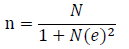
The study adopted a descriptive cross-sectional survey design. According to Setia [20], a descriptive cross-sectional study inspects the prevalence of a disease or condition in a defined population at a specific point or period in time without attempting to draw any inferences or offer any causes for the prevalence. The target population for the study included mothers in Garissa County, the total number of lactating mothers in Bulla Adaan was estimated to be around 7671 and thus a representative sample was drawn from this. For this study, the sample was obtained by calculating the sample size from the target population by applying a Yamane [1], formula:
Where,
n: Sample size
N: Population size
e: Level of Precision at 95% level of confidence
P: 5
n = 7671÷ (1+7671×0.0025)
n = 373.34 respondents
n= 373
Thus a sample size of 373 respondents was required.
A structured researcher-administered questionnaire was used to collect data. To test the validity, the researcher conducted a pilot study using 6 participants from the camp and were not part of the study. The split half method was used to establish instrument reliability. The researcher administered the questionnaires to the same group of persons after one week. Computation of the correlation between the scores was done by first splitting the tests into two halves. Data was collected through actual administration of questionnaires and interviews by the researcher. The participants were assured of confidentiality of their identity. The researcher waited for the questionnaire to be filled in and then collect them once completed. Data was analyzed both qualitatively and quantitatively. Quantitative data was analyzed by use of descriptive statistics such as frequency distribution and percentages with the aid of computer software. Qualitative data was analyzed by the use of content analysis which is the categorizing and indexing of responses and other field notes into common themes. Chi-square tests were conducted to test for relationships. Results were presented in form of tables and figures.
RESULTS
The study targeted 373 breastfeeding/lactating mothers to assess them in breastfeeding practices among Somali women of reproductive age in Bulla Aadan, Garissa County. A total of 373 women filled and returned the questionnaire and this made a response rate of 100%which was excellent.
Demographic Characteristics of the Respondents
It was determined that majority (188, 50.4%) of the respondents were aged between 21-30 years, followed by those aged between 31-40 years, 77[20.6%]16.6% were more than 41 years. On the highest level of education of the respondents, the findings indicated that majority of the respondents had secondary education [149,39.9%], followed by those who had primary education [120,32.2%], while 62[16.6%] had college education and a mere 42 [11.3%] had no education and this was in contrary to my expectations as this region is characterized with high illiteracy rates. On their marital status, majority were married in a polygamous union at [185,49.6%], 137 [36.7%] were married in a monogamous union while 13.7% were divorced/separated (Table 1).
Table 1: Demographic Characteristics of the Respondent
Characteristic
Frequency (n=373) %
Age Bracket of the Respondents
Less than 20 years
46, [12.3]
Between 21-30 years
188, [50.4]
Between 31-40 years
77, [20.6]
More than 41 years
62, [16.6]
Education level
Primary level
120, [32.2]
Secondary level
149, [39.9]
College
62, [16.6]
None
42, [11.3]
Marital Status
Married [monogamous]
137, [36.7]
Married [polygamous]
185, [49.6]
Divorced/Separated
51, [13.7]
The study also sought to determine the age of the child. It was determined majority [192,51.5%] were between 6-12 months, 53,14.2% indicated that their children were between 12-18 months,128[34.3%] were less than six months On the gender of the children, the respondents indicated that 61.4% were female while 38.6% were males (Table 2).
Table 2: Demographic Characteristics of Children
Characteristic
Frequency (n=373) %
Age of your child
Less than 6 months
128 [34.3
Between 6-12 months
192 [51.5]
Between 12-18 months
53[14.2]
Gender of the child
Male
144 [38.6]
Female
229 [61.4]
Breastfeeding Practices
It was established that 40% of the respondents had breastfed their children less than 6 months, compared to 23.9% who had breasted their children for one and half months while a mere 19.3% and 15.5% had breastfed their children for between for 12 months and 24 months respectively. On the factor that influenced the respondents decision to breastfeed, 145[38.9%] indicated it was from their Islamic religion encourages breastfeeding compared to 143 [38.3%] that indicated that they knew that Breastfeeding has health benefits for the baby while 21[5.6%] indicated that they breastfed as a result of Advice from a health care professional or nurse.
Querying the first time the respondents put their infants to breast, majority [n = 186,49.9%, indicated that they put them within first day compared to 135 (36.2%) who indicated they put them within the hour of birth, while a mere 52 [13.9%] indicated within the second day. This implied that the respondents had the knowledge on the importance of putting the infant on breast immediately. Further, the study sought to determine if the respondents gave their neonates/infants the child anything else after three days after delivery. It was determined that majority of the respondents (232, 62.2%) had not provided their infants with anything else after three days after delivery compared to 141 [37.8] who had given them other foods/drinks. This implied that the respondents knew the importance of abstaining from giving their neonates other baby foods. Assessing the various reasons for weaning /stop breastfeeding child, the study established that 107 [28.7%] cited that they become pregnant, 105 [28.2%] indicated that breastfeeding was too tiring and this necessitated them to wean their children while 71[19%] argued that Baby continued to be hungry after feeding (Table 3).
Table 3: Breastfeeding Practices
Characteristic
Frequency (n=373)
%
0– 6 months
141
40.5
0– 12 months
72
19.3
0 – 18 months
89
23.9
0 – 24 month
58
15.5
Factors influenced decision to breastfeed
Islamic religion encourages breastfeeding
145
38.9
Breastfeeding has health benefits for the baby
143
38.3
My family support (i.e., mother, sister, husband)
64
17.2
Advice from a health care professional or nurse
21
5.6
Time first breastfeed child
Within First Hour after birth
135
36.2
Within first day
186
49.9
Within second day
52
13.9
Gave the child anything else after three days after delivery
Yes
141
37.8
No
232
62.2
Reasons for weaning /stop breastfeeding child
Age of Child
14
3.8
Breastfeeding was too tiring
105
28.2
I didn’t have enough breast milk
55
14.7
Baby continued to be hungry after feeding
71
19.0
For Medical reasons
21
5.6
Because of becoming pregnant
107
28.7
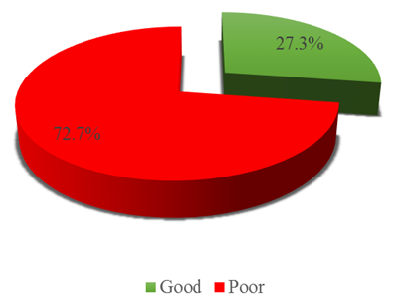
Majority 271 (72.7%) of the respondents had poor breastfeeding practices as shown in Figure 1. This is in agreement with findings of Taha et al. [21], that breastfeeding practices were suboptimal in several aspects with a low proportion of children being exclusively breastfed, short breastfeeding duration and early introduction of complementary feeding, despite high socioeconomic status. It is also similar to findings of Swigart et al. [22], where women reported supplementing breast milk with water and teas soon after birth, as well as introducing small bites of solid food a few months after birth. Asare et al. [23], also found that exclusive breastfeeding and timely complementary feeding practices are suboptimal.
Figure 1: Breastfeeding Practices
Attitudes towards Breastfeeding among Respondents
The study also sought to establish attitudes towards breastfeeding among respondents. The results are presented in Table 4. Results show that 291(78%) disagreed that they did not like breastfeeding. Results show that 267 (71.6%) agreed that women should not breast‐feed in public places such as restaurants. Similarly, 315 (84.5%) agreed that they would feel embarrassed if someone saw me breastfeeding. Majority 312 (83.7%) felt that breastfeeding is old fashioned. Similarly, 294 (78.8%) agreed that breastfeeding will make mothers’ breasts sag. These results point to negative attitudes among respondents. This is similar to findings of Westmar and Johansson [24], where majority of the women had a poor attitude towards breastfeeding. In Ketbi et al. [25], study, 90 (26.2%) had a poor attitude. Dukuzumuremyi et al. [26], also found that only few mothers had a positive attitude towards exclusive breastfeeding.
Table 4: Attitudes Towards Breastfeeding
Variables
1
2
3
4
5
N
%
N
%
N
%
N
%
N
%
I do not like breastfeeding
112
30.0
179
48.0
43
11.5
25
6.7
14
3.8
Women should not breast‐feed in public places such as restaurants.
13
3.5
26
7.0
67
18.0
175
46.9
92
24.7
I would feel embarrassed if someone saw me breastfeeding
11
2.9
18
4.8
29
7.8
176
47.2
139
37.3
Breastfeeding is old fashioned
10
2.7
18
4.8
33
8.8
177
47.5
135
36.2
Breastfeeding will make mothers’ breasts sag
13
3.5
22
5.9
44
11.8
178
47.7
116
31.1
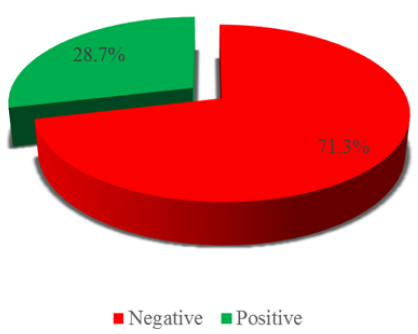
Findings in Figure 2 show that majority 266 (71.3%) of the respondents had negative attitudes towards breastfeeding. This is similar to findings of Orabi et al. [27], whereby only a minority of respondents had a positive attitude toward breastfeeding. However, the finding differs from findings of Zhou et al. [28], Mogre et al. [29], Alamirew et al. [30], Mohamed et al. [31] and Kitiyo et al. [32], where majority of the mothers had positive attitude towards breastfeeding.
Chi-square tests were conducted to find out the effect of attitudes towards breastfeeding on breastfeeding practices. Results in Table 5 show that there is a significant relationship (χ² = 25.020, df = 8, p = 0.002) between attitudes towards breastfeeding on breastfeeding practices. This means that attitudes influence breastfeeding practices. Khresheh [33], also found that participants who intended to breastfeed had significantly higher breastfeeding knowledge and positive attitudes. However, Al Ketbi [25], found that there was no statistically significant relationship between mothers’ breastfeeding attitudes and practices.
Table 5: Effect of Attitudes on Breastfeeding Practices
Variables
Value
df
Asymp. Sig. (2-sided)
Pearson Chi-Square
25.020a
8
0.002
Likelihood Ratio
25.338
8
0.001
Linear-by-Linear Association
0.493
1
0.483
N of Valid Cases
373
-
-
Figure 2: Attitudes Towards Breastfeeding
CONCLUSION
The study concludes that majority of women had negative attitudes towards breastfeeding. Majority of respondents did not believe breast‐feed in public places such as restaurants. Majority indicated that they would feel embarrassed if someone saw me breastfeeding. A high number of respondents felt that breastfeeding was old fashioned and it made mothers’ breasts sag. Analysis showed that knowledge and attitude were related whereby low knowledge resulted in negative attitudes. Similarly, respondents’ attitudes affected their breastfeeding practices whereby respondents with negative attitudes were highly likely to have poor breastfeeding practices. The government and other private institution in the health sector should carry out mass education particularly the women on the importance of breastfeeding to the infants as this has more benefits to both the mother and the infant as well as the society.
REFERENCES
Yamane, T. Elementary Sampling Theory. Englewood Cliffs, New Jersey: Prentice-Hall, 1967.
Anstey, E.H. et al. “Racial and geographic differences in breastfeeding United States, 2011–2015.” MMWR. Morbidity and Mortality Weekly Report, vol. 66, no. 27, 2017, pp. 723–728.
Pillitteri, A. Maternal and Child Health Nursing: Care of the Childbearing and Childrearing Family. Lippincott Williams and Wilkins, 2010.
Kramer, M.S. and R. Kakuma. “Optimal duration of exclusive breastfeeding.” Cochrane Database of Systematic Reviews, vol. 10, no. 8, 2012, pp. 13–27. https://doi.org/10.1002/14651858.CD003517.pub2.
World Health Organization. Protecting, Promoting and Supporting Breastfeeding: The Special Role of Maternity Services. Geneva: World Health Organization, 2009.
Agunbiade, O.M. and O.V. Ogunleye. “Constraints to exclusive breastfeeding practice among breastfeeding mothers in southwest Nigeria: Implications for scaling up.” International Breastfeeding Journal, vol. 7, no. 1, 2012, p. 5. https://doi.org/10.1186/1746-4358-7-5.
León-Cava, N. et al. Quantifying the Benefits of Breastfeeding: A Summary of the Evidence. Pan American Health Organization, 2002.
Cames, C. et al. “A sustainable food support for non-breastfed infants: Implementation and acceptability within a WHO mother-to-child HIV transmission prevention trial in burkina faso.” Public Health Nutrition, vol. 13, no. 6, 2010, pp. 779–786. https://doi.org/10.1017/S1368980009991574.
Oweis, A. et al. “Breastfeeding practices among jordanian women.” International Journal of Nursing Practice, vol. 15, no. 3, 2009, pp. 32–40.
Al Tajir, G.K. et al. “Intragroup differences in risk factors for breastfeeding outcomes in a multicultural community.” Journal of Human Lactation, vol. 22, no. 4, 2006, pp. 39–47.
Mäntyselkä, P. et al. “Beliefs and attitudes towards lifestyle change and risks in primary care – A community-based study.” BMC Public Health, vol. 19, no. 1, 2019, p. 1049. https://doi.org/10.1186/s12889-019-7409-3.
Shaker, M. et al. “Breastfeeding support from partners and grandmothers: Perceptions of Swedish women.” Birth, vol. 30, no. 4, 2004, pp. 261–266.
Maingi, M. et al. “Effectiveness of baby friendly community initiative (BFCI) on complementary feeding in Koibatek, Kenya: A randomized control study.” BMC Public Health, vol. 18, no. 1, 2018, pp. 1–11.
Mututho, L.N. et al. “Factors associated with exclusive breastfeeding in Kenya: A systematic review.” International Journal of Community Medicine and Public Health, vol. 4, no. 12, 2017, pp. 4358–4362.
Kimani-Murage, E.W. et al. Feasibility and Effectiveness of the Baby Friendly Community Initiative in Rural Kenya: Study Protocol for a Randomized Controlled Trial.Trials, vol. 16, no. 1, 2015, p. 431.
Setia, M.S. “Methodology series module 3: Cross-sectional studies.” Indian Journal of Dermatology, vol. 61, no. 3, 2016, pp. 261–264. https://doi.org/10.4103/0019-5154.182410.
Taha, Z. et al. “Patterns of breastfeeding practices among infants and young children in abu dhabi, United Arab Emirates.” International Breastfeeding Journal, vol. 13, no. 1, 2018, p. 48.
Swigart, T.M. et al. Breastfeeding Practices, Beliefs and Social Norms in Low-resource Communities in Mexico: Insights for How to Improve Future Promotion Strategies.PLoS One, vol. 12, no. 7, 2017, e0180185.
Asare, B.Y.A. et al. “Breastfeeding practices and determinants of exclusive breastfeeding in a cross-sectional study at a child welfare clinic in Tema Manhean, Ghana.” International Breastfeeding Journal, vol. 13, no. 1, 2018, pp. 12.
Al Ketbi, M.I. et al. Knowledge, Attitudes and Practices of Breastfeeding among Women Visiting Primary Healthcare Clinics on the Island of Abu Dhabi, United Arab Emirates.International Breastfeeding Journal, vol. 13, no. 1, 2018, p. 26.
Dukuzumuremyi, J.P.C. et al. “Knowledge, attitude and practice of exclusive breastfeeding among mothers in east Africa: A systematic review.” International Breastfeeding Journal, vol. 15, no. 1, 2020, pp. 1–17.
Orabi, A. et al. “Investigating the knowledge, attitudes, practice and perceived barriers of breastfeeding among saudi women in the national guard hospital Jeddah.” Athens Journal of Health, vol. 3, no. 3, 2017, pp. 257.
Zhou, Q. et al. “An exploration of the knowledge and attitudes towards breastfeeding among a sample of Chinese mothers in Ireland.” BMC Public Health, vol. 10, no. 1, 2010, pp. 722.
Mogre, V. et al. “Knowledge, attitudes and determinants of exclusive breastfeeding practice among ghanaian rural lactating mothers.” International Breastfeeding Journal, vol. 11, no. 1, 2016, p. 12.
Alamirew, M.W. et al. “Knowledge and attitude towards exclusive breast feeding among mothers attending antenatal and immunization clinic at dabat health center, northwest Ethiopia: A cross-sectional institution based study.” Nursing Research and Practice, vol. 12, no. 4, 2017, pp. 10–15.
Mohamed, M.J. et al. “Comparison of knowledge, attitudes and practices on exclusive breastfeeding between primiparous and multiparous mothers attending wajir district hospital, wajir county, Kenya: A cross-sectional analytical study.” International Breastfeeding Journal, vol. 13, no. 1, 2018, p. 11.
Kitiyo, P. et al. “Exclusive breastfeeding knowledge and attitudes among mothers in mother-to-mother support groups in kitui county, Kenya.” International Journal of Health Sciences and Research, vol. 10, no. 2, 2020, pp. 208–214.
Khresheh, R. “Knowledge and attitudes toward breastfeeding among female university students in Tabuk, Saudi Arabia.” Nursing and Midwifery Studies, vol. 9, no. 1, 2020, pp. 43–50.
Recommended Articles
Research Article
Valorization of Cofactor-Enriched Whey for Sustainable Lactic Acid Production Using Bifidobacterium bifidum and Lactobacillus acidophilus
Sahar Adnan Sheet
Published: 30/06/2026
Download PDF
Review Article
Rview: Nisin its Importance and Applications
Shaymaa Jawad Mahmood,
...
Sumyia Kh. Badawi
Published: 30/06/2026
Download PDF
Review Article
Review: Nisin its Importance and Applications
Shaymaa Jawad Mahmood,
...
Sumyia Kh. Badawi
Published: 30/06/2026
Download PDF
Research Article
In- Vitro Protein Digestibility, Starch Digestibility and Sensory Property of Fermented and Extruded Blends of Cassava and African Yam Beans
O. Ayomide Omojokun,
...
A. Felix Akinyosoye
Published: 10/09/2021
Download PDF
PO Box 101, Nakuru
Kenya.
Email: office@iarconsortium.org
Editorial Office:
J.L Bhavan, Near Radison Blu Hotel,
Jalukbari, Guwahati-India
AHMED, K. H., Oirere, B. O. & Mapesa, J. (2020). Assessment of Attitudes towards Breastfeeding among Somali Women of Reproductive Age, Garissa County, Kenya. International Academic Journal of Nutrition & Food Sciences, 1(1), 1-6.
MLA
AHMED, Khadijanimo H., Bororo O. Oirere and Job Mapesa. "Assessment of Attitudes towards Breastfeeding among Somali Women of Reproductive Age, Garissa County, Kenya." International Academic Journal of Nutrition & Food Sciences 1.1 (2020): 1-6.
Chicago
AHMED, Khadijanimo H., Bororo O. Oirere and Job Mapesa. "Assessment of Attitudes towards Breastfeeding among Somali Women of Reproductive Age, Garissa County, Kenya." International Academic Journal of Nutrition & Food Sciences 1, no. 1 (2020): 1-6.
Harvard
AHMED, K. H., Oirere, B. O. and Mapesa, J. (2020) 'Assessment of Attitudes towards Breastfeeding among Somali Women of Reproductive Age, Garissa County, Kenya' International Academic Journal of Nutrition & Food Sciences 1(1), pp. 1-6.
Vancouver
AHMED KH, Oirere BO, Mapesa J. Assessment of Attitudes towards Breastfeeding among Somali Women of Reproductive Age, Garissa County, Kenya. International Academic Journal of Nutrition & Food Sciences. 2020 Jul;1(1):1-6.


 Download PDF
 Download XML