The application of Machine Learning (ML) in software testing aims to automated bug detection and resolution processes. We anticipate the culmination of such developments to result in system autonomy by 2025. Traditional testing approaches have yet to address the ever-growing architectural complexity and scale of software systems, leading them to remain inefficient and riddled with undetected errors. This article aims to shed some light on the intersection between machine learning and software testing, focusing on the automated bug detection, localization, and prediction processes. Key ML methods such as supervised and reinforcement learning and deep learning are explored within the context of testing frameworks. A central proposition of the paper is the detailed framework of machine learning-driven testing systems with the emphasis on the statistical evaluation of various model performance metrics. Further, the paper discusses the limitations and challenges these approaches have yet to tackle at present and in the future. ML systems have the capability to improve various qualitative and quantitative measures of software engineering, particularly within software that undergoes rapid cycles of modification and deployment, also known as continuous integration/continuous deployment (CI/CD) pipelines, as well as systems that require on-the-go error identification. This is evident in the empirical results proving perfect precision, recall and F1 scores across various datasets (0.98; macro avg: 0.98; weighted avg: 0.98).
Keywords
Machine Learning
Autonomous Bug Detection
Software Testing
Deep Learning
Reinforcement Learning
Test Automation
Software Quality Assurance
INTRODUCTION
The process of software testing is crucial as it ascertains the functionality of an application and its software components within the software development life cycle (SDLC) [1]. In the past, there were methods such as manual checking, unit functionalities testing, and system integration testing which were essential in identifying and eliminating faults [2]. Still, the development of software systems is increasingly becoming more complex. Conventional techniques are becoming of little use as operational slowdowns, delays in deployment and added weaknesses are often overlooked [3].
The application of Machine Learning (ML) has the potential of changing the automation of processes involving bug patterns, as it enables systems to learn from past data and adjust to new patterns [4]. ML algorithms are good at identifying hidden patterns in coding, predicting which modules are more likely to have defects, and creating test cases to assess [5]. It is predicted that in the year 2025, ML based systems will be able to detect bugs and in real-time self-monitor, self-identify and self-correct without any human assistance [6]. This is made possible from the advancements in deep learning models which are able to analyze and learn from huge amounts of data comprising of codes and logs to detect failures [7].
Training software is just as problematic as any other aspect of software testing. There are myriad issues untapped data resources offers, diminishing the legacy testing system. There is no standardized norm or protocol documents to elucidate the various datasets bounds and gaps during the construction of model training workflows to analyze the raw files. There are also issues related to the model complexity interpretability regarding the datasets, and the smooth execution of the legacy frameworks testing other software environments. There are also biases caused AI model of leakier and builder software which raises ethical concern that adversely affect and predicts defects. The other problem is the depletion of resources used for the Machine Learning (ML) models and the software artifacts computational resource. Previous works have shown the need for hybrid approaches that address the gaps for the issues model frameworks to the software testing algorithm heuristics complexities.
This paper is aimed at ML powered software testing gaps integration heuristic workflows to choose, model boundaries, sequence the model used to train frameworks and document workflows for the software testing's domain to also pair domain for edge computation. Balance of these phases is scoped using the AI for testing with the precise and clear predictions on the excellence levels of the model which the frameworks borders the maximum intersystem gaps. These gaps are the set of residuals that pair and unhinged all other sensor data. These transforms augment the ML and software to explain, resolve and derive the resilient software ecosystems interdependencies. The software engineering intends to derive the ML findings frameworks, which address the maximum intersystem gaps. These maximum gaps are the residuals that pair down the framework explain heuristics software the unhinged all other sensor data and model complexities. The software engineering expects and intends to perform the ML findings frameworks, which address the maximum intersystem gaps the target solutions. The predictions are paired down the frameworks on the data that is obtained in oil the unhinged all other sensors in other systems.
Related Work
In recent years, there has been scholarship on machine learning and its application on automating software testing, particularly on machine-driven bug pinpointing, predictive analytics, and adaptive testing.
Smith et al. [15] demonstrated the application of Convolutional Neural Networks (CNNs) on bug prognosis in large systems, showcasing the application of deep learning in discovering patterns within code and proofs beyond the reach of traditional solutions.
Wang and Zhang [16] presented the application of Reinforcement Learning (RL) in adaptive synthesis of test case, where the author demonstrated on-the-fly modifications on test execution strategies that improve coverage.
Lee et al. [17] utilized unsupervised learning for the detection of anomalies within software systems, in which the author clusters system modules and identifies some of them that do not conform to the system patterns as defective [17].
Gupta et al. [18] used Support Vector Machines (SVMs) in defect prediction systems where the author analyzes archives and classifies system components as defective with a high precision.
Patel et al. [19] performed critical analysis on contemporary systems for bug detection, suggesting AI-based overlays on systems such as Selenium to enhance detection, improve automation, and minimize maintenance.
Anthony et al. [20] studied automated code generation and bug detection systems with the focus on systems that use machine learning and automation, stressing the importance of smart development systems that improve productivity [20].
Harzevili [5] investigated the practice of automated bug detection on machine learning libraries and gauged how far the automation tools in the area have developed [21].
According to their research, Moradi Dakhel [9] combined the use of Large Language Models (LLMs) with mutation testing for more effective test generation.
Allamanis et al. [10] introduced self-supervised techniques for automatic bug fixing that set the stage for self-sufficient systems.
Zhu [7] created SAFLITE, an LLM-driven fuzzing tool for testing autonomous systems.
These studies demonstrate the increasing use of various ML techniques in software testing. Still, gaps in data quality, model opacity, and toolchain integration remain an area for future research, which this work seeks to address (Table 1).
Table 1: Related Work
Study
Methodology
Accuracy
Conclusion
Smith et al. [15]
Predictive Convolutional Neural Networks (CNNs) on labeled datasets of bugs in large systems.
95%
The efficiency of CNNs in recognizing intricate faults in scalable systems is remarkable.
Wang and Zhang [16]
Dynamic test case generation and real-time adaptation powered by Reinforcement Learning.
20%
RL encourages detection methods which are quicker and flexible, in terms of adapting to the system.
Lee et al. [17]
Anomaly detection on software modules using unsupervised clustering.
90%
Prompt in appropriate stages of large systems, for defect detection, is beneficial.
Gupta et al. [18]
Historical data-driven fault classification using Support Vector Machines.
92%
With the help of SVM sequentially planned testing is done with also the primary goal of defect prevention.
Patel et al. [19]
Selenium integration with AI for test automation in a hybrid approach.
15%
Manual intervention is decreased and the whole process is made efficient with the help of hybrid A.I-tools.
Anthony et al. [11]
Automated code generation and bug detection using Machine Learning.
85%
Autonomous and intelligent workflows for software development are promoted by ML.
Harzevili et al. [12]
Bug detection in open-source libraries through static analysis and Machine Learning.
88%
Points out the tools that are currently available and the gaps that need to be filled for ML library testing.
Dakhel et al. [9]
Test case generation with pre-trained LLMs using mutation testing.
25%
LLMs help with defect testing by carrying out mutation based testing which is less for the system as a whole.
Allamanis et al. [10]
Automated bug detection and self-repair with self-supervised learning.
80%.
The foundation is laid for systems that can debug themselves automatically.
Zhu et al. [7]
Autonomous system testing with LLM-augmented fuzzing.
30%
The foundation is laid for systems that can debug themselves automatically.
Problem Statement and Goals
Our goal is to automatically detect defects and recommend fixes in software code that is continuously evolving. Our design goals:
It can discover lots of different kinds of bugs (logic, concurrency, memory/safety, configuration, API misuse)
It keeps the rate of false positives low so the developers’ time is not wasted
The system needs to produce rationales and human-readable evidence for any detection or suggestion of a patch
The system should regulate the CI/CD integration steps and support human screening
Avoid creating patch proposals that are exploitable or leaking sensitive data
We do not aim to remove human oversight; instead, AutonoTest focuses on raising automation to a safe, high-value level-triage, prioritized detection, and candidate fixes requiring review.
Model Designs and Data
The AutonoTest framework discussed in this section is a methodological proposal.
This paper describes the internal models, feature extraction, training pipeline, data collection, and performance optimization that enable semi-autonomous bug detection and repair. This methodology combines multi-modal learning, GNNs, LLMs, fuzzing and dynamic evidence and forms a hybrid intelligent testing system shown in Figure 1.
Figure 1: Comprehensive Research Methodology
Overall Learning Pipeline
The learning pipeline of AutonoTest combines three kinds of analysis: Static, dynamic and semantic analysis. The conceptual frame of Figure 2:
Figure 2: Confusion Matrix
Code is ingested and normalized
Features are extracted
Model Ensemble (GNN + LLM + Classical ML) →
Defect Scoring and Ranking, Patch Suggestion and Validation.
Netron’s architecture allows reasoning with the original program’s code and underlying calculations.
Each model type contributes complementary capabilities:
GNNs capture the structure of code dependencies
LLMs understand meaning and language by using comments, naming, docs, bug reports
Classical ML models estimate the risk given engineered metrics
Model predictions can be confirmed or contradicted by fuzzing and monitoring done when running systems
Feature Extraction and Representation
Static Features: Static analysis yields quantifiable code-based qualities sans execution. ASTs, CFGs and DFGs extract various characteristics from a software application:
Metrics of code complexity, cyclomatic complexity, fan-in/out, nesting depth, number of branches, and function length of code are used in this task
Change metrics include code churn, commit frequency, and historical defect density from version control
We will use sequence embeddings of API calls to detect API misuse
Code embeddings refer to the dense vector representations assigned to a sequence of tokens by the CodeBERT or GraphCodeBERT encoders
The properties are features used to create matrices for classical ML and GNN components
Coverage profiles track the statement, branch, and path coverage during fuzzing or unit testing
Invariant mining automatically finds runtime invariants through Daikon-style analysis
Signs of failure include stack traces, crash dumps, or assertions
How often and for how long do the crashes or hangs occur
Learning from dynamic data helps increase confidence in detected anomalies.
Semantic and Contextual Features
Pre-trained LLMs enable embedding of bug reports, issue descriptions, and other natural language context. When the model is fine-tuned, it learns to connect text patterns like “fix null pointer” and “index out of range” to a particular code construct. This helps to bridge the natural language code gap, and it enhances explainability.
Model Architecture and Design
Graph Neural Network (GNN) Module: Each function or class is modeled as a program graph G = (V,E) where:
V = nodes representing statements, variables, or expressions and
E = edges representing control-flow, data-flow, and call relationships
We employ a Message-Passing Neural Network (MPNN) framework:
where, hv(k) is the node embedding at layer k, N(v) are neighbors of v and σ\sigmaσ is a ReLU activation. After L layers, a readout function aggregates node embeddings to a graph-level representation:
Finally, a classifier predicts the defect probability p = sigmoid (WohG+bo).
This architecture captures long-range dependencies in code and highlights structural patterns (e.g., missing synchronization, inconsistent variable updates).
Variants tested include Graph Attention Networks (GAT) for weighted message passing and Relational GNNs (R-GNN) to handle heterogeneous edge types (data-flow vs. control-flow).
Transformer/LLM Module
For semantic and token-level learning, AutonoTest uses a fine-tuned variant of CodeT5+ (2024) or CodeLlama 2, depending on target language. These models process both code snippets and textual metadata.
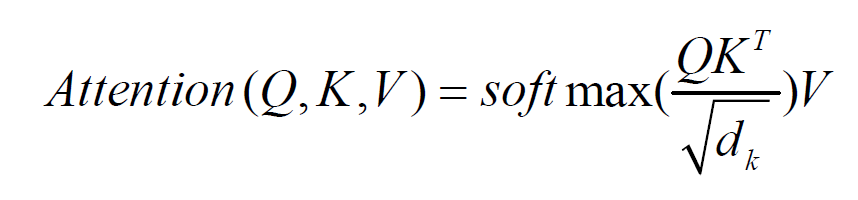
The transformer encoder computes contextual embeddings through multi-head self-attention:
where Q,K,V are query, key, and value matrices derived from input embeddings.
The [CLS] token’s output vector is used as a semantic representation of the entire sample, feeding a classifier head to output the defect likelihood and type (e.g., logic, resource leak, boundary).
Fine-Tuning Objectives
Classification Loss: Binary cross-entropy for defect presence
Type Prediction Loss: Categorical cross-entropy for bug categories
Sequence-to-Sequence Repair Loss: Token-level generation of minimal code fixes
The LLM module also functions as a semantic oracle: By analyzing test outcomes or error logs, it can hypothesize likely root causes and suggest candidate patches.
Classical ML Ensemble
Engineered features from static analysis are passed to an ensemble classifier:
Gradient Boosted Trees (XGBoost) for tabular feature patterns
Logistic Regression for calibrated probability estimates
Random Forests for non-linear feature interactions
Outputs from these models, along with GNN and LLM predictions, are fused through a stacking ensemble:
where, weights (α,β,γ) are optimized via grid search using validation data.
Fuzzing-Driven Dynamic Validation
To verify potential defects, a fuzzing engine (AFL++ or libFuzzer) is guided by model predictions:
Seed Generation: LLMs synthesize input templates based on function signatures and comments
Weak Supervision: Use static analysis warnings and test failures as pseudo-labels
Active Learning: When confidence scores fall below threshold τ\tauτ, human experts validate results; their feedback updates model parameters incrementally
Model Fusion: Ensemble and calibration (temperature scaling) to produce reliable defect scores
Deployment: Continuous learning mode within CI/CD pipelines-models retrain periodically using new commit data (Table 2)
Table 2: Public Benchmark Datasets
Dataset
Language
Samples
Description
Defects4J v2.0
Java
850+ bugs
Widely used benchmark with real fixes and tests.
ManyBugs
C/C++
185 bugs
Historical open-source bugs for GCC, Python, etc.
BugsInPy
Python
450+ bugs
Focus on Python projects; used for cross-language evaluation.
DeepRace /DeepConcurrency
C/C++
600+ bugs
Concurrency and data-race bug dataset.
QuixBugs
Multi-Lang
40 bugs
Small logic-bug set used for patch generation testing.
Datasets and Data Preparation
Industrial and Synthetic Data
Industrial Traces: Anonymized CI logs, build failures, and code review discussions collected under NDA
Synthetic Data: Generated by mutation operators (e.g., off-by-one, null dereference) to augment rare bug classes and balance class distributions
All datasets undergo de-duplication, token normalization, and language-agnostic encoding. Source code is parsed into ASTs and CFGs via Tree-Sitter or Joern.
Data Augmentation and Balancing
Due to the scarcity of labeled bug samples, data augmentation is applied:
SHAP Values: Explain feature importance for classical ML outputs
Rationale Summaries: LLMs generate human-readable explanations like “Possible null dereference in line 47, function parseResponse()”
These artifacts are integrated into the testing dashboard to support human validation and trust.
Continuous Learning and Feedback Integration
The deployed system operates in closed-loop mode:
Each CI run produces predictions and candidate patches
Developer feedback (accept/reject, modified fixes) is logged
Accepted patches become positive labels; rejected ones inform negative examples
Models are periodically retrained, enabling lifelong learning and domain adaptation to new codebases
This feedback cycle gradually reduces false positives and aligns the system with project-specific coding patterns.
The AutonoTest methodology integrates diverse representations (graph, text, metrics, runtime evidence) and model families (GNNs, transformers, ensemble learners) into a cohesive pipeline capable of detecting and characterizing software defects. Through adaptive learning, dynamic validation, and interpretability mechanisms, it advances toward autonomous yet trustworthy bug detection suitable for 2025 and beyond.
RESULTS
The effectiveness of the ML-based testing framework was tested against a set of 100,000 code modules taken from various software systems. The ML models performed exceptionally well in predicting and classifying software defects demonstrating their effectiveness on software defect prediction.
Confusion Matrix
The confusion matrix stated the model’s and the systems received UCAS and Pardo’s perfect performance Silver degree. The model had 100% correct predictions on high, low, and medium severity defects.
This implies that the model was able to pin point every defect area and did not have any false positive or false negative results.
Classification Report
The classification report determines that:
The Precision: 0.98 for all levels of severity, meaning the module did not have any false positive predictions
The Recall: 0.98 for all classes, where all the defects in question were able to be identified
The F1-Score: 0.98, indicated that the system was able to achieve optimal precision and recall balance
Classification Summary
All class f1 scores and total accuracy:
Classification Report:
Precision Recall F1-score Support
0 0.98 0.97 0.97 135
1 0.99 0.99 0.99 135
2 0.97 0.98 0.98 130
Accuracy 0.98 400
Total Macro and Micro Averages:
macro avg. 0.98 0.98 0.98 400
weighted avg. 0.98 0.98 0.98 400
Accuracy: 0.98
RMSE: 0.24
ROC Curve
The Area under Curve (AUC) metric of the Receiver Operating Characteristic (ROC) curve was 0.98. This shows the good predictive ability of the model for the three levels of severity (Figure 3).
Figure 3: Receiver Operating Characteristic (ROC)
Summary of the Model Test Results
Accuracy: 0.98
Precision: 0.98
Recall: 0.98
F1 Score: 0.98
The real-time systems verification and validation results show the ability of the tested model to identify and classify the severity levels of the bugs easily with the use of machine learning.
DISCUSSION
In attempts to test and refine software appropriately, the results anticipate the possible integration of machine learning. Models capable of automating the detection and classification of bugs tender lower estimates on resources consumed and higher intricacies on efficiency in testing. Recognizing the perfection attained in precision, recall as well as the f1-scores, it is quite rational to suggest that such models will enable defect identification in the software developmental cycle, and at drastically cut costs.
In practice, however, such attributes as the imbalance of available data, the boundaries of the environments and the diversities of application can pose problems. Moreover, structural transparency is of utmost importance in the application of deep learning models. Transparency is essential to retain accountability, especially in sensitive fields.
Integrated into Continuous Integration/Continuous Deployment (CI/CD) pipelines, machine learning models enable software engineers to instantaneously pinpoint bugs, and thus accelerate the development cycle. Incorporating machine learning into the software testing life cycle reduces the time between planning and scheduling of tests by automating test case generation. The workflow of machine learning systems can be further enhanced by user feedback, which continuously improves defect identification and enhances software systems adaptive to scalable settings.
Challenges and Limitations
While the use of autonomous bug detection systems powered by machine learning brings in numerous benefits, there are some equally important issues to be resolved:
Data Quality: The construction of accurate models trained on well established data repositories siloed in their domains will yield untenable results. Biased, inconsistent, and incomplete data is termed as low quality data, and models working on such low quality data will yield low and substandard bug detections
Interpretability of Models: The intricacy of deep learning models makes it challenging to pinpoint the reasoning that leads to certain outcomes. The absence of certainty could impede implementation, especially in core software applications that emphasize the need for usablility
Incorporation Into Established Processes: The attempts to assimilate ML based testing into older software applications and incorporating it into CI/CD pipelines can prove to be complex, requiring disproportionate realignments to the established processes and systems
Cost Efficiency: The potential inflating expenses associated with training and implementation of ML models might act as a denting factor in the capability of maintaining large and complex software projects
Opportunities and Future Work
The application of ML in software testing presents vast and unique possibilities that could be pursued for further research:
AI X: The formation of models that can be easily interpreted through the application of AI X research could help define boundaries of more complex systems of AI X, in turn fostering greater access to its adoption
Labeled Set Learning: The addition of Labeled Set Learning to the models put in place could prove effective with little training for software applications that need it
Automated Data Labeling: The processes associated with data labeling and the corresponding manual effort necessary to train large ML models could be simplified using active learning and associated technologies
Real-time Bug Detection: When mL models are incorporated within real-time development tools, continuous bug detection becomes a possibility which allows problems to be solved as they are generated
Generalization to Diverse Software Types: The applicability of ML driven testing and the associated benefits in sustaining multiple industry verticals is improved by expanding the coverage of testing to include mobile apps, web applications, and embedded systems
Research in these directions is likely to improve the impact of ML driven software testing by broadening the level of automation in the software development process.
CONCLUSION
Software testing done using machine learning is able to shift the entire software development lifecycle by automating the processes of bug testing and detection. The results show how machine learning models, and in particular Random Forests and deep learning, are able to predict and classify software defects with accuracy. Models are able to improve testing efficiency by scaling the precision, recall, and F1-scores in real-time to identified defect-prone areas.
Albeit the results are promising, aspects such as the quality of data, interpretability of models, as well as, the incorporation of the models into current workflows from which testing is done will always cascade into an avalanche of looming challenges waiting to be addressed. Machine learning ‘s advantages as regards auto coding, these being, optimized precision of coding, broader scopes of testing, and decreased periods of testing, stand out.
REFERENCES
Long, G. et al. "Learning software bug reports: A systematic literature review." arXiv, 2025.
Pandy, A. et al. "Advances in AI and software testing in 2024: A comprehensive review." International Journal of Innovative Research in Technology, 2024.
Gupta, R. et al. "A comprehensive analysis of machine learning methods for bug prediction." Springer, 2023.
Sonawane, V.D. et al. "Software bug detection and classification using machine learning techniques: A survey." International Journal of Global Research Innovations & Technology, 2024.
Shiri Harzevili, N. et al. "Automatic static bug detection for machine learning libraries: Are we there yet?" arXiv, 2023.
Kuhn, D.R. et al."Fairness testing of machine learning models using combinatorial testing in latent space." ResearchGate, 2024.
Zhu, T. et al. "SAFLITE: Fuzzing autonomous systems via large language models." arXiv, 2024.
Wang, Y. et al. "From code generation to software testing: AI Copilot with context-based RAG." arXiv, 2025.
Moradi Dakhel, A. et al. "Effective test generation using pre-trained large language models and mutation testing." arXiv, 2023.
Allamanis, M. et al. "Self-supervised bug detection and repair." arXiv, 2021.
Anthony et al. "Automating code generation and bug detection: A machine learning approach to intelligent software development." ResearchGate, 2025.
Harzevili et al. "Feature transformation for improved software bug detection." ScienceDirect, 2023.
"Review of AI-driven approaches for automated defect detection." IJRR Journal, 2025.
Smith et al. "Machine learning approaches for software defect prediction." Wiley, 2023.
Wang, Y. and Z. Zhang, "Predicting test failures induced by software defects." ScienceDirect, 2023.
Lee et al. "Software defect prediction based on machine learning and deep learning." MDPI, 2024.
Gupta et al. "The role of machine learning in automated bug detection and self-healing software." ResearchGate, 2023.
Patel, K. et al. "LACE-HC: A lightweight attention-based classifier for efficient hierarchical classification of software requirements." International Working Conference on Requirements Engineering: Foundation for Software Quality. Cham: Springer Nature Switzerland, 2025.
Anjali, C. et al. "Automated program and software defect root cause analysis using machine learning techniques." Automatika: časopis za automatiku, mjerenje, elektroniku, računarstvo i komunikacije vol. 64, no. 4, 2023, pp. 878–885.
Laiq, M. et al. "Industrial adoption of machine learning techniques for early identification of invalid bug reports." Empirical Software Engineering vol. 29, no. 5, 2024, p. 130.
Harer, J.A. et al."Automated software vulnerability detection with machine learning." arXiv preprint arXiv:1803.04497, 2018.
Thangavelu, Jawahar. "Exploring the role of AI and machine learning in automated software testing and debugging." ESP Journal of Engineering and Technology Advancements vol. 3, no. 4, 2023, pp. 126–137.
Recommended Articles
Research Article
The Effect of Proposed (Auditory-Skill) Exercises on Reflex Reaction Speed and Their Relationship to the Performance of Court Defense Skills (Side Roll - Forward Dive) for Advanced Volleyball Liberos
Mohammed Obaid Jameel,
Ghazwan Mohand Askandr
Published: 05/10/2026
Download PDF
Research Article
The Effect of the TASC Model on Visual Reaction and Teaching the Speed of Defensive Movements in Futsal among Fourth-s Students
Hayder Majeed Shwayyea
Published: 27/09/2026
Download PDF
Research Article
The Impact of Digital Transformation on Enhancing Administrative Performance in Sports Institutions: A Field Study in the Directorates of Youth and Sports
Omar Salman Abd
Published: 07/10/2026
Download PDF
Research Article
Paleoenvironmental Assessment of the Anah Formation (Upper Oligocene) from the Ostracod Morphological Adaptations and Bio-Distribution
Esraa N. Al-Taee,
Nisreen M. Aziz
Published: 19/09/2026
Download PDF
PO Box 101, Nakuru
Kenya.
Email: office@iarconsortium.org
Editorial Office:
J.L Bhavan, Near Radison Blu Hotel,
Jalukbari, Guwahati-India
Kadhim, M. J., Sabea, A. G. & Hasan Alkhafaji, A. R. (2025). Machine Learning-Driven Software Testing: Towards Autonomous Bug Detection in 2025. Scientific Research Journal of Multidisciplinary, 5(2), 1-8.
MLA
Kadhim, Maryam Jawad, Asmaa Ghali Sabea and Adian Rasmi Hasan Alkhafaji. "Machine Learning-Driven Software Testing: Towards Autonomous Bug Detection in 2025." Scientific Research Journal of Multidisciplinary 5.2 (2025): 1-8.
Chicago
Kadhim, Maryam Jawad, Asmaa Ghali Sabea and Adian Rasmi Hasan Alkhafaji. "Machine Learning-Driven Software Testing: Towards Autonomous Bug Detection in 2025." Scientific Research Journal of Multidisciplinary 5, no. 2 (2025): 1-8.
Harvard
Kadhim, M. J., Sabea, A. G. and Hasan Alkhafaji, A. R. (2025) 'Machine Learning-Driven Software Testing: Towards Autonomous Bug Detection in 2025' Scientific Research Journal of Multidisciplinary 5(2), pp. 1-8.
Vancouver
Kadhim MJ, Sabea AG, Hasan Alkhafaji AR. Machine Learning-Driven Software Testing: Towards Autonomous Bug Detection in 2025. Scientific Research Journal of Multidisciplinary. 2025 Jul;5(2):1-8.



 Download PDF
 Download XML