A factorial experiment was carried out in field to study the effect of Nanosilicon (98%SiO2) at three levels (0, 50, and 100 kg SiO2 ha-1) and phosphorus fertilizer in the form of concentrated superphosphate at levels 0, 30, and 60 kg P ha-1, on ionic composition and the prevailing salt of a saline soil, as well as growth and yield of Cauliflower. The results indicated that adding silicon led to a decrease in the concentration of all soluble ions except sodium, which led to a decrease in soil salinity, while phosphorus had the opposite effect, leading to an increase the concentration of soluble ions and, as a result, an increased soil salinity. The results also showed that the addition of Nano-silicon up to 100kgSiha-1 and phosphorus fertilizer up to 60 kgSiha-1 led to increase in the shoot dry weight and curd weight of plant. The level of 100 kg Si ha-1 and the level of 30 and 60 kg Si ha-1 gave the highest values for the dry weight and yield, respectively. In summary, these results revealed that enhancement of plant growth and yield by appropriate application of silicon in saline soil may regard as a key to reduce the harm full effect of salinity.
Keywords
Nanosilicon
Salinity
Cauliflower
Dry weight
K/N.
INTRODUCTION
Agriculture in arid and semi-arid regions faces the problem of salinity, which affects more than 20% of the arable land over the world, and may reach more than 50% of these lands (Hu and Schmidhalter, 2004). Salinity negatively affects the soil properties and causes a change in soil moisture state, permeability, and ionic balance in the soil solution, as well as the direct effect on the plant including osmotic potential. Toxicity effects. Imbalanced of nutritional cations in the tissues or reduction in carbon fixation during photosynthesis (1). As a result, plant growth and productivity may be reduced to reach the economically effective limits. One of the most important sources of soil salinization in arid and semi-arid regions is irrigation water, since there are few sources of fresh water, which led to use non-fresh water sources as a means to compensate for a deficiency of fresh water. The bad management of using such water may enhances the salinity problem. The ability of plants to tolerate salts effects is in considerable importance in arid and semi-arid regions. So, alleviation of salinity effects by different approaches involving soil-plant-water system development to enhance plant salt tolerance. Cauliflower (2), is a winter crop belonging to the Brassica oleracea family. It is one of the most consumed vegetables among all the world. It contains a high contents of vitamin B1, B2 and B6 as well as C and K which is useful in preventing cancer. (3) indicated that increasing soil salinity from 2.0 to 6.0 dS m−1 caused a decrease in yield from 26.9 to 9.6 t ha−1 and in cauliflower. (4) also found a reduction in cauliflower yield from 67.91 to 48.45 Mg ha-1 with increasing irrigation water salinity from 1.4 to 4.5 dSm-1 contributing that to the osmotic potential and toxicity of salts accumulation in soil solution.
Silicon (Si) is the second most abundant element in the earth's crust (27.7%) after oxygen. Some researchers classify this element as one of the necessary multi-use elements because of its multiple beneficial roles for plant growth, especially under stress conditions such as salinity, Silicon can reduce the concentration of salts in soil as a result of increasing their solubility in the soil solution and increasing their mobility and /or increasing plant ability to absorb ions (5),6) indicated that silicon improves plant’s absorption selectivity and sodium ion collection in the soil or roots, thus reducing salinity damage. (7) found that adding Si led to increased K absorption and decreased Na absorption, which led to better plant growth under salt conditions. Based on the above data and the lack of studies related to the effect of salinity on cauliflower plants in study region, this study was conducted to demonstrate the growth and yield cauliflower plants under high soil salinity and the role of silicon along with phosphorus fertilization in alleviating salinity harmfull effects.
MATERIALS AND METHODS
Afield experiment was conducted at the Agricultural Research Station, College of Agriculture ,University of Basrah, Garmat Ali region (47⁰44'40"E and 30⁰33'44"N with 3 m elevation and 9.78 km away from the Basrah center ) during the grown season of 2023-2024. The area is characterized as arid region with low annual rainfall(<100mm). The area has along dry season from March to September with high temperature of a peak reached 520C in July and August .Irrigation water used in the area is classified as saline peaking>20dSm-1 because of the movement of salt tidal front of Arabian Gulf along Shatt Al-Arab river which resulting secondary soil salinization in the area.
Composite soil sample (0-30cm) was taken, air- dried , grinded and passed through 2mm sieve, then measure the initial soil properties according to methods described by Richards(1854) and Page et al.(1982) (Table 1). The experiment lay out under the following factors: -
1- Silicon level: Nano silicon was added at levels 0, 100, and 200 kg SiO2 ha-1.
2- Phosphorus fertilizer addition: phosphorus was added at levels of 0, 30, and 60 kg P ha-1 as concentrated superphosphate (20% P). The experiment was designed as a factorial experiment in a randomized complete block design (R.C.B.D) with three replications. The field was plowed in two perpendicular plows at a depth of 0.4 m , smoothing .The field and leveling was divided into three blocks. Each block containing 9 experimental unite with a 2m length entervalled by 1m. The cultivation was done on a row, the distance between tow rows was 1 m, All rows were fertilized with animal manure (cow) at a level of 5 tons ha-1 at a depth of 0.2 m. Each experimental unit contained 5 plants, with a 0.4m distance between one plant and another. The plants were irrigated using a drip irrigation system using Shatt Al-Arab water. White flake cauliflower seedlings were sowing in plastic dishes and then transplanted to the field after they reached the stage of three leaves. Nano silicon(98%SiO2) (Fadak complex new technologies Iran) was added to the soil along with plants line in two doses at planting and 15 days after the first dose. Concentrated superphosphate fertilizer(20%P) was added in along the line of the plants in a homogeneous manner at planting date were added urea fertilizer (46% N) at a rate of 250 kg N ha-1 and potassium sulfate fertilizer (43% K) at a rate of 160 kg K2O ha-1. Nitrogen was added in three doses during the growing season, and potassium was added in one dose a planting date. All agricultural practices adopted in the region were carried out until the end of the plant season and harvesting the crop. At post- harvest stage a randomzed samples were taken from the surface layer (0-30 cm) from each experimental unit, thoroughly mixed, air-dried, then passed through a 2mm sieve. soil analyze for pH and EC in the soil suspension and extract (1:1). according to the method mentioned in Page et al (1982), The dissolved ions in the extract (1:1) (Ca++, Mg++, Na+, K+, CO3=, SO4=, Cl-) were also extracted and estimated according to the standard methods mentioned in Richards (1954) and Page et al. (1982). The theoretical correlation method (Hypothetical combination) was used to identify the predominant salt in the treatments by using the concentrations of the above ions after converting to unit mill MeqL-1 (Al-Zubaidi, 1989). Leaf samples were taken from two plants for each experimental unit, cleaned, dried at 70°C and digested with the acid mixture of 4%HClO4+H2SO4 (Cresser and parsons, 1979).
Table 1 : some chemical and physical properties of soil.
Property Value
pH (1:1 in Water) 7.80
electrical conductivity (EC) 29.22 dsm-1
Calcium 44.50 mmol L-1
Magnesium 21.00 mmol L-1
Sodium 81.30 mmol L-1
Carbonate 0.00 mmol L-1
bicarbonate 6.01 mmol L-1
sulfate 7.50 mmol L-1
chloride 195.00 mmol L-1
Soil texture loam
.
The concentration of potassium and sodium was estimated in the digest using a flame photometer, and the K/Na ratio was calculated. Two plants were taken from each experimental unit and their vegetative parts were dried at 70°C. and the dry weight was recorded. Weight of curd were recorded for all plants in the experimental unit and then the average was determined. The data was subjected to statistical analysis as a two-factor experiment using analysis of variance (ANOVA) by using the GenStat 18.2 program, then means were compared using the revised least significant difference (RLSD).
RESULTS AND DISCUSSION
Effect of Nano-silicon and super phosphorus soluble ions on soil:-
Table (2) indicated that adding Nano silicon led to a significant decrease in the concentration of calcium ions in the soil solution compared to the control, which gave the highest value of 41.66 mmol L-1, and its lowest value reached 6.53 mmol L-1 at 100 kg Siha-1. These results were consistent with the results of (8) who found that increasing levels of silicon led to a reduction in the activity of calcium ions due to the formation of Ca-Si complexes and thus a decrease in their concentration in soil solution. (9) indicated that the reduction in calcium concentration could be a result of increasing absorption by plant due to the reduction of salt pressure resulting from the addition of silicon.
Table(2) also indicated that phosphorus application caused an increase in the concentration of calcium at level 30 kg p ha-1(20.24 mmolL-1), then it decreased significantly at 60 kg p ha-1( 17.24 mmol L-1 ) compared to the control, which gave a value of 19.14 mmol L-1, This can be attributed to the increasing the chance of formation of Ca-p complexes at high levels (10, 11) found that there is a significant correlation between soil salinity and Ca-P compounds, resulting a negative significant correlation (r = -0.64) between soil salinity and available phosphorus, since calcium and lead to binding the orthophosphate ion and their adsorption on clay particles (12). Increasing plant growth and ability to absorb calcium my Ca confirmed the reduction of calcium in soil solution.The increase at the low level (30kgpha-1) may be attributed to the presence of calcium in the superphosphate fertilizer constructing (12-14%). The results of interaction between the addition of silicon and phosphorus indicated that the lowest value found at the level 100 kg Si ha-1 along with 60 kg P ha-1 with a value of 2.80 mmol L-1.
Table 2 showed that addition of Nano silicon caused a significant decrease in magnesium concentration in soil solution, reaching 7.43 mmol L-1 at level of 100 kg Si ha-1 and 9.70 mmol L-1 at level of 200 kg Si ha-1 compared to the control treatment that gave the highest values(9.23 mmol L-1). (13) attributed the decrease soluble magnesium to increasing the absorption by plant as a result. (14) concluded that decreasing soil magnesium concentration is due to the
Table (2) Effect of phosphorus and nano-silicon on the concentration of some positive and negative ions in the soil solution
P( kgPha-1) levelSi level (kgSi ha-1 )
0 100 200 mean
Ca+2 mmolL-1
0 40.14 8.00 9.30 19.14
30 39.93 8.80 12.00 20.24
60 44.93 2.80 3.99 17.24
mean 41.66 6.53 8.43
R.LS.D : P= 0.78 ; S = 0.78 ; P×S = 1.34
Mg+2 mmolL-1
0 14.00 6.40 8.40 9.60
30 22.40 7.09 10.89 13.46
60 21.30 8.80 9.80 13.30
mean 19.23 7.43 9.70
R.LS.D : P= 0.88 ; S = 0.88 ; P×S = 1.59
Na+mmolL-1
0 67.00 69.97 72.58 69.84
30 64.00 66.97 74.49 68.49
60 73.90 73.73 86.40 78.01
mean 68.30 70.22 77.82
R.LS.D : P= 1.56 ; S = 1.56 ; P×S = 2.95
K+ mmolL-1
0 0.80 0.35 0.56 0.57
30 0.78 0.30 0.48 0.51
60 1.04 0.48 0.90 0.80
mean 0.86 0.37 0.64
R.LS.D : P= 0.039 ; S = 0.039 ; P×S = 0.71
Cl- mmolL-1
0 159.16 130.00 110.00 133.05
30 159.60 100.00 100.00 119.88
60 190.79 110.00 106.66 128.84
mean 169.87 110.00 106.66
R.LS.D : P= 2.80 ; S = 2.80 ; P×S = 4.88
HCO3= mmolL-1
0 4.00 2.30 2.40 2.90
30 4.80 2.80 3.20 3.60
60 5.60 3.10 3.10 3.93
mean 4.80 2.73 2.90
R.LS.D : P= 0.32 ; S = 0.31 ; P×S = 0.73
SO4= mmolL-1
0 7.66 0.24 0.28 2.72
30 7.66 0.41 0.57 2.88
60 7.69 7.69 0.59 5.32
mean 7.67 2.78 0.48
R.LS.D : P= 0.16 ; S = 0.16 ; P×S = 0.27
improvement in plant metabolism and growth after the addition of silicon, which leads to an increase in the absorption of ions by roots. The results showed that phosphorus addition led to a significant increase in magnesium concentration in soil solution. The highest value was obtained at level of 30 kg P ha-1, which will not differ significantly from the level of 60 kg P ha-1 ( 13.46 mmol L-1) compared to the control treatment with a value of 9.60 mmol L-1. This can be attributed to the high acidity of the superphosphate fertilizer which dissolves some salts, causing an increase in its concentration. This is consistent with the results of (15), who found that adding phosphate fertilizer led to a significant increase in Soil magnesium soil solution by increasing the addition level. The interaction between Nanosilicon and phosphorus levels led to significant differences with a highest value (22.40mmolL-1) at 0 Si ha-1 and 30 kg P ha-1, , while the interaction of 100 Si ha-1 and 30 kg P ha-1 gave the lowest (7.09 mmol L-1). It can be seen that the concentrations of calcium and magnesium in soil solution have the same trend in regard to the effect of Silicon and phosphorus levels.
The results of table 2 showed that increasing silicon levels consequently increase sodium concentration in soil solution, with a mean value of 68.30, 70.22 and 77.82 mmolL-1 at levels of 0,100 and 200 kgSiha-1, respectively. This is due to the high plant selectivity resulting from the addition of silicon. Many studies indicated that silicon improves plant selectivity and prevents sodium from penetrating into the plant cell and accumulating it in the root and soil solution (16), in addition to the fact that the interaction among silicon, calcium, and magnesium resulting in increased sodium accumulation in the plant. roots (17). The results also indicated that addition phosphorus resulted an increase in sodium concentration in soil solution, reaching the highest value of 78.01 mmol L-1 at the 200kgSiha-1 treatment. This may be attributed to the competition of calcium (which concentration decreased as a result of the formation of complexes with phosphorus) and sodium on the surfaces of soil colloids leading to an increase in the concentration of sodium in soil solution (18). The results also showed that the highest values of soluble sodium were obtained at the highest levels of silicon and phosphorus reaching 86.40mmolL-1 which significantly superior among other treatments with an increase percents ranged 15.98 – 35.00%.
Soluble potassium concentration in soil solution reached 0.37 and 0.64 mmol L-1 for 100 and 200 kg Si ha-1, respectively, while reached the highest value of 0.86 mmol L-1 at control. The decrease in soluble potassium may due to increasing absorption by plants as a result of improved growth due to addition of silicon (19). On the other hand, the results showed an increase in potassium concentration after addition of phosphorus with a highest value of 0.80 mmol L-1 at 60 kg pha-1, compared to lowest value of 0.57 mmlL-1 at the control treatment. (15) attributed this to potassium and calcium antagonism, leading to a decrease in the plant’s absorption of potassium since the concentration of calcium is tenfolds the concentration of potassium in the solution (Table 2). The highest value of soluble potassium was recorded at treatment of 0 kg Si ha-1 along with 60 kg P ha-1(1.04 mmol L-1) while the lowest value was recorded at treatment of 100kgSiha-1 along with 30kgSiha-1 (0.30mmlL-1) .
The results of table (2) indicated a negative effect of the addition of silicon on chloride concentration. Increasing silicon level from 0 to 200kgsiha-1 decreased chloride concentration 169.87 mmol L-1 to 106.66 mmol L-1. The reason can be attributed to the decrease in the concentration of ions with an increase silicon level due to the formation of complexes between the ions and silicon or due to the increase in plant growth and its ability to absorb, resulting in small quantities of these ions present in the soil solution. Addition of phosphorus levels significantly decrease in the concentration of chloride, and the highest value ( 133.05 mmol L-1 ) registered at level of 0 kg P ha-1, which matches the results of Al-Maghrabi (2015) who obtained the lowest chloride concentration(320 C mole.kg-1) at the highest level of phosphorus addition of 120 kg P ha-1. The highest value of the interaction was 190.79 mmol L-1 in the treatment of 0 kg Si ha-1 along with 60 kg P ha-1. In contrast, the treatment of 100 or 200 kg Si ha-1 along with 30 kg P ha-1 gave the lowest values of 100 mmol L-1.
Table 2 showed Different level of silicon had significant influence on bicarbonate concentration in soil solution (table2). Bicarbonate concentration decreased gradually with increasing silicon levels. The maximum concentration (4.80mmolL-1) was recorded from control treatment . The improvement of plant growth and up take capacity may explain the decrease in the concentration of bicarbonate as which we noticed with the rest ions studied. Increasing phosphorus levels led to an increase in bicarbonate concentration. Bicarbonate concentration increased gradually with increasing phosphorus levels. That was possibly due to an increase in the solubility of many compounds after addition of phosphorus and the formation of Ca-P complexes, which led to an increase bicarbonate ions into the soil solution. Control silicon treatment was found to be the highest bicarbonate concentration at all phosphorus levels, while oppositely the control phosphorus treatments was found to be the lowest values at all silicon levels.
The addition of Nanosilicon showed a significant decrease in sulfate concentration, It decreased by 93.74% at the addition level of 200 kg Si ha-1compared to control. (20) explained that the decrease in the concentration of sulfate resulting from the addition of silicon is due to the high absorption resulting from improved plant growth and the effect of dilution. On the other hand, the addition of phosphorus resulted in an increasing in sulfate concentration with a highest value(5.32mmolL-1) at 60 kg P ha-1. This is possibly due to the increasing the release of many ions as a result of adding phosphorus to the soil, in addition to that concentrated superphosphate fertilizer contains a sulfur of about 1% sulfur (21). Interaction treatment indicated that the highest value of sulfur was registered at the highest level of phosphorus and the lowest level of silicon( 7.69 mmol L-1) while it was significantly superior to most of the interaction treatment.
It can be concluded from the results of cations and anions the opposite trends of the effect of silicon and phosphorus. While silicon caused a decrease in the concentrations, phosphorus increased their concentration. Sodium differed from the rest of the ions this phenomenon since the tow factors have similar trend. This confirms the nature of the selectivity that may develops in plants treated with an appropriate level of silicon.
Effect of Nanosilicon and phosphorus on soil salinity:
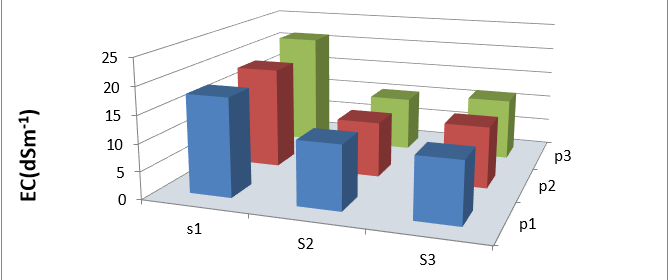
In figure(1), soil salinity expressed as dSm-1 significantly affected by silicon and phosphorus levels and their interaction. Soil salinity decreased with increasing silicon levels. The mean values were 19.30, 10.71 and 10.71 and 11.31 dS m-1 for the level of 0, 100 and 200 kg Si ha-1 respectively. These results were similar to that of both Lee and Kim (2006) and Jabal and Abdulkareem (2023). This can be attributed to decreasing the cations and ions in soil solution as a result of addition silicon, then led to decrease soil salinity. Figure 1 showed that increasing phosphorus levels a significant increased soil salinity, which can be attributed to an increase in the concentration of the most of the ions in soil solution. (22) found that adding phosphorus to calcareous soil at rates 50, 100 and 150 kg P2O5 ha-1 led to a significant increase in soil salinity. The highest values of soil salinity (20.28 dS m-1) were registered in soil treated with 0 kg Si ha-1 and 60 kg P ha-1. In contrast, soil treated with 100 kg Si ha-1 and 0 kg P ha-1 gave the lowest value of 10.20 dS m-1, so this result confirms the role of silicon in reducing soil salinity by up to 50%, and it can be used as a strategy to reduce the damage caused by soil salinity or irrigation water for plants.
Figure 1 Effect of Nanosilicon and phosphorus on soil salinity .(S1=0 kg Si ha-1; S2=100 kg Si ha-1; S3=200 kg Si ha-1;P1=0 kg P ha-1; P2=30 kg P ha-1; P3=60 kg P ha-1; RLSD(S=0.68,P=0.70, S×P=1.18)
Effect Nanosilicon and phosphorus on the prevailing salt in soil :-
It is showed from Table (3) that the dominance of salts for all treatments at low levels (S1, S2) and (P1, P2) was same and it followed the sequence: CaHCO3 > CaSO4 > CaCl2 > MgCl2 > NaCl. This is due to the opposite effect of the silicon and phosphorus on the dominance of soluble ions (Table 2) ,since one of them cancels the effect of the other on calcium precipitation .The results also indicated that the variation in the dominance of salts occurred in treatments S3P1 and S2P3, resulting from increasing the level of silicon or phosphorus to the level that can control the solubility of ions in the solution, and dominance of a particular salt. As for treatment S2P3, the addition of silicon and phosphorus at high levels caused a precipitation of calcium ions as Ca-p
Table(3)Effect of Nanosilicon and phosphorus and on Prevailing salt in soil
Prevailing salt
Treatment
CaHCO3> CaSO4> CaCl2> MgCl2> NaCl
S1P1
1
CaHCO3> CaSO4> CaCl2> MgCl2> NaCl
S1P2
2
CaHCO3> CaSO4> CaCl2> MgCl2> NaCl
S1P3
3
CaHCO3> CaSO4> CaCl2> MgCl2> NaCl
S2P1
4
CaHCO3> CaSO4> CaCl2> MgCl2> NaCl
S2P2
5
CaHCO3> CaSO4> MgSO4> MgCl2> NaCl
S2P3
6
CaHCO3> MgHCO3> MgSO4> MgCl2> NaCl
S3P1
7
CaHCO3> CaSO4> CaCl2> MgCl2> NaCl
S3P2
8
CaHCO3> CaSO4> CaCl2> MgCl2> NaCl
S3P3
9
.(S1=0 kg Si ha-1; S2=100 kg Si ha-1; S3=200 kg Si ha-1;P1=0 kg P ha-1; P2=30 kg P ha-1; P3=60 kg P ha-1
and Ca-Si complexes, leading to the predominance of magnesium ions and formation of MgSO4 salt unlike the other treatments. For treatment S3P1, the effect is due to the presence of high levels of silicon, which led to the formation of Ca-Si complexes and the beginning of the dominance of the magnesium ion, forming two salts, MgHCO3 and MgSO4. The difference in salts in the two treatments may be confirmed by superior effect of silicon over phosphorus for calcium precipitation process under experimental conditions. (22) indicated that increasing silicon application leads to the formation of more silicon-calcium complexes and thus decreasing the amount of soluble calcium in soil solution. (23) explained that the reduction in calcium concentration could be a result of increasing absorption rate of this ion after addition of silicon. It can be concluded that the dominance of any salt in soil grow with plant strongly controlled by plant uptake potential as well as solubility.
Effect of Nanosilicon and phosphorus on the K/Na ratio in leaves:
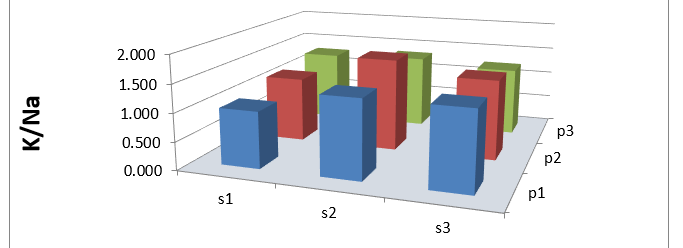
The presence of sufficient concentrations of potassium under salinity conditions is so important for the plant to remain healthy and active, and the presence of a high percentage of this element indicates its tolerance to salinity. One of the most important measurements of plant salinity tolerance is K/Na ratio in plant tissues, and its value depends on the selectivity in absorption and transport of potassium and sodium ions, since It controls H-ATPase activity in the plasmalema of root cells (23). Figure 3 showed that application of Nanosilicon significantly increased K/Na ratio reaching 1.16, 1.47, and 1.36 for levels of 0 , 100. and 200 kg Si ha-1, respectively. These results were similar to the results of (24, 25) attributed this to the high selectivity of the plant treated with silicon, in addition to the fact that the addition of silicon resulted an increase in sodium accumulation in roots and its failure to rise to the vegetative part, which is consistent with the results for sodium and potassium (Table 2), since the concentration
Figure (3) Effect of Nanosilicon and phosphorus on K/Na ratio in leaves.(S1=0 kg Si ha-1; S2=50 kg Si ha-1; S3=100 kg Si ha-1;P1=0 kg P ha-1; P2=30 kg P ha-1; P3=60 kg P ha-1 ;RLSD(S=0.1,P=0.09, S×P=0.18)
of sodium in the soil solution increased, while the concentration of potassium in the soil solution decreased. The results also showed that adding phosphorus increased the K/Na ratio in plant tissue, and the highest value (1.42) was obtained at 30 kg p ha-1 compared to lowest value in the control treatment (1.27), despite that phosphorus had the same effect in both soluble potassium and soluble sodium (Table 2), however, potassium is superior to sodium absorbed by the plant, confirming the role of phosphorus in improving potassium absorption and increasing in the leaves. The results of (26) showed a higher response of alfalfa plant to potassium fertilization when sufficient amounts of phosphorus were added, and the reason for this may be due to increased root growth. after phosphorus addition, enhanced the uptakes of nutrients, including potassium. The results also indicated that there were significant differences for the interaction treatments. Plants treated 100 kg Si ha-1 along with 30 kg P ha-1 gave the best K/Na ratio with a mean value of 1.66 and it outperformed all interaction treatments, while the lowest value was 1.01 associated with no adding silicon and phosphorus, with an increase percent between the two values of 64.35%.
Effect of Nanosilicon and phosphorus on shoot dry weightof cauliflower :
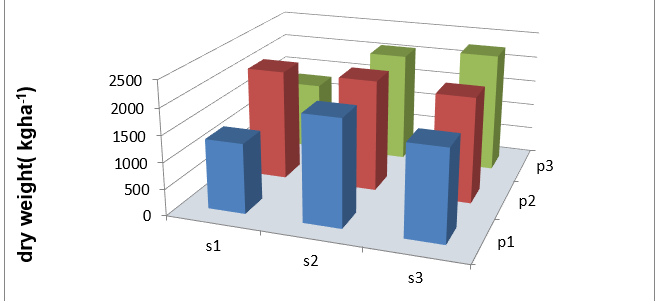
The addition of Nano-silicon increased the shoot dry weight, with a mean value of 1583.55, 2079.91, and 2009.55 kgha-1 for levels of 0, 100, and 200 kg Si ha-1, respectively. A significant differences between level and another were found (Figure 4). Controlling The nutrients uptake after the addition of silicon positively affect absorption processes, photosynthesis and the formation of carbohydrates, which results in an improvement in plant height, number of leaves and leaf area plant (27,28) also found that adding silicon significantly.
Figure (4)Effect of phosphorus and Nano-silicon on Dry weight(kg ha-1).(s1=0 kg Si ha-1; S2=50 kg Si ha-1; S3=100 kg Si ha-1;P1=0 kg P ha-1; P2=30 kg P ha-1; P3=60 kg P ha-1;RLSD(S=152.67,P=158.39, S×P=287.07)
enhance the plant water use efficiency (WUE) and increases the rate of photosynthesis in wheat and corn due to the role of silicon in increasing the activity of enzymes and biochemical processes in plant tissues. In the present study ,decreasing soil salinity by about 50% (Figure 1) and increasing the K/Na ratio in leaves (Figure 3) were confirmed the improvement in the dry weight of cauliflower plants under experimental conditions. Reducing salinity damage resulted in increased plant activity, increased photosynthesis rates and the existence a high percentage of potassium at over sodium in the leaves. The role of potassium in sugar and starch synthesis, assimilation of lipids, fixation of nitrogen, neutralization of organic acids and osmotic control has been proven (29). On the other hand, the slight decrease in shoot dry weight with the higher level of silicon (200kgSiha-1) may attributed to the stress response with negative effect on plant growth and utilization of soil nutrients (30, 31) found that moderate Si level enhances biomass and grain yield as well as nutrient use efficiency, but high level results a negative effects on such parameter .
Data of figure(4) showed that increasing phosphorus levels increased the dry weight of cauliflower. Mean values were 1684.25, 2079.61, and 1906.16 kg ha-1 for 0,30 and 60 kg pha-1, respectively. Phosphorus plays an important role in plant growth and development through involvement in the formation of energy-rich compounds (ATP, GTP, and CTP). It is also included in the composition of some co-enzymes (Abu Dahi and Al-Younis, 1988). Phosphorus is also control the process of decomposing carbohydrates and other substances ,releasing energy and forming amino acids, which are considered the basis for building plant cells (Jayapaul and Devasagayam, 1997). Phosphorus also stimulates the cytokinins building, which are important in increasing the growth of buds and increasing the number of branches (Muhammad and Younis, 1991).
The interaction treatments between Nanosilicon and phosphorus showed significant differences in dry weight. The combination between 200 kg Si ha-1 and 60 kg P ha-1 gave the highest dry weight of 2288.25 kg ha-1, while the lowest values (1319.00 kg ha-1 ) was obtained with the combination of 0 kg Si ha-1 and 60 kg P ha-1, which did not differ significantly from the combination of 0 kg Si ha-1 and 0 kg P ha-1.
Effect of Nanosilicon and phosphorus on curd weight: of cauliflower: -
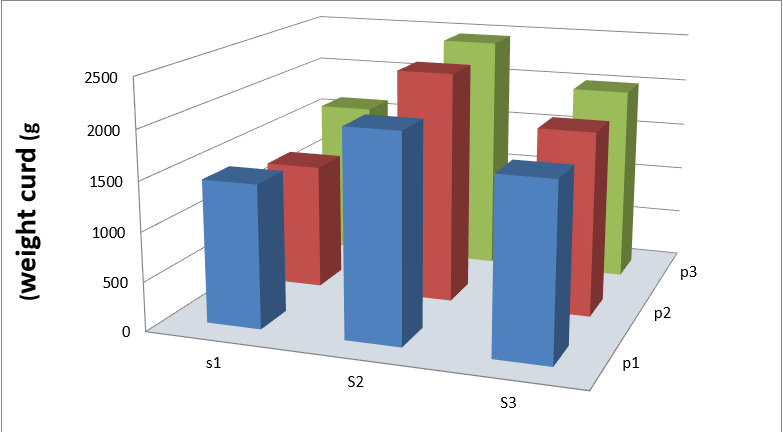
Addition of Nanosilicon significantly increased the curd weight of cauliflower, reaching values of 2297.55 and 1879.88 g. head-1 for 100 and 200 kg Si ha-1, respectively, compared to the control treatment (1455.55 gm. head-1). This is due to the positive effect of silicon on shoot dry weight, uptake nutrient and increasing K/Na ratio leading to increasing curd weight. Silicon plays a role in increasing the size of chloroplasts and increasing the number of grana (units present in the structure of the chloroplast wall) (32). Silicon may have a role in enhancing plant uptake of involved in manufacturing chlorophyll, including iron and magnesium (33). Improving growth and increasing photosynthesis rates resulting in increase food processing and transportation to sinks. These results are similar to the results of (S34) The significant decrease of curd weight at higher level of silicon (200kgSiha-1) compared to 100kgSiha-1 was same to that of shoot dry weight (Fig.4) .
The results also indicated a significant effect of phosphorus levels in curd weight
Figure (5) Effect Nanosilicon and phosphorus on curd weight of cauliflower (gm head-1).(S1=0 kg Si ha-1; S2=50 kg Si ha-1; S3=100 kg Si ha-1;P1=0 kg P ha-1; P2=30 kg P ha-1; P3=60 kg P ha-1 ;RLSD(S=152.67,P=158.39, S×P=287.07)
(Fig.5). The mean values of curd weight were1839.55 and 2030.00 g. head-1 for the levels 0,30and 60 kgpha-1, respectively. This is of course due to the role of phosphorus in increasing growth (dry weight) and nutrients uptake. In regards to interaction effect, Fig.5 illustrated the superiority of plant received silicon at rate of 100 kgSiha-1 in curd weight at all phosphorus level. However, plant received phosphorus at rate of 60kgpha-1 gave the highest curd weight. It can be concluded the positive role of adding Nanosilicon at level of 100kgSiha-1 in reducing soil salinity to the level that contributed to improving growth and yield of cauliflower grown in saline soil. However, increasing silicon to 200kgSiha-1 decreased growth and yield of plant. Data also revealed that increasing phosphorus levels from 0 to 30 and 60 kgpha-1 gradually increased plant growth and yield inspite of the slight elevation in soil salinity.
REFERENCES
Abu Dahi, Youssef Muhammad. "The Effect of Foliar Feeding with Nitrogen, Phosphorus, and Potassium and Its Efficiency Compared to Adding It to the Soil for Vegetable Crops in Protected Agriculture Conditions." The Second National Scientific Conference on Soil and Water Resources, College of Agriculture, University of Baghdad, Iraq, 2002.
Abdul Qados, A., and A. Moftah. "Influence of Silicon and Nano-Silicon on Germination, Growth, and Yield of Faba Bean (Vicia faba L.) under Salt Stress Conditions." American Journal of Experimental Agriculture, vol. 5, no. 6, 2015, pp. 509–524. DOI: 10.9734/AJEA/2015/14380.
Abu Dahi, Youssef Muhammad, and Muayyad Ahmad Al-Younis. Plant Nutrition Guide. Ministry of Higher Education and Scientific Research, University of Baghdad, Republic of Iraq, 1988.
Al-Quraishi, Heba Kalf Razzaq. "The Effect of Phosphate and Organic Fertilization on Soil Phosphorus Forms and Its Relationship to Its Readiness in the Soil and Yellow Corn Yield." Master's thesis, College of Agriculture, University of Basra, 2016.
Al-Saeedi, A. H. "Contribution of Nano-Silica in Affecting Some of the Physico-Chemical Properties of Cultivated Soil with the Common Bean (Phaseolus vulgaris)." Journal of Advanced Agricultural Research, vol. 25, no. 4, 2021, pp. 389-400.
Al-Saidi, Bassam Mazhar Kazem. "The Role of Silicon in Reducing the Effect of Irrigation Water Salinity and the Toxicity of Some Heavy Metals on the Growth of Yellow Corn Plants." Master's thesis, College of Agriculture, University of Basra, 2016.
Al-Taey, DKA. "Effect of Spraying Acetyl Salicylic Acid to Reduce the Damaging Effects of Salt Water Stress on Orange Plants (Citrus sinensis L.)." Journal of Kerbala University, vol. 7, no. 2, 2009, pp. 192-202.
Al-Zubaidi, A. H. Soil Salinity: Theoretical and Applied Foundations. Bail al-Hikma Pub., University of Baghdad, 1989.
Arif, M., S. Ali, A. Shah, N. Javed, and A. Rashid. "Seed Priming Maize for Improving Emergence and Seedling Growth." Sarhad Journal of Agriculture, vol. 21, no. 4, 2005, pp. 539-543.
Barker, A. V., and G. M. Bryson. "Nitrogen." Handbook of Plant Nutrient, edited by A. V. Barker and D. J. Pilbeam, CRC Press, 2007, pp. 21-50.
Bosnic, P., M. Pavlicevic, N. Nikolic, and M. Nikolic. "High Monosilicic Acid Supply Rapidly Increases Na Accumulation in Maize Roots by Decreasing External Ca2+ Activity." Journal of Plant Nutrition and Soil Science, vol. 182, 2019, pp. 210–216. DOI: 10.1002/jpln.201800437.
Buehrer, T. F. "Evaluation of Phosphorus Sources Soil." Journal of Technology Bulletin, vol. 3, no. 3, 2001, pp. 42-58.
Cresser, N. S., and G. W. Parsons. "Sulphuric, Perchloric Acid Digestion of Plant Material for Determination N, P, K, Ca and Mg." Analytical Chemical Acta, vol. 109, 1979, pp. 431-436. DOI: 10.1016/S0003-2670(01)83860-3.
Datnoff, L. E., Snyder, G. H., and Korndorfer, G. H. Silicon in Agriculture. Amsterdam, Elsevier Science B. V., 2001.
Deif Allah, Muhammad Ali. "The Effect of Irrigation with Treated Wastewater on Phosphorus Readiness and Bean Crop Growth in Calcareous Soils." Master Thesis, College of Agriculture, Sana'a University, 2007.
Devasagayam, M. N., and Jayapaul, P. "Varietal Response to Graded Levels of Nitrogen in Sesame." Sesame and Safflower Newsletter, no. 12, 1997, pp. 37-40.
Dishon, M., O. Zohar, and U. Sivan. "Effect of Cation Size and Charge on the Interaction between Silica Surfaces in 1:1, 2:1, and 3:1 Aqueous Electrolytes." Langmuir, vol. 27, 2011, pp. 12977–12984. DOI: 10.1021/la202330f.
Greger, M. I. D., L. Tommy, and V. Marek. "Silicon Influences Soil Availability and Accumulation of Mineral Nutrients in Various Plant Species." Plants, vol. 7, no. 41, 2018, pp. 1-16. DOI: 10.3390/plants7020041.
Helyar, K. R., and W. M. Porter. "Soil Acidification: Its Measurement and the Processes Involved." Soil Salinity and Plant Growth, edited by Rosob A. D., Academic Press, 1989, pp. 61-101.
Hu, Y., and U. Schmidhalter. "Limitation of Salt to Plant Growth." Plant Toxicology, edited by Hock B. and E. F. Elstner, CRC Press, Boca Raton, FL, USA, 2004, pp. 205-238.
Ibrahim, A. K. "Effect of Level and Source of Phosphate Fertilizer on P Available and Growth and Yield of Corn (Zea mays L.) Intercropped with Cowpea (Vigna unguiculata L.)." Master's thesis, College of Agriculture, University of Basrah, 2021.
Jabal, A. H., and M. A. Abdulkareem. "Soil Salinity and Nutrient Availability Influenced by Silicon Application to Tomato Irrigation with Different Saline Water." Revista Bionatura, vol. 8, no. 2, 2023, p. 90. DOI: 10.21931/RB/2023.08.02.90.
Jackson, M. L. Soil Chemical Analysis. Prentice-Hall Inc., Englewood Cliffs, N.J., 1985.
Kaya, C., L. Tuna, and D. Higgs. "Effect of Silicon on Plant Growth and Mineral Nutrition of Maize Grown under Water-Stress Conditions." Journal of Plant Nutrition, vol. 29, 2006, pp. 1469-1480. DOI: 10.1080/01904160600851485.
Khorshidi, M. B., M. Yarnia, and D. Hassanpanah. "Salinity Effect on Nutrients Accumulation in Alfalfa Shoots in Hydroponic Condition." Journal of Food, Agriculture and Environment, vol. 7, 2009, pp. 787-790.
Liang, Y. C., R. X. Ding, and Q. Liu. "Effect of Silicon on Salt Tolerance of Barley and Its Mechanism." Scientia Agricultura Sinica, vol. 32, no. 6, 1999, pp. 75-83. (In Chinese with English abstract).
Liang, Y., L. I. A. O. Min, F. A. N. G. Zhiping, G. U. O. Jiawen, X. I. E. Xiaomei, and X. U. Changxu. "How Silicon Fertilizer Improves Nitrogen and Phosphorus Nutrient Availability in Paddy Soil?" Journal of Zhejiang University Science B, vol. 22, no. 7, 2021, p. 521. DOI: 10.1631/jzus.B2000457.
Marschner, H. "Part 1: Nutritional Physiology." Mineral Nutrition of Higher Plants, 2nd ed., Academic Press Ltd., LondoSn, 1986, pp. 18-30, 313-363.
Mathur, P., and S. Roy. "Nanosilica Facilitates Silica Uptake, Growth, and Stress Tolerance in Plants." Plant Physiology and Biochemistry, vol. 157, 2020, pp. 114–127. DOI: 10.1016/j.plaphy.2020.09.002.
Matthew, A., and A. Akinyele. "Sodium and Calcium Salts Impact on Soil Permeability." Journal of Earth Science, vol. 4, no. 3, 2014, pp. 37–45.
Muhammad, Abdel-Azim Kazem, and Moayad Ahmed Younis. Fundamentals of Plant Physiology, Part Two. Ministry of Higher Education and Scientific Research, Iraq, 1991.
Naguib Muhammad Hussein Al-Maghrabi. "The Effect of Adding Phosphate and Potassium Fertilizers and Their Interactions on Some Soil Chemical Properties." Alexandria Journal for Scientific Exchange, vol. 36, no. 1, 2015, pp. 1-8.
Neu, S., J. Schaller, and E. G. Dude. "Silicon Availability Modifies Nutrient Use Efficiency and Content, C:N
Stoichiometry, and Productivity of Winter Wheat (Triticum aestivum L.)." Scientific Reports, vol. 7, 2017, p. 40829. DOI: 10.1038/srep40829.
Page, A. L., R. H. Miller, and D. R. Keeney. Methods of Soil Analysis, Part 2. 2nd ed., American Society of Agronomy, 1982.
Parveen, N., and M. Ashraf. "Role of Silicon in Mitigating the Adverse Effects of Salt Stress on Growth and Photosynthetic Attributes of Two Maize (Zea mays L.) Cultivars Grown Hydroponically." Pakistan Journal of Botany, vol. 42, no. 3, 2010, pp. 1675-1684.
Pinedo Guerrero, Z. H., C. Gregorio, O. Hortensia, G. Susana, B. Adalberto, V. Jesús, and J. Antonio. "Form of Silica Improves Yield, Fruit Quality, and Antioxidant Defense System of Tomato Plants under Salt Stress." Agriculture, vol. 10, 2020, p. 367. DOI: 10.3390/agriculture10080367.
Prasad, R., and F. Power. Soil Fertility Management for Sustainable Agriculture. Lewis Pub., New York, 1997.
Richards, L. A. Diagnosis and Improvement of Saline and Alkaline Soils. USDA Handbook 60, USDA, Washington DC, 1954.
Savvas, D., D. Giotis, E. Chatzieustratiou, M. Bakea, and G. Patakioutas. "Silicon Supply in Soilless Cultivations of Zucchini Alleviates Stress Induced by Salinity and Powdery Mildew Infections." Journal of Environmental and Experimental Botany, vol. 65, 2009, pp. 11-17. DOI: 10.1016/j.envexpbot.2008.11.004.
De Pascale, Stefania, Albino Maggio, and Giancarlo Barbieri. "Soil Salinization Affects Growth, Yield, and Mineral Composition of Cauliflower and Broccoli." European Journal of Agronomy, vol. 23, no. 3, 2005, pp. 254-264. DOI: 10.1016/j.eja.2004.11.001.
Suriyaprabha, R., G. Karunakaran, Y. Rathinam, and V. Rajendran. "Silica Nanoparticles for Increased Silica Availability in Maize (Zea mays L.) Seeds Under Hydroponic Conditions." Current Nanoscience, vol. 8, 2012, pp. 902-908. DOI: 10.2174/157341312803989356.
Thompson, C. R., D. L. Dodds, and B. K. Hong. "Potash and Phosphate Increase Yield and Profits from Irrigated Alfalfa." Better Crops with Plant Food, vol. 70, 1986, pp. 6-7.
White, P., and M. Broadley. "Chloride in Soils and Its Uptake and Movement within the Plant: A Review." Annals of Botany, vol. 88, 2001, pp. 967-988. DOI: 10.1006/anbo.2001.1460.
Xie, Y., B. Li, Q. Zhang, and C. Zhang. "Effects of Nano‐Silicon Dioxide on Photosynthetic Fluorescence Characteristics of Indocalamus barbatus McClure." Journal of Nanjing Forestry University (Natural Science Edition), vol. 2, 2012, pp. 59–63.
Yan, G., X. Fan, W. Zheng, Z. Gao, C. Yin, T. Li, and Y. Liang. "Silicon Alleviates Salt Stress-Induced Potassium Deficiency by Promoting Potassium Uptake and Translocation in Rice (Oryza sativa L.)." Journal of Plant Physiology, vol. 258-259, 2021, p. 153379. DOI: 10.1016/j.jplph.2020.153379.
Lee, Yong-Bok, and Pil-Joo Kim. "Effects of Silicate Fertilizer on Increasing Phosphorus Availability in Salt Accumulated Soil during Chinese Cabbage Cultivation." Korean Journal of Soil Science and Fertilizer, vol. 39, no. 1, 2006, pp. 19-30.
Recommended Articles
Research Article
The Impact of Medicinal Plant Extracts on Entamoeba histolytica Parasite in Rats: A Study on Hematological and Biochemical Parameters
Haneen Mohanad Maher,
...
Noor Rassam kamil
Published: 28/02/2026
Download PDF
Research Article
Determination of the Factors that Define the Tropism of Astroviruses in Established Cell Lines
Marwah Ali Oudah,
...
Shahad Ahmed Bakheet
Published: 15/12/2025
Download PDF
Research Article
Blood Parasites of Budgerigar (Melopsittacus undulatus) in Maysan Governorate, Iraq
Rehal Jehad Husain
Published: 28/01/2026
Download PDF
Research Article
Study the Influence of Planting Depths and Soil Type on Broad Bean Seed Germination and Growth
Muhammad Amin Walid Taha
Download PDF
PO Box 101, Nakuru
Kenya.
Email: office@iarconsortium.org
Editorial Office:
J.L Bhavan, Near Radison Blu Hotel,
Jalukbari, Guwahati-India
Jabal, A. H. (2024). Ionic composition and Prevailing salt of saline soil grown with cauliflower plants under Nano-silicon and phosphorus application. Scientific Research Journal of Agriculture and Life Sciences, 4(2), 1-10.
MLA
Jabal, Amin H.. "Ionic composition and Prevailing salt of saline soil grown with cauliflower plants under Nano-silicon and phosphorus application." Scientific Research Journal of Agriculture and Life Sciences 4.2 (2024): 1-10.
Chicago
Jabal, Amin H.. "Ionic composition and Prevailing salt of saline soil grown with cauliflower plants under Nano-silicon and phosphorus application." Scientific Research Journal of Agriculture and Life Sciences 4, no. 2 (2024): 1-10.
Harvard
Jabal, A. H. (2024) 'Ionic composition and Prevailing salt of saline soil grown with cauliflower plants under Nano-silicon and phosphorus application' Scientific Research Journal of Agriculture and Life Sciences 4(2), pp. 1-10.
Vancouver
Jabal AH. Ionic composition and Prevailing salt of saline soil grown with cauliflower plants under Nano-silicon and phosphorus application. Scientific Research Journal of Agriculture and Life Sciences. 2024 Apr;4(2):1-10.


 Download PDF
 Download XML