Smart information library services and their applications are the natural extension of what has been built and developed by getting closer to the beneficiaries on the one hand, and direct and simultaneous interaction with data and information spread in the world and its economic, social and security effects on the other hand, so this study sought to identify the reality of smart library and information services in International academic libraries and their role in supporting the smart transformation and the transition to smart libraries by achieving a set of objectives represented in monitoring the current status of smart library and information services in the libraries of international universities, which are ranked highest among university rankings globally. And to identify the tools, techniques and requirements necessary to move towards library and information services Smarter as an imperative imposed by the current era on library and information institutions, then study the extent to which smart knowledge content and information sources support smart library and information services, so that we can form a clear picture about smart library and information services and the role and advantages that they can provide to Arab academic libraries. The researcher used the descriptive analytical method to apply it to 29 international academic libraries representing the highest ranking in the most important international classifications of universities, then directing a set of questions and phrases that came in the checklist, which included 52 questions distributed on 5 main axes that achieve the objectives of the study and answer its questions and hypotheses proposed scientific. The study reached a set of results and the relationships between smart services and the axes of the scientific study, where the results came out in four main axes that represent the answer to the questions of the study, and the most important of these results was that most university libraries that provided smart library and information services are the University of Washington Library, which provides 11 smart services. Then the libraries of Princeton, California and Peking universities, with an average of 10 smart services, and the lowest universities were the University of Chicago Library and the University College London Library, where they provide two smart services. Also, one of the most prominent smart services provided by the libraries under study is the smart search, which includes the unified search in all digital sources and the matching search. The study also recommends the necessity of the participation of international academic libraries, Arab academic libraries, experiences and smart services in technical activities and operations, not only at the level of use, but in the design and production of services and smart content, and that Arab libraries should avoid fear of modern technologies, especially the field of artificial intelligence applications. Currently.
Keywords
Smart Library Services
Smart Information Services
International Academic Libraries
INTRODUCTION
The integration and implementation of artificial intelligence applications in the field of libraries and information has led to the emergence of many modern services that align with this technology. These transformations have directly impacted the nature of library work, as they are flexible institutions that adapt and respond to changes in their communities, whether they are economic, social, or technological. One of the most significant aspects of technological advancement is the rapid global shift towards digital transformation, affecting smart institutions in general and smart libraries in particular. These developments have helped to reduce geographical and temporal barriers in providing intelligent remote information services. Since information services are the true reflection of library activity and its effectiveness in benefiting users, it was necessary to incorporate and transition towards them.
On the other hand, advanced communication technology has found its way into information services, bringing about a radical change in the way libraries provide services to their beneficiaries. It is worth mentioning that artificial intelligence played a key role in its initial development by transitioning from traditional library services to modern electronic services. Computers in their various forms were used in operations such as lending, maintaining user records, managing journal subscriptions, remote current awareness services, and selective dissemination of information. This stage represented the necessary first step towards better utilization of information services in libraries. Due to the availability of automatically readable information in libraries and automated databases, libraries have changed their approach to providing services to users, shifting from an acquisition and information retrieval strategy to an information access strategy. Thanks to artificial intelligence and digital transformation in all fields, and the integration of smart applications in everything we do, libraries had to transform their services and operations to an intelligent approach in service delivery. This resulted in services being provided fully without human intervention, allowing users to use and benefit from the service independently, anytime and from anywhere, all thanks to the tremendous advancement in artificial intelligence technology. In the broader field of security, we can think of several types of threats to data: it can be lost, exposed, or rendered inaccessible. A survey of cybersecurity professionals showed that the three biggest threats are email attachments and links, password crackers, and ransomware. Another type of malware is a type of malware that takes control of your computer system until a sum of money is paid.
Study Significance
The importance of this study stems from the significance of artificial intelligence and its role in advancing and developing library and information services in Egyptian university libraries to meet the needs of beneficiaries, both at the university and community levels. This is viewed from the societal role of universities. Unlike the common belief that smart library and information services are only a set of electronic applications on smartphones, smart services represent the natural evolution of the electronic library and information services model that we have experienced over the past decade. While digital libraries generally sought to emerge and develop their services for online delivery through web applications and electronic portals.
Furthermore, smart library and information services and their applications are a natural extension of what has been built and developed by getting closer to beneficiaries on one hand, and the direct and synchronous interaction with data and information scattered worldwide and its economic, social, and security impacts on the other hand. Tools and devices related to artificial intelligence have evolved, including internet-connected security cameras in libraries, climate sensors, energy consumption measuring devices, and electricity consumption connected to the internet. Additionally, there are data protection and resource protection devices, smart lending devices, instant translation tools, data presentation and analysis tools, and other smart tools that have contributed to the development of a new technological environment. Libraries can benefit from this in delivering and developing their services in a more efficient, cost-effective manner, and with less susceptibility to human errors or administrative oversights.
Problem of the Study
The primary problem of the study arises from the availability of artificial intelligence technologies and their integration into various fields, including the domain of libraries and information. Consequently, it has become imperative for libraries in general, and university libraries in particular, to develop and adapt their services to become intelligent information services that meet the needs of beneficiaries from university libraries. This is a global trend. Despite the importance of global university libraries offering intelligent information services, academic libraries in Egypt still rely on traditional services, which hinder the fulfillment of the beneficiaries' desires and needs. They have not kept up with global developments. Institutions that do not evolve cannot compete, and without competition, they have no existence. Therefore, it is necessary to enhance the services of Egyptian university libraries and shift towards more intelligent services by utilizing artificial intelligence applications.
On the other hand, traditional library and information services in Egyptian university libraries are incapable of achieving and meeting the constantly changing desires and needs of beneficiaries, which is imposed by the evolving environment. This necessitates becoming more intelligent. Everything around us has become digital and readily available before we even think of what we need. Another problem lies in the diversity of designations and the differing levels of providing library and information services in university libraries. Some university libraries do not provide any intelligent information services to researchers and students.
All of this has led libraries to face the problem of intense competition in the field of information exchange and dissemination. It has become difficult to pinpoint a single competitor, as the beneficiary themselves might be the one they aim to serve. Therefore, there is a necessity to move towards more intelligent information services to meet the needs of these new potential beneficiaries created by artificial intelligence applications. They are indeed the potential beneficiaries we have sought to serve since the previous century (Harbo, 2012; Hansen). On the other hand, the new role of library institutions and their intelligent services should be discovered to complete the mental image of our Egyptian university libraries regarding this intelligent development. This includes understanding its importance in the evolution of all trends in Arab academic libraries, as well as serving all segments of society to meet their current and future needs, whether economic, social, scientific, or operational, and so on.
Study Objectives
Monitor the current status of intelligent library and information services in international universities ranked highest in global university rankings
Identify the tools, technologies, and components necessary for the transition towards intelligent library and information services
Identify methods for supporting intelligent knowledge content and utilizing digital information sources in providing intelligent library and information services
Study the procedures and plans implemented by academic libraries towards beneficiaries to offer them intelligent library and information services
Study Questions
What are the intelligent library and information services based on smart systems and artificial intelligence applications in international university libraries
Do university libraries need new tools, software, and devices to transition towards intelligent library and information services
Do academic libraries require a new type of information sources and different content to support intelligent library and information services
What are the procedures, plans, and guidelines implemented by academic libraries towards beneficiaries to offer them intelligent library and information services
What are the advantages and benefits that Egyptian university libraries gain from providing more tailored information services to beneficiaries
Study Scope
Objective Limits: Intelligent library and information services utilizing artificial intelligence applications and how they are implemented in international university libraries to establish guidelines for their application in Egyptian university libraries.
Qualitative Limits: Academic libraries.
Temporal Limits: The field study was conducted at the end of 2020 and relied on global university rankings for the year 2021.
Linguistic Limits: The study relied on the analysis of data collected from university libraries' websites in the English language.
Study Terminology
World University RankingA system for ranking universities based on academic, scientific, or literary levels. This ranking depends on a set of statistics or surveys distributed to students, professors, and other experts and reviewers. It may also involve evaluating the website or other criteria. University ranking is defined as a set of lists of universities based on a range of indicators related to scientific research, publications, and other factors, some related to scientific research, publications, and others based on surveys [1].
ARWU Shanghai Ranking
One of the most globally recognized rankings, which selects the top 1000 universities worldwide based on various criteria, including the quality of education, the caliber of faculty members who have received Nobel Prizes, the citation of their research, publications in "Science" and "Nature" journals, as well as the media coverage and the university's performance in relation to its size [2].
QS World University Rankings
An annual global ranking of the best universities with the aim of identifying universities that rise from a local level to a global level and determining their position among the world's best universities. The criteria for this ranking include academic reputation based on surveys, scientific research, citation rates, faculty-to-student ratio, percentage of international faculty and students, and the reputation of university staff [3].
Times Higher Education World University Rankings
The largest ranking of universities worldwide, including over 1600 universities from 99 countries. The Times Higher Education World University Rankings for 2022 rely on 13 performance indicators that measure the excellence of the university or educational institution in four main areas: teaching, research, knowledge transfer, and international outlook [4].
Smart Information Services:
When searching for the concept of Intelligent Information Services in specialized scientific dictionaries, no specific terminology definition was found. This led the researcher to formulate a procedural definition that aligns with the nature of the research topic in the field of Intelligent Information Services.
Procedural Definition of Intelligent Information Services: It encompasses all procedures and facilities aimed at speeding up and facilitating access to information, facts, and ideas in various fields for beneficiaries regardless of their location and timing. This is achieved through the application of artificial intelligence techniques.
Research Methodology
In this research, a descriptive-analytical approach is employed by presenting and analyzing the experiences of international university libraries that provide intelligent services to beneficiaries. This methodology is most suitable for application because it is based on studying and describing the reality quantitatively using statistical analysis methods. This clarifies the characteristics of the phenomenon and its correlation with other phenomena, ultimately leading to results that explain and develop the reality. Subsequently, these services are evaluated using data collection tools, which include a review checklist that tracks and specifies how these services are provided, their distinctive features, requirements, and benefits for beneficiaries in the academic community. Finally, proposals and recommendations are developed to guide decision-makers in planning to improve and activate the provision of intelligent information services in Egyptian libraries.
Data Collection Tools:
Review Checklist: The study relied on a review checklist to collect data about the study sample, which represented academic libraries affiliated with the top universities globally. The review checklist consisted of 52 questions distributed across five main axes:
Axis One: Library Information
Axis Two: Intelligent Information Services
Axis Three: Beneficiaries and Intelligent Information Services
Axis Four: Requirements for Providing Intelligent Information Services.
Axis Five: Content to Support Intelligent Information Services.
Direct Observation
This involves direct browsing of the website of each university library in the study area in order to assess the availability of intelligent information services and to answer the questions listed in the review checklist. It also entails exploring and monitoring the intelligent information services provided by each university library in the sample of the study.
Correspondence
The researcher communicated with library specialists through the instant messaging service via the websites and social media pages of the academic libraries under study. This was done to obtain answers to some questions that the researcher was unable to address through browsing the services and website of the libraries.
Apparent Validity of Study Tools
The initial version of the review checklist was submitted to a group of four expert referees to test its apparent validity. This was done after achieving an agreement level of no less than 80% for each statement. Based on this, some statements were removed, others were added, and the wording of some statements was refined. Consequently, the number of statements in the review checklist reached 52 (Table 1).
Table 1: Names of Expert Referees for the Statements in the Review Checklist
Dr. Zein El-Din Mahdi Abdul Hadi
Professor of Libraries and Information at Helwan University.
Dr. Sameh Zeinhom
Professor of Libraries and Information at Benha University.
Dr. Randa Ibrahim
Professor of Libraries and Information at Helwan University.
Dr. Asmaa Ragab
Asst. Professor of Libraries and Information at Damietta University.
Statistical Validity of the Review Checklist
The researcher conducted a pre-test on a number of intelligent library and information services provided by international academic libraries to calculate the statistical validity coefficient for each statement in the data collection tool. This was done using the correlation coefficient between the score of each statement and the total score of the review checklist. The estimated value of the statistical validity varied between (0.5) and (89.0), and the statements were statistically significant at a significance level of (0.01).
Reliability of the Review Checklist
The researcher calculated the reliability coefficient of the review checklist using the retest method. They applied the review checklist guide for the second time and conducted the post-test on the same sample previously tested. This was done with a two-week interval between the two measurements to obtain each term's score for the first application and the second application. Pearson's correlation coefficient was then calculated as determined by the following formula:
It was found that the reliability coefficients of the review checklist were high, and therefore, they can be relied upon in the field study.
Self-Validity
The self-validity was assessed by calculating the square root of the reliability coefficient of the questionnaire guide. The self-validity coefficient for the questionnaire was (0.91) and (0.89).
Statistical Processing Methods
Regarding quantitative data related to the responses to the statements, the following statistical parameters were used:
Calculating the percentage for each statement individually in each axis of the review checklist
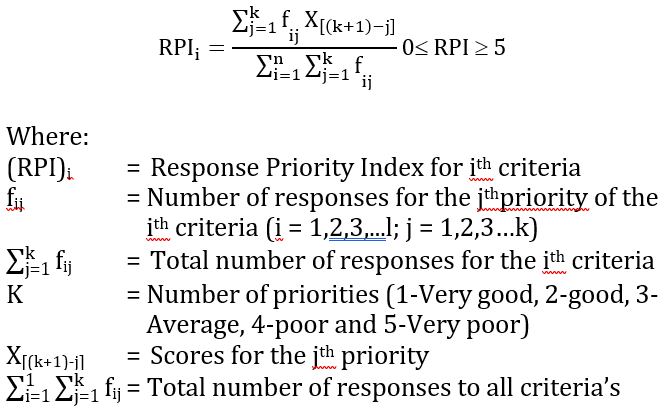
Calculating the standard score using the concept of weighted weights by assigning a weight to each response, where "Yes" received a score of two, "To some extent" received a score of one, and "No" received a score of zero for positive statements, using the following equation:
Standard Score for Positive Statements = 2A + 1B + 0C
Where (A) = Yes, (B) = To some extent, (C) = No.
Calculating the Pearson correlation coefficient:
From 0.000 to 0.199 indicates a weak positive correlation
From 0.200 to 0.399, there is a weak positive linear relationship
From 0.400 to 0.599, there is a moderate positive linear relationship
From 0.600 to 0.799, there is a strong positive linear relationship
From 0.800 to 0.999, there is a very strong positive linear relationship
At a score of 1, the relationship is usually perfect, indicating a variable's correlation with itself.
At 0.8, there is no relationship because all responses are positive.
From -000 to 0.199, there is a weak negative inverse relationship.
From 0.200- to 0.399-, there is a weak negative inverse relationship.
From 0.400- to 0.599-, there is a moderate negative inverse relationship.
From 0.600- to 0.799-, there is a strong negative inverse relationship.
From 0.800- to 0.999-, there is a very strong negative inverse relationship.
The verification score for each statement individually is determined through the relationship.
Calculating the relative weight for each response of the three responses using the following equation:
Calculating the ranking of the statements using the concept of standard score for each statement within its framework.
Study Population and Sample
The study population consists of international academic libraries that ranked highest in global university rankings for the year 2022-2021. The most widely used rankings were Shanghai, Times, and QS. The top 20 universities and academic institutes were selected for the study, and a purposive sample was chosen from these libraries for the following reasons:
Libraries affiliated with universities that ranked highest globally in university rankings (Shanghai - Webometrics - Times). These libraries are considered the best libraries globally in terms of services and information resources, as they are one of the judgment criteria that influence the university's global ranking
Libraries offer any type of intelligent information services through their electronic platform
Libraries provide an interactive reference service: This allows communication with library specialists to answer some of the questions listed in the review list that cannot be answered through the website and services provided to beneficiaries
The sample size for the study was 29 academic libraries, taking into account the repetition of some universities in the rankings and the emergence of new universities in others, as shown in Table 2:
Table 2: Top Universities Globally According to International Rankings.
University
QS Rankings
Shanghai Ranking
Times Rankings
Massachusetts Institute of Technology
1
4
5
University of Oxford
2
7
1
Stanford University
3
2
4
University of Cambridge
4
3
6
Harvard University
5
1
3
California Institute of Technology
6
9
2
Imperial College London
7
17
12
ETH Zurich
8
-
15
UCL (University College London)
9
-
18
University of Chicago
10
10
10
National University of Singapore
11
-
-
Nanyang Technological University
12
-
-
University of Pennsylvania
13
15
14
Ecole Polytechnique Federale de Lausanne
14
-
-
Yale University
15
11
9
University of Edinburgh
16
-
-
Tsinghua University
17
-
17
Peking University
18
-
16
Columbia University
19
8
11
Princeton University
20
6
7
University of California, Berkeley
-
5
8
Johns Hopkins University
-
16
13
University of California, Los Angeles
-
14
20
University of Toronto
-
-
19
Cornell University
-
12
-
Paris-Saclay University
-
13
-
University of California, San Diego
-
18
-
University of Washington
-
19
-
University of California, San Francisco
-
20
-
As evident from the previous table, the sample size represents 29 academic libraries affiliated with universities and institutes that have excelled in global university rankings. Some universities did not appear in some rankings, while others appeared only once in some. It is worth noting that 12 universities had a similar ranking in global rankings, especially the University of Chicago, which held the same rank, number 10, in all global rankings.
Previous Studies
The researcher conducted a search using various tools to survey intellectual production related to the field of libraries and information on both the global and Arab levels, along with some databases, as well as various online search engines. Many Arabic and foreign studies addressing the subject of the study in terms of library and information services, both in the new technological environment and in terms of the development of academic library services, were found. However, there were no documented Arabic or foreign academic experiences regarding intelligent library and information services that rely on artificial intelligence and the concept of smart cities in providing them to potential beneficiaries.
First: Arabic Studies
The primary goal of the study by [5] is to plan the provision of information services to beneficiaries from university libraries through smartphone applications, in addition to providing a future vision from the researcher's perspective on areas of benefit from this technology to achieve the goals of university libraries. The study adopted the documentary method to collect information by reviewing the literature on the subject and extracting its key findings. One of the results of this study is that university libraries can make use of smartphone technologies to perform some of their tasks, such as tracking supply requests using applications like Viber and WhatsApp, in addition to the possibility of obtaining bibliographic data for information sources they have by copying them from library catalogs and freely available bibliographic databases on the internet. As for direct information services, university libraries can provide most of these services using some applications available on smartphones, including, but not limited to, current awareness service, selective dissemination of information, answering reference inquiries, and scanning service.
The study by [6] aimed to shed light on the reality of services provided by Lebanese academic libraries in the smart environment and how to utilize smartphone applications in their provision, in addition to the services that students from those universities wish their libraries to offer. The study relied on the survey and comparative descriptive methods to obtain data indicating the smart services in those libraries through observation, interviews, and a questionnaire consisting of four areas, each containing a number of questions. The results showed that more than half of the eight universities provided three services through smartphones. In addition, the library of the American University of Beirut, and the library of Our Lady of Louaize University provided their services through smartphone applications specific to their respective universities, while the library of the Holy Spirit University of Kaslik, the libraries of Beirut Arab University, and the library of Our Lady of Louaize University provided their services through a web page accessible via smartphones. The study proposed a model for implementing smartphone applications to provide academic library services.
The study by [7] aimed to understand the reality of using mobile technology in benefiting from information services at the University of Jordan Library from the students' perspective. The study's community consisted of undergraduate students at the University of Jordan for the academic year 2016/2017. The study sample was randomly selected and consisted of 381 male and female students. To achieve the study's objectives, a questionnaire was constructed, consisting of two sections: the first included demographic data of the study sample in terms of variables such as gender, academic year, and college, while the second consisted of 29 items distributed across two areas, measuring the students' use of mobile technology and benefiting from information services at the University of Jordan Library. The results showed that the students' use of mobile technology for educational purposes was moderate, and indicated that the students' use of the University of Jordan Library website was also moderate. There were statistically significant differences at a level of (α ≤ 0.05) in students' use of mobile technology for educational purposes, in favor of fourth-year students, and in the field of the library website, in favor of the scientific college. Based on these results, the study provided a set of recommendations, including the necessity for officials at Jordanian universities to pay attention to technological advancement, make use of mobile technology, and use it to expand the scope of information services and reach beneficiaries. Additionally, there is a need to provide awareness-raising training courses for students on how to benefit from information services on the university library's website.
The study by [8] addressed the existence of libraries and their custodians in the virtual world, an open world accessible to all users on the internet. In this context, it described the development of university and public libraries, highlighting the motives and reasons for libraries entering the virtual world, as well as the central projects of academic and public libraries, the types of services they offer, and the challenges they face in executing their operations in this virtual dimension. Additionally, this study outlines the main roles of custodians of university and public libraries, and users who work together in the virtual world. The study also presents the activities of university and public libraries in the three-dimensional virtual world, operating on the Internet. Furthermore, the study reviews the evolution of university and public libraries in the world of the Internet, the services they offer, and the aspirations and challenges they face in the virtual environment. It also covers the activities of library custodians in both types and their work, as well as their patterns of activity in virtual environment services. Therefore, the significance of this study lies in its attempt to understand the role that university and public libraries play, or may not play, in the virtual world, and to expand their services to broader horizons than they currently occupy. The researcher assumes that university and public libraries, along with the virtual environment, can play an effective role that alters and adds new dimensions to their services. The primary objective of the study is to prove or disprove this hypothesis. To achieve this goal, the study followed a descriptive, analytical, and inductive approach.
The study by [9] aimed to identify the information technologies used at the Central Library of the University of Omdurman Islamic Center and their impact on information services at the library. It also aimed to uncover the problems and obstacles facing the use of technologies in providing information services at the library. The researcher relied on the documentary method to review the literature on the subject, and the survey method to describe and analyze the use of information technologies in information services at the University library. The researcher employed interview and questionnaire tools to collect data in order to answer the study's objectives. A purposive sample was selected, consisting of employees at the Central Library of the University of Omdurman Islamic Center. The study reached several conclusions, including the weakness of the infrastructure of the Central Library, which does not keep up with technological requirements, and the lack of a sufficient and clear budget for the library to help it acquire the latest information technologies. The study recommended the necessity of providing a sufficient budget to bring in the latest devices and technologies, as well as continuous and ongoing training for employees and beneficiaries on the technologies.
The study by [10] aims to understand the historical evolution of providing remote information services and libraries, and the services offered by remote university libraries. It also investigates the satisfaction of beneficiaries with these services by examining some models of libraries and information centers that provide remote services. The study also looks into the components required to provide this type of service, as well as the skills necessary for information specialists performing this task. The study population consists of beneficiaries from remote university libraries, totaling 221 beneficiaries. One of the key findings of the study is that information specialists in libraries play a crucial role in facilitating and providing remote library and information services, highlighting the importance of equipping information specialists with the necessary technological skills.
Secondly, Foreign Studies
A study by [11] addressed digital information services, defining their scope, features, challenges, and available opportunities to enhance their effectiveness. It also explored modern trends in digital information services, examining services available on two library websites in India: the website of the Indian Institute of Information Technology in Delhi, and the website of the Institute of Energy and Resources in New Delhi.
A study by [12] aimed to identify the information services available on the websites of libraries on the internet. The study was conducted on twelve library websites, and the results indicate that the services available on library websites vary from one library to another. The most commonly available services on the studied websites were information availability and providing a map of the library's location, as well as frequently asked questions (FAQs).
A study by discussed the transformation of the University of Nevada, Reno libraries towards user-centered information access services. This was achieved through the development of a strategic plan that seeks to understand user needs and provide seamless access to information services that support these needs. The transition involved shifting from traditional technical services to knowledge access and management services (KAMS), resulting in the creation of new roles for library custodians to meet these user-related needs.
The study by [13] focuses on the 2012-2017 strategic plan being implemented at the University of Kansas libraries. The aim of this plan is to develop collections and place significant emphasis on user-centric information services that support scholarly, research, and teaching purposes. This is achieved through several key steps, including the precise definition of development plan objectives and the appointment of a team to review all aspects of the libraries, resulting in recommendations for organization and development based on the user-centric library approach.
Additionally, the study by delves into the concept of user-centered library systems and services in the era of information technology and their significance for libraries. It explores the role of the internet and web technology in designing effective user services. The study concludes by highlighting the need for specialists in library and information science to shift their philosophy from a library-centric approach to a user-centric approach, supported by web technologies that facilitate access for users wherever they may be, fostering collaboration between libraries and their users.
The study by [14] addresses reference information services provided by academic library websites on the internet. The study was conducted on a sample of American academic library websites, and it found that 74% of the sample libraries provide reference services to beneficiaries through their websites on the internet. The study also highlights the various methods of providing these services, including email, telephone, chat using text messages, and chat using video technology.
The study by [15] aims to analyze the phenomenon of smart libraries, defining them as a system of library and information services developed to support research and training activities. The paper describes the need to provide innovative library and information services in universities and analyzes over 200 publications authored by specialized scholars. It offers a review of both classical library services and those focused on the needs of modern education and science. The research results represent the library and publishing community affiliated with Siberian Federal University. As a result, a new library information environment was developed and implemented at the university. The study recommends a range of technological solutions and electronic smart services.
The study by [16] addressed the availability and utilization of information resources, as well as the functional performance in some libraries in North and Central Nigeria. The study included a community of 128 academic library professionals in seven university libraries. The data collected using the SPSS program indicated that 90% of the professionals reported the availability of high-quality information sources for their functional performance. Additionally, 75% of the specialists indicated significant use of electronic resources. The study established a relationship between the level of information resource utilization and the functional performance of academic library managers in the selected university libraries at 0.591 - β; P (0.05> significance level). The hypotheses suggested that functional performance was significantly associated with information use. While information availability was found to be positively correlated with functional performance, this relationship did not reach statistical significance at 0.081 - β; (0.05˃p) from a theoretical perspective. The study contributed to validating the theory of congruence between tasks and technology based on these results.
The study by [17] discusses the current role of libraries and their transformation into knowledge service centers, oriented towards knowledge, committed to intellectual innovation, and focusing on users' knowledge requirements. The study primarily concentrates on library services, with knowledge management applications being mainly limited to library services. The study assumes that libraries lack innovative applications in internal management, such as workflow and institutional settings. This study takes Peking University Library, one of the top academic libraries in China, as a case study to explore this issue. It does so by restructuring its institution and reassigning its staff roles based on 'knowledge management' as the foundation for meeting the knowledge requirements of various types of users and creating an environment conducive to knowledge management and innovation.
The Theoretical Framework of the Study
Smart Library and Information Services: In the near future, all libraries will transition into integrated smart environments to align with the nature of smart cities. Beneficiaries living in smart cities will need increased access to information. This need is accompanied by rapid technological changes and the exponential growth of data and information. Technology, in general, poses new challenges for librarians worldwide [18]. Information scientists strongly recommend that librarians leverage emerging technologies and transition towards making their libraries smart. In general, as illustrated in Figure 1, the smart library will require intelligent individuals who need smart services for learning, working, and living a high-quality life [19].
Smart library and information services are characterized by a set of features that keep pace with the era of artificial intelligence and smart cities. The most important of these features include:
Services not bound by specific timing
Operating 24 hours a day, 7 days a week, 365 days a year
Distinguished similar to hotel services
Fast in transactions and robust in procedures
Rapid responsiveness to all changes
Innovating solutions for challenges and problems
Facilitating the lives of beneficiaries and providing them with knowledge and happiness
Components for providing smart library and information services:
Information specialist combining personal qualities, professional and technical qualifications to keep up with modern developments and embrace change
An electronic environment enabling the efficient delivery of services
Stable communication networks
Modern devices
Modern databases
Advanced information resources
The ability to continue, contribute, develop, and keep pace with continuous change by responsible authorities
Categories of Smart Library and Information Services
Developmental Knowledge Services: Beneficiaries acquire new facts and ideas that help improve their living and cultural standards, enhance work performance, expand awareness, and promote continuous and lifelong learning.
Educational Training Knowledge Services
Beneficiaries gain information and data about education and learning in various fields, which contribute to supporting educational courses and training materials.
Scientific Research Knowledge Services
These services encompass all aspects of scientific research, from scientific methodologies and tools to application stages, results, quantitative indicators, and methodologies. They include experimental and theoretical research, steps, and outcomes related to practical research and its tools
Achievement-Oriented Temporary Knowledge Services
Beneficiaries obtain these services to complete a specific task, project, or make certain decisions. These services are temporary and fast, obtained only when needed, in contrast to continuous developmental and research knowledge services.
Incentivizing Knowledge Services
These are also temporary services sought by beneficiaries to stimulate and arouse interest in something specific.
Types of Smart Library and Information Services
Automatic Messaging Service – Chatbot: The direct automatic messaging service involves creating a window or chatbot for chatting and answering potential beneficiaries' questions by customizing the user interface element dedicated to live chat to meet the actual library's needs. Automatic messages are used to support both beneficiaries and new library staff. Through the library's dedicated live chat program, the team can be trained by monitoring every conversation deemed important. Comprehensive insights into employee performance or the entire library's services can also be configured using easy-to-use dashboards tailored for live chat monitoring.
The Importance of Automatic Messaging Service
Cost reduction
Time and effort savings
Marketing and advertising for the institution or university
Flexibility in accessing information and data about the university
Ensuring messages reach a large number of individuals at once
Advantages of Automatic Messaging
Initiating conversations at any time
Answering questions before they are asked
Providing support under all circumstances for beneficiaries
Works without an internet connection to answer questions when library specialists are not available on the electronic library platform
Welcoming first-time visitors to the library platform
Broadcasting extensive information about the library and its resources
Providing customer support around the clock, seven days a week
Accessible on smartphones
Automatic Translation Service
Translation service is a form of beneficiary service provided by libraries to overcome language barriers in which intellectual output is disseminated.
Semantic Automatic Translation Service over the web is considered one of the best internet services that web developers seek to maximize its benefits due to its importance and the high demand for it among internet users and beneficiaries. There is no doubt that this service contributes to the advancement of scientific research, as intellectual output is published in more than fifty languages around the world. However, translation is not the only way to overcome these language barriers, but it is part of a set of means that work together and form an integrated system to facilitate the use of intellectual output issued in foreign languages. These means include:
Learning foreign languages.
Issuing journals with abstracts in the national language.
Preparing local abstracts.
Providing selected translations of expected important documents.
Providing complete translations for specific sectors of foreign intellectual output.
Automatic translation service is one of the services that have saved a lot of trouble and helped in translating not only words and paragraphs but also entire files and web pages, from any language to any language. However, what benefits us Arabs the most is translation from English to Arabic and vice versa. Previously, some libraries used to provide translation services, but this added a financial burden, in addition to the fact that not all libraries offer translation services. But today, translation has become free and more professional through the automatic translation service. All beneficiaries need is a constant internet connection to translate whatever they need whenever they need to.
Smart Information Search Service
Smart search services include various types for searching and retrieving information, including:
Unified Search: This is a technology that allows beneficiaries to search through multiple sources of information at the same time using a single query and a single search window. The search results are then displayed in one integrated list, meaning searching through all library sources using one window with the ability to control the desired search and retrieval elements
Matching Search: By matching an image, text, or something else using the smart phone's camera or by using a stored image in the smart phone's memory, and then retrieving everything that matches this desired image or text
Voice Search: This is a technology that converts spoken words into text to recognize the spoken language and the words spoken by the beneficiary. It is essentially using voice commands to search the internet or a website or application, and also detecting a specific audio recording or conversation using the smart phone's microphone and obtaining a search that matches what was spoken through the smart phone
Android Applications (Mobile Phone Applications)
There are many mobile phone applications aimed at enhancing communication between beneficiaries and information institutions. In fact, there are other standalone applications dedicated to broadcasting information and knowledge to beneficiaries. Their main goal is to provide informational and knowledge services to users through mobile phones.
Geographic Information Systems: Many beneficiaries now use geographic maps to access places and determine distances. Geographic services greatly assist the field of libraries and information by facilitating access to library information resources and its various services. They also aim to reach the largest possible number of beneficiaries. Therefore, Geographic Information Systems have gained significant importance among library and information services that are indispensable today in an era characterized by easy access to locations
Using Smart Google Applications: These are applications provided by Google to keep up with the advancements in artificial intelligence technologies, coexist with smart cities, and control everything around us. Google provides many free and paid smart applications that libraries can utilize and train beneficiaries on to offer remote smart services and assist beneficiaries in maximizing the use of their smartphones by installing such applications
Augmented Reality and Virtual Reality Services: These technologies work by projecting virtual objects and information into the real environment to provide additional information about it, unlike virtual reality which is based on projecting real objects into a virtual environment. These services include producing various content and broadcasting information using these smart technologies, such as space studies
QR Code Application: The Quick Response (QR) code is a two-dimensional code that can be read by a QR code reader or a mobile phone camera. It can be used to provide library guidelines ready for use in designated places, and to refer to the locations of certain devices in the library, such as printers and copiers. It can also provide a summary of a book in the form of a QR code on the book's cover, along with indicating the location of the books on the shelves, reviewing materials related to the topic the beneficiary is looking for within or outside the library. Additionally, QR codes can be used to advertise some new services in the library
Information Encryption and Security Service: This service involves requesting the library to encrypt and secure information for beneficiaries to use over the internet, protecting it from hacking. Blockchain and other data encryption and protection technologies may be used. It may also be used to verify the identity of beneficiaries to request specific categories of information and archival data
Cooperative Content Service: This involves generating and creating comprehensive and integrated knowledge content among multiple libraries and is shared across a network of information for participating libraries. Innovative content is created to serve a wide range of beneficiaries for these libraries. It also includes common indexing, electronic collaboration services in digital archives, and sharing digital collections
The Study Framework
First: Geographic Distribution of Academic Libraries: As shown in the above chart, the United States has taken the lead in academic libraries under study, with 16 out of 29 libraries. In contrast, the United Kingdom has only 5 libraries, which is equivalent to Singapore, China, and Switzerland, each having 2 libraries. Canada and France are equal with one library out of 29 academic libraries under study.
Second: Smart Libraries and Information Services
Using the term "Smart Libraries and Information Services" on the university library's web platform and introducing new intelligent services.
From Table 3, it is evident that only 15 academic libraries have used the term "Smart Libraries and Information Services" on their websites. These include libraries such as the University of California, Stanford, Massachusetts Institute of Technology, and Washington, accounting for 51% of the total number of academic libraries under study. On the other hand, 12 other libraries, including the University of Chicago and Harvard, have not used this term at all, constituting 41.4% of the total. As for the introduction of new smart services, 23 libraries, including Oxford, Stanford, and Toronto, have provided new smart services such as space studies and remote sensing, accounting for 79.3% of the total number of libraries under study.
Table 3: Term "Smart Libraries and Information Services"
Use of the term "Smart Services"
No
Sometimes
Yes
Mean (Average)
Standard Deviation
N
%
N
%
N
%
The term "Smart Libraries and Information Services" in international academic libraries
12
41.4
2
6.9
15
51.7
1.10
0.976
Use of the term "Smart Services"
2
6.9
4
13.8
23
79.3
1.72
0.591
The extent of availability and accessibility of smart library and information services in the studied university libraries.
Comparison of Responses to Smart Library and Information Services and the Newly Implemented Services Applied Together in Academic Libraries Under Study.
Table 4 illustrates the distribution of smart library and information services as well as the newly implemented services according to the frequency of their application in the academic libraries under study. It is evident that the Frequently Asked Questions (FAQs) service and the use of Google Maps are among the most applied services. On the other hand, remote sensing services and map drawing were among the least implemented services in only one university library, which is the library of Columbia University, with the same percentage for both augmented reality services and electronic borrowing.
Table 4: Smart Libraries and Information Services
Smart Libraries and Information Services
No
Sometimes
Yes
Mean (Average)
Standard Deviation
N
%
N
%
N
%
RFID Identity Verification System
15
51.7
1
3.4
13
44.8
.93
0.998
QR Code Technology
8
27.6
1
3.4
20
69.0
1.41
0.907
Automatic Messaging Services (Chatbot) for Information Dissemination
17
58.6
4
13.8
8
27.6
0.69
0.891
Creating digital content using augmented reality applications
5
17.2
1
3.4
23
79.3
1.62
0.775
The library has a unified search engine for searching all its digital resources.
-
-
1
3.4
28
96.6
1.97
0.186
Searching for information by matching, whether it's an image, text, or audio.
10
34.5
1
3.4
18
62.1
1.28
0.960
Techniques for encrypting information and protecting copyrights.
4
13.8
1
3.4
24
82.8
1.69
0.712
Geographic Information Systems in providing more intelligent information services.
11
37.9
2
6.9
16
55.2
1.17
0.966
Providing protocols for collaboration with other libraries in creating collaborative digital content.
3
10.3
5
17.2
21
72.4
1.62
0.677
Direct semantic translation services.
9
31.0
3
10.3
17
58.6
1.28
0.922
The Degree of Application of Intelligent Knowledge Services in Academic Libraries Under Study
The Table 5 shows that educational and developmental knowledge services are among the most emphasized knowledge services that academic libraries focus on applying. The percentage of their application ranged from 24.4% to 26.7%. Libraries such as Princeton University Library and Nanjing University Library are examples of universities applying these services. On the other hand, there are university libraries that provide all developmental, educational, research, and achievement-oriented knowledge services, including the libraries of the University of California, Columbia University, Oxford University. Incentive knowledge services are considered to be among the least implemented services, with a percentage of 11.1%. The researcher suggests that this may be attributed to the type of the library and the nature of its research and academic sources, as it is not a public or school library.
Table 5: Intelligent Knowledge Services in Studied Libraries
Categories of Intelligent Knowledge Services Frequency Percentage
N
Percentage
Mean
Std. Derivation
Developmental Knowledge Services
22
24.4%
0.76
0.435
Educational and Training Knowledge Services
24
26.7%
0.83
0.384
Purely Scientific Knowledge Services
21
23.3%
0.72
0.455
Temporary Achievement-Oriented Knowledge Services
13
14.4%
0.45
0.506
Incentive and Entertaining Knowledge Services
10
11.1%
0.34
0.484
in digital libraries - based on building a technological environment tailored to each beneficiary that aligns with the search and retrieval environment on the Internet.References
RESULTS
The study results were divided according to the objective axes related to achieving the study's goals and answering its scientific questions.
Axis One
Application of Smart Library and Information Services in International Libraries:
The term "smart library and information services" is used more in the United States, China, and France, mentioned in 15 university libraries, including the libraries of the University of California, Stanford University, and Paris-Saclay University
The unified search service across all sources is one of the most common services in academic libraries, used by 28 libraries. Following that are augmented reality services and data encryption, with percentages ranging from 80% to 85%
Only 8 libraries apply the chatbot automatic messaging service with a percentage of 27%. Among the libraries providing this service are Princeton University Library and Johns Hopkins University Library
The application of intelligent knowledge services in libraries varies between 20% and 62.5%. However, temporary intelligent knowledge services and entertaining knowledge services range from 10% to 14%, equivalent to 11 libraries. This is due to the academic library's context and the nature of its research sources, as it is not a public or school library
Axis Two
Procedures and Operations Carried Out by Libraries to Assist Beneficiaries in Utilizing Smart Services:
There are 17 academic libraries that study beneficiary categories to determine their need for modern smart services and, at the same time, provide smart services directly to them. Examples include the libraries of Stanford University, the University of California, and Cornell University
Only 5 libraries offer training courses on using smart services. However, there is more emphasis on providing training courses in the field of artificial intelligence applications and programming, with a percentage of 34%. Examples include the libraries of Stanford University, Cambridge University, Washington University, and the Massachusetts Institute of Technology
Libraries are primarily interested in their websites and social media pages to inform beneficiaries about smart and newly introduced services, with 22 libraries at a percentage of 44.9%
The study found that the highest percentage regarding the procedures and instructions for assisting beneficiaries in using smart services reached 61.6%. Meanwhile, the number of libraries that do not implement such procedures and operations is 26.1%
The most university libraries that assist beneficiaries and provide support for using smart library and information services are only 7 libraries, amounting to 3.4% of them. Among them are the libraries of the University of California, Washington University, and the Massachusetts Institute of Technology. There are university libraries that do not provide such procedures at all, with a selection percentage of 0%. Their number is three libraries, including the library of the University of Chicago
Axis Three
Requirements including Equipment and Software Needed to Provide Smart Services in Academic Libraries:
The study concluded that providing smart services requires a high-speed internet connection. 82.8% of the libraries emphasized the importance of providing a strong internet connection to facilitate the use of smart library and information services
It is not necessary to have smart robots to provide smart services in libraries. There are only 5 libraries that possess a smart robot, while 24 libraries do not have one. However, they still offer many smart services, such as the Massachusetts Institute of Technology Library
The study found that 55.2% of the libraries do not have a smart system for managing devices, software, and the building as a whole. This does not hinder the provision of smart services to beneficiaries. Among these libraries are Harvard University Library and Yale University Library
The library must develop specific software for providing smart library services. More than half of the study sample affirmed this, with a percentage reaching 66.2%
55.2% of the libraries emphasize the importance of having specific financial allocations for providing smart services. This includes libraries like the University of Oxford Library, Beijing University Library, and the University of Edinburgh Library
There is a smart application for 21 libraries from the study sample, while 15 others do not have a smart application for mobile phones. This may hinder the provision of smart library and information services for them, including libraries like the University of Pennsylvania Library, Cornell University Library, and King's College London Library
The study found that the highest percentage regarding the provision of requirements, equipment, and software that assist in providing smart services in academic libraries reached 54.1%, while the number of libraries that do not provide these requirements out of the total responses was 34.8%. The neutral percentage was 11% out of the total responses for the studied libraries
The most university libraries that provide the requirements, equipment, and software that assist in providing smart services in academic libraries are Washington University Library, with 10 responses and a percentage of 3.4%. This is followed closely by the libraries of the University of California with 11 responses and a percentage of 3.1%. Additionally, the University of Edinburgh Library has the same rate and percentage. The lowest responses were 0% for King's College London Library
Axis Four
Intelligent Content and Information Sources to Support Smart Library and Information Services:
One of the most common types of intelligent content provided by the libraries in the study sample is offering multimedia in all fields (images, videos, graphics, and sound recordings) and providing links to digital content on the web and publishing data about conferences, seminars, and workshops. There are 27 libraries that offer this type of content
The study found that providing summaries about patents is one of the least common types of content provided by the libraries in the study sample. The libraries include the University of California libraries in Los Angeles, Berkeley, San Diego, and San Francisco, as well as the University of Oxford Library, King's College London Library, and the University of Edinburgh Library, with a percentage of only 3.4%
There are 23 libraries that provide a virtual exhibition for libraries and heritage unique to the university, such as Princeton University Library, Stanford University Library, the University of Edinburgh Library, with a percentage of 75.9%
Intelligent and suitable content for people with special needs is not available in 16 libraries out of the international academic libraries in the study, despite the importance of having suitable content for this category of beneficiaries. Examples include the University of California Library, Nanjing University Library, Columbia University Library, and others
The study found that the highest responses from the libraries in the study were regarding selecting intelligent content and addressing information sources to support smart services in academic libraries, reaching 62.7%, while the number of responses for libraries that do not provide intelligent content and objective processing to support their smart services was 21.9%
The most university libraries that provide intelligent content and process information sources to support smart services are Washington University Library, with 10 responses and a percentage of 3.4%. This is followed closely by the libraries of the University of California with 11 responses and a percentage of 3.1%. Additionally, King's College London Library has the same rate and percentage
Recommendations
International university libraries should emphasize the smart library and information services on their website or electronic platform
International academic libraries should establish clear regulations and policies for smart library and information services, as is customary in library institutions, such as lending, copying, and reproduction services, etc
The necessity to provide smart and suitable services for people with special needs and work on creating intelligent content tailored to them to assist them in developing various knowledge
International academic libraries should share experiences and smart services with Arab libraries not only in usage, but also in design and production of smart services and content, as well as in technical activities and operations
Our Arab libraries must engage and integrate with smart technology in all operations and services performed by the library
Arab libraries should distance themselves from the fear of modern technologies, especially in the field of artificial intelligence applications
Arab libraries must train specialists to qualify them to provide smart services in Arab academic libraries.
Arab libraries must provide smart services to beneficiaries and train them on how to use them to achieve maximum interaction
Future Studies Recommended by the Researcher:
Application of expert systems in providing innovative information services based on user participation.
Cooperative content among Egyptian academic libraries is not only at the level of resource sharing, but also in subject-oriented content processing for the information sources they acquire.
Smart search services in digital libraries - based on building a technological environment tailored to each beneficiary that aligns with the search and retrieval environment on the Internet.References
REFERENCE
Mahassen N. “A quantitative approach to world university rankings.” Center for World University Rankings, 2014.
Shanghai Jiao Tong University. “Academic Ranking of World Universities.” Graduate School of Education, Shanghai Jiao Tong University, 2021.
QS (Quacquarelli Symonds) World University Rankings. “World university rankings.” 2021. Retrieved from: https://www.topuniversities.com/university-rankings/ world-university-rankings/2022
Times World University Ranking. “World university ranking.” 2021. Retrieved from: https://cutt.us/QFbXH
Al-Attab M.A.A. “Planning to provide information services in university libraries using some smartphone applications.” Arab Center for Research and Studies in Library and Information Science Journal, vol. 5, no. 20, 2018. http://search.mandumah.com/Record/869693
Zaher S.H.B. “The use of smartphones in providing services in university libraries: A comparative study of libraries in the Lebanese Academic Libraries Association.” Arab Portal for Libraries and Information, 35, n.d. http://search.mandumah.com/Record/961707
Taha N.N.H. and Al-Shamri W.M.M. “The reality of using mobile technology to benefit from information services at the University of Jordan Library from the students' perspective.” Studies - Triune Sciences: University of Jordan - Dean of Scientific Research, vol. 46, no. 4, 2019, pp. 453–472. http://search.mandumah.com/Record/1022457
Khedr I.K.Y. “University and public libraries in the virtual world: Between reality and future possibilities.” Studies - Triune Sciences: University of Jordan - Dean of Scientific Research, vol. 74, no. 2, 2020, pp. 563–575. http://search.mandumah.com/Record/1085410
Heid M.M.H. and Ismail A.B.Y. “The use of information technology in information services at university libraries: A case study of the Central Islamic University Library in Omdurman.” Majter Journal, 2020. http://search.mandumah.com/Record/1140337
Sawy R.A.H.A.Q. “Remote information services in university libraries: A field study.” International Journal of Library and Information Science: Egyptian Association for Libraries, Information, and Archives, 25, 2021, pp. 233–259. http://search.mandumah.com/Record/1183258
Bhattacharya P., Siddiquee M.Q., Jha M.P.K. and Khan S.D. “Digital information services: Challenges and opportunities.” NIFM-MANLIBNET 4th Annual National Convention on Paradigm of Information Technology: Application to Business and Management Libraries, National Institute of Financial Management, Faridabad, 2002. Retrieved from: http://members.tripod.com/siddiquee_q/DigitalInformationServices.pdf
Pareek S. and Gupta D.K. “Information about services and information resources on websites of selected libraries in Rajasthan: A study.” DESIDOC Journal, 2012.
Morris S.E. and Currie L. “Remember me? Content development in a user-centered services library.” Collection Management, vol. 39, no. 2–3, 2014, pp. 96–109.
Yang S.Q. and Dalal H.A. “Delivering virtual reference services on the web: An investigation into the current practice by academic libraries.” The Journal of Academic Librarianship, vol. 41, no. 1, 2015, pp. 68–86.
Baryshev R.A., Verkhovets S.V. and Babina O.I. “The smart library project: Development of information and library services for educational and scientific activity.” The Electronic Library, vol. 36, no. 3, 2018, pp. 535–549.
Kutu J.O. and Olajide O. “Information resources availability, utilization and job performance of academic librarians in selected university libraries in North-Central Nigeria.” 2020.
Xiao L. “Innovative application of knowledge management in organizational restructuring of academic libraries: A case study of Peking University Library.” IFLA Journal, vol. 46, no. 1, 2020, pp. 15–25.
Cao G., Liang M. and Li X. “How to make the library smart? The conceptualization of the smart library.” The Electronic Library, 2018.
Jadhav D. and Shenoy D. “Measuring the smartness of a library.” Library & Information Science Research, vol. 42, no. 3, 2020, p. 101036.
Recommended Articles
Research Article
The Effectiveness of Using AI-Generated Visual Forms (ChatGPT) on Biology Achievement and Learning Motivation among Second-Grade Intermediate Students
Hashim Hasan Misto Sheikho
Published: 25/02/2026
Download PDF
Research Article
Administrative Control Mechanisms over Acts of Public Administration in Iraqi Law
Khaleel Ali Fadhel ALkaddoli
Published: 25/01/2026
Download PDF
Research Article
China in Ghana: a Benefactor or an Exploiter?
Shafiu Alidu,
Basak Ozoral
Download PDF
Research Article
The vulnerability of children and the incidence of ‘baby factory’ in Ngwaland, Abia State of Nigeria
Patrick Ifechukwude Okonji
Download PDF
PO Box 101, Nakuru
Kenya.
Email: office@iarconsortium.org
Editorial Office:
J.L Bhavan, Near Radison Blu Hotel,
Jalukbari, Guwahati-India
Mohsin Rfys Al- saeedi, R. & jihad kadhim, N. (2025). A Descriptive Analytical Study of Smart Libraries and Information Services in International Academic Libraries. Scientific Journal of Arts, Humanities and Social Science, 5(2), 1-13.
MLA
Mohsin Rfys Al- saeedi, Rjeha and Noor jihad kadhim. "A Descriptive Analytical Study of Smart Libraries and Information Services in International Academic Libraries." Scientific Journal of Arts, Humanities and Social Science 5.2 (2025): 1-13.
Chicago
Mohsin Rfys Al- saeedi, Rjeha and Noor jihad kadhim. "A Descriptive Analytical Study of Smart Libraries and Information Services in International Academic Libraries." Scientific Journal of Arts, Humanities and Social Science 5, no. 2 (2025): 1-13.
Harvard
Mohsin Rfys Al- saeedi, R. and jihad kadhim, N. (2025) 'A Descriptive Analytical Study of Smart Libraries and Information Services in International Academic Libraries' Scientific Journal of Arts, Humanities and Social Science 5(2), pp. 1-13.
Vancouver
Mohsin Rfys Al- saeedi R, jihad kadhim N. A Descriptive Analytical Study of Smart Libraries and Information Services in International Academic Libraries. Scientific Journal of Arts, Humanities and Social Science. 2025 Jul;5(2):1-13.


 Download PDF
 Download XML