More and more individuals are becoming aware of the negative effects that human actions have on the natural world. To discover answers to environmental challenges, it is crucial to know what factors affect people's pro-environmentalism, sometimes called pro-environmental attitudes and actions (Cook et al., 2013). According to Steffen et al. (2015), environmental attitudes (EA) are defined as an individual's "collection of beliefs, influence, & behavioural intentions pertaining to ecosystem related activities or issues," and environmental behaviours (EB) are actions that help keep the environment habitable. More and more, environmental education (EE) is being acknowledged as a powerful tool for changing people's attitudes and behaviours towards more eco-friendly ones. It is often believed that experiential education is more effective than extrinsic motivators like incentives and punishments in enhancing people's EA and EB (Wynes & Nicholas, 2017). In the past, environmental education has mostly focused on teaching people what and the whys of environmentally friendly behaviour. The value of knowledge in EB prediction, however, seems to be minimal. According to Braun and Dierkes (2017), there are other factors that are more strongly linked to environmentally beneficial behaviour, such as having a connection with nature and holding beliefs that benefit the environment. Even while knowledge may be imparted anywhere, it is often more difficult to acquire EA and EB in a classroom setting. Consequently, some researchers think that being outside is a great way to boost EA and EB, and they're pushing to include outdoor activities in EE programmes (Collado et al., 2013). Unfortunately, most previous research has concentrated on examining how exposure to natural settings affects children's emotional regulation and emotional intelligence. However, these studies have been retrospective and correlational, so they cannot establish a causal relationship between spending time in nature and an increased occurrence of EA and EB. This makes it less likely that environmental educators and other interested parties will get tailored recommendations, say Otto and Pensini (2017). This has led to a renewed need for controlled research that may help shed light on how youth exposure to nature affects their environmental consciousness (Lekies et al., 2015). A randomised control study, also called a "true experiment," was conducted to evaluate the impact of the nature-based educational education (NBEE) curriculum and the environmental awareness and actions of elementary school children. NBEE is an abbreviation for environment-based education. This is the first reply to your request. According to Evans et al. (2018), the NBEE course was created to provide students with hands-on encounters with nature while still following the standards of a standard academic programme.
BACKGROUND OF THE STUDY:
The nature education movement taught young people respect and preservation of environment via tales and ethics. Anna Botsford Comstock pioneered environmental studies and wrote The Handbook for Environment studies in 1911. The Handbook of Nature Study recommended teaching kids morals and ethics outside. The Cornell University Institute for Nature Study was led by Comstock, a pioneer of the movement. Comstock and other Nature Study leaders like Liberty Hyde Bailey changed the scientific curriculum in US schools (Ulset et al., 2017). The Dust Bowl and 1930s economic depression inspired conservation education, a new field of environmental studies. Preservation instruction emphasises scientific instruction rather than a wide introduction to the environment, unlike Nature Study, which focuses on the past history of the environment. Conservation Education, an essential part of scientific planning and leadership, will address current environmental, social, & economic challenges (Ulset et al., 2017).
The contemporary environmental education movement might be traced back to the period between the years 1960 and 1970, when nature studies and preservation education were popular. The Civil Rights Movement, Vietnam War, and Cold War separated Americans and the federal government. As more people learned about radiation, chemical pesticides, and air pollution, environmentalists emerged from people's worries for their own and the planet's health. Public concern for health and the environment sparked environmentalism. James A. Swan wrote the first Phi Delta Kappan essay on environmental education's emerging trend in 1969. William Stapp initially defined "Environmental Education" in Educational Digest in March 1970. In later years, Stapp founded the Global Rivers Transnational Network & became UNESCO's first Environmental Education Director.
Earth Day began on April 22, 1970, as a nationwide environmental teach-in. This started the contemporary environmental education movement. Later same year, President Nixon signed the National Environmental Education Act to include environmental education into primary, intermediate, and postsecondary education. The North American Association of Environmental Investigation was founded in 1971 as the National Association to Education in the Environment to promote environmental education programmes and provide teachers with resources to raise students' environmental awareness (Chawla, 2015). The association became the North American Association of Environmental Studies (NAAES) in 2002 (Chawla, 2015).
The 1972 UN Convention for the Human Environment in Stockholm, Sweden, legitimised global environmental education by stating that it should be used to combat environmental issues. This proclamation makes environmental education a global instrument for solving environmental issues. UNEP or UNESCO created three significant statements that govern environmental education.
PROBLEM STATEMENT:
“According to some experts, environmental education is seen as exhibiting prejudice and presenting a one-sided perspective”.
The well-being of all organisms on Earth, as well as the very survival of life, is closely tied to the condition of the planet's ecosystem. This link is indissoluble. Researchers rely on the surrounding environment for essential resources like water, air, food, and other crucial supplies. This is due to the fact that planet Earth harbours a diverse array of living species. Consequently, it is crucial that every one of us takes action to save and rehabilitate the natural environment, as researchers are doing.
Regrettably, a significant portion of the population remains unaware of the paramount environmental concern that now plagues the world, as well as the pros and cons of several prospective remedies. Consequently, ordinary actions that harm the environment have become the norm in our culture. The deterioration of the environment might be mostly attributable to pervasive ignorance and a lack of knowledge of its intrinsic worth. Hence, it is crucial to impart knowledge to individuals on the importance of conserving the natural environment (Nassén, 2014).
LITERATURE REVIEW:
The objective of this chapter is to provide a comprehensive overview of the relevant scholarly work in the fields of well-being and environmental education, in order to facilitate understanding of the research's rationale and objectives. This chapter explores key concepts and literary works in the fields of education, ecological education, & wellness education. Furthermore, the discussion revolved on the current methodologies used to examine the well-being of teenagers, with the aim of establishing the study techniques and subsequent chapters that followed. This literature review examines the theoretical frameworks that focus on the concept of wellbeing, including both a broad perspective and specifically within the context of adolescence. Additionally, it emphasises principles that may be used in educational settings to cultivate a succinct understanding of the impact that educational methods and circumstances can have on the welfare of young individuals, with a specific focus on environmental education (Collado et al., 2013).
The purpose for this thesis is to provide new insights into the processes or mechanisms that impact the wellbeing of young people in the context of environmental education. The first part of this chapter will present a comprehensive discussion on the concept of wellbeing, by examining the different theoretical approaches that have been previously developed to study it. During this segment, researchers were deliberating on the objective and subjective methods to wellbeing, which are considered the two main methods of addressing the issue of wellbeing. When the incorporation of subjective wellbeing in research and policy is considered, it reveals the critiques of the objective approach. Specifically, the complaints centre upon the objective approach's neglect of the intangible aspects of individuals' lives that might influence their overall welfare. Subsequently, this study redirected its attention towards examining how critiques of the impartial approach towards wellbeing have prompted the development and integration of more subjective perspectives on wellbeing in research. Continuing from the previous point, the subsequent chapter focused on the prevailing techniques used to assess wellbeing. It then delved specifically into how the notion of wellbeing has been interpreted in relation to both young people and adolescents. The subsequent subject addressed in this chapter is the correlation between education and holistic well-being. This section focuses on literature that examines the impact of achievement-based classrooms, including formal educational settings, on the well-being of young individuals. This section explored the historical development of environmental education inside educational institutions, particularly schools, as it becomes more integrated with official education objectives, including accompanying assignments and assessments. A discussion is needed to explore the relationship between traditional educational settings and non-traditional learning settings that complement traditional schooling. This will help us understand any similarities or differences that exist among the various contexts aimed at fostering the positive development of young individuals. The main objective of schools visiting FSC Slapton Ley is to collect data for assignments and examinations, rather than only adhering to the conventional preservation & green movement goal associated with environmental and outdoor education, as emphasised in this evaluation. This is a crucial aspect of the study, since it receives the most attention from the schools who visit FSC Slapton Ley (Evans et al., 2018).
RESEARCH OBJECTIVES:
To identify the effects of nature based environmental education on children.
To understand the importance of environmental knowledge and the connectedness to nature.
To evaluate the ecological behaviour of environmental education of children.
To explore the environmental attitude of environmental education of children.
To determine the importance of environmental knowledge and the connectedness to nature based environmental education of children.
RESEARCH METHODOLOGY:
Method and sampling:
Throughout the trial, the Eco-organization contacted twenty state primary schools located in various geographical areas of Spain to ask about their interest in participating in the NBEE project. The list of schools was narrowed to seven due to the qualifying requirements, which encompassed the principal's or teachers' excitement for the curriculum, as well as the school's closeness to a readily accessible natural environment. The EE intervention was administered to the kids at the class level. Classes at the educational institution were assigned randomly to either the experimental group (N = 516, mean = 8.23, standard deviation = 1.71) or the waitlist controls group (N = 218, mean = 9.47, standard deviation = 1.39, with 50% males). The mean score of the experimental group was considerably lower compared to the waiting control group. While it was crucial for the Eco-organization to carry out an empirical investigation to ascertain the impact of their NBEE programme on the environmental awareness (EA) and environmental behaviour (EB) of children, their main goal was to actively include as many children as possible from the beginning of the project. This is because administrators & instructors often encounter opposition while participating on a waitlist management committee. The allocation of students to each class was done randomly, with a ratio of 2:1 between the experimental group and the control group.
Data and Measurement: Likert scale, rating system, used in questionnaires, that is designed to measure people’s attitudes, opinions, or perceptions. Subjects choose from a range of possible responses to a specific question or statement; responses typically include “strongly agree,” “agree,” “did not answer,” “disagree,” and “strongly disagree.” Often, the categories of response are coded numerically, in which case the numerical values must be defined for that specific study, such as 5 = strongly agree, 4 = agree, and so on.
Statistical Software: MS-Excel and SPSS 25 were used for Statistical analysis.
Statistical tools: Descriptive analysis was applied to understand the basic nature of the data. Validity and reliability were tested through regression coefficients and t-tests.
CONCEPTUAL FRAMEWORK:
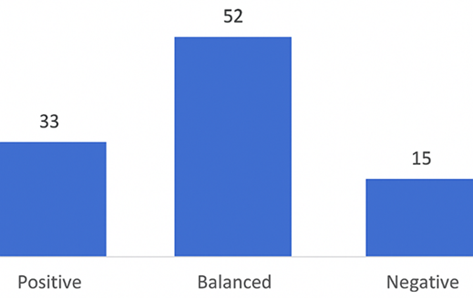
RESULT:
Table 1 compares our T0 and T1 values to a control group for descriptive data. Overall, children had good EA and participated in EBs. Table 2 shows the results of all three stepwise regression studies (one for each dependent variable) to determine if children's EA and EB differ by group. Our findings suggest that the NBEE programme (the study group) improves children's EA more than regular schooling during the CEPS, as measured by the NEP. This was found by comparing the group participating in the experiment to the control group's conventional education. This applied regardless of children's groupings. After adjusting for baseline mean, CEPS post-intervention study found a 0.24 mean difference between experimental as well as control groups. The CEPS reported that the NBEE experiment enhanced students' EA by 6% compared to regular teaching. After adjusting for the mean value of every group before the intervention began, the average variance in NEP scores between the experimental and control groups was 0.32. Thus, NBEE participants increased their EA by 9% higher than normal instruction participants. The NEP provided this data. After taking into account the EBs reported at the start of the research, the trial group & the control group had similar post-intervention EBs reported by participants.
Table 1: pre-& post-intervention outcome indicators mean (SD), skewness, & kurtosis by group (experimental: N = 516; and control: N = 218)
Table 2: Stepwise regression coefficients (CI, R2, t, p, & residual df)
Researchers started our regression analysis by adding the variable category, with values of 1 for experimental & 2 for comparison, to predict each outcome variable. This first step resembles a t-test with independent samples. The mean pre-intervention outcome was included into the regression model in the second phase. This was carried out to adjust for baseline differences. This second stage resembles covariance analysis. This model controls the relationships between R2, t, p, and the remaining df. The regression coefficient is related to our grouping variable (experimental/control); hence it correlates with the difference in post-test mean outcomes between the two groups. The Children's Environment Perceptions Survey, the evolving Ecological Paradigm, and the Survey of Children's Ecological Behaviour are abbreviated CEPS, NEP, and CEP. Pair t-tests showed that NBEE involvement boosted children's academic attainment (EA) but had no effect on academic advancement. Data study revealed this. The CEPS reported a 6% increase in children's EA, whereas the NEP reported a 5% increase. The average CEPS EA difference between T0 and T1 for children was 0.25. The placebo group had no significant impact on any of the categories investigated; see Table 3 for a comprehensive list of variables.
Table 3: Pairwise t-tests for the experimental and control group results gave CI, t, p, df, or Hedges.
CONCLUSIONS:
This empirical study on a school science curriculum-based environmental education programme demonstrated that acquiring environmental attitudes via nature is superior to standard instruction. This was determined by comparing pre- and post-course feelings. This research is essential to investigating nature-based environmental education's advantages since its powerful design supports causal findings. According to our results, experts recommend using nature-based pedagogy more in Spanish formal education to improve children's environmental views. Understanding how different amounts of nature exposure affect kids' pro-environmentalism, how nature-based educational programmes affect other important outcomes like environmental knowledge and health, or the barriers to implementing such programmes would help improve nature-based educational programmes.
Given the severity of the climate catastrophe, children must be taught about nature in a manner that motivates sustainable behaviour. Three elements affect kids' environmental behaviour. These include the age at which kids learn about the natural world, their nature time, and environmental education that promotes compassion. Nature-connected kids are more likely to improve their environmental practices. Connection to nature is a significant component because it motivates youngsters to adopt sustainable lifestyles. Early exposure to difficult issues may promote lasting environmental indifference. Environmental education involves empathy, particularly for 4-7-year-olds. Empathy, like nature, inspires youngsters to care about the environment. Every aspect of environmental education requires additional investigation, particularly age. Walker discovered that youngsters require greater family liberty to adopt healthy environmental practices, whereas Sobel concluded that social responsibility should be introduced around age twelve. Thus, environmental education research is essential. This study helps youngsters become climate leaders by teaching them about nature. Climate change opinions of many leaders globally indicate a new leadership style is required. When asked about the way she leads, Jacinda Arden said "researchers reject to accept the notion that individuals cannot be both caring & strong". Arden is a top climate policy leader. Researchers must educate kids empathy and environmental connection to fight climate change.
LIMITATION:
More research is needed to prove that environmental literacy & a feeling of belonging in nature drive individuals to behave sustainably. Quantitative studies need a big population sample. Because researchers survey a tiny section of a society, their views are immediately generalised to the complete population. A vast number of individuals must be surveyed to accurately reflect the population. Quantitative research is laborious because, unlike qualitative research, it involves actively finding and gathering relevant data before converting it into a numerical structure for analysis. Quite lengthy. Again, distributing surveys and waiting for responses may be time-consuming since many individuals react slowly or not at all. Thus, quantitative research demands time. Thus, this may not be the optimal research technique in emergencies.


 Download PDF
 Download XML







