An integrated sustainable solid waste management system involves a combination of techniques and programs to suit the local needs. The unprecedented production of municipal solid waste (MSW) represents one of the greatest challenges nowadays confronted by waste manager at varying spatial scale around the world and the urban local bodies (ULBs), state and federal governments are very much concerned and place a high priority on managing municipal garbage in order to protect public health, the environment, and natural resources. The situation in the Indian city of Udaipur with regard to SWM is particularly worrying, and it is made worse by rapid population growth and urbanisation. An accurate prediction of the volume of solid waste that will be produced in the future is necessary for establishing suitable plan and procedure of an efficient MSW management system. Therefore, the primary goal of the current work is to create a model for precise MSW generation estimation that aids solid waste-related administrations in improving the design and operation of MSW management systems. Furthermore, the current study's use of a novel analytical technique predicts that by the year 2041, the city will produce about 403 TPD of solid waste. The results will be useful to decision- or policy-makers in the future as they develop long-term planning and design in the SWM system.
Keywords
Municipal Solid Waste
Estimating
Population Projection
Waste Quantification
Udaipur City
INTRODUCTION
For the successful planning of an effective solid waste management system, an accurate estimation of the quantities of municipal solid waste is essential [1]. Adequate management of municipal solid waste (SWM) in urban areas has really become a biggest challenge on a global scale. Due to accelerating growth in economy, expansion of industrial domain, urbanisation, rapid population growth, improvement in standard of living, rising level of consumption, migration from rural to urban areas, and other factors, India is facing an eye-witnessing challenge in managing the unprecedented generation and diverse streams of municipal solid waste [2]. Due to daily changes in the compositions and characteristics of MSW, sustainable municipal solid waste (MSW) management is currently a hurdle for every urban local body (ULB). Systematic and timely records of solid waste generation are prerequisite for passable management and planning, to prevent environmental contamination [3]. In the modern era of urbanisation, industrialisation [4], globalisation, and social transformation, municipal solid trash has not only altered in importance and quality but also grown in volume.
Therefore, excessive solid waste output and poor management have a negative impact on both the environment and human health [5-7]. In order to maintain a healthy environment, especially in highly urbanised and inhabited areas, comprehensive planning and waste management are necessary. However, accurate estimation and projection of municipal solid waste (MSW) generation play a key role for the success of an effective waste management system, as they form the basis for the expansion of current waste management infrastructures, their optimization, and their sustainable development. A number of issues, including insufficient infrastructure for collection, transportation, landfilling, or processing, may result from inaccurate estimation [8].
Urban local bodies of India should be concerned about the rising MSW generation trend and diverse stream of solid wastes. The Municipal Solid Waste Rules, 2000 were a set of rules, legislation, and objectives that the Indian government (Ministry of Environment, Forest, and Climate Change) evaluated and updated to create the Solid Waste Management Rules, 2016 for the efficient management of municipal solid waste.
The SWMR, 2016, amended Rules have been debated extensively outside of municipal boundaries. To guarantee the proper implementation of the Rules, the Municipal Corporation, Central and State Board, Ministry of Urban Development, Local Bodies, and waste generators' responsibilities have been listed.
In Indian cities, the average generation rate of municipal solid trash ranges from 300 TPD in Nasik to 11000 TPD in New Delhi (State Pollution Control Boards, Municipal Corporations). The annual volume of MSW generation is currently at 62 million tonnes, but it is increasing rapidly and is expected to reach nearly 165 million tonnes per annum by the year 2030. In order to collect, transport, treatment, and proper dispose of garbage, it is crucial to understand the rate of generation and composition of municipal solid waste. However, the statistics on the generation of garbage is not consistently recorded in the cities of the developing world, including India. Therefore, the trend of fluctuation in the rate of waste generation over time is the method used by the majority of municipalities to estimate the quantity of MSW.
However, due to the dynamic nature of the MSW creation process, such estimations are unreliable [9]. As a result, long-term prediction cannot be done with such a method. Since the generation rates of waste in the present and the future are expected to change, extrapolating prior data is not a valid signal for estimating future waste generation rates. In underdeveloped countries, it is rare to find adequate historical data on the rate of solid waste generation [10].
Forecasting the rate of solid waste generation is not an easy task, mostly because there is a lack of adequate data and a rapid change in socioeconomic conditions brought on by an increase in the GDP of a country, area, tourism, economic activity, etc. [11] In these situations, modelling techniques for projecting MSW generation rate are generally found to be useful. The prior research demonstrates various algorithm-based studies on the forecasting of SWM that can be divided into five categories demonstrates that a variety of prediction models are used, each with a different level of complexity, such as:
Time series models,
Data-driven models, and
Factor models
The previous literature shows different algorithm-based studies on forecasting of MSW, which can be classified into five categories [12], such as statistical analysis [13,14], regression analysis [15-17], material flow analysis [18-20], time series analysis [21,23], artificial intelligence [24-26], fuzzy logic [13,27], geographical information system, single regression analysis, analytic hierarchy process [28], gray model and support vector machines model [29,30].
But each of these unique models and analyses has its own shortcomings and advantages over others. In contrast to predictable and descriptive statistical methods, time series analysis and regression analysis, material flow models, and other techniques, the artificial intelligence model (AIM) of predicting MSW generation has nevertheless been growing in popularity due to its high flexibility and demonstrated forecasting skills [30,31]. Once more, a key flaw in time series models or data-driven models is the absence of crucial knowledge about the influencing elements responsible for solid waste creation. This is important for waste management in general and the decrease of solid waste generation [23].
Several researchers have examined the connections between the rates of household solid waste generation and the associated socioeconomic factors. For the purpose of predicting rates of solid waste generation, previous studies have taken into account a variety of socio-economic and other independent variables, including total consumer spending, recycling activities [31], population awareness of the environment [23], the impact of tourism [11], and GDP. Ordinarily, population growth and average per capita trash generation are used as the primary predictors in conventional and descriptive statistical approaches of projecting MSW generation [32]. Since population growth and the rate of yearly MSW generation have historically followed certain trends, one of the goals of the current study is to estimate the amount of MSW that will be generated in Udaipur city over the next 30 years. Additionally, there is still a lack of pertinent study on the features and forecast of MSW generation in the city. Though researchers, urban planners, and decision-makers have taken note of MSW generation. The current work is therefore extremely pertinent to the designated study area as well as to other places where MSW management is missing as a result of uncertainty regarding the rate at which solid waste will be generated in the future.
Solid Waste Generation Models
Solid waste generation models may be grouped into two large classes:
Descriptive generation models. These models include data on the production of solid waste from many sectors, including the residential, commercial, institutional, and industrial ones. These models are typically represented in terms of unit waste generation rates, which are multipliers or factors that relate the amount of garbage produced with particular community variables, including the total population or number of people employed [33]. In general, generation data are obtained using four different types of sampling: direct waste analysis, waste product analysis, market product analysis, and weighting of representative samples of the loads of solid waste collection. Direct waste analysis involves sampling waste produced by representative sources, waste product analysis involves sampling waste products derived from a specific waste management process, waste product analysis involves sampling materials used for the production of commodities through the enumeration of supplies (tonnage estimation models) [34]
Predictive generation models. These models often rely on unit waste generation rates [33]. The forecasting models are created using a variety of statistical techniques, including the use of linear regression models and the association between socioeconomic indicators and the production of solid waste [35], The use of non-parametric statistics to determine the probability distribution for daily solid waste generation data [36], principal component analysis to suggest indicators of potential solid waste generation, retrospective analysis by time intervals to understand the concurrent influence of the variables involved in the generation of solid waste (geometric lag time series analysis techniques), and more [37]
Categories of Solid Waste
Depending on its source, nature, phase, needed treatment, etc., solid waste can be divided into distinct sections. Based on their source, the waste types are defined in the Table 1 Residential, municipal, mining, agricultural, industrial, etc. are all included.
Manufacturing units, process industries, power plants, etc.
Hazardous wastes, ashes, housekeeping wastes, special wastes etc.
Commercial and Institutional
Restaurants, hotels, schools, hospitals, markets, office buildings, prisons etc.
Bio-medical waste, food waste, glass, metals, plastic, paper, special wastes etc.
Construction and Demolition
New construction sites, repairing of roads, demolition of existing structures, etc.
Wood, steel, concrete, dust etc.
Municipal facilities
Landscaping, street cleaning, parks and other recreational areas, water and wastewater treatment plants
Tree trimmings, general wastes, sludge etc.
Agriculture
Crops, dairies, farm, orchards, vineyards, etc.
Agricultural wastes, hazardous wastes such as pesticides
Mining
Underground mining; Open-cast mining
Mainly inert materials such as ash
Source: Construction and Demolition Waste Management Rules, 2016; Plastic Waste Management Rules, 2016; E-Waste Management Rules, 2016; Biomedical Waste Management Rules, 2016; Hazardous and Other Waste Management Rules, 2016 are separately notified by MoEF and CC.
Literature Review
The environmental challenge posed by municipal solid waste (MSW) is one of the most significant. Waste management is often the responsibility of municipalities. The residents must have access to an effective and efficient system. However, they frequently encounter issues that go beyond the municipal authority's capacity to manage the MSW. This is mostly caused by a lack of funding, poor organisation, and complexity. The MSW composition varies greatly from one urban area to another and from country to country. These variations are primarily influenced by the way of life, the state of the economy, the rules governing garbage disposal, and the industrial structure. For the assessment of the proper handling and management of these wastes, the quantity and composition of the municipal solid waste are essential.
The MSW streams analysis and precise predictions of solid waste quantities generated have a significant impact on the proper planning and operation of a solid waste management system, making forecasting of municipal waste generation an important challenge for decision-making and planning. Therefore, forecasting methods may be an effective remedy for this issue given the dynamic and complexity of the solid waste management system. Hence, the following are some studies which give the details of forecasting of municipal solid waste generation by different sources (Table 2).
Table 2: Literature Review on Municipal Solid Waste (MSW) Generation
Author
Timeline
Objectives
Findings
Buenrostro, O., et al. [8]
1998-1999
Forecasting the production of urban solid waste in Mexico's Morelia (Michoacan)
Residential garbage production is very different from waste produced by non-residential sources.
Beigl, P. [11]
1970-2001
To determine the factors that explain the current status and forecast the future generation of municipal solid waste (MSW) per person in various European cities.
It displays a core set of important indicators that can be used to illustrate a long-term development trajectory that foretells the amount of waste generation. An econometric model for European towns incorporates these conclusions regarding this parallel.
Dyson, B., and Chang, N. B. [10]
1980-2000
For the prediction analysis of solid waste generation to be completed with a fair level of accuracy, a novel analytical approach that can consider socioeconomic and environmental situations must be devised and deployed.
When conventional statistical least-squares regression techniques are unable to address such problems, a novel forecasting method may encompass a variety of potential causal models and trace inevitable uncertainties down.
Abbasi, M., (2013)
2008-2011
To provide a novel approach for predicting the creation of solid waste in Tehran by analysing the uncertainty in the model's output using a hybrid PLS-SVM model.
PLS-SVM outperforms the SVM model in terms of prediction accuracy and computation efficiency. Results also show that PLS could effectively identify and eliminate complicated nonlinearity and correlations among input variables.
Xu, L., (2013)
2011-2020
In order to estimate MSW generation at various time scales without taking into account other aspects like demography and socioeconomic factors, this study proposes a hybrid model that combines the seasonal autoregressive integrated moving average (SARIMA) model and grey system theory.
The model is sturdy enough to accurately fit and forecast monthly, medium-term, and long-term dynamics of MSW generation. The proposed hybrid model can help decision-makers create long-term integrated waste management strategies and initiatives.
Intharathirat, R., et al., 2015
2013-2030
forecast MSW collected in Thailand with prediction interval in long term period by using the optimized
multivariate grey model
The most significant factor impacting the amount of MSW collected is population density, which is followed by urbanisation, the percentage of employment, and home size.
Kolekar, K. A., et al., (2016)
2006-2014
To examine MSW generation models that make use of economic, sociodemographic, or management-focused data and find potential factors that will aid in deciding on key design choices within the context of mathematical modelling
The size of the household as a whole, the income level of households, and the degree of education are the most frequent characteristics determining the generation of garbage, according to an analysis of models on solid waste generation projections.
Abbasi, M. and El Hanandeh, A. [30]
To provide a model for precisely forecasting MSW production that aids waste management organisations in improving the design and operation of efficient MSW management systems.
Artificial intelligence models are effective at making predictions and could be used to create models for anticipating municipal solid trash.
Marandi, F. and Ghomi, S. F.
2009-2014
The best time series model for forecasting the volume of solid waste creation in Tehran city should be analysed, compared, and chosen.
ARIMA (2, 1, 0) was employed to anticipate the amount of solid waste produced for the upcoming years because it beat other alternative models in terms of MAPE, MAD, and RMSE metrics.
Fathollahi, M., et al.
2006-2011
Prediction of future solid waste generation by using algorithms
The first technique, which is the classical regression approach, serves as a benchmark for the models of neural networks under consideration. The second technique uses historical data as a training example for a neural network to identify autocorrelation among the target, and the neuro-fuzzy method lastly uses fuzzy-rule learning to understand the relationship between data.
Vignesh, C., et al.
2015-2017
The analysis, comparison, and selection of the best time series model among ARIMA models for predicting the amount of solid waste generation for the upcoming years in Karur Town (Tamil Nadu) by manual calculations and comparison with the output produced by a software instrument
Based on historical data, the generation of solid waste can be anticipated for the coming years.
Soni, U., et al. [27]
1993-2011
Compare various artificial intelligence models to determine how well they can predict how much waste will be produced.
The genetic algorithm and artificial neural network hybrid model was discovered to have the lowest RMSE, the greatest IA value, and the highest R2 values, making it the most accurate of the aforementioned six models.
Fan, Z. and Fan, Y.
2005-2020
In order to precisely and scientifically anticipate MSW generation, MSW is a crucial component of urban green planning.
In 2020, Shanghai city had 8.86 million tonnes of MSW.
Zhang, Z., Zhang, Y. and Wu, D. [20]
2008-2016
For the purpose of selecting the most appropriate waste treatment methods and scheduling the distribution of disposal facilities using a hybrid model, accurate forecasting of municipal solid waste (MSW) generation is required.
Population, economics, and educational variables are influencing factors for waste generation, according to the model coefficients and correlation analysis. Future MSW production in Hangzhou is anticipated to gradually rise and reach 5.12 million tonnes in 2021.
Araiza-Aguilar, J. A., et al.
To create a forecast model to assess how quickly municipal solid waste is produced in the state of Chiapas, Mexico's south east.
In relation to population growth and the percentage of residents who were born in another entity (migration), the MSW generation rate typically showed a progressive increase
Kulisz, M., & Kujawska, J.
2003-2019
In order to create successful planning strategies and implement sustainable development, it is essential to establish correlations between the variables that affect how much garbage is produced by municipalities and forecast the demands for waste management.
The working ANN models are useful for forecasting waste production and can be used to design integrated waste management systems at a low cost.
Tkachenko, A., et al.
2020-2040
The government's sustainable development strategy for balancing the economy, the environment, and social protection should guide Ukraine's future economic progress.
Comparing two economic development scenarios—inertial and innovative—shows that both have an impact on the environment and the economy, making them investment-worthy.
Kumar, S., and Kumar, R. [25]
2017-2023
Uses non-linear autoregressive (NAR) models to predict the monthly production of MSW in Nagpur (India) for the year 2023.
The fluctuation in MSW generation was likewise found to be best captured when annual lagged values were utilised to build the NAR model and the coefficient of efficiency (E) was 0.99 and 0.97 for testing and validation. According to research, the city will produce the least amount of waste in the month of February and the most in the month of December in 2023.
Oguz-Ekim, P.
2010-2026
Three different machine learning methods were used to analyse data for various countries: backpropagation neural network (BPNN), support vector regression (SVR), and general regression neural network.
For the case of Turkey and other nations around the world, BPNN and SVR methods can be used successfully to predict the MSW generation, with BPNN being marginally superior. Machine learning techniques can provide a good projection for waste generation if the input and output variables are well identified. This projection can be used for various countries
Puntari´c et al.
2019-2025
The objective of the study was to construct a
model to predict the amount of MSW using an ANN.
The ANN model has been found as best suited model for predicting the output variables in Croatia and the European Union due to its simplicity, accuracy and high error tolerance that allows ANN to work with deficient data.
Source: Compiled by Authors.
The Study Area
The city, Udaipur, is considered as one of the oldest cities of India. Earlier, Udaipur was the capital city of Mewar kingdom, which was laid by Maharaja Udai Singh in 1559. Furthermore, it was constituted as a municipality by the Mewar Dynasty in 1922. The Udaipur city is situated in between 24°35' North latitude and 73°42' East longitude and about 610 m above the mean sea level (Figure 1).
Figure 1: Regional Setting of Udaipur City, 2011
Major cities like Ahmedabad, Jaipur, New Delhi, Mumbai, etc. are connected to the city by road, train, and air. It is the only city in the nation where the GQH (golden quadrilateral highway) project's east-west and north-south corridors both pass through it. Having characteristics of picturesque beauty, such as lakes, rivers, beaches, or spectacular snow-covered mountains, a city with hills and rolling topography has greater charm. The city is a well-known tourist destination and is noted for its history of warriors and a rich cultural legacy. The most well-known and stunning lakes in Rajasthan are those surrounding the city, including Pichola, Fateh Sagar, Udai Sagar, and Swaroop Sagar.
City Structure
In the last 20 years, Udaipur has undergone numerous changes. Numerous small, medium, and large-scale industries can be found in the city, most of which are involved in the production of synthetic yarn, tyre tubes, cement, marble tiles and marble slabs, gases, synthetic threads, oil refineries, and other products. A large number of regional and state public offices are also located in the city. However, the city continues to experience significant issues that impede its overall development. For instance, Udaipur, like the majority of Indian cities, is expanding quickly and haphazardly. Both industrial and commercial development have been hampered by the lack of broad-gauge connectivity to the city. Infrastructure systems like sewage, drainage, and solid waste management need to be improved. The city has a rich legacy, but there is a lack of civic consciousness regarding the heritage and factors of conservation, which has led to the "Walled City's" bad condition. Udaipur is separated into a Walled City, or "walled city," which is generally comprised of a walled historic centre and a contemporary outer city. The majority of the buildings in the walled city are historic, and it is also a popular tourist destination. The city is also referred to as "Venice of the East," "City of Lakes," "Zinc City," and "Kashmir of Rajasthan" as a result of all these elements.
Demographic Structure
Udaipur, the sixth-largest city in Rajasthan, has experienced tremendous population growth over the past 40 years, which has been aided by economic growth that, once again, has been mostly driven by an increase in tourists. 4,51,735 people (Census of India, 2011) represent a 26.18% growth in the city of Udaipur's total urban population from 3,89,317 people in 2001. Population density is 7,925 people per square kilometre. The city's overall literacy rate is 89.66 percent, with male and female literacy rates of 94.47% and 84.52%, respectively. On the other hand, there are 925 females for every 1000 males in the city.
Urban Governance
The administrative centre for the Udaipur district is located in the city of Udaipur, which is a municipal corporation. It has 55 yards and a total size of 64 square kilometres (City Development Programme, 2014: 13-14). The provision, operation, and maintenance of urban services are the responsibilities of many departments that make up Udaipur's institutional framework for urban living. The Urban Improvement Trust (UIT), under which the Udaipur Municipal Council (UMC) is a principal administrative entity, is in charge of the general development of the city of Udaipur. The Rajasthan authority also oversees a number of line departments that largely provide supports services within their respective departments or spheres of control (such as town planning, departments of public health and engineering, PWD, Rajasthan Housing Board, RSRTC, department of forest, and department of tourism). When working on initiatives involving the distribution of urban services and infrastructure development, these departments will work closely with UMC.
This paper is divided into six sections. Following the introduction, the second section provides a literature review. The third section gives a brief on the study area. The fourth section details the data sources and methodology adopted. Results are discussed in the fifth section, and the sixth section defines the causal effect relationship and then concludes.
MATERIALS AND METHODS
Database
Governments are very concerned about managing municipal solid waste (MSW) in order to maintain the environment, human health, and natural resources. A precise estimation of the quantity of future waste generation is necessary for the planning and operation of an efficient MSW management system. As a result, the main goal of the current study is to create a model for accurate assessment of MSW generation that aids waste-related companies in improving the design and operation of MSW management systems. The relevant information was gathered from various government agencies and field surveys to determine the average rate of municipal solid waste generation in the city of Udaipur. From several census reports of the Udaipur district, information on the overall population and the growth rate of the last census was gathered. The Udaipur Municipal Corporation (UMC) provided data on the rate, amount, and characteristics of solid waste generation annually for the years between 2001 and 2011. In order to comprehend the current solid generation and waste management systems, the authors visited and observed the study area and face-to-face discussion was executed with municipal staffs that have knowledge of waste management. Software from IBM SPSS 25 and Microsoft Office Excel 2016 were applied to analyse the quantitative data. The estimated population growth and projected municipal garbage generation per capita were used to forecast the generation of urban municipal solid waste in 2041. According to the technical group on population estimation report submitted to the office of the Registrar General and Census Commissioner of India, the population data was compiled from the Indian census. The forecasting method is used to determine the population projection. The population of Udaipur will increase by 59.76% in 30 years, or 1.9% annually, from 2011 to 2041. The model used to anticipate the generation of MSW from 2011 to 2041 takes this increase rate into account. According to the estimate of MSW from the years 2011 to 2041, the amount of garbage produced in Udaipur will rise at a per capita rate of roughly 1.4% annually. The population versus increase of municipal solid waste generation of year wise from 2012 to 2041 is obtained from forecasting method.
Methodology
A systematic and structured description of the study's design is presented in Figure 2.
Figure 2: Flow Chart of Research Framework
First, using the MSW data available from 2001 to 2011, we calculated the monthly solid waste generation rate for the city of Udaipur for the years between 2012 and 2041. Based on the available data, the forecasting was estimated using the equation below (Eq. 1):
(Where: Fmsw Forecasting of solid waste generation (based on waste generation); F = function of forecast; Pfse = particular year of forecast; Sswg = sum of waste generation of all previous years; Apy = all previous years) Projection of SWG for the year between 2012 and 2041 is shown in (Figure 3).
Figure 3:Year Wise Projected Solid Waste Generation (In Tons) Of Udaipur City for the Year between 2012 and 2041
We also considered the population projection which is essential for estimating the SWG rate besides SWG projection. The population of the year 2001 and 2011 was taken as base data and thereafter the population of the year 2012 was forecasted using the MS excel forecasting function, which is expressed in following equation (Eq. 2):
(Where: Pp Population projection; F = function of forecast; Ppy= particular year which have to forecast; = sum population of all previous years; Apy = all previous years). Then the per capita waste generation is multiplied to the get quantity of waste generation, which can be written as (Eq. 3):
(Where: Fmsw Forecasting of solid waste generation (based on population); Pp = population projection; wpc = per capita waste generation) Then, we compared the statistics of the projected population with the population as per the Udaipur Municipal Corporation (UMC) projected population for the year 2012. Therefore, our forecasting results have been considered for population projection for 30 years. The projected population for the year between 2012 and 2041 is shown in (Figure 4).
Figure 4:Projected population of Udaipur city
In the third step, we also predicted per capita SWG of Udaipur city taking secondary data of yearly per capita SWG of the year 2001, 2006, 2008 and 2011 as base data. The projection of per capita SWG of Udaipur city for the year between 2011 and 2041 is shown in Figure5.
Figure 5:Projected Per Capita Solid Waste Generation Trends of Udaipur City
Then, in order to estimate the total solid waste generation of Udaipur city we multiplied the designed population and projected per capita annual SWG for the year between 2012 and 2041 (Table 3).
Table 3: Projected Solid Waste Generation of Udaipur City
Year
Projected Population
Projected per capita SWG (gm/day)
Total SWG (projected population*projected per capita SWG) (ton/day)
Total SGW (based on previous year wise collected SW) (ton/day)
Total SWG (as per DPR, UMC) (ton/day)
2012
461948
340
157
249
235
2013
472161
346
163
255
238
2014
482374
353
170
262
242
2015
492586
359
177
268
245
2016
502799
366
184
275
249
2017
513012
373
191
282
253
2018
523225
379
198
289
256
2019
533438
386
206
296
260
2020
543651
392
213
303
263
2021
553864
399
221
310
267
2022
564077
406
229
318
272
2023
574289
412
237
325
277
2024
584502
419
245
332
282
2025
594715
425
253
339
287
2026
604928
432
261
347
292
2027
615141
439
270
355
296
2028
625354
445
278
362
301
2029
635567
452
287
370
306
2030
645779
458
296
377
311
2031
655992
465
305
385
316
2032
666205
472
314
393
322
2033
676418
478
323
401
327
2034
686631
485
333
409
333
2035
696844
491
342
417
338
2036
707057
498
352
425
344
2037
717270
505
362
434
350
2038
727482
511
372
442
355
2039
737695
518
382
450
361
2040
747908
524
392
458
366
2041
758121
531
403
467
372
Source: Calculated by Authors, 2020.
Finally, the estimation of annual solid waste generation rate based on the previous month-wise generated solid waste and forecast of total SWG based on per capita and designed population was comparatively analyzed.
Reliability and Validity
The data used was designed based on a conceptual framework that guided the overall study. This ensured that all relevant and confounding data was taken to ascertain the completeness of the tool in terms of the study objectives. The estimation of municipal solid waste generation is generally based on data collected from the Udaipur Municipal Corporation, 2011; Udaipur Master Plan, 2011-2031 and city sanitation plan Udaipur, 2015-16 and also presented in studies such as Sk et al. [13] Combined, these contributed to the validity and reliability of the estimating of future generation of MSW.
RESULTS AND DISCUSSION
A number of causes, such as annexation, natural, and migration, have contributed to the rapid population expansion in Udaipur, a tourist and industrial town. Between 1961 and 1971, Udaipur's population rapidly increased as a result of the area's explosive economic and tourist boom. For employment and work prospects, the industrial growth in the area attracted a significant migration of rural and urban residents from all parts of the country as well as from nearby locations. From 1961 to 2011 (Figure 6), the total population and growth rate of the city of Udaipur were plotted, and from there, a trend was created to predict future forecasts.
Figure 6:Population and Decadal Growth Rate of Udaipur City
Udaipur city had a population of 4.7 lacks in 2011 with an estimated decadal population growth rate of 21.85 percent. Based on the previous population growth, the population of the Udaipur city is estimated to reach about 7.58 lacks by the Year 2041 (Table 3). The population growth and the changing habits and consumption patterns of the people influence future generation trends of solid waste. In the present study, equation 2 was applied to predict the number population of Udaipur city for next 30 years, while equation 1 was used to forecast the total amount of solid waste generation for the next 30 years and the result showed that the amount of solid waste generation in Udaipur city by 2041 will be 372 tons/day due to the growth rate of population, consumption of goods and products, as the increase in consumption is accompanied by an increase in the generation of solid waste. We also predicted total solid waste generation based on the design population multiplied by average per capita solid waste in Udaipur city and resulted in about 403 tons/day of solid waste generation by the year 2041 (Eq. 3).
Therefore, we predicted total solid waste generation of the defined area two times by using two different equations (Eq. 1 and 3) in order to understand the variation in the quantity of solid waste generated over time. It is observed that the total solid waste generated by adopting the average per capita solid waste generation, multiplied by the design population for the years 2012 to 2041, is relatively close to the projections provided by the Udaipur Municipal Corporation (UMC), but differs significantly from the total solid waste generation forecasted based on the trends of previously recorded year-wise data (Figure 7).
Figure 7: Projected Solid Waste Generation of Udaipur City
Note: PD_DPR- Projected solid waste as per DPR, UMC; PD_WGR- Projected solid waste using Equation 1; FWG_PPCWG- Projected solid waste using Equation 3.
This discrepancy highlights the potential variations and uncertainties inherent in predictive modeling of urban waste generation, emphasizing the need for careful consideration of different forecasting approaches. Hence, we considered that the projected solid waste generation of Udaipur city will reach approximately 467 tons/day by the year 2041. Based on this projection, it is estimated that the per capita solid waste generation in Udaipur will gradually increase from 340 gm/day in 2012 to 531 gm/day by the target year 2041, reflecting both population growth and changes in consumption patterns over the projected period.
CONCLUSION
Conclusion and Policy Implications
The amount and characteristics of solid waste generation has changed as a result of urbanisation, industrialisation, and exponential population development. In order to lessen the negative effects of solid waste management on the environment and public health, it is crucial to implement appropriate technology and sustainable managemental approaches. This is because the composition and properties of waste that is generated vary from day to day in small to large amounts. Additionally, by predicting an adequate model and operational framework, this might be achieved. Consequently, one of the components of operational framework is accurate waste estimation.
Due to a lack of funding, organised management and technical know-how, there is absence of complete official records regarding the quantity and quality of solid waste in developing nations. The accurate data that is available for any location is crucial for long-term planning and development of municipal solid waste management systems. The qualities and quantity of solid waste have changed significantly as a result of economic development, changing living standards, lifestyles, and consumption habits among urban people, making it difficult for urban planners and authorities to take the necessary measures. In order to comprehend the need for infrastructure in relation to garbage collection, storage, transportation, processing, and disposal, urban authorities and town planners need an accurate analysis of the quantity and characteristics of solid waste in every given city. Although the Indian government has enforced effective solid waste management to every urban local body, Udaipur city still has unorganised collection, transportation, and disposal in regards to solid waste management systems. The city generates about 120 tonnes of solid trash every day. There are many problems that the city is currently dealing with, including mixed composition, a lack of source segregation, restricted door-to-door collection, an appropriate handling, a lack of safety management, and a lack of scientific disposal methods.
Looking towards the existing scenario of solid waste management in Udaipur city there is an immediate need for implementation of suitable technology and a more efficient regional solid waste management system to eradicate the detrimental impacts on environment and health. These could be possible by designing a long-term visionary approach that can address the area-specific problems. Accurate prediction of municipal solid waste (MSW) is one of the aspects of sustainable solid waste management. The methodology used in the present study can be applied in other parts of developing countries to forecast waste generation rate. This study will be useful for decision-makers who need to accurately forecast the waste generation in order to effectively design a regional solid waste management system with limited data availability.
Acknowledgment
This research received no specific grant from any funding agency in the public, commercial, or not-for-profit sectors.
Conflict of Interest
The authors declare that there is no conflict of interests regarding the publication of this manuscript. In addition, the ethical issues, including plagiarism, informed consent, misconduct, data fabrication and/or falsification, double publication and/or submission, and redundancies have been completely observed by the authors.
REFERENCE
SK, M.M. et al. “Forecasting of solid waste management in a fast-growing industrial region using systematic approach.” Studies in Indian Place Names, vol. 40, no. 71, 2020, pp. 284–300.
Sk, M.M. Environmental Impact Assessment of Solid Waste Generation and Management in Durgapur City, West Bengal. PhD thesis, Aligarh Muslim University, 2020.
Adamović, V.M. et al. “Prediction of municipal solid waste generation using artificial neural network approach enhanced by structural break analysis.” Environmental Science and Pollution Research, vol. 24, no. 1, 2017, pp. 299–311.
Sk, M.M. et al. “Optimal sanitary landfill site selection for solid waste disposal in durgapur city using gis and multi-criteria evaluation technique.” KN–Journal of Cartography and Geographic Information, vol. 70, no. 4, 2020, pp. 163–80.
Abul, S. “Environmental and health impact of solid waste disposal at mangwaneni dumpsite in manzini, Swaziland.” Journal of Sustainable Development in Africa, vol. 12, no. 7, 2010, pp. 64–78.
Mazza, A. et al. “Illegal Dumping of Toxic Waste and Its Effect on Human Health in Campania, Italy.” International Journal of Environmental Research and Public Health, vol. 12, no. 6, 2015, pp. 6818–31.
Mohsin, M. and A. Chinyama. “Impacts of solid waste management practices on environment and public health: a case of bahawalpur city, Pakistan.” Journal of Environmental and Agricultural Sciences, vol. 9, 2016, pp. 69–79.
Buenrostro, O. et al. “Forecasting generation of urban solid waste in developing countries: A case study in Mexico.” Journal of the Air & Waste Management Association, vol. 51, no. 1, 2001, pp. 86–93.
Abbasi, M. and A. El Hanandeh. “Forecasting municipal solid waste generation using artificial intelligence modelling approaches.” Waste Management, vol. 56, 2016, pp. 13–22.
Dyson, B. and N. B. Chang. “Forecasting Municipal Solid Waste Generation in a Fast-Growing Urban Region with System Dynamics Modeling.” Waste Management, vol. 25, no. 7, 2005, pp. 669–79.
Beigl, P. et al. “Forecasting municipal solid waste generation in major european cities.” Waste Management, 2004.
Abbasi, M. et al. “Forecasting municipal solid waste generation by hybrid support vector machine and partial least square model.” International Journal of Environmental Research, vol. 7, no. 1, 2013, pp. 27–38.
Bider, W.L. and W. E. Franklin. “A method for determining processible waste for a resource recovery facility.” 1980, pp. 211–19.
Even, J.C. et al. “Residential waste generation: a case study.” Resources, Conservation and Recycling, vol. 6, 1981, pp. 187–201.
Franchetti, M.J. “Development of a solid waste prediction, characterization, and modelling tool for the assessment of manufacturing and service waste management systems.” Journal of Solid Waste Technology and Management, vol. 38, 2012, pp. 38–57.
Denafas, G. et al. “Seasonal variation of municipal solid waste generation and composition in four east european cities.” Resources, Conservation and Recycling, vol. 89, 2014, pp. 22–30.
Vivekananda, B. and A. K. Nema. “Forecasting of solid waste quantity and composition: a multilinear regression and system dynamics approach.” International Journal of Environment and Waste Management, vol. 13, no. 2, 2014, pp. 179–98.
Schiller, F. et al. “Hidden flows and waste processing: an analysis of illustrative futures.” Environmental Technology, vol. 31, no. 14, 2010, pp. 1507–16.
Tonjes, D.J. and K.L. Greene. “A review of national municipal solid waste generation assessments in the USA.” Waste Management & Research, vol. 30, no. 8, 2012, pp. 758–71.
Zhang, L. et al. “Estimating future generation of obsolete household appliances in China.” Waste Management & Research, vol. 30, no. 11, 2012, pp. 1160–68.
Katsamaki, A. et al. “Time series analysis of municipal solid waste generation rates.” Journal of Environmental Engineering, vol. 124, no. 2, 1998, pp. 178–83.
Navarro-Esbrí, J. et al. “Time series analysis and forecasting techniques for municipal solid waste management.” Resources, Conservation and Recycling, vol. 35, no. 3, 2002, pp. 201–14.
Chung, S.S. “Projecting municipal solid waste: the case of hong kong SAR.” Resources, Conservation and Recycling, vol. 54, no. 11, 2010, pp. 759–68.
Noori, R. et al. “Evaluation of pca and gamma test techniques on ann operation for weekly solid waste prediction.” Journal of Environmental Management, vol. 91, no. 3, 2010, pp. 767–71.
Kumar, J.S. et al. “Prediction of municipal solid waste with rbf network: A case study of eluru, AP, India.” International Journal of Innovation, Management and Technology, vol. 2, no. 3, 2011, p. 238.
Abbasi, M. and A. Hanandeh. “Forecasting municipal solid waste generation using artificial intelligence modelling approaches.” Waste Management, vol. 56, 2016, pp. 13–22.
Karadimas, N.V. and A. Orsoni. “Municipal solid waste generation modelling based on fuzzy logic.” Proceedings of the 20th European Conference on Modeling and Simulation, 2006.
Xu, L. et al. “A hybrid procedure for msw generation forecasting at multiple time scales in xiamen city, China.” Waste Management, vol. 33, no. 6, 2013, pp. 1324–31.
Sousa, V. et al. “Prediction performance of separate collection of packaging waste yields using genetic algorithm optimized support vector machines.” Waste and Biomass Valorization, vol. 10, 2019, pp. 3603–12.
Abbasi, M. et al. “Results uncertainty of support vector machine and hybrid of wavelet transform–support vector machine models for solid waste generation forecasting.” Environmental Progress & Sustainable Energy, vol. 33, 2014, pp. 220–28.
Hockett, D. et al. “Determinants of per capita municipal solid waste generation in the southeastern United States.” Journal of Environmental Management, vol. 45, no. 3, 1995, pp. 205–18.
Noori, R. et al. “Prediction of municipal solid waste generation with combination of support vector machine and principal component analysis: A case study of Mashhad.” Environmental Progress & Sustainable Energy, vol. 28, no. 2, 2009, pp. 249–58.
McBean, E.A. and M.H. Fortin. “A forecast model of refuse tonnage with recapture and uncertainty bounds.” Waste Management & Research, vol. 11, no. 5, 1993, pp. 373–85.
Bruner, P.H. and W.R. Ernst. “Alternative methods for the analysis of municipal solid waste.” Waste Management & Research, vol. 4, 1986, pp. 147–60.
Khan, M.A, and F.A. Burney. “Forecasting solid waste composition: An important consideration in resource recovery and recycling.” Resources, Conservation and Recycling, vol. 3, no. 1, 1989, pp. 1–17.
Arey, M.J. et al. “Use of mixed probability distributions for the analysis of solid waste generation data.” Waste Management & Research, vol. 11, no. 5, 1993, pp. 387–402.
Chang, N.B. et al. “Time series forecasting of solid waste generation.” Journal of Resource Management and Technology, vol. 21, no. 1, 1993, pp. 1–10.
Recommended Articles
Research Article
An Econometric Analysis of the Impact of Selected Fiscal Policy Instruments on Economic Performance in Iraq (2005–2024)
Hussam Al-Din Taha Mohsen
Published: 25/12/2025
Download PDF
Research Article
Investigating Students’ Culture Shock during International Credit Transfer in Philippines
Download PDF
Research Article
Laparoscopic Cholecystectomy and find out Risk operator for Conversion in Al-Ramadi Teaching Hospital Retrospective Analysis
Download PDF
Research Article
Climate change and its impact on Akoko rural farmers' productivity, in Ondo State, Nigeria
Download PDF
PO Box 101, Nakuru
Kenya.
Email: office@iarconsortium.org
Editorial Office:
J.L Bhavan, Near Radison Blu Hotel,
Jalukbari, Guwahati-India
Ali, N., Ahmad, N. & SK, M. M. (2022). Analytical Approach for Predicting Future Municipal Solid Waste Generation: Evidence from India. IAR Journal of Humanities and Social Science, 3(2), 1-11.
MLA
Ali, Nazim, Nafees Ahmad and Md M. SK. "Analytical Approach for Predicting Future Municipal Solid Waste Generation: Evidence from India." IAR Journal of Humanities and Social Science 3.2 (2022): 1-11.
Chicago
Ali, Nazim, Nafees Ahmad and Md M. SK. "Analytical Approach for Predicting Future Municipal Solid Waste Generation: Evidence from India." IAR Journal of Humanities and Social Science 3, no. 2 (2022): 1-11.
Harvard
Ali, N., Ahmad, N. and SK, M. M. (2022) 'Analytical Approach for Predicting Future Municipal Solid Waste Generation: Evidence from India' IAR Journal of Humanities and Social Science 3(2), pp. 1-11.
Vancouver
Ali N, Ahmad N, SK MM. Analytical Approach for Predicting Future Municipal Solid Waste Generation: Evidence from India. IAR Journal of Humanities and Social Science. 2022 Jul;3(2):1-11.



 Download PDF
 Download XML




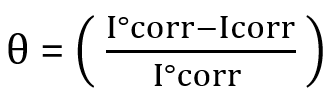
 = sum population of all previous years; Apy = all previous years). Then the per capita waste generation is multiplied to the get quantity of waste generation, which can be written as (Eq. 3):