As defined by the World Health Organization, emerging infectious diseases (EIDs) are serious global public health threats. An emerging infectious disease is one that either has appeared and affected a population for the first time or has existed previously but is rapidly spreading, either in terms of the number of people getting infected or to new geographical areas. Many EIDs are zoonotic in origin, which means that the disease has emerged from an animal and crossed the species barrier to infect humans. Nipah virus, Crimean-Congo hemorrhagic fever, and avian influenza A (H5N1) are examples of diseases that have recently emerged. By contrast, re-emerging infectious diseases (REIDs) are diseases that once were major health problems globally or in a particular country, and then declined dramatically, but are again becoming health problems for a significant proportion of the population (malaria and tuberculosis are examples).
Keywords
Emerging
Re-Emerging Infections
Overview
Global Response
Way Forward
INTRODUCTION
Emerging Infectious Diseases
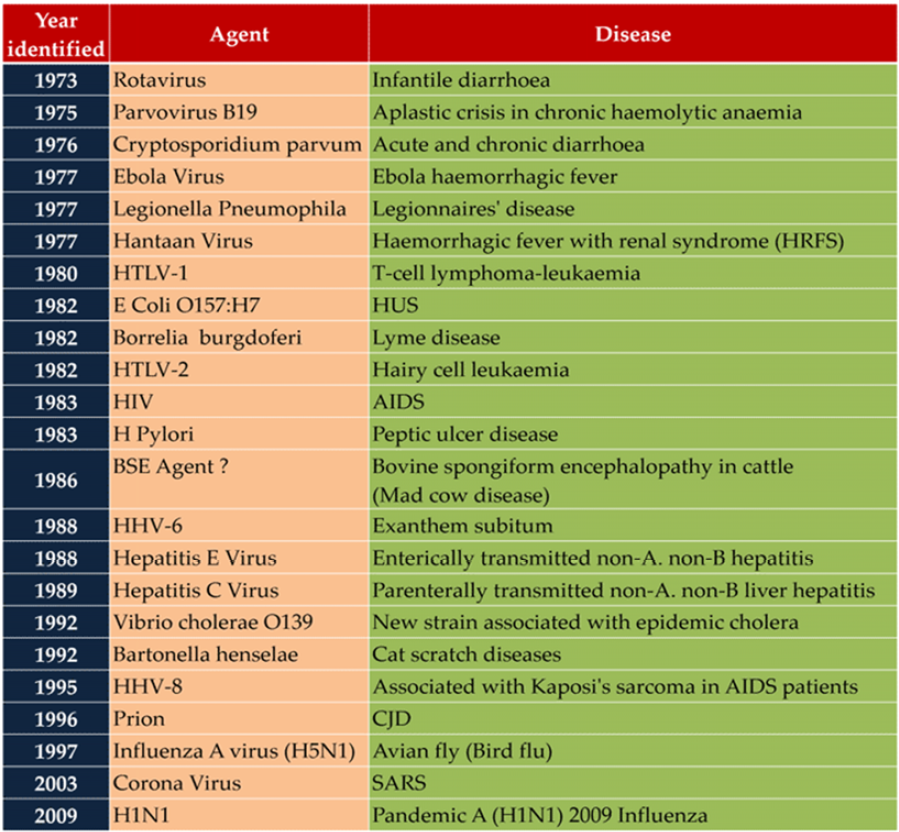
Emerging infectious diseases are those due to newly identified and previously unknown infections which cause public health problems either locally or internationally”. In the past 20 years, at least 30 new diseases have emerged to threaten the health of hundreds of millions of people. Emerging Infectious Diseases have not occurred in humans before this type of emergence is difficult to establish and is probably rare. They have occurred previously but affected only small numbers of people in isolated places (Ebola hemorrhagic fever are examples); or have occurred throughout human history but have only recently been recognized as distinct diseases due to an infectious agent (Lyme disease and gastric ulcers are examples) (Table 1).
Re-Emerging Infectious Diseases
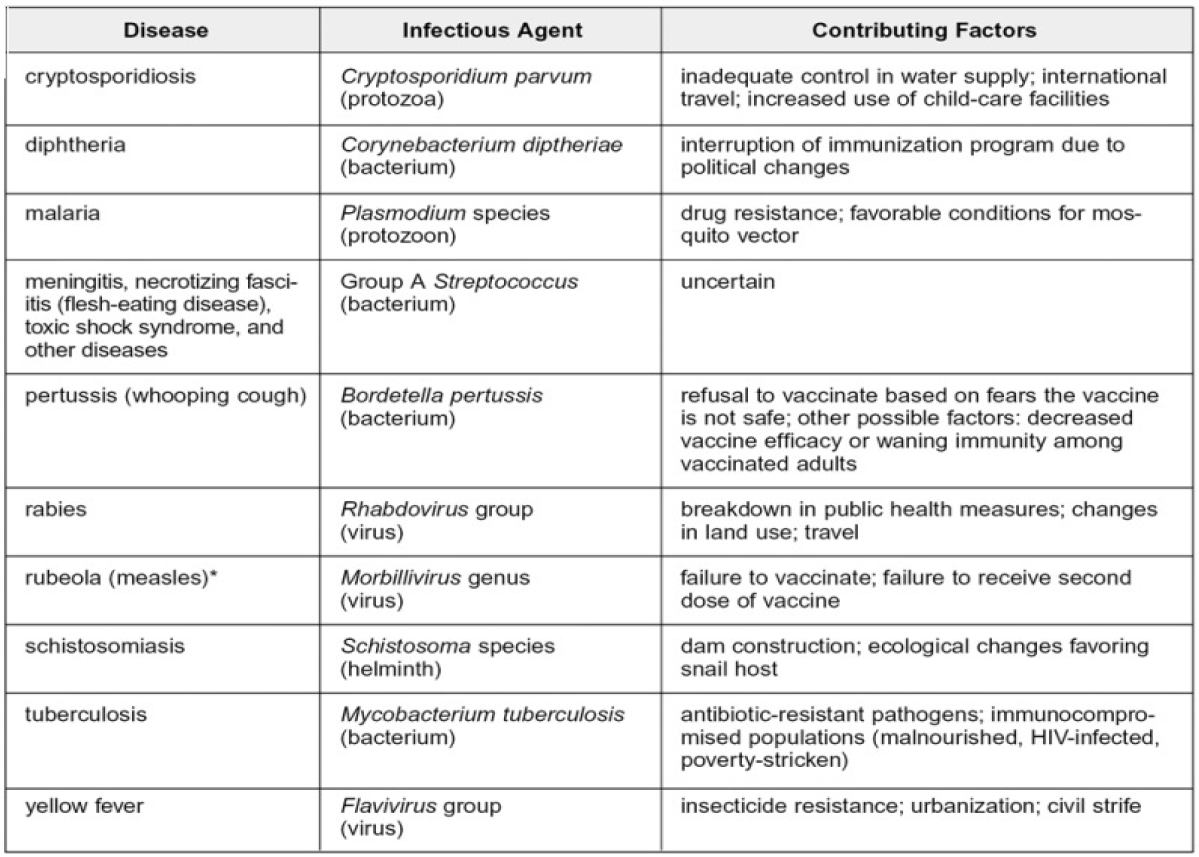
Re-emerging infectious diseases are those due to the reappearance and increase of infections which are known, but had formerly fallen to levels so low that they were no longer considered a public health problem”.Re-emerging infectious diseases often appear in epidemic proportions. Re-Emerging Infectious Diseases are diseases that once were major health problems globally or in a particular country, and then declined dramatically, but are again becoming health problems for a significant proportion of the population. Many specialists in infectious diseases include re-emerging diseases as a subcategory of emerging diseases (Table 2).
Responsible Factors
The factors responsible for emergence and re-emergence of infectious diseases are:
Unplanned and under-planned urbanization
Overcrowding and rapid population growth
Changes in genetic makeup of the pathoge
Poor sanitation
Inadequate public health infrastructure;
Resistance to antibiotics
Increased exposure of humans to disease vectors and reservoirs of infection in nature
Rapid and intense international travel
Practice of modern medicine and relaxation in immunization practices
Deforestation
Failure to control carriers or breakdown in water and sanitation systems
High risk human behaviour
Channelling of funds to other problems
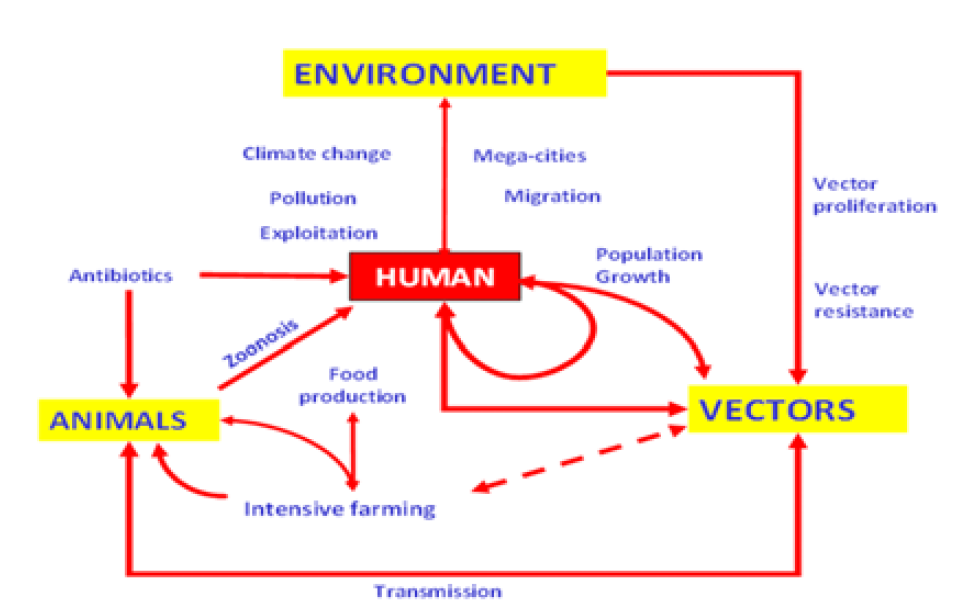
“Emerging and re-emerging infections reflect the constant struggle of microorganisms to survive” (Figure 1).
Table 1: Emerging Infectious Diseases
Table 2: Re-Emerging Infectious Diseases
Figure 1: Responsible Factors
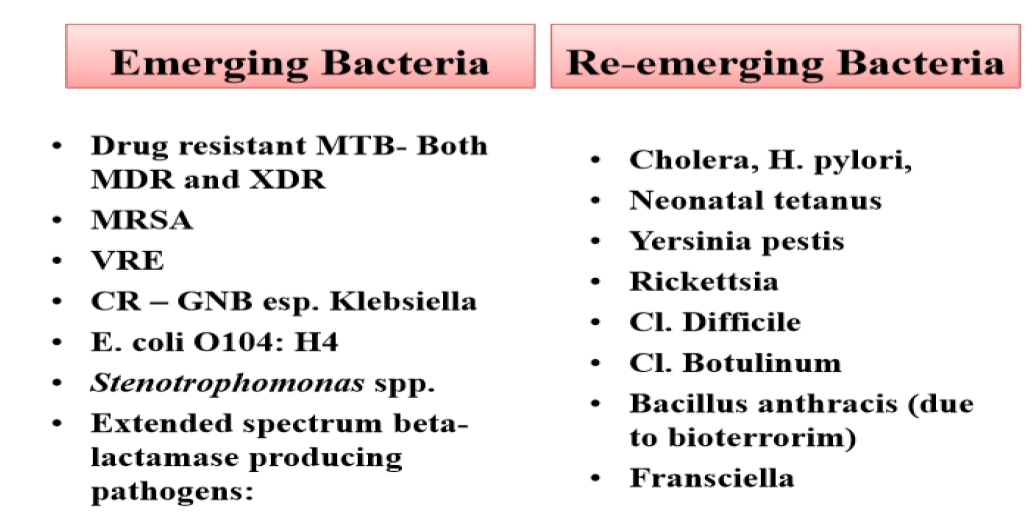
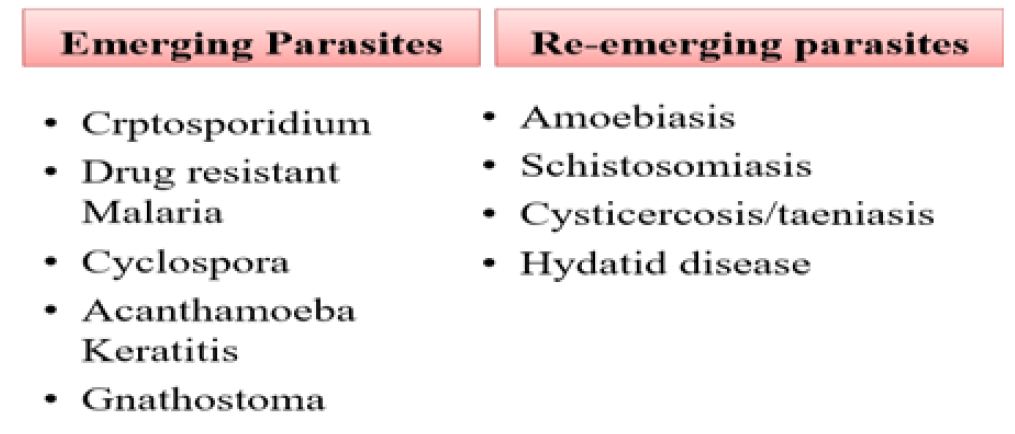
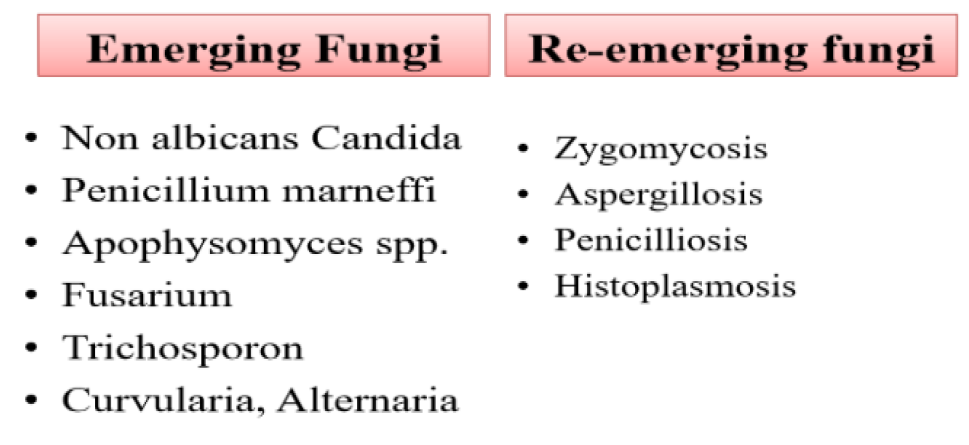
Bacterial Infections, Viral Infections, Parasitic Infections and Fungal Infections
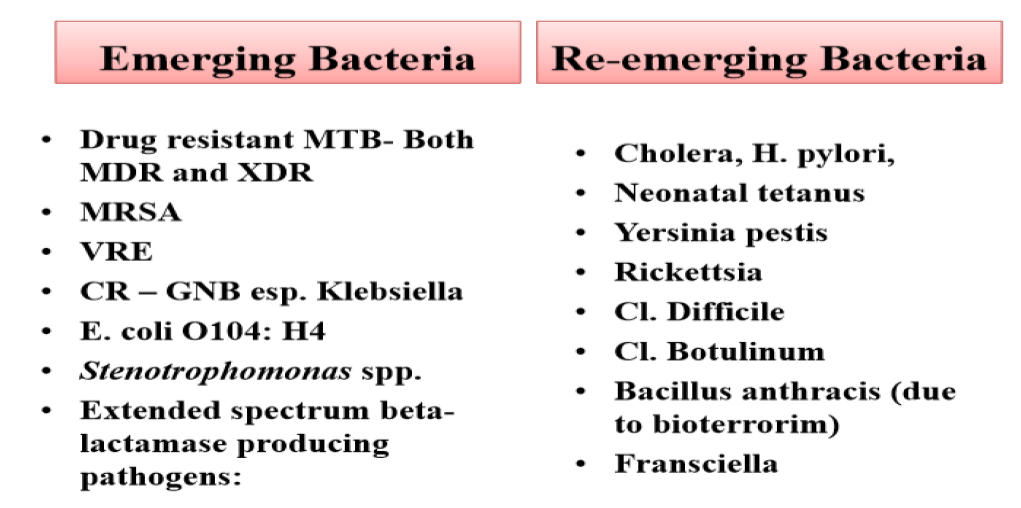
In an era of heightened pandemic vigilance, the profile, nature, and scope of emerging infectious diseases are varied and multiform. Subsequently, a range of infectious diseases, with the cited potential to transpire into significant public health emergencies, are presented within the following classifications of emerging and re-emerging infectious diseases: bacterial infections, viral infections, parasitic infections and fungal infections. (Figure 2-5).
Global Response
Establishment of the Division of Emerging and other Communicable Diseases Surveillance and Control (EMC), by WHO to Strengthen national and international capacity in the surveillance and control of communicable diseases, including those that represent new, emerging and re-emerging public health problems, for which it ensures a timely and effective response.
Role of WHO
The World Health Organization, as one of the partners in this global effort, is strengthening global monitoring systems to serve as part of the overall detection system.In addition to partnership in global monitoring, WHO is working in countries to strengthen national disease detection and response through improved surveillance systems, and specialized training in epidemic preparedness and response. A final role of WHO in this partnership is to help ensure a coordinated global response to infectious diseases of international importance, often with the technical expertise of the WHO Collaborating Centres or other centres of excellence.
WHO Collaborating Centres
The first global monitoring system is that of the WHO Collaborating Centres, specialized Laboratories and institutions with expertise in infectious disease diagnosis and epidemiology. Through WHONET and GASP, WHO regularly obtains standardized information of known quality on the current state of antimicrobial resistance. Helps countries use this information nationally for sound drug policies, and internationally uses the information to identify problems. Advocate research and development on antibiotics.
Figure 2: Emerging and Re-Emerging Bacteria
Figure 3: Emerging and Re-Emerging Virus
Figure 4: Emerging and Re-Emerging Parasites
Figure 5: Emerging and Re-Emerging Fungi [1]
International Health Regulations (IHR)
The third system is represented by the International Health Regulations (IHR), currently the only international public health legislation which requires mandatory reporting of infectious diseases. Three diseases are covered by the IHR – cholera, plague and yellow fever [2].
Steps Forward: Addressing Emerging and Re-emerging Diseases
The wake of the 2014 West Africa Ebola epidemic has reinvigorated and galvanized global efforts to monitor and regulate the emergence and re-emergence of pathogens with pandemic potential and to effectively address and contain infectious disease outbreaks to limit global contagion. While the past public health emergencies of the early twenty-first century (such as SARS, H1N1, and Ebola) represent diverse and varied health histories, key elements of pandemic preparedness and response – including increased spending and investment in health security, the bolstering of routine and timely disease surveillance systems, and continued investments and support for the development and deployment of vaccines to protect populations from infection and limit contagion – should continue to inform and guide both short- and longer-term initiatives to regulate the spread of emergent and re-emergent infectious diseases [3].
The governments all around the globe should emphasized coordinated global and regional leadership to formulate timely and proportionate responses to emergent disease threats, strategic and targeted spending and investment, the continued development of effective and widely available vaccines to counter disease outbreaks, as well as the utilization of broad and nuanced understandings of the correlated realities of health and disease, economy, politics, and society as imperatives in continued global health initiatives to regulate and contain emergent and re-emergent diseases [4].
REFERENCE
“Emerging and Re-Emerging Diseases.” Annals of Community Health, https://www.annalsofcommunityhealth.in/ojs/index.php/AoCH/pages/view/emrem. Accessed June 2022.
Roberts, S.L. “Emerging and Re-Emerging Diseases.” The Palgrave Encyclopedia of Global Security Studies, edited by S. Romaniuk et al., Palgrave Macmillan, 2019.
Fauci, A.S. “Emerging and Reemerging Infectious Diseases: The Perpetual Challenge.” Academic Medicine, vol. 80, no. 12, December 2005, pp. 1079–1085.
“Emerging and Re-Emerging Infectious Diseases.” Europa, https://ec.europa.eu/info/research-and-innovation/research-area/health-research-and-innovation/emerging-and-reemerging-infectious-diseases_en. Accessed June 2022.
Recommended Articles
Research Article
Pink Perspectives: Unveiling Conjunctivitis Awareness in Himachal Pradesh - A Comprehensive Study on Types, Symptoms, Prevention, and Treatment among the General Population
Sumit Kumar,
Prabhleen
Published: 14/12/2023
Download PDF
Research Article
Iron Deficiency Anemia in Pregnancy: A Randomized Control Study to Compare the Change in the Mean Serum Ferritin Level after Intravenous Ferric Carboxymaltose and Iron Sucrose
Ankita Thakur,
...
Sidharath Sood
Published: 30/08/2022
Download PDF
Research Article
A cross sectional study to evaluate the Correlation between Clinically Significant Macular Edema (CSME) with different Biochemical Parameters among Patients of Type 2 Diabetes Mellitus Present at Ophthalmology OPD of Tertiary Care Center
Punam ,
Vinod Kashyap
Published: 10/10/2022
Download PDF
Research Article
Silent Growths: Assessing Knowledge of Bone Tumors in Children among Hamirpur's General Public
Swati Chandel,
Vishal Dhatwalia
Published: 19/11/2024
Download PDF
PO Box 101, Nakuru
Kenya.
Email: office@iarconsortium.org
Editorial Office:
J.L Bhavan, Near Radison Blu Hotel,
Jalukbari, Guwahati-India
Bhardwaj, V., Sirkeck, A. & Kalia, K. K. (2022). Emerging and Re-Emerging Infections: An Overview, Global Response and Way Forward. IAR Journal of Health Care and Prevention, 2(2), 1-4.
MLA
Bhardwaj, Vineet, Assem Sirkeck and Kamal K. Kalia. "Emerging and Re-Emerging Infections: An Overview, Global Response and Way Forward." IAR Journal of Health Care and Prevention 2.2 (2022): 1-4.
Chicago
Bhardwaj, Vineet, Assem Sirkeck and Kamal K. Kalia. "Emerging and Re-Emerging Infections: An Overview, Global Response and Way Forward." IAR Journal of Health Care and Prevention 2, no. 2 (2022): 1-4.
Harvard
Bhardwaj, V., Sirkeck, A. and Kalia, K. K. (2022) 'Emerging and Re-Emerging Infections: An Overview, Global Response and Way Forward' IAR Journal of Health Care and Prevention 2(2), pp. 1-4.
Vancouver
Bhardwaj V, Sirkeck A, Kalia KK. Emerging and Re-Emerging Infections: An Overview, Global Response and Way Forward. IAR Journal of Health Care and Prevention. 2022 Jul;2(2):1-4.


 Download PDF
 Download XML