This paper examined the major facts which motivate households’ decisions to engage in agro business of fuelwood, determined the most preferred fuel wood species and availability of income inequality among selected communities. The study sampled six selected communities in the Ngor Okpala based on poverty and rural dependence mode. The paper used the simple random sample along with a structured questionnaire to get information from respondents. The results showed that, increased in travel cost and cost of access to forested sites impact negatively on the number of visits for fuel wood. The study further revealed that, benefits from fuel wood agro business in terms of reducing income inequality differ from community to community. The study recommended that, government and international organizations should facilitate the cultivation forest sites solely for fuel wood harvest to ensure environmental sustainability. In addition, fuel wood harvesters must be taught forest management and conservation strategies in Imo State, Nigeria.
Keywords
Fuel Wood
Agro Business
Domestic Usage
Inequality
Forest Management
INTRODUCTION
Fuelwood studies have given rather less attention to the effect of urban demand on fuelwood production and supply than to most other aspects. The tendency to regard fuelwood as mainly the concern of rural producers and consumers discouraged the study of the commercial organization of the fuelwood industry and of the role of fuelwood in the development process. Whilst it is highly probable that most fuelwood use lies outside the monetary economy, nevertheless there is growing, even substantial, evidence of the use of fuelwood in towns (including charcoal) for both domestic and industrial purposes [1]. There is evidence too of the purchase of fuelwood by a small proportion of rural consumers, particularly those who are not farmers or who have higher incomes.
Fuel wood has been further defined to be wood whose form is rough and could be branches of trees, logs, sawdust, pellets and twigs mainly for energy generation [2]. Fuel wood has played significant role in domestic and commercial energy consumption world over. Cook et al. [3] estimated approximately about two billion people world over use biomass in the form of fuel wood and charcoal for cooking and heating. These people have depended on these natural resources for their survival for a very long period of time.
Human beings have always had a close relationship with environmental resources and therefore take their livelihood from it. Twerefou and Ababio [4] put it that, more than half of the developing world inhabitants who are considered very active depend in part or whole on the environment which could be hunting, fishing, agriculture, forestry and so on. Forest and environmental resources are considered to have played an important role in both rural and urban livelihoods but particular reference is given to rural livelihood [5]. The rural inhabitants often subsisted through dependence on forest resources and the environment.
Kiflu et al. explained that, researchers on fuelwood use in developing regions of Africa, Asia and Latin America believed that, wood fuel was a major factor in tropical deforestation and thus, accounted for forests loss and widespread wood fuel shortages. However, other studies disproved the notion that, wood fuel harvesting is a direct cause of deforestation since most wood fuel demand is met by trees and shrubs growing outside of forest areas and from farm clearance [6].
Imo State’s fuelwood consumption is been increasing for both urban and rural inhabitants. This invariably has motivated many people to engage in commercial harvest of the fuel wood. Fuelwood is still widely used as a dominant energy among all classes of people across sub Saharan Africa and Nigeria is no exception [7].
Dominance in fuelwood agro business has had gender dimension in Nigeria both rural and urban areas and could relate to gender dimension to poverty and livelihood alternatives. Women in most cases in the rural settings in Nigeria undertake major part of the farm activities including walking to distant places to gather fuel wood. Osuagwu and Osuagwu [1] stated that gathering and collecting fuelwood alongside their farming activities involve women walking long distances and this impact negatively on women.
Azeez et al. [8] further opined that, to achieve poverty reduction based on forest products, there has to be an increase in the creation of wealth through forest products production, processing and marketing and to streamline mechanisms to guarantee that some of that wealth is captured by the intended beneficiaries. Thus, commercialization of fuel wood perhaps could enhance welfare.
The objective of the study was to assess fuelwood agro business and domestic usage in selected rural areas of Imo State, Nigeria. The specific objectives were to: identify the major factors which motivate households’ decision to engage in agro business of fuelwood in Ngor Okpala, Imo State, Nigeria. Determine the most preferred fuelwood specie by households and availability of income inequality among participating communities in Ngor Okpala, Imo State, Nigeria. Establish fuelwood agro business and domestic usage in sampled communities in Ngor Okpala, Imo State, Nigeria.
A study by Azeez et al. [8] on the utilization pattern and economic evaluation of fuelwood enterprise: A case study of some areas in Ibadan Metropolis, Oyo State, Nigeria to evaluate the profitability and factors influencing fuelwood profitability among marketers in the study area. They employed descriptive and quantitative techniques in the analysis of the data. The result showed that majority of households used fuelwood for cooking purposes and that the marketing of this product is highly profitable. The average Profitability Index for all farms was 0.75, indicating that out of every N10 earned; about N7.5 accrue to the marketer as profit after accounting for all cost. Therefore marketing of fuel wood holds a great potential for income generation as it was found to be a very profitable business. This justifies for the current study in this area considering the fact that, both locations have higher rates of employment.
Taiye and Emmanuel [9] examined the sustainability of fuelwood harvesting from Afaka Forest Reserve in Kaduna State, Nigeria. They used field observation, physical measurement of harvested wood diameters, photographing reporting and farmers’ interviews. The data was analyzed, by means of descriptive statistics in order to estimate the quantity of wood harvested per day, week, month and year; as well as the sizes of harvested trees and the harvesting method. The results showed that, a daily average of 91.9 tons of wood was harvested from the forest and transported into Kaduna State through various classes of vehicles. Approximately, about 15% of the harvested wood had a diameter of less than 5cm, 40% (5.1-10 cm), 14% (10.1-15 cm), 16% (15.1-20 cm) and 15% (> 20 cm). They revealed harvesters did not use any specific scientific method of harvesting and the rate of regeneration and/or replacement planting trees were below the rate of harvesting. They viewed the demand for fuel wood, poverty level, the harvesting cost and availability of fuel alternatives would affect the rate of wood harvesting. They recommended that, Government at all levels; NGO (Non-Governmental Organisations) and CBO (Community Based Organisations) should expand the forest and at the same time put in place a sustainable method of harvesting. This support the intent of the current study as fuelwood harvesters in the study area share similar characteristics.
MATERIALS AND METHODS
The study was conducted in Ngor Okpala Local Government of Imo State of the cattle corridor.
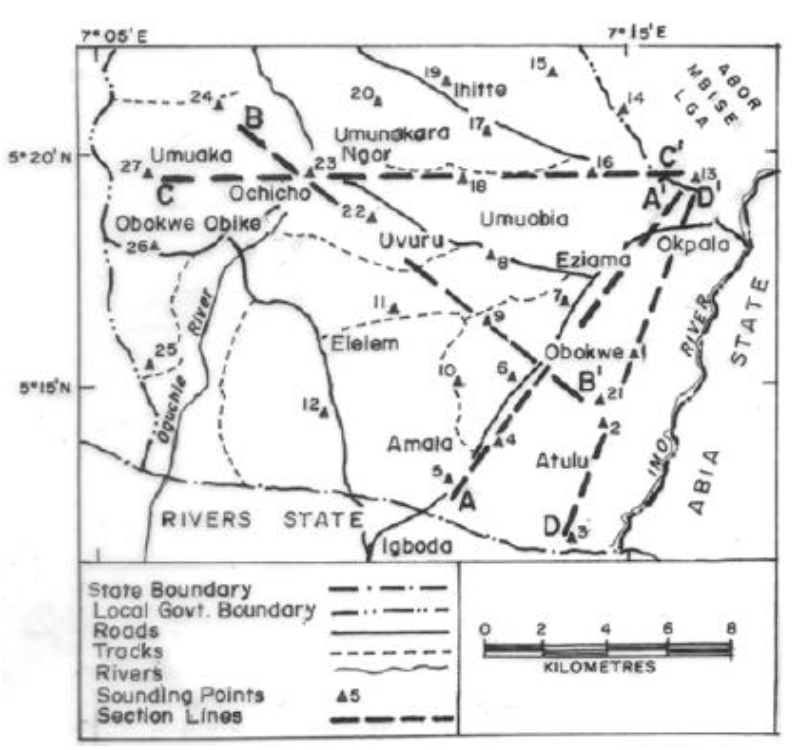
Ngor Okpala is a Local Government Area of Imo State, Nigeria. Its headquarters is in the town of Umuneke Ngor. It has an area of 561 km2; it has a population of 159,932 at the 2006 census. It is a notable place in Imo state because of the LGA's locational position. Ngor Okpala Local Government Area in Imo State of Nigeria which is located in the rain forest belt of Nigeria; was carved out of Owerri North and Owerri Municipal. Ngor Okpala lie between latitude 5° 25’N and 5° 31’N and longitude 6° 59’E and 7° 04’E. Ngor Okpala has a land area of about 12, 145 square kilometers, with population of about 950,000. Climatically, Ngor Okpala is characterized with heavy rainfall pattern averaging about 1900 mm (190 cm) per annum, temperature ranging from 220°C-340°C daily [10]. The area was chosen because most of the inhabitants are engaged in various types of farming; this is justified by the presence of thick forests in the area which from time origin. The maps of the study area and the state are shown in Figures 1 and 2 below.
Primary data were collected by a pre tested semi- structured questionnaire administered through face to face interviews to capture the underlying social, cultural and economic data. Data collected included age, sex of the household head, size of the grazing land owned, access to market information, reasons of keeping cattle, participation in the livestock marketing and channels used, road infrastructure status and challenges encountered. Secondary data to augment the research included livestock production estimates and livestock off-take rates was collected from Agricultural Development Programme (ADP) office in Owerri, Imo State.
Information on the fuelwood types were stated in Igbo Language for uniformity. Igbo Language is the dominant language in the study area. In the various communities, we employed the services of literate inhabitants to translate into the local dialect for questionnaire administration. The data was collected by five (5) trained research assistants in addition to the author. The period for the data collection was November 2015 to April, 2016. This was the dry season period in which fuel wood commercialization was evident. The analyses were based on descriptive statistics including frequency distribution.
Four communities namely Obiangwu/Logara, Obib-Ezena, Amala/Olulu/Oburu, Ihite-Okwe, Umuowa and Ohekelem/Nnorie were randomly selected from Ngor Okpala Local Government Council (Figure 1-2).
Figure 1: Location Map of Ngor-Okpala L.G.A. Imo State (Adopted from Ministry of Land and Survey, Owerri)
Figure 2: Map of Imo State showing the three Agricultural zones
RESULTS AND DISCUSSIONS
Summary statistics of household heads on fuel wood commercialization is explained. This study used a structured questionnaire to obtain information from household heads. Therefore, the information provided by the head is a true reflection of the household. A household in this study refer to a person or group of persons who eat from the same pot and dwell under the care of a head. Table 1 provides the characteristics of the household heads in the sampled communities.
Table 1 showed information on households’ characteristics which are: sex, age, immediate dependents, marital status, highest level of formal education and employment status along with their frequencies, percentage, mean and standard deviation. The results has shown that, 88(31.4%) of the results were males and 192(68.6%) were females. The age of the respondents showed that, 126 (45.0%) are in the age 45-54 actively engaged in fuel wood commercialization in the selected districts. Predominantly, 202 (72.1%) of the married had approximately four (4) immediate dependents and this is supported by the IMLS (2019) data that, the rural households have high population growth rates. The results evidently also show high number of respondents without formal education 232 (82.9%). Therefore, due to lack of employable skills as many as 187 (66.8%) decided to engaged in fuel wood commercialization as a full time business and few are involved in other part time businesses. In the case of dominance in the fuel wood commercialization business, the results revealed that, women were domination in the business and this result is supported by Tabuti et al. [11] study which opined that, women are dominating in fuel wood business.
Table 1: Descriptive Statistics for Sampled
Households (Households Characteristics)
Variable Frequency %
N = 280
Sex
Male
88
31.4}
Female
142
68.6}
Age
20-34 years
21
7.5
35-44 years
82
29.3
45-54 years
126
45
55 years+
51
18.2
Immediate Dependents
Marital Status
Single
21
7.5
Married
202
72.1
Divorced/Separated
21
7.5
Widow/Widower
36
12.9
Highest Level of Formal Education
None
232
82.9
Middle/JSS
29
10.4
SSS
19
6.8
From the results on Table 2, the main source that the sampled households obtained their fuel wood was from open vegetation, 261 (93.2%). The trees they harvested for fuel wood was mainly dead dry trees as shown on the table 186 (66.4%). With these two cross tabulation, there exist a sustainability harvest idea in that, even though, the inhabitants harvested from open vegetation which was obvious from the results, they were mindful to harvest significantly dead dry trees. The study also related that, they also harvested over aged trees, 186 (33.6%) which in terms of regeneration may not have been possible. The results on the table revealed community members do obey the directives of the local authorities not to harvest wet standing trees. The results regarding the implied sustainability harvesting is supported by Manyatsi and Hlophe [12]. Many households perhaps would in future continue to be involved in fuelwood Agro Business owing to the fact that, it is an open access resources and not from the few restricted forested areas in the study area. In addition, fuelwood harvested are dead/dry trees and household heads believed that, fuel wood harvested from restricted forested sites is not a major challenge.
Table 2: Harvesting and Sustainability
Parameters
Main Source of Obtaining Fuelwood
Open Vegetation
Farm Gatherings
Total
Types of Fuelwood Harvested
Dead Dry Trees
167
19
186
Over Aged Trees
94
0
94
Total
94
19
280
Field Survey: 2016
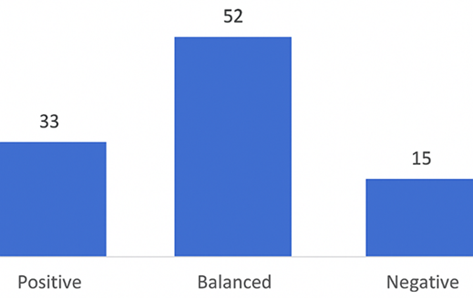
The study investigated the major factors which motivated sampled households to engage in fuel wood Agro business as a business entity. Some of the sampled communities had no major forest and therefore existences of trees were few. Relying on this, thus triggered the question of motivational factors. The distributions of the responses from the sampled household heads are shown in Figure 3.
The results from Figure 3 showed that, 240 (85.7%) of the respondents said that, income generation has been the reason for them engaging in fuelwood agro business. Even though, they had other non-fuelwood occupations and the income from fuelwood agro business is higher than other sources. Whereas 21 (7.5%) said unemployment was a factor which motivated them to engaged in fuelwood agro business and remaining 19 (6.8%) attributed their involvement in the business to seasonal nature of faming activities.
Tabuti et al. [11] noted, because households considered fuel wood to be available so they easily involved in commercial activity related to fuel wood. The households however, have preferences regarding the fuel wood they harvest for commercial purposes. The implication of the Figure 1 is that, household heads go into fuel wood agro business due to income.
Table 3: Source of Income for households
Frequency
Percentage
Fuel wood
156
55.7
Charcoal
60
21.4
Hunting
31
11.1
Forest plant foods
33
11.8
Total
280
100
Field Survey: 2016
Motivation for Fuelwood Agro Business
Respondents were asked to provide information regarding the main sources of their incomes. This was to provide explanation regarding the composition of incomes from the sampled communities. The responses are shown in Table 3.
Sources of income for households as shown in Table 3, proved that, majority of the sampled households 156 (55.7%) obtained their income from fuelwood agro business and the least been proceeds from hunting. The results are further supported by Gladman and Muchapondwa [13] that, households do not only depend on fuelwood but other environmental resources for survival.
The study further intended to find out which fuel wood species was preferred by sampled households as a fuel wood for commercial purposes and the results are shown in the Table 4.
As one of the objective of the study was to investigate which of the tree species were preferred by sampled households. This objective was necessitated to draw conclusion regarding ADP (Agricultural Development Programme) Afforestation programme. The results showed that Siamese Cassia popular among the sampled locality, was the most preferred tree species for fuel wood with 113 (40.4%).
Figure 3: Major factors Motivating Households Decision to engage in Fuelwood Agro Business
Category 4: Income = 240 (85.7%), Categories 1 and 2: Unemployment 21 (7.5%), Category 3: Seasonality of farming = 19 (6.8%)
CONCLUSION AND POLICY RECOMMENDATIONS
This paper studied fuelwood agro business and its domestic use in the Ngor Okpala Local Government Council of Imo State, Nigeria. The study sampled six (6) communities and elicited information from household heads. The intent of the paper was to investigate benefit from fuelwood agro business from the local populace in the study area. The analysis of the results proved sustainable harvest of fuelwood for agro business as 167 (60%) of the respondents harvested dead/dry tree as fuelwood and not wet standing trees. This harvest of dead/dry trees is done instead of wet standing trees because of the directive from the community leaders. The results of the study further revealed that, 240 (85.7%) were motivated for fuelwood commercialization because of income and harvesters earn some amount of income.
Another interesting observation is that, household heads diversify their portfolio in terms of income seeking and dependable on forested resources, however, fuel wood has been a major contributor to the incomes of households. In addition, Senna siamea (Siamese Cassia) is the most preferred fuelwood specie among the respondents. The study linked fuelwood agro business and its domestic usage. The major conclusion drawn from the study is that, fuelwood agro business at the study areas contributed significantly to poverty reduction and welfare enhancement and a major safety net; and that, the activity is sustainability and environmental friendly.
From policy recommendations, the findings does rely on the fact that, fuelwood agro business can potential move inhabitants of Ngor Okpala Local Government Council of Imo State, Nigeria above the poverty line as shown in the data. A policy intervention aimed at deliberate cultivation of forest for fuelwood either from government, non-governmental organization or international donors would better the lives of the people.
The accessed lands in the areas were mainly open vegetation and harvesters did not need any training to harvest, therefore, forest management and conservation strategies must be given a serious attention within these areas by the forest commissions. Finally, policies put in place to prevent or limit fuelwood agro business should be done away, as the study has revealed that, their activity do not cause any environmental degradations.
REFERENCE
Osuagwu, Chizoma Olivia and Ihechinyerem Kelechi Osuagwu. "Fuelwood Energy Production and Use by Farm Households in Imo State, Nigeria: Implications for Forest Resource Conservation." Journal of Biotechnology and Bioengineering, vol. 4, no. 4, 2020, pp. 1-9.
Akther, S. et al. "Household Adaptations to Fuelwood Shortage in the Old Brahmaputra Downstream Zone in Bangladesh and Implications for Homestead Forest Management." International Journal of Biodiversity Science, Ecosystem Services & Management, vol. 6, 2010, pp. 139-145. doi:10.1080/21513732.2010.538720.
Cooke, P. et al. "Fuelwood, Forests and Community Management: Evidence from Household Studies." Environment and Development Economics, vol. 13, 2008, p. 93. doi:10.1017/S1355770X0700397X.
Twerefou, D.K. and D.K.A. Ababio. "An Economic Valuation of the Kakum National Park: An Individual Travel Cost Approach." African Journal of Environmental Science and Technology, vol. 6, no. 4, 2012, pp. 199-207. doi:10.5897/AJEST11.159.
Walelign, S.Z. "Forests beyond Income: The Contribution of Forest and Environmental Resources to Poverty Incidence, Depth and Severity." International Journal of AgriScience, vol. 3, no. 7, 2013, pp. 533-542.
Heltberg, R. et al. "Fuelwood Consumption and Forest Degradation: A Household Model for Domestic Energy Substitution in Rural India." Land Economics, vol. 76, 2000, pp. 213-232. doi:10.2307/3147225.
Amuah, N.E.E.H. The Potential of Agroforestry in Fuelwood Production for Domestic and Income Generation Activities - A Case Study of Three Communities in the Sunyani District of the Brong Ahafo Region, Ghana. Thesis, Kwame Nkrumah University of Science and Technology, Kumasi, Ghana, 2011.
Azeez, F.A. et al. "The Utilization Pattern and Economic Evaluation of Fuelwood Enterprise: A Case Study of Some Areas in Ibadan Metropolis, Oyo State." International Journal of Agriculture, Forestry and Fisheries, vol. 2, no. 6, 2014, pp. 91-95.
Taiye, O.A. and A.O. Emmanuel. "Sustainability of Fuel Wood Harvesting from Afaka Forest Reserve, Kaduna State, Nigeria." Journal of Agricultural Science, vol. 7, no. 1, 2015, pp. 1-8.
Imo State Ministry of Lands and Survey (IMLS). Detailed Atlas of the State. 2019.
Tabuti, J.R.S. et al. "Fuelwood Use in Bulamogi County, Uganda: Species Harvested and Consumption Patterns." Biomass & Bioenergy, vol. 25, 2003, pp. 581-596.
Manyatsi, A.M. and E.T. Hlophe. "Contribution of Sale of Firewood Towards Rural Livelihood in Swaziland, and Its Environmental Sustainability." Current Research Journal of Social Sciences, vol. 2, no. 4, 2010, pp. 226-232. Maxwell Scientific Organization.
Gladman, T. and E. Muchapondwa. Dependence on Environmental Resources and Implications for Household Welfare: Evidence from the Kalahari Drylands, South Africa. ERSA Working Paper 370, 2013.
Recommended Articles
Research Article
OBSERVATIONS ON THE HOMOGENEOUS TERNARY QUADRATIC DIOPHANTINE EQUATION x2 + 4xy + 9y2 = 21z2
Download PDF
Research Article
Computer Driven Library Management and Service Rendering System: Mobile Library Landscape
Yekini N. A,
...
Ojo O
Published: 10/06/2020
Download PDF
Research Article
Influence of Optimum Percentage of Waste Ceramic Powder as a Fine Aggregate Replacement on Hardened Properties of Concrete
Mohammad Ali Asaad,
...
Mohammed Muhsin
Published: 11/06/2020
Download PDF
Research Article
The Possibility of Treating Corrosion in Iron Valves of Flow Regulators, Pumping Station Components, and Suspended Solids Filtration Networks in Rivers and Streams in Al-Qadisiyah Governorate
Qasim M. Turki,
...
Ahmed Hakem Jabor
Published: 02/03/2026
Download PDF
PO Box 101, Nakuru
Kenya.
Email: office@iarconsortium.org
Editorial Office:
J.L Bhavan, Near Radison Blu Hotel,
Jalukbari, Guwahati-India
Osuagwu, C., Obi-Ihebie, U. & Osuagwu, K. (2021). Fuel Wood Agro Business and Its Domestic Usage in Ngor Okpala Local Government Council of Imo State, Nigeria. IAR Journal of Engineering and Technology, 2(1), 1-6.
MLA
Osuagwu, C.O., U.I. Obi-Ihebie and K.I. Osuagwu. "Fuel Wood Agro Business and Its Domestic Usage in Ngor Okpala Local Government Council of Imo State, Nigeria." IAR Journal of Engineering and Technology 2.1 (2021): 1-6.
Chicago
Osuagwu, C.O., U.I. Obi-Ihebie and K.I. Osuagwu. "Fuel Wood Agro Business and Its Domestic Usage in Ngor Okpala Local Government Council of Imo State, Nigeria." IAR Journal of Engineering and Technology 2, no. 1 (2021): 1-6.
Harvard
Osuagwu, C., Obi-Ihebie, U. and Osuagwu, K. (2021) 'Fuel Wood Agro Business and Its Domestic Usage in Ngor Okpala Local Government Council of Imo State, Nigeria' IAR Journal of Engineering and Technology 2(1), pp. 1-6.
Vancouver
Osuagwu C, Obi-Ihebie U, Osuagwu K. Fuel Wood Agro Business and Its Domestic Usage in Ngor Okpala Local Government Council of Imo State, Nigeria. IAR Journal of Engineering and Technology. 2021 Jan;2(1):1-6.



 Download PDF
 Download XML