The study assessed impact of Fadama III program on rice farmers in Lau Local Government Area of Taraba State. Primary data were collected via structured questionnaire coupled with interview schedule. A purposive and random sampling techniques were used to obtain the required sample size of 70 from the list of registered rice farmers and Fadama III beneficiaries in the study area. Descriptive statistics and multiple regression analysis were used in analyzing the data. The mean annual income of the rice farmers before and after Fadama III program is N 41,050 and N 156,043 receptively, implying that Fadama III program had a positive impact on income level of the beneficiaries in the study area. Findings of the study further revealed that the variables education (1.125), farming experience (0.402) farm size (0.269) and access to credit (0.194) were positive and statistically significant at 1% implying that the variables influence the income of rice farmers. The result of the study also revealed that poor storage facilities, inadequate supply of inputs, high cost of labour and poor marketing system were among serious constraints that hampered rice faming in the study area. The study recommends amongst others the need for the government and private sectors to provide standard storage facilities for the farmers.
Keywords
Fadama
Impact
Income
Programme and Rice Farmers
INTRODUCTION
Rice is valued as the most important staple food for major population of the world and is deeply embedded in the cultural heritage of many societies. It is a staple food for more than half of the world’s population and has become increasingly important in Africa, both as a food source and as an economic commodity [1]. It is now the continent’s most rapidly growing food source. African rice production increased from 8.6 million tonnes in 1996 to 14.6 million tonnes in 2006 [2]. Rice is cultivated in virtually all the agro-ecological zones in Nigeria. Rain-fed lowland rice is the most predominant rice production system in Nigeria, accounting for nearly 50% of the total rice – growing area in Nigeria; 30% of production is rain-fed upland rice, while just 16% is high yielding irrigated system [3].
The National Fadama Development Project (NFDP) is a Community Driven Development (CDD) project of the Federal Ministry of Agriculture and Rural Development. It is jointly funded by the Federal Government of Nigeria and the World Bank with counterpart funding by states and local governments. The project is agricultural based that aim at increasing the income of fadama lands and water resource users to reduce rural poverty, increase food security and empower rural communities through Fadama Community Associations (FCAs) and Fadama User Groups (FUGs). The first phase of the project is popularly known as the National Fadama Development Project I (NFDP I). It was executed between the years 1993 and 1999, and focused mainly on the promotion of simple low-cost irrigation technologies in the bid to increase food production but largely neglected the down-stream activities such as; processing, preservation, conservation, and rural infrastructure meant to ensure efficient evacuation of farm produce to the markets.
Also, the project did not take into consideration the farmers involved in other areas of agriculture like; livestock and fisheries. This resulted in not only perpetual conflict between users, but restricted benefits to only those who were involved in crops production [4]. At the completion of the project phase in 2001, the Nigerian Government adopted new rural development strategies, which was in line with African Development Bank’s strategic plan that had as its focus a number of approaches to development. The plan stressed the need for consistency, sustainability and greater equity in the access to benefits of the land resources in fadama areas of the country. Consequently, the Bank deemed it necessary to agree to Nigerian Government’s request for funding phase II of the project not only as a follow-up of the phase I, but also to expand its scope [5].
The status of development assistance by respective development partners gives insights on the nature and potentials of funding and assistance by the respective multilateral and bilateral agencies in the country. The World Bank country assistance strategy focuses on expanding community driven development approaches and supporting infrastructure as means of easing bottlenecks to private sector activity in agriculture and other economic sectors. The World Bank provides part financing for the fadama III projects [6].
Successive governments have always acknowledged the eminent role of agriculture in the national economy. Somehow, they have never been able to position agriculture on the proper scheme of national priorities through its investment decisions. Agriculture has been neglected in terms of quantity and quality of investments. Adoption of rice production has been considered as a pride among small scale farmers in Nigeria because rice is considered as a high value crop. The goal of Fadama project is to reduce poverty by improving the living condition of the rural poor and to contribute to food security and increased access to rural infrastructure, and specifically the Fadama project will enhance agricultural productivity and value addition for small holders and rural entrepreneurs on a sustainable basis [7]. This, therefore raises the question of the farming inputs that could be supply by the Fadama project in order to enhance the level of efficiency of Fadama farmers, hence, improve the productivity of rice production in Lau Local Government Area f Taraba State and Nigeria as a whole.
Fadama III is a World Bank sponsored project aimed at providing all-year round cropping of marketable and high-value crops. The project seeks to increase the income of small scale farmers using the Community Driven Development approach. The activities of the program were conducted in a way that they focused on Fadama User Groups (FUGs) having a common economic interest. Since the inception of Fadama III in 2009, however, little or no effort has been made to investigate the impact of the program on the beneficiaries especially rice farmers in Lau Local Government Area of Taraba State. This could be a prerequisite toward ensuring that the goals of agricultural development programs are met [8]. Therefore, the aim of this study was to assess the impact of Fadama III on the livelihoods of rice farmers in Local Government Area of Taraba State, Nigeria. The specific objectives were to:
Determine the income level of Fadama III rice farming beneficiaries, before and after the project in the study area
Determine the factors influencing the income level of the Fadama III beneficiaries in the study area
Identify the constraints associated with Fadama III rice farmers in the study area
MATERIALS AND METHODS
Study Area
Lau Local Government Area is one of the 16 Local Government Areas in Taraba State which is located between latitude 8o56’N to 9o40’N of the equator and longitude 11o15’E to 11o40’E of the Green witch meridean. Lau GGA has a land mass of 1660km2 with the population of 95,190 [9]. It has a projected population of about 143,833 by 2017. LGA is bounded to the northeast by Demsa LGA of Adamawa state, to the north and west by Karim Lamido LGA, and to the south by Ardo Kola, Jalingo and Yorro LGAs. Lau is a lowland area located on the flood plains of the River Benue. It is drained by river Mayodunga and several others which empty into river Benue. Most of the tributary rivers are silted. Sand deposits have almost leveled the river valleys in most places. Lau LGA has a tropical continental climate and Sudan savanna type vegetation which consists of grasses and scattered tall trees. The dominant vegetation consists of acacia plants and a type of palm called giginya in Hausa language. The palm is seen dotting the landscape on the flood plain of River Benue. The soil consists of alluvial soil rich in alluvial deposits and mostly of clay loamy soil and sandy loamy in some places [10].
Data Collection
Data for this study was obtained from primary source. Primary data were obtained using structured questionnaire.
Sampling Procedure and Sample Size
Fadama III beneficiaries formed the population of the study. A purposive sampling techniques was employed in this study. Lau Local Government Area is made up of Cells. Five Cells were (Lau, Mayo lope. Abare, Kunini and Garin Dogo) were purposively selected based on their relevance in rice production. In the second stage two farming communities were randomly chosen in each of the selected Cell. Ten farming communities form the area of the study.
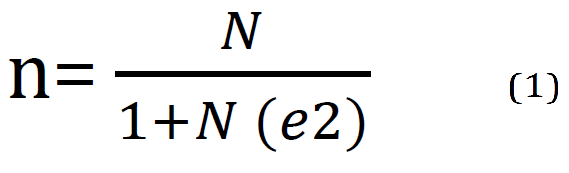
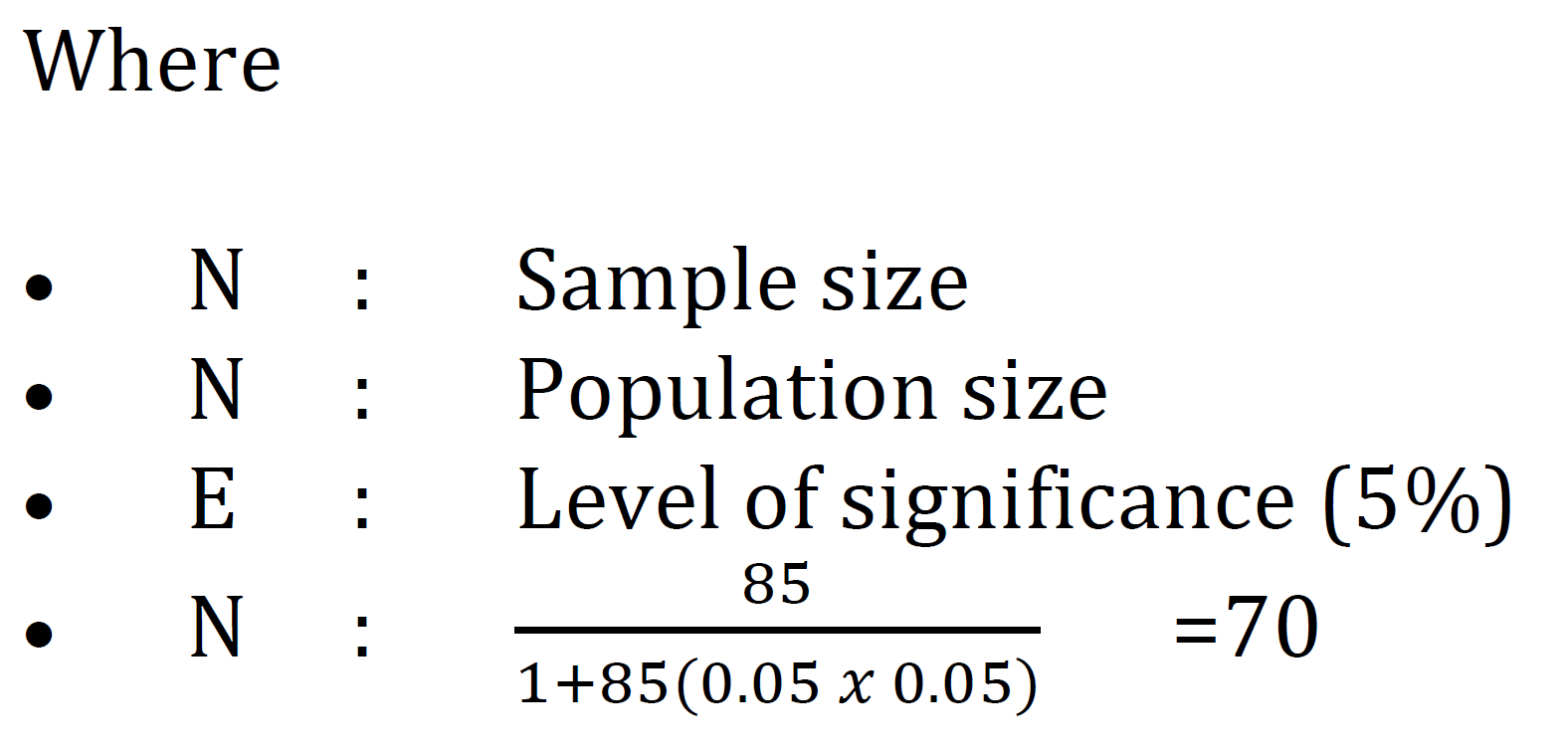
In the third stage farmer were randomly selected in proportion to the population of Fadama III beneficiaries farmersa in the study area. Finally, a 5%. Proportion of the total population of 85 Fadama III beneficiaries farmers in the selected farming communities were taken using Yaro Yamen formula to arrive at a total sample size of 70 respondents.
The sample size was determined at 5% level of significance using Yero Yamen’s formula presented by Baridam [11]
Data Analysis
Data were analyzed using descriptive statistics such as mean, frequency and percentages to address objective I and III while multiple regression analysis was employed to address objective II:
The multiple regression function is expressed as follows:
Y=f (X1, X2, X3, X4, X5, X6, X7,)
(2)
Where:
Y : Income level (₦)
X1 : Educational level (Educated = 1 and not Educated = 0)
X2 : Farming experience (Years)
X3 : Farm size (Hectare)
X4 : Access to credit (Yes = 1 and No = 0)
X5 : Members of association (Number of persons)
X6 : Gender (Male = 1 and Female = 0)
RESULTS
Income Level of Beneficiaries before and After Fadama III Program
Result in Table 1 expressed the different income levels of Fadama III beneficiaries that were into rice farming before and after the project. The result showed that 75.7% of the beneficiaries had an income level between ₦ 10,000 - ₦ 50, 000 per annum while 24.3% had an income level between ₦51,000 - ₦ 100,000 with a mean annual income of N 41,050 before the implementation of the project in the study area. Comparatively, about 14.2% of the beneficiaries had an income level between ₦51,000 – 100,000, 52.9% had an income level between ₦101,000 – 200,000 while 32.9% had ₦200,000 and above with a mean annual income of N156, 043. This implies that the income levels of Fadama III beneficiaries that participated in rice farming increased tremendously after the implementation of the Fadama III program in the study area. The implication of the finding is that the project had a positive impacts in the lives of the beneficiaries. The result of this findings is in tandem with the findings of Babatunde et al. [12] which reported that Fadama III program had impact in the livelihood of dry season vegetable growers in Kwara State.
Factors Influencing Income of Fadama III Rice Farmers (Beneficiaries)
Ordinary least squares multiple regression was used and the results were presented in Table 2.This model was used to determine the specific contribution of each independent variables and the total variance explained by all the variables on factors influencing farmers income. The coefficient of determination R2 indicates that 73.4% variation in the income was explained by the independent variables included in the regression model, while the remaining 26.6% is attributable to non-inclusion of some important explanatory variables as wells errors in estimation. The results further revealed that out of the six 6 independent variables, four 4 were found to have a significant influence on rice farmer’s income. These include educational level 1.125, farming experience 0.402, farm size 0.069 and access to credit 0.194 at 1% significance level. The positive estimate coefficient with respect to education indicated that education was a significant determinant of farmer’s income. The result shows that farming experience have significant relationship with farmer’s income. This implies that the higher the farming experience, the higher the income. The coefficient of farm size and access to credit were positive and statistically influence the level of the farmer’s income. The result of this work is in consonance with finding of Tasie [13] who reported that farm size and educational have a significant influence in the level of income of rural farmers in Rivers State.
Table 1: Income of Respondents before and after Fadama III Program
Income (₦)
Before Frequency
%
After Frequency
%
10,000 – 50,000
53
75.7
0
0
51,000 – 100,000
17
24.3
10
14.2
101,000 – 200,000
0
0
37
52.9
>200, 000
0
0
23
32.9
Total
70
100
70
100
Mean income
41,050
-
156,043
-
Source: Field Survey, 2018
Table 2: Result of Regression Analysis
Variables
Coefficient
Standard Error
T-Value
Constant
0.667
0.055
0.000
Educational level (X1)
1.125***
0.265
4.2453
Farming experience (X2)
0.402***
0.063
6.3810
Farm Size (X3)
0.269***
0.035
7.6857
Access to credit (X4)
0.194***
0.049
3.9592
Membership of Cooperative (X5)
0.248
0.178
1.3932
Gender (X6)
0.072
0.279
0.2581
R2 Value
0.634
-
-
R2 Adjusted
0.615
-
-
F – Ration
7.806***
-
-
Source: Field Survey, 2018 *** Significant at 1%
Table 3: Constraints Associated with Fadama III Rice Farmers
Constraints
Frequency
Percentage
Poor storage facilities
51
75.0
Inadequate supplies of inputs
45
66.2
High cost of labour
35
51.5
Poor marketing system
23
33.8
Land tenure system
16
23.5
Pest and disease infestation
15
22.1
Lack of improved variety
8
11.8
Lack of access to credit facility
3
4.4
Lack of extension services
2
2.9
Lack of funds
2
2.9
Source: Field Survey, 2018 Multiple response
Constraints Associated with Fadama III Rice Farmers in the Study Area
The constraints facing rice farmers in the study area is presented on Table 3. The result revealed that poor storage facilities was the most 75 %. serious constraint affecting Fadma III rice farmers while inadequate supply of farm inputs was second most 66.6% serious prevalent constraint affecting rice farmers in the study area . High cost of labour was third most prevalent constraint represented by 51%. This finding is in line with the findings of Aboki, et al. [14] which reported that high cost of labour was a major constraints militating against rice production in Donga Local Government Are of Taraba State, Nigeria. Poor marketing is the fourth most 33.8 %. serious constraint affecting rice production in the study area.
CONCLUSION
In view of the findings of this study, it can be deduced that even though the Fadama III rice farmers suffered numerous challenges as a result of poor storage facilities, high cost of labour, poor marketing system coupled with inadequate supplies of inputs from service providers, the project’s still had a positive impact on beneficiaries as there was a tremendous increase in their income after participating in the project.. Based on the findings the following recommendations were made that;
Government and non-governmental Organization should collaborate together to assists farmers with modern storage facilities
Service providers should ensure adequate supply of inputs to farmers on good times. Government and private sector should provide enough machines to thefarmers at a subsidized price in order to cut down the cost of labour
The private sector and the farmers should join hand together to create more outlets and also to improve the existing marketing in the study area
REFERENCE
FAO. Food and Agriculture Organization Year Book. Food and Agriculture Organization, 2006, p. 79.
FAO. The State of Food Insecurity in the World 2008: High Food Prices and Food Security—Threat and Opportunity. Food and Agriculture Organization, 2008.
World Bank. Fadama III Rural Agriculture Project Fast Becoming a Household Name in Nigeria. World Bank, 2014.
Federal Republic of Nigeria. National Fadama Development Project (NFDP) Appraisal Report. Abuja, 2007.
Federal Republic of Nigeria. National Fadama Development Project (NFDP) Appraisal Report. Abuja, 2015.
Federal Government of Nigeria. Project Implementation Manual, Volume II: Third National Fadama Development Project (NFDP III). Federal Ministry of Agriculture and Water Resources, 2009.
Msuya, M. M. Republic of Nigeria Fadama Development Project Appraisal Report: World Bank Appraisal Mission to Nigeria (13 July–2 August). World Bank, 2003, pp. 5–39.
World Bank. Human Development Report for Nigeria. Nov. 2017.
National Population Commission. Human Population Figures of the 2006 Census in Nigeria. NPC, 2006.
Oruonye, E. D. “Assessment of Fadama Dry Season Farming through Small-Scale Irrigation System in Jalingo LGA, Taraba State.” International Research Journal of Agricultural Science and Soil Science, vol. 1, no. 1, 2015, pp. 14–19.
Baridam, D. M. Research Methods in Administrative Science. 2nd ed., Paragraphics, 2001.
Babatunde, M. M., et al. “Effect of Fadama III Programme on Dry Season Vegetable Growers in Kwara State.” Kasetsart Journal of Social Sciences, vol. 38, no. 2, 2017, pp. 163–168.
Tasie, M. C. “Effect of International Fund for Agricultural Development Credit Supply on Rural Farmers in Rivers State, Nigeria.” Journal of Development and Agricultural Economics, vol. 5, no. 5, 2013, pp. 186–191.
Aboki, E. et al. “Profitability Analysis of Small-Scale Broiler Production in Wukari Local Government Area of Taraba State, Nigeria.” Nigerian Journal of Tropical Agriculture, vol. 1, no. 6, 2016, pp. 120–126.
None
None
None
Recommended Articles
Research Article
Strategy of Cocoa Commodity Based Agrowisata Development in Jembrana Regency
I Gusti Ayu Widari Upadani,
...
Luh Putu Kirana Pratiwi
Published: 30/01/2021
Download PDF
Research Article
Survey on the pollutants effect of some physicals and chemicals characteristics of the White Nile River around Khartoum state in the Sudan
Zeinb E. Elamean,
...
Egbal Osman Ahmed
Published: 20/01/2021
Download PDF
Research Article
Effecting of Hormonal Gonads (Test, Lh, Pro) and Dopamine on Transitional Nuclear Protein /1 Gene Frequency in an Infertile-Men
Taleb K. Odah
Published: 18/09/2023
Download PDF
Research Article
The study on priciple of herd health maagement assesment of Jimma University college of Agriculture And Veterinary Medicine dairy farm
Samson tesfaye,
...
Feyera Gemeda
Published: 01/04/2023
Download PDF
PO Box 101, Nakuru
Kenya.
Email: office@iarconsortium.org
Editorial Office:
J.L Bhavan, Near Radison Blu Hotel,
Jalukbari, Guwahati-India
E., A., P., S., P., D. & G., N. (2020). Impact of Fadama III Program on Rice Famers in Lau Local Government Area of Taraba State, Nigeria. IAR Journal of Agriculture Research and Life Sciences, 1(2), 1-4.
MLA
E., Aboki, et al. "Impact of Fadama III Program on Rice Famers in Lau Local Government Area of Taraba State, Nigeria." IAR Journal of Agriculture Research and Life Sciences 1.2 (2020): 1-4.
Chicago
E., Aboki, Samuel P., Danji P. and Nyapuri G.. "Impact of Fadama III Program on Rice Famers in Lau Local Government Area of Taraba State, Nigeria." IAR Journal of Agriculture Research and Life Sciences 1, no. 2 (2020): 1-4.
Harvard
E., A., P., S., P., D. and G., N. (2020) 'Impact of Fadama III Program on Rice Famers in Lau Local Government Area of Taraba State, Nigeria' IAR Journal of Agriculture Research and Life Sciences 1(2), pp. 1-4.
Vancouver
E. A, P. S, P. D, G. N. Impact of Fadama III Program on Rice Famers in Lau Local Government Area of Taraba State, Nigeria. IAR Journal of Agriculture Research and Life Sciences. 2020 Jul;1(2):1-4.


 Download PDF
 Download XML