The study included an inhibitory study of two types of medicinal plants Camellia sinensis and Eucalyptus sp. against two types of pathogenic bacterial isolates, Escherichia coli and Staphylococcus aureus. Two types of extracts were made for both plants, the aqueous extract of Camellia sinensis was characterized as having the most effect on Escherichia coli at a concentration of 200 μl and the alcoholic extract of Camellia sinensis was characterized as having equal effect on Escherichia coli and Staphylococcus aureus. The aqueous extract of Eucalyptus sp. was characterized as having an effect on Staphylococcus aureus at a concentration of 200 μl. but the alcoholic extract of Eucalyptus sp. was characterized as having a greater effect on Staphylococcus aureus at a concentration of 200 μl. The sensitivity of bacteria to antibiotics was examined using Ampicillin, Erythromycin, and Piperacillin antibiotics. Escherichia coli bacteria were characterized by being more resistant to all antibiotics, while Staphylococcus aureus were sensitive only to Oxacillin.
Keywords
Camellia sinensis
Eucalyptus sp.
Antimicrobial Activity
Antibiotic Sensitivity
INTRODUCTION
Bacterial resistance to antibacterial drugs is becoming a global issue that needs immediate attention due to its rapid rise and dissemination. Antibiotic resistance is currently one of the top three dangers to public health, according to the World Health Organization [1] Numerous variables, such as patients' noncompliance with appropriate antibiotic usage and the incorrect prescription of antibiotics in as many as 30% to 50% of medical cases, contributed to the problem's exacerbation [2].
Finding novel antimicrobial drugs was one of the urgent solutions required to address the antibiotic resistance challenge. Many of the many different kinds of plants found in nature have been utilized medicinally over time. These therapeutic herbs become part of the scientific search for novel antibacterial medications. The genus Eucalyptus contained a number of similar species. According to Lawal et al. [2] Eucalyptus sp. is a varied genus of flowering trees and shrubs in the Myrtaceae (myrtle family).
The identification and synthesis of medicinal plants as medications, particularly in China, India, and several African nations, has shown promise in treating clinical and environmental isolates with multidrug resistance patterns. Plant-derived medications have several advantages over synthetic ones, including greater therapeutic benefits and more inexpensive treatment [3]. Actually, scientific data supports the theory that certain plants are made up of chemical entities that are physiologically active and several Drugs used in modern medicine are actually mimics of chemicals derived from plants [4]. Some plant extracts were found to have good inhibitory effects against harmful bacteria, which could aid in the development of antimicrobial supplements. For instance, it has been demonstrated that green tea extract from Camellias sinensis leaves possesses a broad spectrum of antimicrobial activity because it contains high content catechin, particularly epigallocate chingallate, or EGCG [5].
The tea plant Camellia sinensis is native to Southeast Asia but is currently cultivated in >30 countries around the world. Camellia sinensis is the species of plant whose leaves and leaf buds are used to produce tea [6]. The tea is an infusion of leaves that has been consumed for centuries as a beverage and is valued for its medicinal properties. The phytochemical screening of tea revealed the presence of alkaloids, saponins, tannins, catechin and polyphenols [7]. In old China, tea was first used as an antidote and in India as a kind of medicine for treatment of diarrheal disease . In recent years there are some reports, mostly from Japan, dealing with the antibacterial activity of tea. It is well known that tea polyphenols are responsible for the antibacterial activities of various tea products [8].
Members of the Eucalyptus sp. were used traditionally, by different ethnic groups, for their antibacterial, antimalarial, antioxidant, antifungal, antiviral, antihistaminic, anti-inflammatory, anticancer, and antiseptic properties. Specifically, the medicinal uses of Eucalyptus globules have been investigated in many studies. The antioxidant effect of its leaves, marking the plant’s neuroprotective ability against oxidative stress in H2O2 - induced stress experiments [9].
MATERIALS AND METHODS
Samples Collection
The plant samples under study were collected by purchasing them from the local markets, as they were cleaned of dust and impurities by washing it with plain water several times, then with distilled water, and letting it dry at room temperature then grinded the plant parts of the samples were collected separately with an electric grinder and then kept in dry, clean, opaque and airtight plastic containers in the refrigerator at 4°C until used for extraction and microbial study.
Preparation of plant extracts
Preparation of the Aqueous Extract: Followed the method [10] in preparing the aqueous extracts by mixing 20 gm of plant powder for each plant sample separately with 400 ml of distilled water in a volumetric flask capacity 1000ml, then nominated
The suspension was preserved using several layers of medical gauze and then sterilized through a 22µm.0 Millipore filter, the liquid is liquefied in airtight containers in the refrigerator at 4°C until use (Khanzada et al.,2006).
Preparation of the alcoholic extract
The dried plants were broken up into little pieces and left to soak for approximately a month at room temperature in five liters of ethanol (EtOH). Using a rotary evaporator, the ethanolic extract was filtered and evaporated at a temperature below 40°C under reduced pressure, producing a thick, dark green residue. After that, the extract was partitioned three times using ethyl acetate (EtOAc) and water. When the EtOAc extract was forced to evaporate, a thick, greenish residue was produced [11].
The Bacteria Used in the Study
Escherichia coli and Staphylococcusaureus obtained from Al-Rifai General Hospital were used to determine their sensitivity to the plant extracts under study.
Sensitivity of Bacterial Isolates to Plant Extracts
The pathogenic bacteria were grown on Blood agar medium at a temperature of 37°C for 24 hours. A bacterial suspension was made by placing 5 ml of physiological salt solution in a test tube, and a colony of pathogenic bacteria was added to it, and the turbidity was controlled with a standard McFarland tube. Dip a sterile swab inside the tube and press on the walls of the tube to get rid of the liquid. Kirby power method was used to spread bacteria on Mueller Hinton Agar and leave the dishes for 10 minutes to dry. A 7 mm diameter cork drill was used to make a hole in the middle, and the extract was placed in the size of 100 and 200 micrometers in the holes. The plates were left few hours to ensure the spread of active substances, then incubated at a temperature of 37 ° C for 18 hours, after which the diameter of the inhibition zone was measured.
Antibiotic Susceptibility Test
The sensitivity test for the bacterial isolates under study was conducted using the Kirby-Bauer method by taking (3-5) colonies of the bacterial isolate growing on the MacConkey and Blood agar medium at the age of 18-24 hours transmit to a test tube containing (5) ml of physiological salt solution and the density was compared with McFarland's standard turbidity constant solution. containing the bacterial suspension It was rotated and pressed against the inner wall of the tube to remove the excess inoculum, then it was passed over the Muller-Hinton medium three times, each time moving the plate to distribute the bacteria evenly in all directions, the plates were left to dry at room temperature for 5-10 minutes. Antibiotic discs were placed on the inoculated Muller-Hinton agar surface using sterile forceps, gently pressed and incubated at 37 °C for 24 h. After incubation, the results were recorded by measuring the diameter of the inhibition zone in the flag around each disc.
RESULTS
Sensitivity of Bacteria to Plant Extract
The current study was carried out using two types of medicinal plants, Camellia sinensis and Eukalyptus, to study their effectiveness against two types of human pathogenic bacteria, Escherichia coli and Staphylococcus aureus.
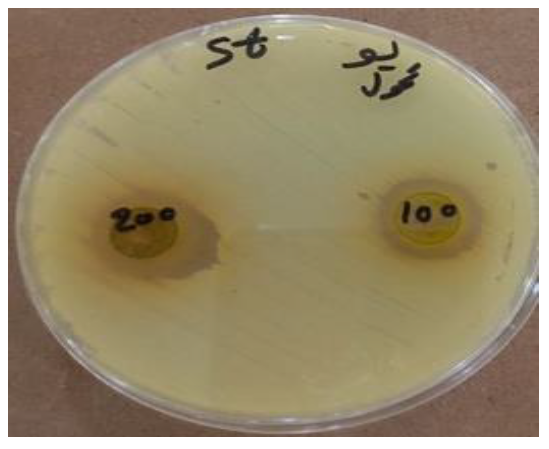
The aqueous extract of green tea was more effective against Escherichia coli at a concentration of 200 μl and these results matched with [12] as in the following table.
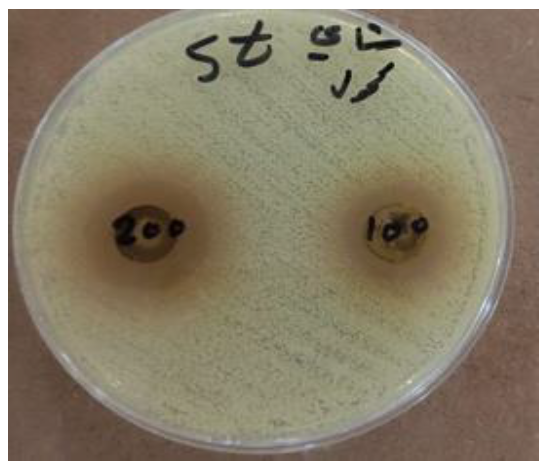
The alcoholic extract of green tea had equal effect against Escherichia coli and Staphylococcus aureus and these results agreed with [13], as green tea has a presence of saponins, flavonoids, terpenoids, glycosides, alkaloids, phenonls, and tannins that are distinguished as the active substances against the most expensive microbes [12]as in the following table.
The aqueous extract of Eucalyptus was effective against Staphylococcus aureus, while it did not give any result against Escherichia coli. As for the alcoholic extract of Eucalyptus, it had the most effect on Staphylococcus aureus and these results agreed with [14] as in the following table 3 and 4.
Table 1: The Effect of Aqueous Extract of Camellia Sinensis on Pathogenic Bacteria
Bacteria
Concentration
Diameter of Inhibition Zone
Escherichia coli
100 µl
20.5 mm
200 µl
30 mm
Staphylococcus aureus
100 µl
10.5 mm
200 µl
20 mm
Table 2: The Effect of Alcoholic Extract of Camellia Sinensis on Pathogenic Bacteria
Bacteria
Concentration
Diameter of Inhibition Zone
Escherichia coli
100 µl
20 mm
200 µl
30 mm
Staphylococcus aureus
100 µl
20.5 mm
200 µl
30 mm
Table 3: The Effect of Water Extract of Eucalyptus Sp
Bacteria
Concentration
Diameter of Inhibition Zone
Escherichia coli
100 µl
0
200 µl
0
Staphylococcus aureus
100 µl
20 mm
200 µl
20.5 mm
Table 4: The Effect of Alcoholic Extract of Eucalyptus Sp. on Pathogenic Bacteria
Bacteria
Concentration
Diameter of Inhibition Zone
Escherichia coli
100 µl
10 mm
200 µl
20 mm
Staphylococcus aureus
100 µl
20 mm
200 µl
20.5 mm
Table 5: Sensitivity of Pathogenic Bacteria to Antibiotics
Antibiotics
Escherichia coli
Staphylococcus aureus
Ampicillin
0
0
Oxacillin
0
10 mm
Erythromycin
0
0
Piperacillin
0
0
Figure 1: The Effect of Water Extract of Camellia Sinensis on Escherichia Coli
Some authors have reported that gram-negative micro-organisms are slightly more sensitive to essential oils when compared to gram-positive. The gram-positive and gram-negative microorganisms differ in several aspects other than with respect to the structure of their cellular walls, mainly with regard to the presence of lipoproteins and lipopolysaccharides in gram-negative bacteria that form a barrier to hydrophobic compounds.The antibacterial activity of Eucalyptus extracts has been due to the components such as 1,8-cineole, citronellal,
Figure 2: The Effect of Alcoholic Extract of Eucalyptus on Staphylococcus Aureus
Figure 3: The Effect of Alcoholic Extract of Camellia Sinensis on Staphylococcus Aureus
Figure 4: Sensitivity of Staphylococcus Aureus to Antibiotics
Figure 5: Sensitivity of Escherichia Coli to Antibiotics
The microorganisms have shown the ability to develop resistance to as many classes of antibiotics as the Enterobacteriaceae. Of the large list of bacterial genus that belong to this family, E. coli is multidrug-resistant and the past two decades have witnessed major increases in the emergence and spread of E. coli resistance strains to major classes of antibiotics such as β-lactams, quinolones, aminoglycosides, sulfonamides and fosfomycin. Unfortunately, this resistance has spread to last resource antibiotic classes such as the polymyxins and carbapenems (Galindo-Méndez, 2020). Staphylococcus aureus has shown great resistance to the antibiotics used, and this is a dangerous indication of a dangerous bacterial spread
REFERENCES
Jammoul M.W. and T.E. Nawas. “Antibacterial effect of the leaves of Eucalyptus globulus against clinical bacterial isolates.” GSC Biological and Pharmaceutical Sciences, vol. 9, no. 2, 2019, pp. 110–116.
Lawal T.O. et al. “Combination studies of Eucalyptus torelliana F. Muell. leaf extracts and clarithromycin on Helicobacter pylori.” Phytotherapy Research, vol. 26, no. 9, 2012, pp. 1393–1398.
Ojo S. et al. “Synergistic effects of Phyllanthus amarus and Diodia scandens on staphylococcal isolates from wound and burns patients.” Nigerian Journal of Applied Science, vol. 31, no. 1, 2013, pp. 197–202.
Parvez M.A.K. et al. “Antibacterial activities of green tea crude extracts and synergistic effects of epigallocatechin gallate (EGCG) with gentamicin against MDR pathogens.” Heliyon, vol. 5, no. 7, 2019.
Song J.M. and B.L. Seong. “Tea catechins as a potential alternative anti-infectious agent.” Expert Review of Anti-infective Therapy, vol. 5, no. 3, 2007, pp. 497–506.
Chaturvedula V.S.P. and I. Prakash. “The aroma, taste, color and bioactive constituents of tea.” Journal of Medicinal Plants Research, vol. 5, no. 11, 2011, pp. 2110–2124.
Archana S. and J. Abraham. “Comparative analysis of antimicrobial activity of leaf extracts from fresh green tea, commercial green tea and black tea on pathogens.” Journal of Applied Pharmaceutical Science, vol. 1, no. 8, 2011, pp. 149–153.
Flayyih M.T., H.S. Yousif, and I.M. Subhi. “Antimicrobial effects of black tea (Camellia sinensis) on Pseudomonas aeruginosa isolated from eye infection.” Iraqi Journal of Science, vol. 54, no. 2, 2013, pp. 255–265.
González-Burgos E. et al. “Antioxidant activity, neuroprotective properties and bioactive constituents analysis of varying polarity extracts from Eucalyptus globulus leaves.” Journal of Food and Drug Analysis, vol. 26, no. 4, 2018, pp. 1293–1302.
Ahmad I., Z. Mehmood, and F. Mohammad. “Screening of some Indian medicinal plants for their antimicrobial properties.” Journal of Ethnopharmacology, vol. 62, no. 2, 1998, pp. 183–193.
Khanzada S.K. et al. “Chemical constituents of Tamarindus indica L. medicinal plant in Sindh.” Pakistan Journal of Botany, vol. 40, no. 6, 2008, pp. 2553–2559.
Agbom J.N. et al. “Antibacterial activities of Camellia sinensis plant extracts against uropathogenic E. coli in vitro and in vivo.” African Journal of Pharmacy and Pharmacology, vol. 14, no. 6, 2020, pp. 147–155.
Ikigai H. et al. “Bactericidal catechins damage the lipid bilayer.” Biochimica et Biophysica Acta (BBA) - Biomembranes, vol. 1147, no. 1, 1993, pp. 132–136.
Ali L.F. and N.S.M. Hussein. “The biological activity of Eucalyptus rostrata leaves extraction against E. coli and Staphylococcus aureus isolated from Iraqi patients.” Iraqi Journal of Science, vol. 59, no. 1, 2018, pp. 1806–1810.
Bachir R.G. and M. Benali. “Antibacterial activity of the essential oils from the leaves of Eucalyptus globulus against Escherichia coli and Staphylococcus aureus.” Asian Pacific Journal of Tropical Biomedicine, vol. 2, no. 9, 2012, pp. 739–742.
Recommended Articles
Research Article
Strategy of Cocoa Commodity Based Agrowisata Development in Jembrana Regency
I Gusti Ayu Widari Upadani,
...
Luh Putu Kirana Pratiwi
Published: 30/01/2021
Download PDF
Research Article
Survey on the pollutants effect of some physicals and chemicals characteristics of the White Nile River around Khartoum state in the Sudan
Zeinb E. Elamean,
...
Egbal Osman Ahmed
Published: 20/01/2021
Download PDF
Research Article
Effecting of Hormonal Gonads (Test, Lh, Pro) and Dopamine on Transitional Nuclear Protein /1 Gene Frequency in an Infertile-Men
Taleb K. Odah
Published: 18/09/2023
Download PDF
Research Article
The study on priciple of herd health maagement assesment of Jimma University college of Agriculture And Veterinary Medicine dairy farm
Samson tesfaye,
...
Feyera Gemeda
Published: 01/04/2023
Download PDF
PO Box 101, Nakuru
Kenya.
Email: office@iarconsortium.org
Editorial Office:
J.L Bhavan, Near Radison Blu Hotel,
Jalukbari, Guwahati-India
Al-Humaidy, N. M., Al-Hameedawi, D. F. & Kudaier, A. (2023). Effect of Aqueous and Alcoholic extract of Camellia sinensis and Eucalyptus sp. on some pathogenic bacterial species. IAR Journal of Agriculture Research and Life Sciences, 4(2), 1-4.
MLA
Al-Humaidy, Noor M., Dumooa F. Al-Hameedawi and Ahlam.M Kudaier. "Effect of Aqueous and Alcoholic extract of Camellia sinensis and Eucalyptus sp. on some pathogenic bacterial species." IAR Journal of Agriculture Research and Life Sciences 4.2 (2023): 1-4.
Chicago
Al-Humaidy, Noor M., Dumooa F. Al-Hameedawi and Ahlam.M Kudaier. "Effect of Aqueous and Alcoholic extract of Camellia sinensis and Eucalyptus sp. on some pathogenic bacterial species." IAR Journal of Agriculture Research and Life Sciences 4, no. 2 (2023): 1-4.
Harvard
Al-Humaidy, N. M., Al-Hameedawi, D. F. and Kudaier, A. (2023) 'Effect of Aqueous and Alcoholic extract of Camellia sinensis and Eucalyptus sp. on some pathogenic bacterial species' IAR Journal of Agriculture Research and Life Sciences 4(2), pp. 1-4.
Vancouver
Al-Humaidy NM, Al-Hameedawi DF, Kudaier A. Effect of Aqueous and Alcoholic extract of Camellia sinensis and Eucalyptus sp. on some pathogenic bacterial species. IAR Journal of Agriculture Research and Life Sciences. 2023 Jul;4(2):1-4.


 Download PDF
 Download XML