An Assessment of the Nutritional Content of Selected Neglected and Underutilized Indigenous Wild Leafy Vegetables Ceratotheca Sesamoides and Corchorus Olitorius Consumed in Manyumbi Area of Kapiri Mposhi, Zambia: A Preliminary Study for Recovering Africa’s Lost Potential Crops
Chansa Chomba
1
,
Harry Chabwela
2
,
Winstone Chavwakaila
3
1
School of Agriculture and Natural Resources, Department of Natural Resources and Environmental Science, Kabwe, Zambia
2
Department of Biological Sciences, University of Zambia
Native leafy vegetables play a critical role in the livelihoods of many rural communities in sub-Saharan Africa including Zambia. This study was carried out in 2021and 2022 aimed at identifying and evaluating the nutritional content of the two wild leafy vegetables consumed as okra Ceratotheca sesamoides and Corchorus olitorius. Field observations using field guides and interview with local people who use the species for food were used to identify species in situ. To ascertain the species’ identification, specimens were collected and taken to the herbarium for authentification. Nutrient composition assessments were restricted to fats/lipids, protein, potassium/ash, carbohydrates, fibre and water and these were determined using the Proximate analysis laboratory technique. Results of the assessments showed that Ceratotheca sesamoides and Corchorus olitorius had significantly high levels of protein (p<0.05) than all the nine popular vegetable cultivars (Cabbage - Brassica oleracea var. capitata; Lettuce -Lactuca sativa, Okra– Ladies fingers-Abelmoschus esculentus; Tomato-Solanum lycopersicum; Spinach-Spinacia oleracea; Carrot-Daucus carota; Eggplant -Solanum melongena; Common Onion-Allium cepa; and Rape Leaves-Brassica napus). Additionally, Corchorus olitorius had highest fibre and carbohydrate content than all the other 11 species put together. It was concluded that a thorough assessment of protein be carried out to the level of amino acid composition and also all the macronutrients and micronutrients to be considered in order to establish a detailed species’ nutritional profile, followed by popularization of the species. This would improve people’s attitudes towards the two species as important sources of nutrition for rural communities; to reclassify them as crops rather considering them as weeds. Other uses such pharmaceutical properties should also be investigated and documented.
Keywords
Macronutrients
Micronutrients
Cultivars
Food Security
Arable Weed
Proximate Analysis
INTRODUCTION
The Sustainable Development Goals (SDGs) of the United Nations (UN) particulalrly SDG 2 emphasises the need to identify sustainable and environmentally friendly ways of producing food to enhance human nutrition so as to prevent hunger and starvation which is one of the most contemporary challenges of the Anthropocene era. For a large part of the developing world, particularly Africa, hunger is still on the rise and many people consume low-quality food causing micronutrient deficiencies [1]. Many populations are undernourished and a myriad of natural systems stretched beyond their inherent capacity by mainly unsustainable food production methods in order to meet the rising food demand.
Hunger in many countries, including Zambia is not just a factor of lacking access to food, it is also the lack of access to the right nutrients. For good body health, we all need a range of foods which provide essential elements. Many rural families in Zambia and subsaharan Africa in general, rely on just one or two staple foods. In case of Zambia, maize (Zea mays) as staple food, which inevitably means that the population does not get enough essential macronutrients and vitamins and may still suffer the effects of hunger.
A lack of nutrition is especially critical during the first 2,000 days of life [2]. For pregnant and breastfeeding women and young children, nutrition support during pregnancy and up to the age of five can additionally help protect children for their entire lives, while the opposite of it reduces and enhances the likelihood of disease, poor health and cognitive impairment. Identifying nutrient-rich wild foods that are safe to eat in order to make the most of their available resources can help address the challenge of malnutrition. This is one of the many practical ways we can craft sustainable solutions for malnourished communities in Africa.
In this context, the scientific targets for healthy diets and sustainable food systems are integrated into a common framework of “one health”; therefore, the innovation of the agri-food system in the modern society allows to merge the issue of malnutrition and sustainability. Moreover, diet is not only aimed at guaranteeing a suitable source of macronutrients but also at ensuring a balanced intake of micronutrients [3], including bioactive compounds that can promote human health and solve global nutritional issues, such as hidden hunger, stunting and famine. Not only vitamins and minerals, but also dietary phytochemicals such as plant antioxidant, anti-inflammatory and anti-aging compounds originating from leafy vegetables have been proved to contrast the outbreak of Non-Communicable Diseases (NCDs), as well as metabolic disorders (e.g., obesity), so that their uptake is recommended by institutions such as the World Health Organization (WHO) [4,5]. Leafy vegetables are sources of nutritional components, including proteins, dietary fibers, vitamins and minerals [6], as well as natural antioxidants, including phytochemicals [7].
In many parts of rural Africa, communities, have an extensive range of indigenous plants some growing as arable weeds while others are cultivated by households for self-consumption that represent a valuable source of micronutrients and phytochemicals [3]. The dietary diversification through the inclusion of such food items in people’s diets can reduce the risk of malnutrition and hidden hunger-related pathologies as reported by Companaro et al. However, the importance of identifying or resuming wild species with agricultural potential such as Ceratotheca sesamoides and Corchorus olitorius may not only deal with nutritional needs, but also with environmental pharmaceutical concerns. These species are naturaly adapted to the natural weather conditions and grow with minimal impact on the environment [8], Dixit et al. [9] and Guzzetti [10], for instance, evaluated the healthy properties of Corchorus olitorius L., an indigenous African leafy vegetable known as jute mallow and found that it was nutrient dense and suitable for consumption as vegetable. For this and many other benefits the plant has largely diffused in the Middle East and in African countries [11-13] and is mainly cultivated in smallholding farms for self-consumption mainly as a mucilaginous soup or sauce in many rural communities in sub-Saharan Africa [14]. It has a high content of fiber, vitamins and antioxidant compounds and is highly resistant to environmental stressors such as heat and water deficiency [3] and requires low fertilization to grow [6], which makes it suitable. We hypothesized that since these wild leafy vegetables are adapted to stressful cultivation conditions, such as hydric stress, they would be suitable for countries like Zambia which has already suffered from the impact of climate change.
The aims of the study which was to assess the nutrional status of the two species of wild leafy vegetables incomparson with cultivars, was inevitable in elevating their popularity profiles so that communities can be encouraged to include them in their diets for enhanced nutrition and improved human well being as also earlier reported by [15,16].
Many indigenous species of herbaceous plants of high nutritional value grow naturally and are often termed as arable weeds in cultivated lands even if the macro and micronutrients they contain far exceed those of cultivated vegetables of foreign origin (cultivars). They are often overlooked and their consumption is often associated with low income households.
The term 'indigenous' as used in this paper derives its origin from the Latin 'indigenus' and 'indigena' (native) and from the Old Latin 'indu' that is derived from the archaic 'endo' (a cognate of the Greek 'endo'), meaning 'in, within' and the Latin 'gignere' meaning 'to beget', from the root 'gene' meaning 'to produce, give birth, beget.
These are native plants of a geographical area which includes plants that have developed naturally or existed for many years in an area in this case Zambia and are contrasted from introduced which are called exotic plants. These plants play a significant role in enhancing the nutritional status of particularly rural communities in many parts of Africa. Muchuweti, et al., for instance, investigated the nutritional value of wild vegetables commonly consumed by people of Buhera district in Manicaland province of Zimbabwe. In this study a variety of vegetables including Amaranthus hybridus, Cleome gynandra, Bidens pilosa, Corchorus tridens and Adansonia digitata (leaves) were collected and processed using traditional methods of cooking and drying, then subjected to proximate and micronutrient analyses. Results of their study showed that these vegetables were particularly high in calcium, iron and vitamin C, compared with Brassica napus (rape). Amaranthus hybridus for instance contained twice the amount of calcium with other nutrients almost in the same range. Amaranthus hybridus was also found to contain 7, 13 and 20 times more vitamin C, calcium and iron respectively compared with Lactuca sativa (lettuce). Cleome gynandra contained 14 mg/100 g, 115 mg/100 g, 9 mg/100 g of vitamin C, calcium and iron respectively. Bidens pilosa was found to be a valuable source of vitamin C (63 mg/100 g), iron (15 mg/100 g) and zinc (19 mg/100 g), compared with Brassica oleracea (cabbage). The leaves of Corchorus tridens were an excellent source of vitamin C (78 mg/100 g), calcium (380 mg/100 g) and iron (8 mg/100 g). The Adansonia digitata leaves were also rich in vitamin C (55 mg/100 g), iron (23 mg/ 100 g) and calcium (400 mg/100 g). Based on these nutrient contents, it was recommended that the above vegetables had the potential benefits and should be part of feeding programmes, as well as their promotion as part of composite diet for vulnerable groups.
Rudbejer et al., called them neglected and underutilized species and underscored the need to promote them to enhance their role in combating hunger and malnutrition. In many parts of Africa as already mentioned, indigenous food plants have and continue to play an extremely important part of the local diet, especially in rural areas for a number of reasons; they are cheaper than exotic imports and thus affordable by an average rural dweller or are obtained free of cost, they are very nutritious, often more nutritious than some introduced (and perhaps more popular) plants sold in shopping malls or markets, they are well-adapted to the local environment, are often free of pests and diseases and are able to grow in extremely difficult conditions (in very dry areas or in very acidic or alkaline soils, for example). These neglected and otherwise underutilized plant species can make a significant contribution to humanity. Many rural communities have access to indigenous and traditional crops that are rich in micronutrients, which are likely to serve as a long term strategy to eliminate food insecurity and contribute to nutrient requirements. These include indigenous fruits, vegetables, tubers and roots.
In Zambia like many other countries experiencing rapid urbanization, the indigenous technical knowledge relating to the use of certain indigenous plants may be lost. One major contributing factor is the unfounded widespread impression, especially among younger people and urban populations, that traditional varieties are ‘primitive’ or ‘old,’ overlooked upon as weeds and food for the poor and that farming is a disgraceful vocation. These wild species also often considered as weeds, yet these are the potential crops for the future. With particular reference to food security and nutrition, indigenous okra improves palatability and adds variety to diets (Figure 1), especially those of the poor. They are particularly valuable sources of food during emergency periods such as during flood, famine, drought and war. In particular cases, they are given to patients that are recovering from for instance, malaria bouts, because their mucilaginous nature makes it easy to swallow the food.
In the Manyumbi area of Kapiri Mposhi, central Zambia, these leafy wild vegetables are well-known to the rural communities, they are collected from the wild while in few incidents (n = 3) they were cultivated in gardens near home during the rainy season. The majority of the households however, overlooked their importance and just collect them from the fields when weeding their crop fields.
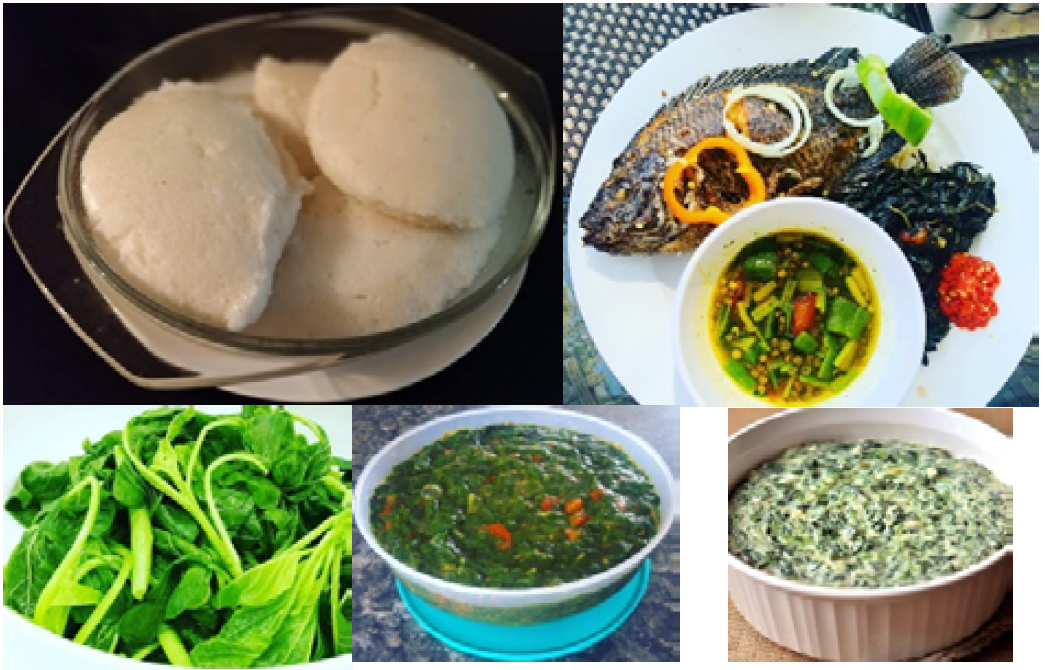
They are considered free for all by rural residents and harvesting starts when the plants are about 20-30 cm high. The common recipe was that fresh shoots are collected cut or pounded in a motar and mixed with soda and salt and then cooked to produce a relish of slimy and slippery consistency and used as relish (Figure 1). When large quantities are collected, the leaves are sun-dried either whole or pounded to preserve them for future use particularly in the dry season when they are out of season. As a common practice, whole okra plant is dried in the shade and the leaves removed later. The mucilaginous property of the preparation makes it easy to take with starchy staple foods, usually nshima (thick maize porridge) (Figure 1).
The two species of native okra selected in this study are commonly consumed by the rural populations around Manyumbi area and all the other provinces of Zambia. The hidden potential of indigenous okra species needs to be exploited in order to play a pivotal role in solving malnutrition, food insecurity and poverty challenges.
Despite their potential as an important source of nutrients for the local communities, they are still considered as arable weeds [17] and as a consequence of that, there is little knowledge, on their nutritional value and continue to be considered as food for the poor. Awareness and documentation of nutritional value are limited and the nutritional benefits remain largely obscured and untapped which disadvantages rural communities who have limited access to urban markets where they can purchase exotic cultivars. These and several other reasons could be responsible for the low popularity of these native species which inhibits the attainment of full potential as sources of macro and micro nutrients for communities. As such, the species have not been exploited to their full capacity by the people, they are essentially neglected and underutilized.
The diversity of native leafy vegetables collected from the wild often free of cost offers an opportunity for enhanced household food security [18], for instance recorded more than 175 different species of native vegetables in Zambia. Among the popular ones being, Amaranthus, Cleome, Triumfetta, Hibiscus, Solanum, Corchorus, Disa, Solanum, various cucurbits and Ceratotheca just to name a few. In addition to the popular ones were 'minor' indigenous species known by fewer households and used less frequently.
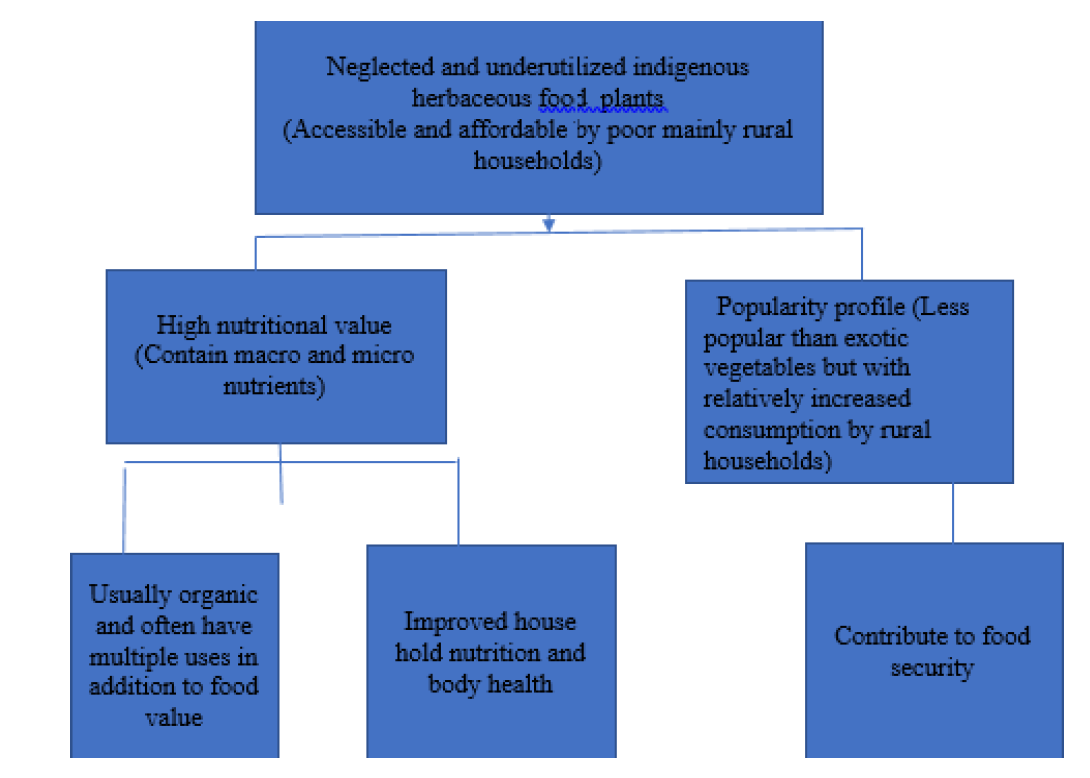
With these obscured multiple values of native leafy vegetables, it becomes inevitable to conserve popularize them and use them sustainably (Figure 2).
Figure 1: Nshima (a Popular Local Dish Made from Maize Flour), is Eaten with a Variety of Relish Including Corchorus sp and Cerathotera sp as Okra or Delele, Leafy Vegetables and Fish or Beef
(Source of Pictures: google. search/Zambian foods,com)
Figure 2: Conceptual Framework on the Theorized Nutritional and Health Benefits of Native Leafy Vegetables to House Holds
The consumption of indigenous leafy vegetable including okra helps in reducing hunger during drought and flood times and has always been recognized as part of the local technical knowledge which forms a greater part of the complex cultural system.
Native herbaceous plants are valuable sources of nutrients [19,20], with some also having important medicinal properties [21].
During years of food shortages such as those following droughts, which are now more frequent owing to climatic changes, indigenous plants can contribute and usually do contribute significantly to food security [22]. Overcoming food and nutritional insecurity among women, pregnant and lactating mothers and children under five years of age, remains a challenge in many developing countries in sub-Saharan Africa [23] and it is in these countries where the nutrient rich native plant species which are often cost free become important.
In Zambia for instance, Mzumara et al. [24] and the National Food and Nutritional Commission report of 2012 [2], provided a detailed summary report on levels of stunting in the country. The national average stunting was 45% in 2012 `shared by province as follows; Luapula 56 % (and the highest), Central 53%, Northern 49%, Eastern 50%, Northwestern and Copperbelt 44%, Lusaka 37% and the lowest were Western and Southern provinces at 36%. Such levels of stunting portrayed a nation that may be considered severely undernourished and the economic future at risk of self-dilapidation. By 2018, the national average slightly reduced by 11% from 45% in 2012 to 40% in 2018, distributed by province as follows; northern province was this time the highest 49% (representing no change between 2012–2018), Muchinga 44% (new addition), Eastern 43% (a reduction of 7%) , Luapula 43% (a reduction of 13%), Central 43% (a reduction of 10%), Southern 37% (an increase of 1%), Northwestern 37% (a reduction of 7%), Copperbelt 36% (a reduction of 8%), Western 36% (an increase of 1% and Lusaka 36% (a reduction of 1%). Luapula and central provinces had the highest reduction [24,25]. These figures still portray a severely undernourished population.
A growing body of knowledge now suggests that nutritional factors have a direct influence on cognitive growth including brain development of children which later manifest into adulthood and negatively impact the nation as a whole [26]. Even though according to Hamer et al., [27], brain development is fairly robust in principle, it can be modified by early environment, nutrition, illness and other experiences. However, nutritional deficiencies combined with repeated infections seemed to form a vicious cycle reinforcing each other, ultimately undermining the physical and cognitive development of chi9ldren with subsequent effects on education and economic productivity of individuals and their families and the nation at large. At 45% stunting as a national average [2], Zambia is enlisted as having one of the highest rates of childhood stunting (6 to 59 months) in the world which was higher than the 42% average for Africa. Other forms of under nutrition were reported to be wasting or acute malnutrition, with 5% of children under 5 years being underweight at 15%. In addition, 54% of children had vitamin A deficiency and 53% had iron deficiency, 9.3 % were born with low birth weight, all indicative of poor maternal nutrition.
It was postulated that if the levels of stunting remained unchanged in Zambia, over the next decade(s), the country would lose an estimated USD 775million in economic underperformance. Therefore, addressing under nutrition was essential to improved economic performance of the country and critical if the country was to meet the relevant Sustainable Development Goals. That why this paper emphasizes the important role of milk production and consumption can play in changing the status quo in order to address the current nutritional challenges at micro, meso and macro scales [26].
To further underscore the importance of milk in enhancing the nutritional status of particularly children, the WHO and FAO launched in April 2003 an independent report on diet and nutrition, which served as the basis for developing a global strategy to combat the growing burden of chronic diseases mainly linked to poor nutrition [2].
Vegetables in particular, are important sources of micronutrients which although required in minute quantities ranging from millionth of a gram (microgram) to thousandths of a gram (milligram) are still vital for good health. The role of both wild and domesticated vegetables in providing macro and micronutrients necessary for good body health cannot be ignored. The popularization and promoting the consumption of these otherwise neglected and underutilized species can significantly improve house hold nutrition and elevate the health status of individual family members [26]. Indigenous vegetables play important roles in human diets. They supply the body with minerals, vitamins and certain hormone precursors in addition to protein and energy [28]. Despite the consumption of exotic vegetables, some indigenous vegetables have been reported to be more nutritious and less expensive than the exotic ones.
Despite the wide distribution of these native plants most of which are considered to be arable weeds, little has been investigated with respect to their nutrient and minerals content. There is a need to optimize the nutrient content and other properties of traditional vegetables in the daily food of the population. So far, little effort has been made to critically analyze the nutritional value of native food plants and also to investigate the possibility of their commercial production. Improving their nutritional quality through research and development should be a priority of new crop research [29]. Global documentary reveals that most edible indigenous okra and leafy vegetable plants bring about nutritional benefits and reduces poverty and also food insecurity. The inclusion of indigenous okras in leafy vegetables production systems would reduce the risks of hunger and poverty; because most of them are laden with high levels of macro and micronutrients. To vulnerable communities such as those in war torn countries, during and post flood, famine, drought and absolute war they may become the only reliable and accessible source of nutrients.
In contrast with many modern, exotic commercially produced vegetables and fruit, which also more often than not contain harmful chemicals including in some instances Persistent Organic Pesticides (POPs) which are harmful to human health and the environment in general, naturally growing indigenous okra and leafy plants are organic and have plenty of phytonutrients which are extremely valuable for good health of our bodies.
In South Africa for instance, anecdotal reports suggest that in Mpumalanga and Limpopo provinces women harvest and store Ceratothera sesamoides and Corchorus olitorus seed, which they then sow widely in their fields. These have been identified as part of the group of species that have the potential to be developed as vegetables [30]. The importance of the study therefore, was to investigate the nutritional content of the two native okra species, to provide a better understanding and knowledge on the nutritional benefits of consuming these okra species It was hoped that once the rural communities appreciate the nutritional value of native species, they would in turn take an active role to manage, preserve harvested specimens and consider various ways of their propagation which should be science based [31]. Although the wild okras are eaten as vegetable and have the potential to be developed as valuable crops. Currently very little is known about their role in the overall food acquisition system in many rural settings of Zambia especially in relation to their contribution to the intake of important micronutrients, which is why this study was carried out.
MATERIALS AND METHODS
Study Area Location and Description
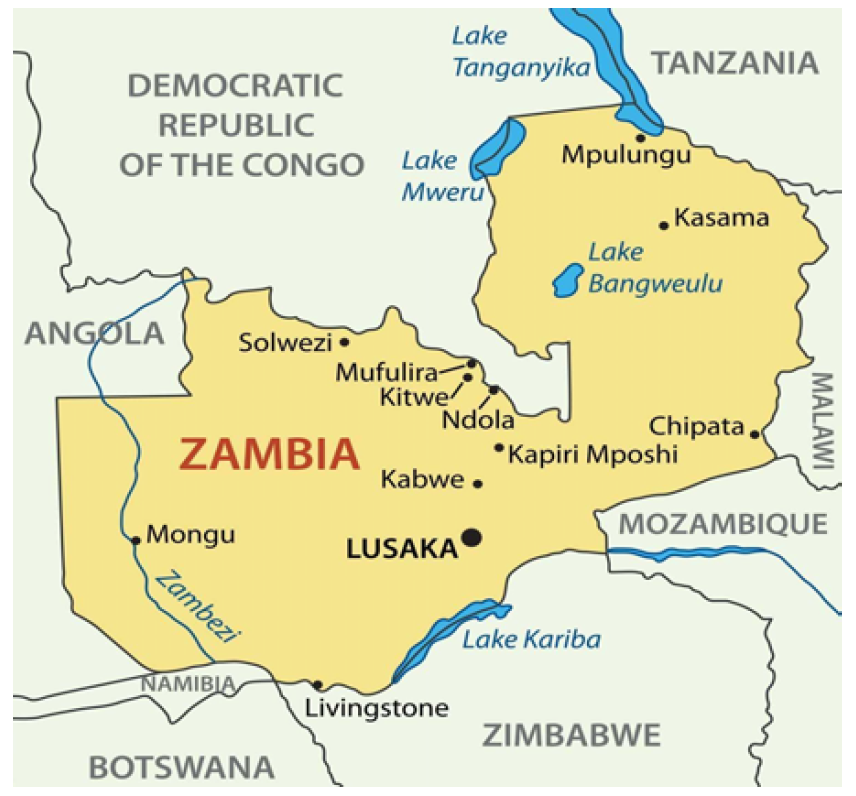
The study was carried out around Manyumbi area of Kapiri Mposhi District, about 30 km north of Kabwe town along the Great North Road (Figure 3). The area was selected because of its proximity to Mulungushi University where the researchers are based. It was therefore convenient and cost effective to access the study area. The area has an estimated human population of 3,852 people which is essentially rural with daily activities based on the primary extraction of natural resources and covers an area of approximately1, 186Km2.
Data Capture Techniques
Focused Group Discussions and Questionnaire Surveys
Fourth year undergraduate students pursuing environmental studies were used to carry out a survey to determine the locations and popularity profile of the two selected species of native okra. A total of 120 respondents were interviewed. A Focus Group Discussion was also carried to validate data collected from the questionnaires. This was done using participatory rural appraisal approach of which the tools for Focus Group Discussion included the identification of the popularity of selected indigenous types of okra.
During the FGD, participants whose fields had one or both okra species were requested to allow the researchers to collect specimens for laboratory analysis. During specimen collection, the whole plant was pulled out of the ground and kept in a cool box to prevent the loss of water. At the laboratory, only the edible parts of the plant were extracted for analysis. We used electronic field guides initially developed by Vernom and Guzman-Ladion [32] and downloaded an application on android mobile phone to identify the species.
Specimen Collection and Laboratory Analysis of Specimens
Proximate Analysis which is the partitioning of compounds in a feed of six categories based on the chemical properties of the compounds was carried out as follows:
Moisture
Ash (potassium)
Crude Protein (or Kjeldahl protein)
Crude Lipid
Crude Fibre
Nitrogen-Free Extracts (digestible carbohydrates)
The determination of moisture, ash, protein, fibre, crude oil and available carbohydrates were estimated by subtracting the total number of the summation of the minerals mentioned from total available minerals (100) [33]. The primary objectives were to measure the amount of each individual component in the sample in this case Ceratothera sesamoides and Corchorus olitorus, which are consumed as food (vegetable).
Figure 3 Location of Manyumbi Study Area Which is between Kabwe and Kapiri Mposhi
The arrow shows the location of Manyumbi)
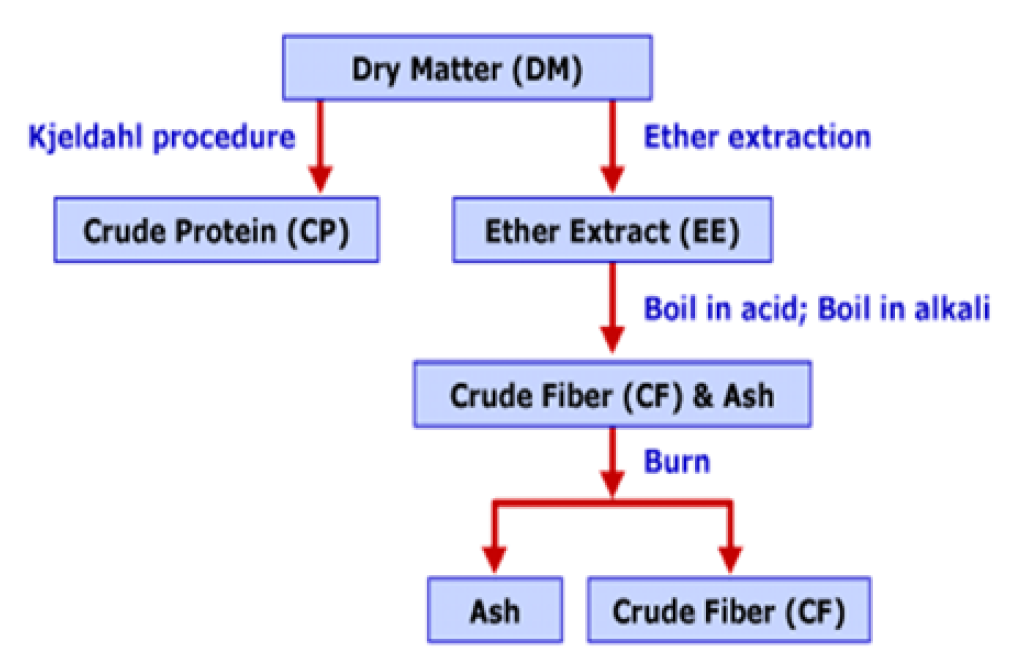
This system is a series of chemical analyses to estimate the quantity of individual components of a feedstuff (Figure 4) which briefly outlines the proximate analysis system.
The initial procedure of proximate analysis was to determine the Dry Matter (DM) content of the sample. The dry matter procedure removes the free water from the sample. To perform the procedure, the original sample was weighed, the weighed sample is then placed in a 105-degree Celsius oven for 12-16 hours and the sample is reweighed [33]. The dry matter and moisture content of the feedstuff are calculated. The second procedure of proximate analysis is to determine the Crude Protein (CP) content of the feedstuff. The crude protein procedure estimates the quantity of protein and non-protein nitrogen compounds in the sample. The Kjeldahl method was used to measure the nitrogen content of the sample. The nitrogen content was converted to a crude protein estimate under the assumption that all proteins contain approximately 16% nitrogen. The procedure consisted of boiling a dried sample in sulfuric acid, the sample was then diluted with water and neutralized with sodium hydroxide and finally, the sample was distilled and the distilled ammonium was titrated with a known concentrate of sulfuric acid. To determine crude protein content, the nitrogen value from the procedure was multiplied by 6.25. This procedure though has an inherent error which is that it incorrectly assumes all nitrogen-containing compounds are proteins and all nitrogen sources are 16% nitrogen [33]. With regard to the crude fat or Ether Extract (EE), procedures estimate the quantity of lipids. To perform the procedure, the dried samples were ground and extracted with an organic solvent for four hours and the remaining residue was dried and weighed. Ether extract was then calculated as the difference between the original sample and the ether extract residue. The main source of error in this procedure is that ether extract procedure incorrectly assumes all substances soluble in diethyl ether are lipids. The ash procedure estimated the quantity of inorganic material or minerals, known as ash, in the sample [33,34]. To perform the procedure, the sample was heated at 500-600 degrees Celsius for 2-4 hours and the remaining residue then weighed. The remaining residue was ash. The Crude Fiber (CF) procedure estimated hemicellulose, cellulose, lignin, pectin and other components associated with the fibrous carbohydrates in the sample. This process attempts to simulate the pH-related digestive processes in the stomach and the small intestine of the animal. The process does not account for enzymatic digestion. The sample was prepared by performing the dry matter and subsequently the ether extraction procedure on the sample. To perform the procedure, the residue was boiled in a sulfuric acid solution for 30 minutes and rinsed and then boiled in a sodium hydroxide solution for 30 minutes and rinsed. Finally, the residue was dried, weighed, ashed and reweighed [33]. The crude fiber content was estimated as the difference between the pre-ash weight and the post-ash weight [33,34]. The crude fiber procedure also has many sources of error. The primary source of error is that the acidic and basic solutions solubilize some of the true fiber, therefore the procedure underestimates true fiber content of the sample. Another source of error is proteins bound to insoluble fiber fractions which are included in the crude fiber content, thus overestimating crude fiber. The final component of proximate analysis was Nitrogen-Free Extract (NFE). The nitrogen-free extract estimated nonfibrous carbohydrates, such as sugars and starches. The nitrogen free extract determination is the only estimate of proximate analysis determined by a calculation of a difference versus chemical analysis followed by appropriate calculations. The calculation for nitrogen free extract is: % NFE = 100 % – (% EE + % CP + % Ash + % CF). As nitrogen-free extract is calculated by difference, all the errors associated with proximate analysis are additive in the estimate of nitrogen-free extract [34].
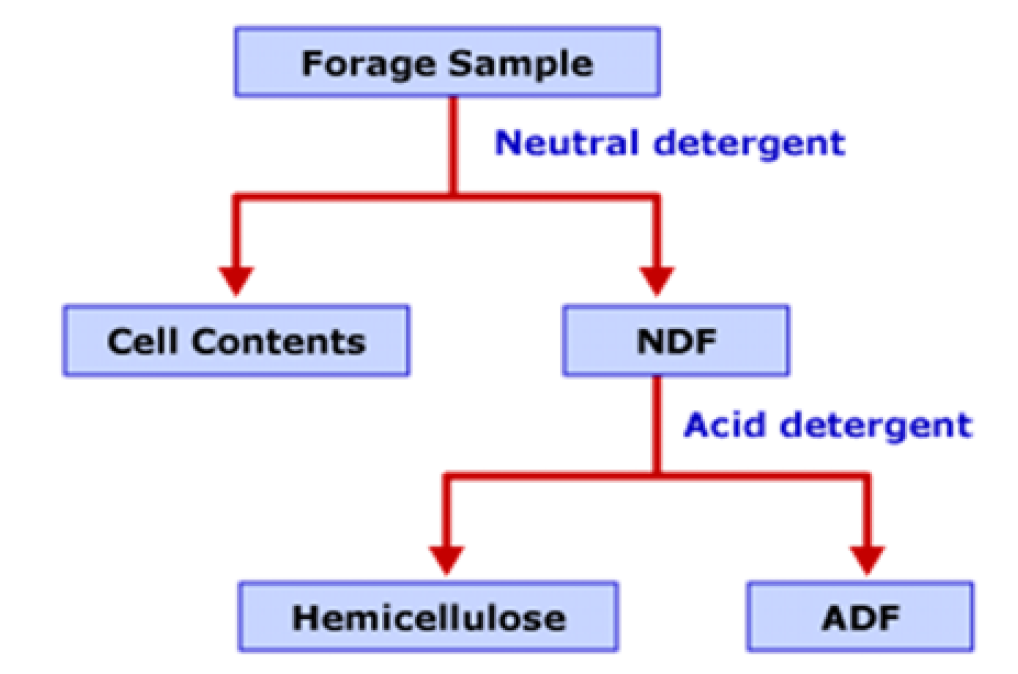
The estimations of carbohydrates were done by carrying out the detergent fiber system (Figure 5).
The detergent fiber system more accurately defines the carbohydrate fraction in the sample. The detergent fiber system divides structural carbohydrates into Neutral Detergent Fiber (NDF) and Acid Detergent Fiber (ADF) fractions. The system also estimates Nonfibrous Carbohydrates (NFC). The procedure uses two detergents to determine the fractions. To perform the NDF procedure, the dried sample was boiled in a neutral solution for 1 hour [33].
Figure 4: Proximate Analysis System [33,34]
Figure 5: Brief Diagram of the Detergent Fibre System [33]
The neutral detergent extracts, also referred to as Cell Wall Contents (CWC), are the more digestible fractions of the sample. The CWC include organic acids, sugars and other water solubles, lipids, pectins, nonprotein nitrogen sources and soluble proteins. The insoluble fraction or neutral detergent residue is referred to as neutral detergent fiber. The NDF primarily contains the major cell wall components including hemicellulose, cellulose and lignin. The NDF also contains some minor cell components such as some proteins, bound nitrogen and minerals. An additional process determines the ADF fraction of forages. The dried NDF residue was boiled in sulfuric acid based solution. The ADF procedure primarily solubilizes hemicellulose and cell wall proteins. Therefore, the ADF residue consists of cellulose, lignin and lignified nitrogen and other minor cell wall components [33]. The nonfibrous carbohydrate fraction was estimated by a calculated value. The NFC was then calculated using the following equation: % NFC = 100 % – (% EE + % CP + % Ash + % ND [33,34].
Ethical Considerations
All participants in this study were rightfully informed about the purpose of the research. Permission was sought in form of consent before specimens could be collected from people’s cultivated field where they were treated as arable weeds.
RESULTS
Results obtained through proximate analysis showed that False sesame (Cerathotera sesamoides) and Jute/Jew’s mallow, bush okra or nalta jute (Corchorus olitorious) are important sources of protein, fats, fibre and carbohydrates. Compared with the more popular vegetable cultivars the two species were found to contain higher levels of protein than the nine popular vegetables examined in this study.
Confirmation of Species Identification of False Sesame (Cerathotera Sesamoides)
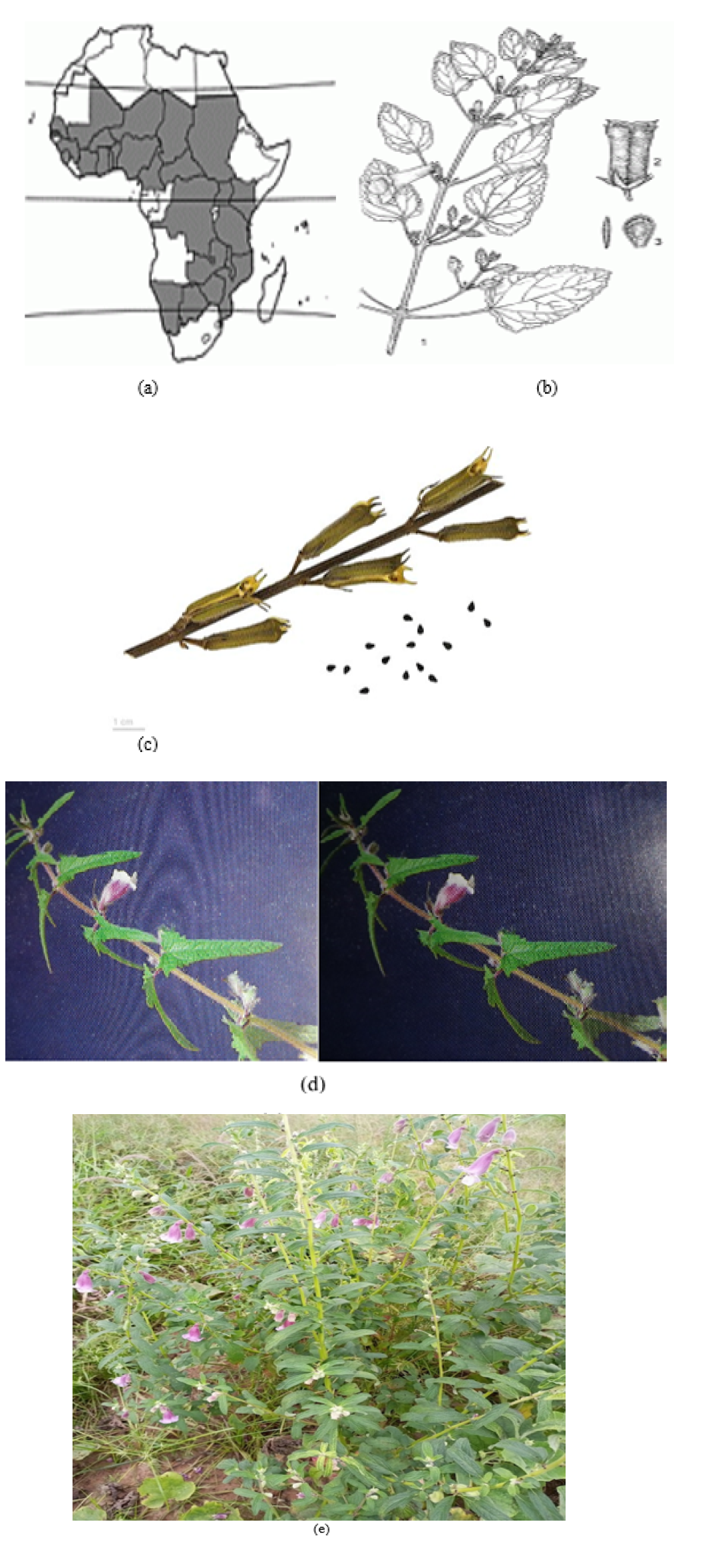
To positively identify the species, field observations made and verified with herbafrium records showed that it was an annual herb of up to 100 (120) cm tall, sometimes with woody rootstock, which was either prostrate, ascending or erect, with pubescent stems. Leaves were opposite or nearly opposite, simple; and stipules were absent the petiole was up to 6 cm long in lower leaves and short in upper leaves; the blade was lanceolate-deltate to ovate-triangular or narrowly ovate, measuring 1.5–8 cm × 0.5–4.5 cm, truncate, broadly cuneate sometimes slightly hastate at base, acute at apex and was usually coarsely toothed at least toward base, pubescent and densely glandular below, sparsely so above, venation was palmate at base. Flowers were solitary in leaf axils, bisexual and zygomorphic, 5-merous; pedicel 3–8 mm long; the calyx had narrow and triangular lobes of up to 7 mm long, connate at base; while the corolla was funnel-shaped, 1.5–4 cm long, sparsely pubescent, pink, lilac, mauve or purple, the throat and lower lobe were often cream with dark lines and the lower lobe broadly ovate and longer than other lobes; stamens were 4, inserted near base of corolla tube and included; the ovary was superior, 2-celled but each cell almost to apex divided by a false septum, the style was long and slender, with 2-lobed stigma. The fruit was an oblong-quadrangular capsule measuring 1–2 cm long, compressed laterally, with slender lateral horns up to 3.5 mm long, loculicidally dehiscent, many-seeded. Seeds were broadly obovate in outline, compressed laterally, measuring 2.5–4 mm × 2–2.5 mm, the testa was smooth but radially rugose at margin and was black when ripe. Seedling with epigeal germination; hypocotyl was 1.5–4.5 cm long; cotyledons broadly elliptical, up to 1 cm long, entire, leafy (Figure 6a, b, c, d, & e). This confirmed that we dealt with positively identified species. Its distribution is wide spread (Figure 6a) and easily identified by use of inflorescence, leaf margins and venation or leaf arrangement (Figure 6b). It has numerous hairs on the stem and pink flowers.
Figure 6: (a) Distribution of the Species in Africa, (b) Identification by use of Leaves (c) Seed Pods and Seeds, (d) Leaf Arrangement on the Stem and (e) Growth form.
The Edible Parts Are Usually Leaves Fresh or Dry
Source of Picture: Science direct. com/African plants Cerathotera sesamoides
Nutritional Content of False Sesame (Cerathotera Sesamoides)
False sesame (Ceratotheca sesamoides) had good nutritional potential. The species was high in energy levels, fat content, proteins and carbohydrate values.
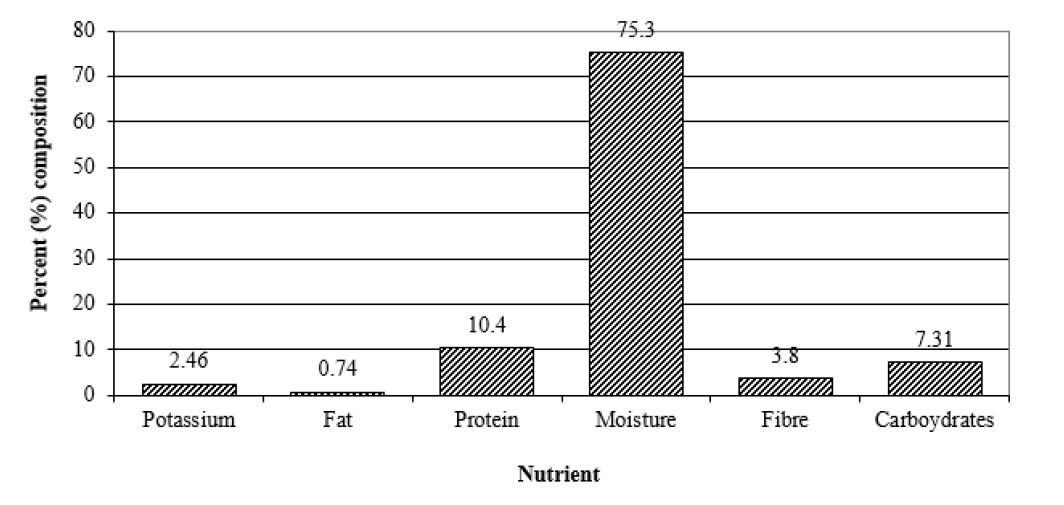
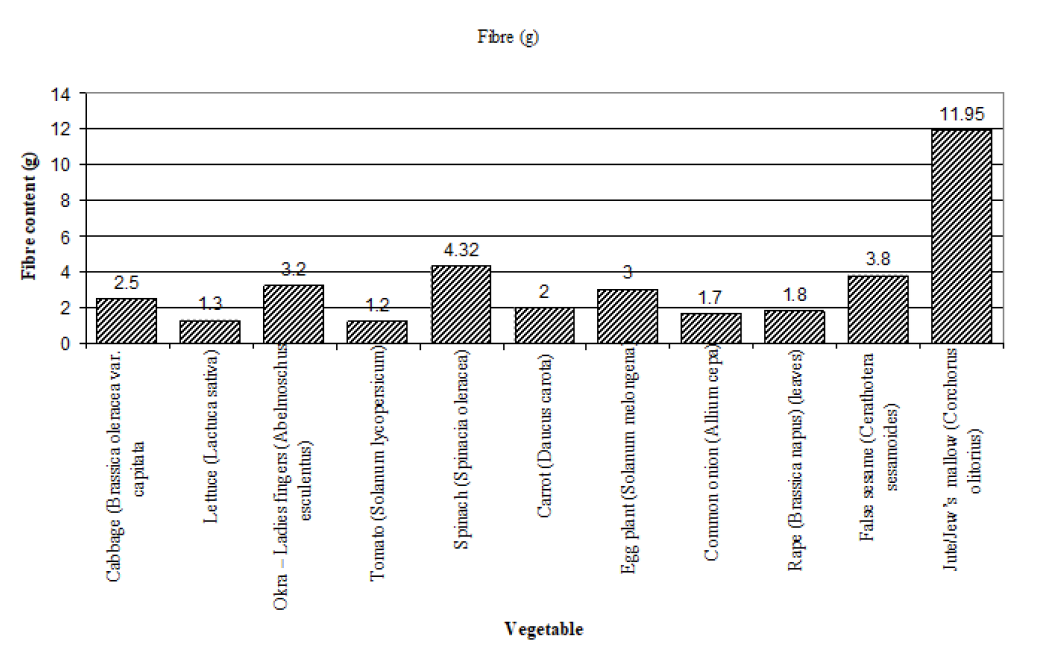
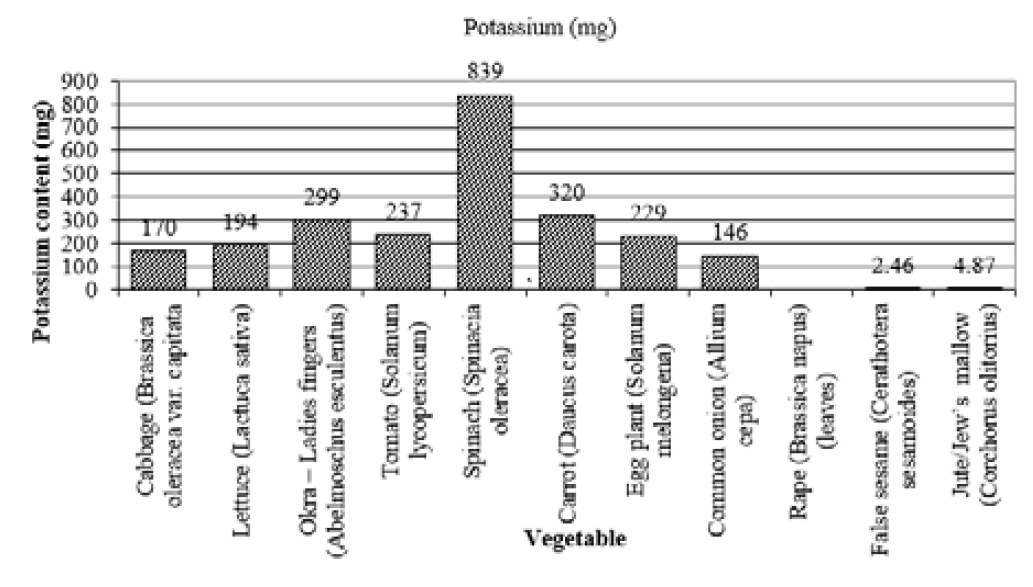
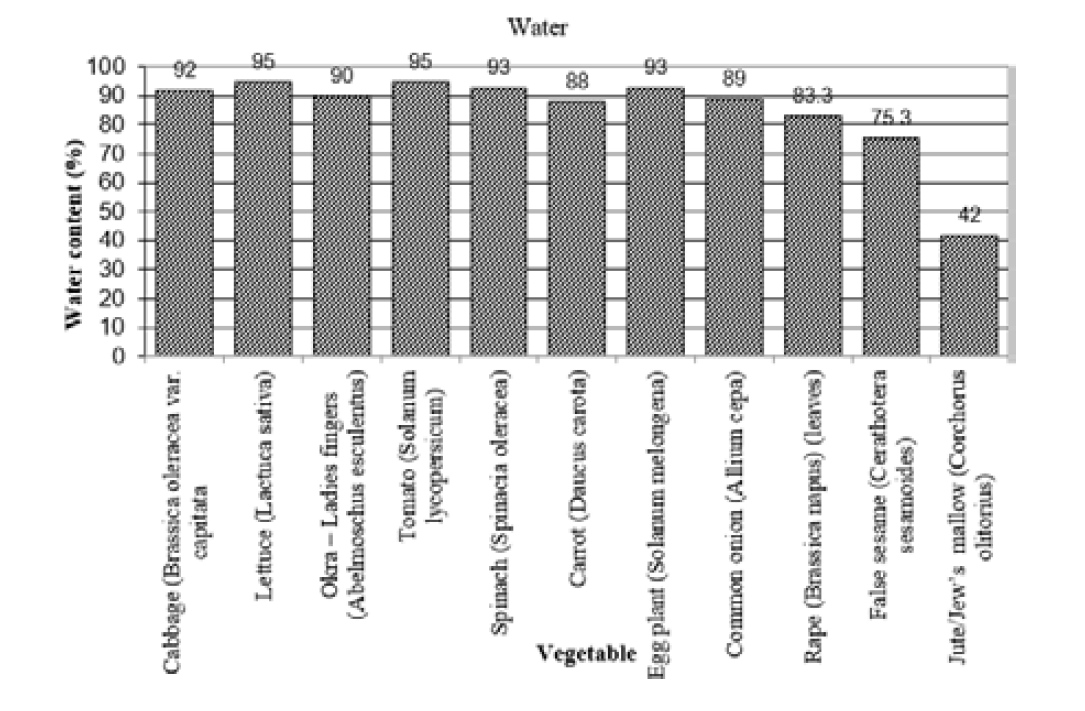
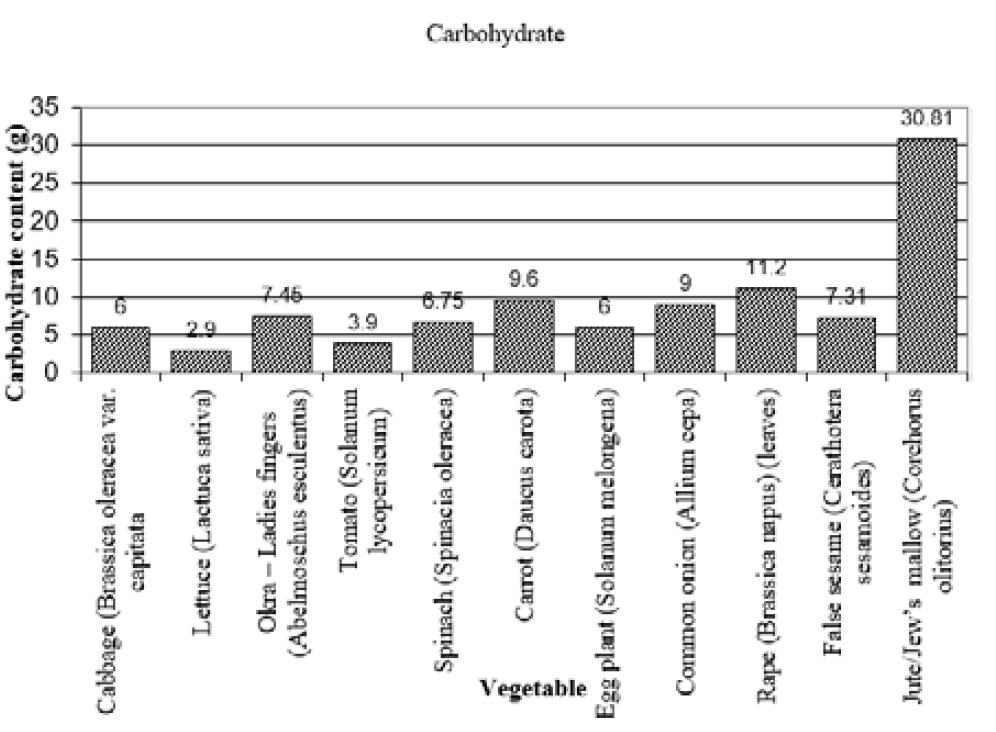
With regard to the proportional composition of the five macronutrients and water which were investigated, it was found to be highly nutritious native vegetable. It contained 75.3%) moisture, 10% protein, 7.31% carbohydrates, 2.46% potassium, 3.8% fibre and low levels of fat 0.74% (Figure 7). Among the nutrients assessed the least was fat (lipds).
Jute/Jew’s Mallow, Bush Okra or Nalta Jute (Corchorus Olitorious)
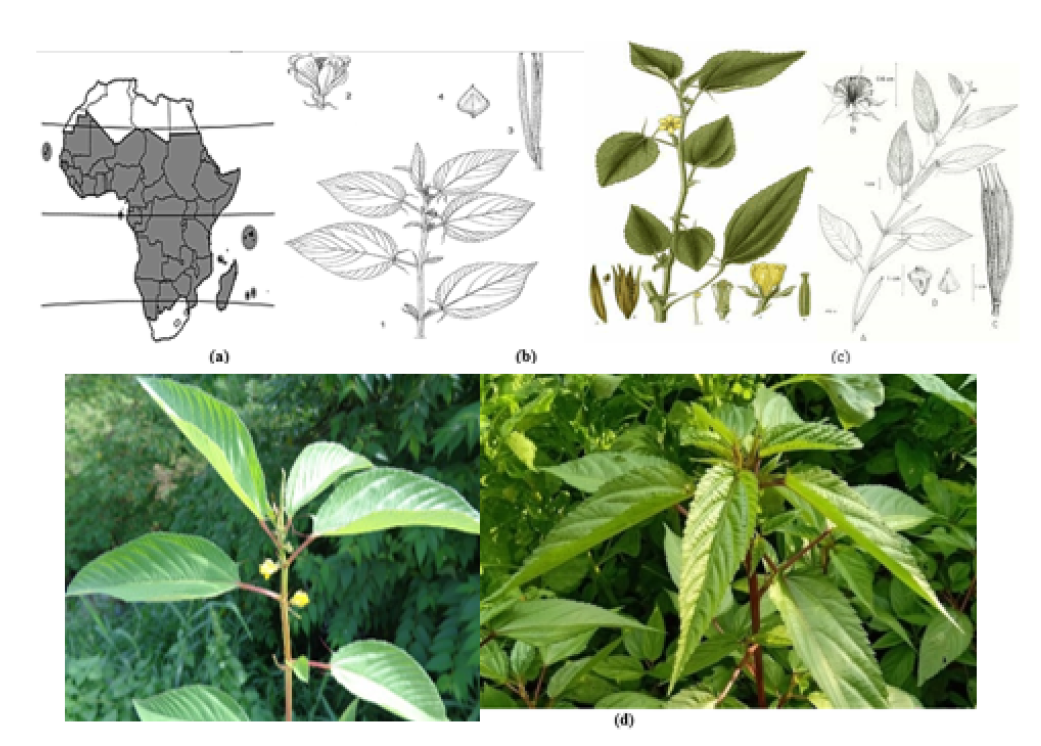
Similar to Cerathotera sesamoides identification of Corchorus olitorious was based on field observations and herbarium verification which showed that it was taller than C. sesamoides. Leaves were opposite or nearly opposite, simple; and stipules were absent; the petiole was up to 6 cm long in lower leaves and short in upper leaves; the blade was lanceolate-Jute mallow is a robust erect annual herb, up to 2 m tall. Leaves ovate-lanceolate to lanceolate, up to 10 × 5 cm, thinly textured, mostly hairless on both surfaces; margins crenate-serrate. Flowers in 2-3 flowered axillary clusters, yellow, c. 1.4 cm in diameter; sepals linear, pointed, as long as the petals. Fruit is a 10-ribbed cylindric capsule, splitting into 5 valves, straight or slightly curved, more or less appressed to the stem, up to 8 cm long with a straight apical beak.
Figure 7: Nutritional Content of Cerathotera sesamoides
Figure 8: (a) Distribution of the Species in Africa, (b) Identification by use of Leaves (c) Identification Using the Inflorescence and Seed Pods and (d) Growth form
Source of picture: Science direct. com/African plants Corchorus olitorious
Its distribution is wide spread and easily identified by use of inflorescence, leaf margins and venation or leaf arrangement (Figure 8). It has numerous hairs on the stem and pink flowers.
Nutritional Content of Jute/Jew’s Mallow, Bush Okra or Nalta Jute (Corchorus Olitorious)
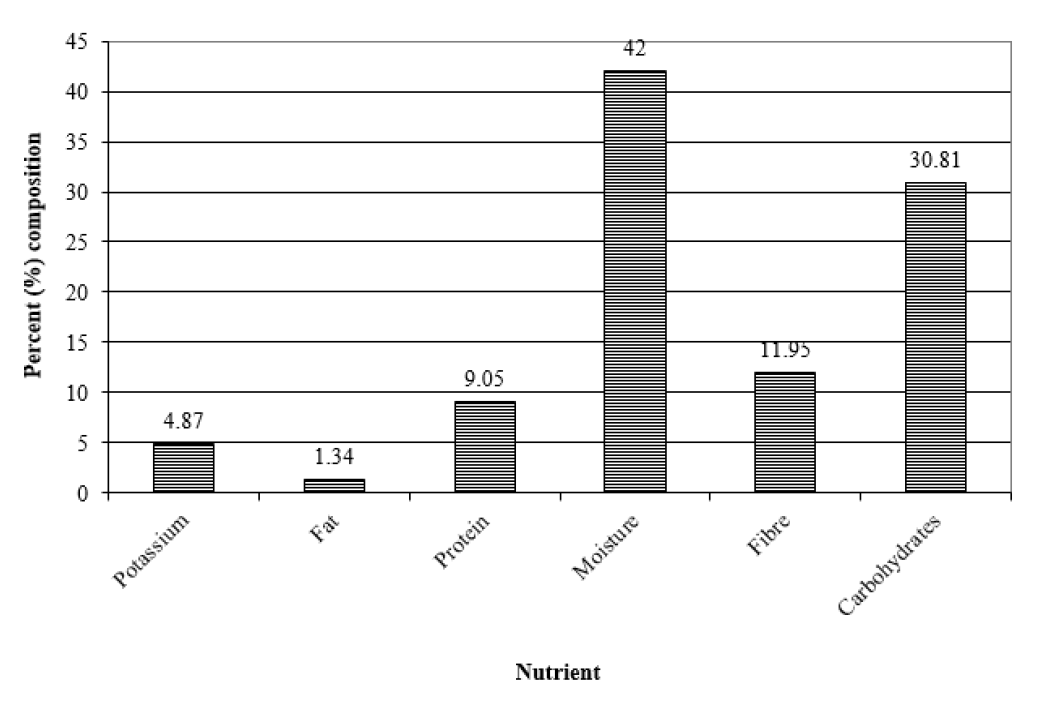
Jute/Jew’s mallow, bush okra or nalta jute (Corchorus olitorious) was also found to be highly nutritious containing; 4.87% potassium, 1.34 % fat, 9.05% protein, 11.95 fibre, 30, 81 % carbohydrates and 42% was water (Figure 9).
Common Uses
Literature reviewed showed that Jute/Jew’s mallow is used as a leafy mucilaginous vegetable. The cooked leaves form a slimy sticky sauce, comparable to okra which taken as relish together with nshima a popular carbohydrate rich paste (Figure 1). In Nigeria this sauce is found suitable for easy consumption of starchy balls made from cassava, yam or millet. A powder prepared from dried leaves is used to prepare this sauce during the dry season. The immature fruits, called bush okra, are also dried and ground to a powder for the preparation of this slimy sauce. In East Africa several recipes exist, e.g. Jew’s mallow may be cooked with cowpeas, pumpkin, cocoyam leaves, sweet potato, milk and butter, meat and flavoured with peppers and lemon.
Jute is also used as packaging fibre because of its strength and durability, low production costs, ease of manufacturing and availability in large and uniform quantities. The types of Corchorus olitorius that are used as a leaf vegetable are quite distinct from the types used for jute production. Whole jute stems are suitable as raw material for paper pulp. However, when jute is used for pulping, it is usually in the form of cuttings from burlap manufacture, old sugar bags and wrappings. The resulting pulp is made into hard, thick paper, suitable for cards and labels. The woody central core (‘stick’) remaining after removal of the bast is also processed into paper, board and cellulose.
Root scrapings of Jew’s mallow are used in Kenya to treat toothache, a root decoction as a tonic, leafy twigs in Congo against heart troubles, an infusion from the leaves is taken in Tanzania against constipation and seeds in Nigeria as a purgative and febrifuge.
Figure 9: Nutritional Content of Corchorus Olitorious
Comparison of Nutrient Content Between Cerathotera Sesamoides and Corchorus Olitorius
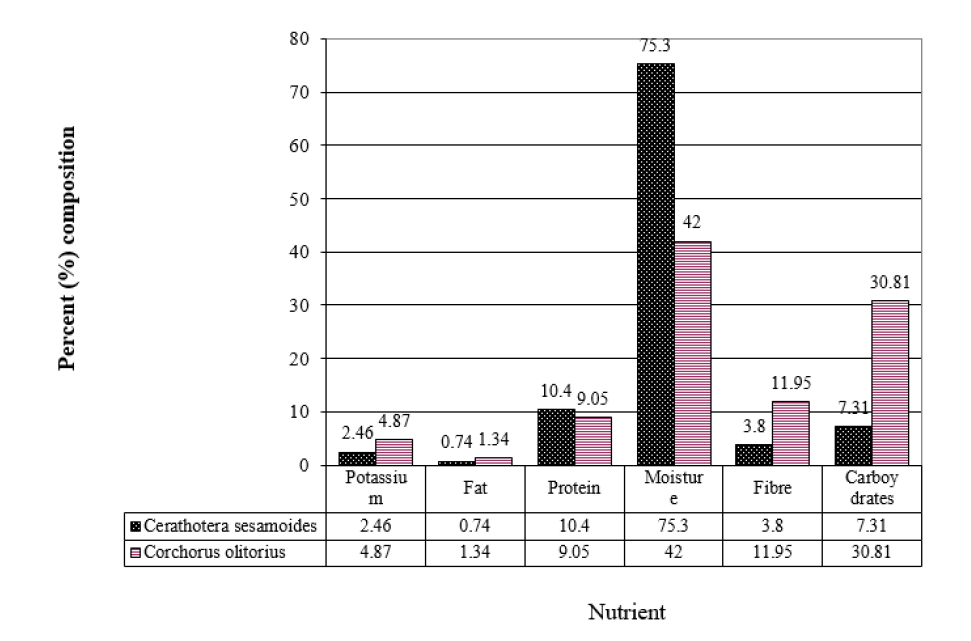
The two species are important sources of macro and micronutrients. Though there were minor differences in the percent composition of some nutrients, these differences were largely insignificant (p>0.05) except for carbohydrates and water (Figure 10).
A Comparison of Protein Content with Nine Popular Leafy Vegetables and Okra Cultivars
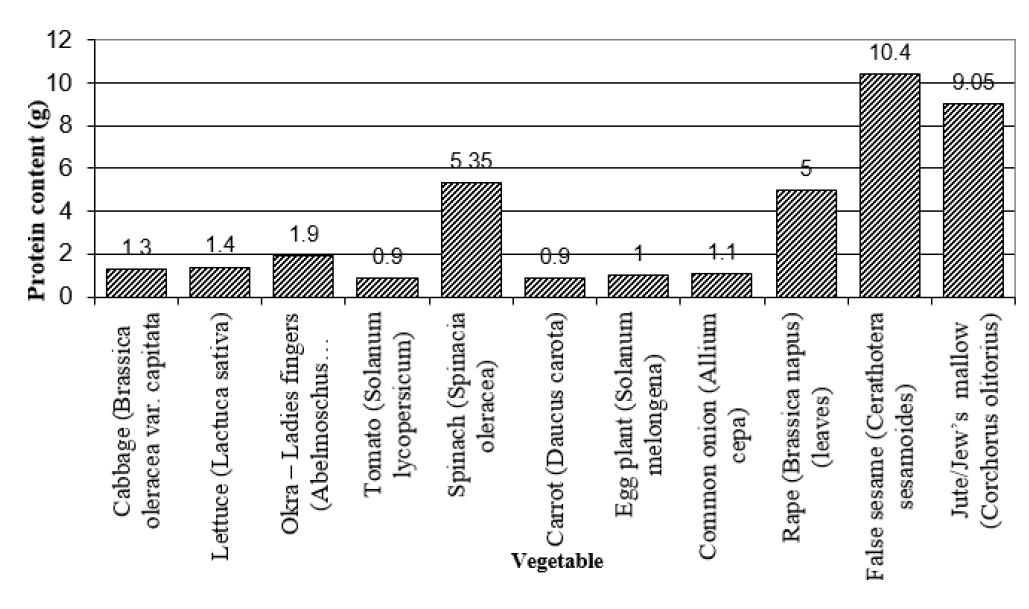
A comparison of protein content with popular leafy vegetables and okra cultivars; Cabbage (Brassica oleracea var. capitata), Lettuce (Lactuca sativa), Okra–Ladies fingers (Abelmoschus esculentus), Tomato (Solanum lycopersicum), Spinach (Spinacia oleracea), Carrot (Daucus carota), Eggplant (Solanum melongena), Common Onion (Allium cepa), showed that Cerathotera sesamoides and Corchorus olitorius had significantly higher protein content (p<0.05) (Table 1) and more or less the same on a case by case basis for the others (Figure 11a,b,c,d e & f).
Figure 10: Comparison of Nutrient Content between Cerathotera Sesamoides and Corchorus Olitorius
Figure 11a: Continue
Figure 11b: Continue
Figure 11c: Continue
Figure 11d: Continue
Figure 11e: Continue
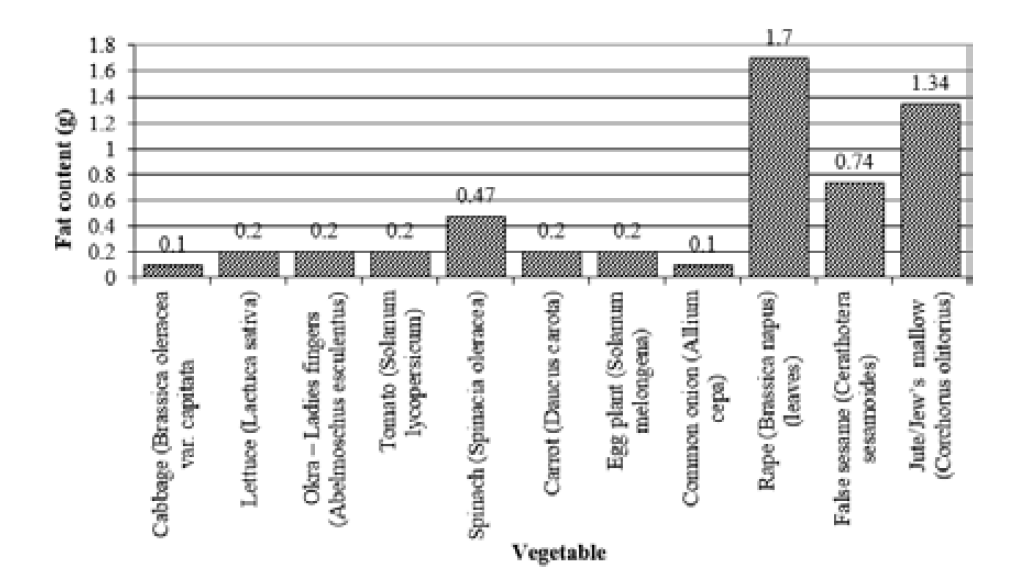
Figure 11: Comparative Nutrient Content of Eleven Vegetables; a) Fats, b) Protein, c) Fibre, d) Potassium, e) Water and f) Carbohydrates
Table 1: A Comparison of Protein Content of Cerathotera Sesamoides and Corchorus Olitorius with Nine Other Leafy, Fruit and Bulbous Vegetable Cultivars
No.
Vegetable
Nutritional composition
Fat (g)
Protein (g)
Potassium (mg)
Water (%)
Fibre (g)
Carbohydrates (g)
1
Cabbage (Brassica oleracea var. capitata)
0.1
1.3
170
92
2.5
6
2
Lettuce (Lactuca sativa)
0.2
1.4
194
95
1.3
2.9
3
Okra–Ladies fingers (Abelmoschus esculentus)
0.2
1.9
299
90
3.2
7.45
4
Tomato (Solanum lycopersicum)
0.2
0.9
237
95
1.2
3.9
5
Spinach(Spinacia oleracea)
0.47
5.35
838.8
93
4.32
6.75
6
Carrot (Daucus carota)
0.2
0.9
320
88
2
9.6
7
Egg Plant (Solanum melongena)
0.2
1
229
93
3
6
8
Common Onion (Allium cepa)
0.1
1.1
146
89
1.7
9
9
Rape–Leaves (Brassica napus)
1.7
2.9
0.9
83.3
1.8
11.2
10
False sesame (Cerathotera sesamoides)
0.74
10.4
2.46
75.3
3.8
7.31
11
Jute/Jew’s mallow (Corchorus olitorius)
1.34
9.05
4.87
42
11.95
30.81
Source of information for B. napus: James A. Duke. 1983. Handbook of Energy Crops. Unpublished
The protein content in Cerathotera sesamoides and Corchorus olitorius were significantly higher than was contained in the nine popular domesticated vegetables (χ2 = 35.64, DF = 10, α = 0.05, p<0.05) (Figure 11b). Of the nine cultivars (domesticated vegetables) only rape and spinach had slightly higher levels of protein but still far lower than the two wild vegetables.
With fats, the two native species had the largest values 0.74 and 1.34 mg) respectively by content, though these were not statistically different (χ2 = 3.81, DF = 10, α = 0.05, p˃0.05) from the cultivars (Figure 11a). With regard to carbohydrates and fibre, Corchorus olitorius had significantly higher levels of carbohydrates and fibre than all the other species (χ2 = 63.16, DF = 10, α = 0.05, p<0.05), while (Cerathotera sesamoides) was fifth in the roll (Table 1, Figure 11f, 11c).
Potassium was highest in spinach and lowest in Cerathotera sesamoides and Corchorus olitorius (Figure 11d), while Corchorus olitorius had the lowest water content of all (42%) (Figure 11e) perhaps owing to the higher levels of fibre.
DISCUSSION
The results of the study through laboratory analysis revealed that indigenous Corchorus olitorius and Ceratotheca sesamoides contain appreciable amounts of vital nutrients such as protein, fiber, calcium, fat, moisture and carbohydrates, with a wide range of uses. In Zambia and Manymbi area in particular, the two species are normally consumed as vegetables and to some extent for various medicinal purposes. Detailed analysis of the chemical composition done elsewhere reveal an amazing plethora of macro and micro nutrients.
Multiple Values of Wild Leafy Vegetables
In describing the nutritional value of Ceratotheca sesamoides Adesina and Olaleye, et al., [35], recorded a wide range of nutrients after determining the chemical composition of leaves which contained; protein (crude) 8.5%, fat 1.5% (dry), fibre (crude) 8.5% (dry), ash (soluble) 20.2% (dry), carbohydrate (soluble divided as - starch 3.1%, sucrose 3.5%, D-glucose 1.5%, D-fructose = 0.1% (dry). Amino acids (g [16g N]-1): Aspartic acid = 17.2g. Threonine = 5.1g. Serine = 4.4g. Glutamic acid = 13.3g. Proline = 5.0g. Glycine = 5.7g. Alanine = 6.3g. Valine = 6.5g. Cysteine (performic acid oxidation) = 0.7g. Methionine (performic acid oxidation) = 1.9g. Isoleucine = 5.5g. Leucine = 9.4g. Tyrosine = 4.2g. Phenylalanine = 5.7g. Lysine = 5.2g. Histidine = 2.1g. Arginine = 6.1g. Minerals: Sulphur = 0.23% (dry). Potassium = 0.23% (dry). Magnesium = 0.48% (dry). Calcium = 1.48% (dry). Na = 0.02% (dry). Zinc = 36mg/kg-1 (dry). Iron = 194mg/kg-1 (dry). Manganese = 173mg/kg-1 (dry). Copper = 15mg/kg-1 (dry). Aluminum = 137mg/kg-1 (dry). The leaves of Corchorus olitorius on the other hand were reported to be rich sources of many chemical compounds. Adesina and Olaleye, et al., [35], concluded that the plant was nutrient dense with more than 17 active nutrient compounds in Jute leaves including protein, fat, carbohydrate, fiber, ash, calcium, potassium, iron, sodium, phosphorus, beta-carotene, thiamine, riboflavin, niacin and ascorbic acid just to name some of them some of which were also reported in this study. Therefore, the edible part for jute for instance, which are the leaves that are rich in potassium, vitamin B6, iron, vitamin A and vitamin C make this plant very important, for communities with micronutrient-poor staple crops as it will cover a high share of their energy requirement. This explains it’s wide spread use as a vegetable predominantly in Africa (West Africa in particular and to some extent Angola and East Africa) and Asia [36]. We postulate that the low popularity profile recorded in Zambia is due to low levels of informastion infiltration in the rural population about the nutritional value of the two species.
The two species, had an unusually high level of protein content than cultivars. This inevitably qualifies our proposal to elevate their profile as key vegetables in the diet. Protein a word which means ‘prime importance’ or from the Greek language ‘to come first’ [37], are important components of muscles, other tissues and other vital body fluids such as blood. In the form of enzymes, hormones and antibodies with a wide range of vital metabolic processes. It is no wonder that the species’ pharmaceutical [38] and culinary values have been comprehensively studied in some countries. While in others commercial production is already being practiced. In Europe for instance, C. olitorius could be grown in a floating system with nutrient solution and could produce baby leaves, which would be interesting for the fresh cut leafy vegetable industry. The lack of detailed laboratory analysis of the nutritional content to the level of amino acids and beyond could be one of the major reasons why the two species are still considered as arable weeds in Zambia and efforts to grow them on a commercial scale dismal.
In South Africa Nqobile et al., [38], further elucidated on the pharmacological properties of Ceratotheca species that the current increasing resistance of micro-organisms to available antibiotics is a major concern to researchers and clinicians around the world.
Existing drugs are becoming ineffective against viruses, bacteria, fungi and protozoa which is a problem in the fight against microbial related ailments. In addition to the search for new drugs from medicinal plants, leafy vegetables such as Ceratotheca might be a complementary option because of their health benefits both nutritionally and medicinally. Furthermore, in vitro and epidemiologic studies have shown the benefits of foods rich in phenolic compounds in reducing the risk of such health problems due to their antioxidant, anti-mutagenic, anti-inflammatory and antibacterial properties [39], which further underscore the general lack of detailed laboratory based studies in Zambia as being one of the major challenges influencing the low poularity profile and low uptake in the diets of rural communities. The antioxidant, antimicrobial, antidiarrhoeal, anti-inflammatory, anti-diabetic, antiplasmodial, antiviral and antivenom activities of C. sesamoides and C. triloba are additional pharmaceutical values that are underutilized in Zambia.
With regard to culinary values showed that in Syria, Lebanon, Palestine and Egypt as a potherb and its culinary use goes back at least as far as the Ancient Egyptians. It is an important leafy vegetable in Côte d'Ivoire, Benin, Nigeria, Ghana, Cameroon, Sudan, Uganda, Kenya and Zimbabwe. It is also cultivated and eaten in the Caribbean and Brazil, in the Middle East and in India, Bangladesh, Japan and China. Its leaves are a special favourite of the Boros of northeast India, who make a mucilaginous preparation with its dried leaves mixed with fatty pork and lye called narji. In Nigeria, the leaves are boiled to make a sticky, mucilaginous sauce which is served with balls of cassava which are otherwise rather dry. In Vietnamese cuisine, it is known as rau đay and made into a soup with shrimp. The limited data in Zambia, perhaps could be attributed to the low profile awarded to it and in fact it is still treated as an arable weed.
Bedigian further added that the usage and cultural importance of wild and weedy edible leaves of wild relatives of sesame, Ceratotheca and Sesamum in Africa, is reported from herbarium records, published sources and firsthand observations. They contribute not only nutritionally, protein, lipid and micronutrients, especially calcium and iron, but release a little scrutinized valuable product, water-soluble polysaccharide mucilage, that serves as a source of fiber and provides beneficial dietary bulk, enhances gastrointestinal function, alleviates constipation, protects against diabetes and lowers cholesterol. Dissimilar genera and species are used in similar ways. Their utility was discovered by women gathering edible leaves to accompany dry cereal staples. African vernacular names, from several disparate cultures for example delele (Nyanja) and mulembwe (Bemba) in Zambia refer to their slimy consistency.
Dzomba and Mwanza [40], carried out a study on Ceratotheca sesamoides, Corchorus fascicularis and Corchorus olitorius and found that they were used to manage diabetes mellitus type 2 in traditional practices world-wide. They investigated the alpha-glucosidase and dipepptidyl peptidase inhibitory activity of the four bush okras’ leaf, seeds and pods extracts in which liquid extracts were anaylsed for active phytochemicals. The extracts and standard inhibitors, sitagliptin and precise were then used in vitro studies to determine percentage inhibition and IC50 values using UV-VIS spectrophotometry. They found that C. sesamoides, C. fascicularis, C. olitorius had significant dipeptidyl peptidase inhibitory activity with IC 50 values rangong from 1.53 – 92.32µg mL- and a-glucosidase inhibitory activity with IC50 values ranging from 1.85- 8.43 µg mL-. Most extracts showed greater than 50% inhibition at concerntration lower than 10 µg mL-1 Leaf and seed extracts showed the best result with IC50 values lower than those of standard inhibitors, 2.32 and 2.38 µg mL- for sitagliptin and precise, respectively. Among the okras they concluded that the administration of polar extracts i.e aqueous infusions of C. sesamoides, C. fascicularis, C. olitorius and A. esculentus inhibits the enzymes a-glucosidase and dipeptidyl peptidase. Thus the results of their study supported the global use of edible okra species in traditional medicine to manage diabetes mellitus type 2. This further tallies with our findings through FGD in which some community members said that the two okra species were not merelry consumed for food but were also considered and used as medicine for a wide range of ailments. This also underscores the importance of earlier findings by various scholars who have carried out nutritional value assessemnts and recommended the inclusion in the diets of the wild okra species due to their inherent food and pharmaceutical values.
In another separate study, Abubakar et al., [41], showed that false sesame has been claimed to possess some anti-viral properties and has been employed as an aphrodisiac against jaundice, snakebites and skin diseases as also earlierreported by Bedigian and Adetula, [42]. The seed oil was recorded as being similar in composition to sesame oil and contains sesamin, a phenyl propanoid lignin. This compound showed anti-oxidant, anti-inflammatory, anti-hypertensive, cytotoxic (including anti-tumour) and insecticidal activities [43]. It is a plant of multiple practical uses and applications in food and medicine [42,44,45]. The leaves and flowers of this plant are often consumed as vegetables (delele in Zambia) or used in sauces. The leaves also have medicinal benefits while the seeds can produce cooking oil. Aqueous leaf extracts are used in the treatment of diarrhea, dysentery and measles. The leaf may be an effective anti-oxidant, anti-inflammatory and anti-hypertensive agent, while the mucilage can be used as an emollient and lubricant. The slimy liquid produced by soaking the leaves in water can be used to treat conjunctivitis [44]. Warm leaves can be ground and mixed with ash then applied to inflamed cervical lymph nodes to help expedite delivery in both humans and animals. If the leaves are ground with the rhizome of Anchomanes difformis, the ensuing mixture has been used to treat cases of leprosy. Our study further underscores our conviction that the species under study have inevitably been underutilized as they have both food and pharmaceutical values of immense proprtions. Trully, these are neglected and underutilized indigenous plants worth recovering and popularising.
In a study by Laskar et al., [46], to test the effect of protein from Corchorus olitorius on rats using seed protein enriched diet on some enzymes and liver lipids of albino rats (Rattus norvegicus), they found that the effect of protein, isolated from Jute (Corchorus olitorius) seed was studied upon albino rats with respect to some of their serum, liver and intestinal enzymes and liver lipids. An increase in the body weight (including the weight of the liver) was noted in test animals after feeding with a Jute seed protein enriched diet. It was also observed that AST, ALT and total lipid of liver increased significantly whereas AST and ALT of serum were decreased. An increase in the concentration of lipids in the liver was found and this may be due to excess of the seed protein in the diet. An overall observation reveals that there is slight fatty infiltration in the liver of test animals.
In South Africa however, a study by Ndhlovu and Afolayan [47], yielded slightly different results from most of the previous results in different parts of Asia and Africa. In this study, the nutrient levels and phytate content of leaves, fruits and stems of Corchorus olitorius were determined using standard analytic methods and results compared with those of cabbage (Brassica oleracea L.) and spinach (Spinaceae oleracea L.) and found no significant difference in the crude protein content between C olitorius (16.3%) and spinach leaves (18.7%). They also found no significant difference in lipid content of wild okra leaves, cabbage and spinach. However, the intra-nutritional contents of C. olitorius revealed that its leaves showed superior nutritional quality when compared to the fruits and stems except the lipid content in which the fruits had the highest value. They also fond that C. olitorius had higher magnesium content than cabbage and sinach. Despite these minor variations between these results and our findings, their overall conclusing remarks were that their findigs revealed that the wild okra contained more nutritional qualities than cabbage and spinach, a factor common to all previous findings in other parts of Africa and Asia.
Many scientists and particularly nutritionists are divided in their opinion as to whether these species should be treated as medicinal or food perhaps both. The wide ranging pharmaceutical values including some non communicable diseases such as cancer compels us to suggest that their commercial production be considered inevitable in many parts of Africa where the convetional health care systems are almost non existent to rural populations. And we also suggest that the two species be considered as materials of multiple values.
Li et al., [16], for instance, found that the phenolic fractions occurring in the leaves of C. olitorius induced a significant reduction in the viability of Caco-2 cancer cells without any detrimental effect on the healthy cell line. These were observed despite the preliminary boiling which makes C. olitorius a promising candidate species in the field of nutritional prevention. A similar effect in terms of selectivity in the reduction of HepG2 liver cancer cell line viability was shown in another study performed by Li et al., [16], which found that the mechanism of action promoted by jute mallow extracts is the mitochondria-dependent apoptosis pathway. In that study, the selective cytotoxic activity triggered by C. olitorius PEEs appeared to be mediated by a sudden increase in the ROS level, still high after 2-h treatment and through a successive decrease in the activity of glutathione-independent antioxidant enzymes. This activity may appear as a paradox because phenolic compounds are known to be among the best antioxidant phytochemicals. However, it is important to note that the tumor environment shows different redox status compared to healthy tissues and this study confirms previous observations highlighting that despite their well-known antioxidant properties on healthy tissues these secondary compounds can induce pro-oxidant responses on tumor cells, triggering programmed cell death mechanisms such as apoptosis [48].
Another noteworthy secondary metabolite identified by Li et al., [16], in PEEs was the flavonoid astragalin (K-3-O-Gly), which was found in different amounts in approximately all PEEs. This compound has been reported to modulate inflammatory responses by regulating the expression of NF-κB, iNOS as well as cytokines and chemokines (COX-2, TNF-α, IL-10 and IL-6). Astragalin is also known to be an inhibitor of ERK-1/2 and Akt signaling; therefore, it is a significant compound against the proliferation of cancer cells [49]. With the new trends in cancer prevention and therapy which are directed at identifying combinations of different phytochemicals, acting simultaneously on several pathways to contrast cancer progression and to overcome drug resistance mechanisms typical of chemotherapy [50,51], the wild okra avails grand opportunities for the future.
CONCLUSION
These results show that indigenous vegetables play an impoirtant role in human diets. They have multiple values; culinary, phamatceutical and commercial and supply the body with essential minerals, vitamins and certain hormone precursors in addition to protein and energy [28]. It can therefore be concluded tthat despite the popularityand consumption of exotic vegetables, indigenous vegetables are generally more nutritious and less expensive as most are collected free of charge than the exotic cultivars. They are currently neglected, underrated and underutilized a factor that may be related to the paucity of nutritional and phamarceutical information.
It can also be concluded that most rural communities in many parts of Africa rely on vegetables as source of protein, iron and βcarotene; therefore, Corchorus spp. especially Corchorus olitorius and Ceratotheca sesamoides could play a significant role in for providing cheap and affordable protein for rural populations.These species have high levels of protein and have the potential to enrich the human diet that will help Zambian population to fight against hunger and malnutrition especially in marginal and tribal belt of the nation where the species grow as arable weeds.
This study therefore, brings forth the nutritional superiority of wild okra Corchorus olitorius and Ceratotheca sesamoides which are presently grossly underutilized and underated in terms of consumption and trade, but offer exciting prospects for crop diversification and nutritional needs of the community. It is assumed that studies that investigate the nutrional value like this study would provide information that would help to popularize the species and widen the diets of most rural populations.
The inclusion of Corchorus olitorius and Ceratotheca sesamoides in human diets as sources of protein and crude fibre and can therefore reduce the body cholesterol level, also good in nutritive minerals especially K and Fe would enhance hunan health. Additionally, they contain only very trace amount of toxic mineral elements and moreover, the body will not be overloaded with any of the minerals. The mineral ratios showed in many of the laboratory analyses imply that the samples could not pose any health risk to consumers and although the concentrations were low, the non-starch polysaccharide would play a very good role in digestion and reduction in the incidence of colon cancer, diabetes, obesity and other degenerative diseases when consumed.
Recommendations
The multiple values of the two species makes it inevitable to promote and popularize the wild okra species. This will require highlighting the unexplored nutritional and pharmacological potential of African indigenous leafy vegetables Ceratotheca sesamoides and Corchorus olitorius among them for the following reasons:
Nutrional and Culinary Uses: Wild okras contain numerous macro nutrients and important vitamins and minerals, including vitamins A and C, riboflavin, folate and iron, generally more than the domesticated vegetables. Due to their gelatinous texture, they’re a popular thickening agent in soups and stews in some parts of Africa or used as a beverage in others
Pharmaceutical Uses: Encourage research in the pharmaceutical uses of the species since available information already suggests that leaves for instance are reported to be demulcent, deobstruent, diuretic, lactagogue, purgative and tonic. The species are/is folk remedy for aches and pains, dysentery, enteritis, fever, pectoral pains, tumors, cystitis, dysuria, fever, gonorrhea and many others [52-54], while the cold infusion is said to restore the appetite and strength
Commercial Uses: Fibre and textile uses of the species are already widespread. For example, jute fibre is made from the bark tissue of C. olitorius and C. capsularis, especially in South Asian countries, though fibre made from C. olitorius is considered to be of lesser quality. Finished fibres appear golden and silky with a length of up to 3 metres and with a diameter of 2.4 µm. The plant stalk is cut and then processed by pulling up, rippling, partial retting, breaking, spinning and combing to obtain fine fibres that are well separated from unwanted woody material. Afterwards the fibres are cured and dried. Many textiles are made of jute, such as yarn, twine, sacking, carpet backing cloth and other blended textiles. It is also used as raw material for cords and strings. Could supplement or be an alternative in some aspects to cotton (Gossypium hirsutum) and sisal (Agave sisalana)
Cultivate, Popularize and Improve: Propagation, planting and and commercial commecial production -If the plant is considered for Propagation, planting and and commercial production, it will be necessary to carry out more detailed differential analyses to better clarify which compounds vary between the tested growth conditions leading to differential bioactive responses
Genetic Preszervation: Given the current low levels of popularity it is unlikely that wild okras genetic resource have been attention though we cannot be sure that they are threatened by genetic erosion, since both are weedy and becoming domesticated in parts of Africa. Still we need to make effort to collections for genetic presrrvation
Future Studies: Should consider investigating the nutritional content as well as methods of its improvement are necessary if the plants are to be included as domesticated vegetable crops
Conflict of Interest
The authors declare that the research was conducted in the absence of any commercial or financial relationships that could be construed as a potential conflict of interest.
Acknowledgement
Authors are grateful to the many reviewers for their invaluable input and suggestions for refinement of this article.
REFERENCES
Willett, W. et al. “Food in the anthropocene: The eat–lancet commission on healthy diets from sustainable food systems.” The Lancet, vol. 393, 2019, pp. 447–492. https://doi.org/10.1016/S0140-6736(18)31788-4.
GRZ. The First 1000 Most Critical Days: Prevention of Stunting in Children Less Than Two Years of Age in the National Food and Nutrition Strategic Plan, 2011–2015. National Food and Nutrition Commission, 2012, Lusaka.
Padulosi, S. et al. “Fighting poverty, hunger and malnutrition with neglected and underutilized species: needs, challenges and the way forward.” Food Science & Nutrition, vol. 6, 2013, pp. 714–727. https://doi.org/10.1002/fsn3.643.
Conti, M.V. et al. “Potential role of neglected and underutilized plant species in improving women’s empowerment and nutrition in areas of sub-saharan Africa.” Nutrition Reviews, vol. 77, 2019, pp. 817–828. https://doi.org/10.1093/nutrit/nuz038.
Maseko, I. et al. “African leafy vegetables: A review of status, production and utilization in south Africa.” Sustainability, vol. 10, 2018, pp. 1–16. https://doi.org/10.3390/su10010016.
Van Jaarsveld, P. et al. “Nutrient content of eight African leafy vegetables and their potential contribution to dietary reference intakes.” Journal of Food Composition and Analysis, vol. 33, 2014, pp. 77–84. https://doi.org/10.1016/j.jfca.2013.11.003.
Sergio, L. et al. “Bioactive Phenolics and antioxidant capacity of some wild edible greens as affected by different cooking treatments.” Foods, vol. 9, 2020, pp. 1320. https://doi.org/10.3390/foods9091320.
IPCC. Climate Change and Land: An IPCC Special Report on Climate Change, Desertification, Land Degradation, Sustainable Land Management, Food Security and Greenhouse Gas Fluxes in Terrestrial Ecosystems. 2019, www.ipcc.ch/srccl/.
Dixit, A.K. et al. “Soil properties, crop productivity and energetics under different tillage practices in fodder + sorghum–cowpea–wheat cropping.” 2019.
Guzzetti, L. et al. “Sustainability perspectives of Vigna unguiculata L. Walp. cultivation under no tillage and water stress conditions.” Plants, vol. 9, 2020, pp. 48. https://doi.org/10.3390/plants9010048.
Dhar, P. et al. “Differential response of tossa jute (Corchorus olitorius) submitted to water deficit stress.” Industrial Crops and Products, vol. 112, 2018, pp. 141–150. https://doi.org/10.1016/j.indcrop.2017.10.044.
Kundu, A. et al. “Origins of white (Corchorus capsularis L.) and dark (C. olitorius L.) jute: A reevaluation based on nuclear and chloroplast microsatellites.” Journal of Plant Biochemistry and Biotechnology, vol. 22, 2013, pp. 372–381. https://doi.org/10.1007/s13562-012-0165-7.
Islam, M.M. “Biochemistry, medicinal and food values of jute (Corchorus capsularis L. and C. olitorius L.) leaf: A review.” International Journal of Enhanced Research in Science, Technology and Engineering, vol. 2, 2013, pp. 35–44.
Ola, S.S. et al. “HPLC/DAD/MS Characterization and analysis of flavonoids and cinnamoyl derivatives in four nigerian green leafy vegetables.” Food Chemistry, vol. 115, 2009, pp. 1568–1574. https://doi.org/10.1016/j.foodchem.2009.02.013.
Rajamanickam, S. and R. Agarwal. “Natural products and colon cancer: Current status and future prospects.” Drug Development and Research, vol. 69, 2008, pp. 460–471. https://doi.org/10.1002/ddr.20276.
Li, C.J. et al. “Induction of apoptosis by ethanolic extract of Corchorus olitorius leaf in human hepatocellular carcinoma (HepG2) cells via a mitochondria-dependent pathway.” Molecules, vol. 17, 2012, pp. 9348–9360. https://doi.org/10.3390/molecules17089348.
Vernon, R. Field Guide to Important Arable Weeds of Zambia. Mount Makulu Central Research Station, Department of Agriculture, 1983, Chilanga, Zambia.
Ogle, B.A. et al.Traditional Vegetables in Zambia: A Study of Procurement, Marketing and Consumption of Traditional Vegetables of Selected Urban and Rural Areas of Zambia. Rural Development Studies No. 28, Swedish University of Agricultural Sciences, 1990, Uppsala.
Steyn, N.P. et al. “A survey of wild, green, leafy vegetables and their potential in combating micronutrient deficiencies in rural populations.” South African Journal of Science, vol. 97, July–August 2001.
Yang, R.Y. and G.B. Keding. “Nutritional contributions of important African indigenous vegetables.” African Indigenous Vegetables in Urban Agriculture, edited by C.M. Shackleton et al., Earthscan, 2009, pp. 105–143.
Hilou, A. et al. “In vivo antimalarial activities of extracts from Amaranthus spinosus L. and Boerhaavia erecta L. in mice.” Journal of Ethnopharmacology, vol. 103, no. 2, 2006, pp. 236–240. https://doi.org/10.1016/j.jep.2005.08.006.
Yiridoe, K.E. and M. Vincent. “Garden production systems and food security in Ghana: Characteristics of traditional knowledge and management systems.” Renewable Agriculture and Food Systems, vol. 20, no. 3, 2005, pp. 168–180.
Andersen, R.H. et al. “A comparison of coronary angioplasty with fibrinolytic therapy in acute myocardial infarction.” The New England Journal of Medicine, 2003. https://doi.org/10.1056/NEJMoa025142.
Mzumara, B. et al. “Factors associated with stunting among children below five years of age in zambia: evidence from the 2014 Zambia demographic and health survey.” BMC Nutrition, vol. 4, 2018, pp. 51. https://doi.org/10.1186/s40795-018-0260-9.
Food and Nutrition Commission. Zambia Food Composition Tables. National Food and Nutrition Commission, 2019, Lusaka.
Chomba, C. and I. Lichilo. “Dairy animal management
S. et al. “Nutritive and anti-nutritive evaluation of sweet potatoes (Ipomoea batatas) Leaves.” Journal of Nutrition, vol. 5, 2006, pp. 166–168.
Gockowski, J. et al. “African traditional leafy vegetables and the Urban and peri-urban poor.” Food Policy, vol. 28, 2003, pp. 221–235.
Jansen van Rensburg, W.S. et al.“African leafy vegetables in south Africa.” Water SA, vol. 33, 2007, pp. 317–326.
Abukutsa, M.O.O. African Indigenous Vegetables in Kenya: Strategic Repositioning in the Horticulture Sector. Second Inaugural Lecture, Jomo Kenyatta University of Agriculture and Technology, 2010.
de Guzman-Ladion, H. Healing Wonders of Herbs: Guide to the Effective Use of Medicinal Plants. Inter-American Division Publishing Association, 1988, Miami.
FAO. Recommended Methods of Analysis and Sampling. Food and Agriculture Organization of the United Nations, 2021, Rome.
Anon. Proximate Analysis: Laboratory Manual. Department of Animal Science, University of Ljubljana, 2018.
Adesina, A.J. et al. “Nutritional evaluation of leafy vegetables of Corchorus olitorius family from Ekiti State, Nigeria.” ChemSearch Journal, vol. 13, no. 1, 2022, pp. 147–156.
Kissanga, R. et al. “Nutritional and functional properties of wild leafy vegetables for improving food security in southern angola.” Frontiers in Sustainable Food Systems, vol. 5, 2021, article 791706. https://doi.org/10.3389/fsufs.2021.791706.
Mehta, M.N. and N.J. Mehta. Nutrition and Diet for Children Simplified. Jaypee Brothers Medical Publishers, 2014, New Delhi.
Nqobile, A. et al. “Nutritional and pharmacological potential of the genus Ceratotheca.” Journal of Ethnopharmacology, vol. 178, 2016, pp. 209–221.
Dzomba, P. and E. Mwanza. “Dipeptidyl peptidase IV and α-glucosidase inhibitory activity of Ceratotheca sesamoides, Corchorus fascicularis, Corchorus olitorius and Abelmoschus esculentus.” Journal of Applied Sciences, vol. 19, 2019, pp. 586–592.
Abubakar, M.A. et al. “Phytochemical and antimicrobial analyses of leaf extracts of Ceratotheca sesamoides and Chromolaena odorata.” International Journal of Research–Granthaalayah, vol. 8, no. 8, 2020, pp. 65–74. https://doi.org/10.29121/granthaalayah.v8.i8.2020.435.
Bedigian, D. and O.A. Adetula. “Ceratotheca sesamoides Endl.” PROTA 2: Vegetables/Legumes, PROTA, 2004, Wageningen, Netherlands.
Griffin, D.M. et al. “Dendritic cell modulation by 1α, 25-dihydroxyvitamin D₃ and its analogs: A vitamin D receptor–dependent pathway that promotes a persistent state of immaturity in vitro and in vivo.” Proceedings of the National Academy of Sciences of the United States of America, vol. 98, no. 12, 2001, pp. 6800–6805. https://doi.org/10.1073/pnas.121172198.
Adesiyun, A.A. and R.O. Uddin. “Insects associated with bungu, ceratotheca sesamoides, in ilorin, Nigeria.” Agricultural and Biological Journal of North America, vol. 2, no. 6, 2011, pp. 974–980.
Fasakin, K. “Proximate composition of bungu (Ceratotheca sesamoides Endl.) Leaves and Seeds.” Biokemistri, vol. 16, 2004, pp. 88–92.
Laskar, S.G. et al. “Influence of Corchorus olitorius Seed Protein–Enriched Diet on Some Enzymes and Liver Lipids of Albino Rats (Rattus norvegicus).” Physiologia Bohemoslovaca, vol. 35, no. 1, 1986, pp. 86–89.
Ndlovu, J. and A.J. Afolayan. “Nutritional analysis of the south African wild vegetable Corchorus olitorius L.” Asian Journal of Plant Sciences, vol. 7, 2008, pp. 615–618.
Lambert, J.D. and R.J. Elias. “The antioxidant and pro-oxidant activities of green tea polyphenols: A role in cancer prevention.” Archives of Biochemistry and Biophysics, vol. 501, 2010, pp. 65–72. https://doi.org/10.1016/j.abb.2010.06.013.
Riaz, A. et al. “Astragalin: A bioactive phytochemical with potential therapeutic activities.” Advances in Pharmacological Sciences, vol. 2018, 2018, Article ID 9794625. https://doi.org/10.1155/2018/9794625.
Panzeri, D. et al. “Effectiveness of Vigna unguiculata seed extracts in preventing colorectal cancer.” Food & Function, vol. 11, 2020, pp. 5853–5865. https://doi.org/10.1039/D0FO00913J.
Bukowski, K. et al. “Mechanisms of multidrug resistance in cancer chemotherapy.” International Journal of Molecular Sciences, vol. 21, 2020, article 3233. https://doi.org/10.3390/ijms21093233.
Kamboj, V.P. “Herbal medicine.” Current Science, vol. 78, 2000, pp. 35–39.
Mukeshwar, P. et al. “Phytomedicine: An ancient approach turning into a future potential source of therapeutics.” Journal of Pharmacognosy and Phytotherapy, vol. 3, no. 1, 2011, pp. 113–117.
Nair, R. and S. Chanda. “Antibacterial and phytochemical analysis of punica granatum in different solvents.” Indian Journal of Pharmaceutical Sciences, vol. 67, 2008, pp. 239–243.
Recommended Articles
Research Article
Strategy of Cocoa Commodity Based Agrowisata Development in Jembrana Regency
I Gusti Ayu Widari Upadani,
...
Luh Putu Kirana Pratiwi
Published: 30/01/2021
Download PDF
Research Article
Survey on the pollutants effect of some physicals and chemicals characteristics of the White Nile River around Khartoum state in the Sudan
Zeinb E. Elamean,
...
Egbal Osman Ahmed
Published: 20/01/2021
Download PDF
Research Article
Effecting of Hormonal Gonads (Test, Lh, Pro) and Dopamine on Transitional Nuclear Protein /1 Gene Frequency in an Infertile-Men
Taleb K. Odah
Published: 18/09/2023
Download PDF
Research Article
The study on priciple of herd health maagement assesment of Jimma University college of Agriculture And Veterinary Medicine dairy farm
Samson tesfaye,
...
Feyera Gemeda
Published: 01/04/2023
Download PDF
PO Box 101, Nakuru
Kenya.
Email: office@iarconsortium.org
Editorial Office:
J.L Bhavan, Near Radison Blu Hotel,
Jalukbari, Guwahati-India
Chomba, C., Chabwela, H. & Chavwakaila, W. (2022). An Assessment of the Nutritional Content of Selected Neglected and Underutilized Indigenous Wild Leafy Vegetables Ceratotheca Sesamoides and Corchorus Olitorius Consumed in Manyumbi Area of Kapiri Mposhi, Zambia: A Preliminary Study for Recovering Africa’s Lost Potential Crops. IAR Journal of Agriculture Research and Life Sciences, 3(2), 1-15.
MLA
Chomba, Chansa, Harry Chabwela and Winstone Chavwakaila. "An Assessment of the Nutritional Content of Selected Neglected and Underutilized Indigenous Wild Leafy Vegetables Ceratotheca Sesamoides and Corchorus Olitorius Consumed in Manyumbi Area of Kapiri Mposhi, Zambia: A Preliminary Study for Recovering Africa’s Lost Potential Crops." IAR Journal of Agriculture Research and Life Sciences 3.2 (2022): 1-15.
Chicago
Chomba, Chansa, Harry Chabwela and Winstone Chavwakaila. "An Assessment of the Nutritional Content of Selected Neglected and Underutilized Indigenous Wild Leafy Vegetables Ceratotheca Sesamoides and Corchorus Olitorius Consumed in Manyumbi Area of Kapiri Mposhi, Zambia: A Preliminary Study for Recovering Africa’s Lost Potential Crops." IAR Journal of Agriculture Research and Life Sciences 3, no. 2 (2022): 1-15.
Harvard
Chomba, C., Chabwela, H. and Chavwakaila, W. (2022) 'An Assessment of the Nutritional Content of Selected Neglected and Underutilized Indigenous Wild Leafy Vegetables Ceratotheca Sesamoides and Corchorus Olitorius Consumed in Manyumbi Area of Kapiri Mposhi, Zambia: A Preliminary Study for Recovering Africa’s Lost Potential Crops' IAR Journal of Agriculture Research and Life Sciences 3(2), pp. 1-15.
Vancouver
Chomba C, Chabwela H, Chavwakaila W. An Assessment of the Nutritional Content of Selected Neglected and Underutilized Indigenous Wild Leafy Vegetables Ceratotheca Sesamoides and Corchorus Olitorius Consumed in Manyumbi Area of Kapiri Mposhi, Zambia: A Preliminary Study for Recovering Africa’s Lost Potential Crops. IAR Journal of Agriculture Research and Life Sciences. 2022 Jul;3(2):1-15.


 Download PDF
 Download XML