Pulau Seri Buat is a part of the infamous Marine Park of Tioman, off Pahang waters, yet little is known about its coral reef community. Therefore, a study was conducted in 2016 to investigate the community structure of coral reefs in Pulau Seri Buat. The coral survey was conducted using a Point Intercept Transect method at three sites. The result showed that the average live coral cover of Pulau Seri Buat was 52.6%. In total, 30 genera of scleractinian corals from 11 family and 2 scleractinian incertae sedis have been recorded, with Acropora and Porites were the most abundant genera. No recently killed corals was found at any site. The coral diversity was highest at Site 1 (ST1) with Shannon Diversity Index (Hˈ) and Evenness index (HE) was 1.43 and 0.45 respectively. These results suggested that the coral reefs of the island were still in good condition. This study could provide an important assessment of the coral condition of Pulau Seri Buat.
Keywords
Scleractinian coral
Benthic community
Live coral cover
Marine Park
Peninsular Malaysia
INTRODUCTION
Coral reefs are among the most productive ecosystems on earth [1]. Coral reef areas were less than 0.1% of sea floors but they contain very high biodiversity that providing ecosystem goods and services for human and marine lives such as coastal protection, habitat for fisheries and attractive scenario for tourism [2]. Coral reefs are habitats for many fishes [3], for food security [4] and natural protection of the shore [5]. They also have recreational and cultural importance for local communities [6].
The greatest biodiversity of corals is found within the Coral Triangle, which includes Malaysia, Indonesia, the Philippines, Timor-Leste, Papua New Guinea and the Solomon Islands. It contains over 600 scleractinian coral species, accounting for nearly 75% of the world's reef coral species [7]. In Malaysia, coral reefs have previously been documented to cover almost 3,000 km2 [1], however a latest estimation put the reef coverage of approximately 1,687 km2 [8], with most of them located inSabah. Huang et al., [9] and Waheed [6]has documented a total number of 501 species of reef corals in Malaysia, with almost 80% (398 species) can be found on the east coast of Peninsular Malaysia. In Peninsular Malaysia, coral reefs can be found in East, West and South Coast at several areas [10]. However, more than 90% of coral reefs in Malaysia are threatened by unsustainable fisheries, coastal development, pollution, thermal stress and coral bleaching [1]. There is much concern about the continuing deterioration of coral reefs in Malaysia. Thus, protection and proper management of coral reef areas are among the best recommendation for sustainable fisheries.
Limited scientific information on coral reef ecosystem of Pulau (=island) Seri Buat, one of the islands under Tioman Marine Park archipelago, has been documented. The only study on coral diversity of Pulau Seri Buat was done by Harborne et al., [11]. Most of the studies were conducted at its sister island of Pulau Tioman [12,13,14,15]. Thus, this study was conducted to determine the coral community of Pulau Seri Buat, which includes the coral coverage, abundance and diversity.
MATERIALS AND METHODS
Study Area
Tioman archipelago, located on the east coast of Peninsular Malaysia, consists of nine islands namely, Pulau Chebeh, Pulau Gut, Pulau Labas, Pulau Sembilang, Pulau Sepoi, Pulau Seri Buat (PSB), Pulau Tokong Bahara,
Table 1: Coral health criteria by Chou et al., [16]
Percentage of Live Coral Cover (%)
Rating
0 – 25
Poor
26 – 50
Fair
51 – 75
Good
76 – 100
Excellent
Pulau Tulai andPulau Tioman itself. This archipelago was gazetted as Marine Park on 20th October 1994 with the size of protected area of 7,720 ha. PSB is the second largest island after Pulau Tioman. Its distance to the mainland is approximately 16 nm from Rompin, Pahang, 15 nm from Mersing, Johor and 18 nm to the west of Pulau Tioman. This study was conducted from April to October 2016 at three sites on the northern part of the island.
Survey Method
A coral community structure (diversity and health) was determined by transect that was laid at the seabed of the coral areas. The Point Intercept Transect method applied was from ‘Reef Check’ protocol [12], a well-established and reviewed method for assessing global coral health. A 100 meter transect was laid perpendicular to the shore at the depths between 3 to 6 meter, and diver swim along transect to record benthic community. Transect divided into four replicates with 20 meter per replicate and benthic community recorded for every 0.5 meter along transect.
Substrates were divided into 10 categories that includeScleractinianCorals, Non-scleractinian Corals, Recently Killed Corals, Nutrient Indicator Algae, Sponges, Rock, Rubble, Sand, Silt and Others. Coral Reef Health Criteria developed by Chou et al., [16] was used to calculate the live coral cover and classify the status of coral health (Table 1).
Data Analysis
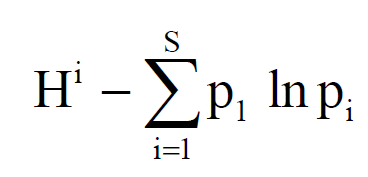
The Shannon Biodiversity Index (Hˈ) and Evenness (E) were calculated to determine the diversity of scleractinian corals at thestudy area. According to Sarma and Das [17], the H index also known as information statistics indices is commonly used to characterize species diversity in a community. This was calculated using the Shannon-Wiener Index (Hi), as per Zar [18], as illustrated below:
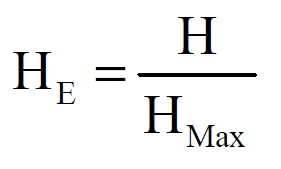
Where, H is the Shannon-Wiener diversity index. Pi is the relative proportion (n/N) of the individual of one particular species found. It entailed dividing (n) number of an individual species by the total number of all species individual numbers (N) found in a particular environment. LNPi was natural logarithm (LN) of the value Pi. Lastly, the symbol implied (Ʃ) summation of the outputs with the final value multiplied by negative one (–1). Another variable, the Evenness (HE) of respective ecosystems was determined, as per Zar [18], as equation below:
Where, E was the determined evenness whereas H was the Shannon-Wiener diversity index and HMax was the natural logarithm of the number of specific categories/types of species in the sampled ecosystem (LN(n)). The interpretation Shannon-Weiner index is if H has a bigger number, it is more diverse and if E close to 1, the species arewell distributed.
The Relative Abundance (RA) Analysis was Calculated Based on Rilov & Benahayu [19] Formula as Showed below:
RA = (Pi / P total) × 100
Where Pi is pooled living coverage of the ith species from all transects at a given site; P total is pooled total living coverage of all species in all transects at a given site. The values used for abundance categories (%) are represented with ‘*’ as follows: not recorded (RA=0) as ‘-‘, rare (0<RA<0.1) as ‘*’, uncommon (0.1<RA<1) as ‘**’, common (1<RA<10) as ‘***’, abundant (10<RA<20) as ‘****’, and dominant (RA>20) as ‘*****’.
RESULTS
Benthic community categorised into 10 classes i.e. scleractinian coral, soft (non-scleractinian) coral, recently killed coral, nutrient indicator algae, sponges, rock, rubble, sand, silt and others (i.e.: sea anemone). ST1 belonged in the “Good” category with Live Coral Cover (LCC) of 69%. Other substrates that were observed at this site were abiotic components i.e. rock (28%) and rubbles (2%). ST2 has the second highest LCC (49%) and fitted into the “Fair” category. This site also covered by rock (31%) and sand (13%). The lowest LCC was at ST3 with 40% LCC, 35% rock and 16% sand. Soft coral, recently killed coral and sponges were not recorded at any sites. Overall, the mean LCC for PSB was 52.6%. and categorised as “Good”.
A total of 30 genera of scleractinian corals belongs to 11 family and 2 scleractinian incertae sedis were discovered at Pulau Seri Buat (Table 2). The most common genera were Acropora and Porites which were found in abundant at every station. Pachyseris, Trachyphyllia and Leptastrea were the least common genera which can only be found at ST2, ST1 and ST2 respectively.
In total, 387 numbers of coral colony were observed throughout the survey (Table 3). Highest number of colonies was observed at ST1 with 24 genera. However, the differences in genus composition between the sites were minor.The Shannon Biodiversity Index (Hˈ) for ST1, ST2 and ST3 was 1.42, 1.35 and 0.97, respectively, while Evenness Index (EH) was 0.45 at ST1, 0.43 (ST2) and 0.31 (ST3). This result showed that ST1 had the highest coral diversity and the highest evenness index, while ST3 has the lowest indices values among the three sites.
Table 2: Coral genera and their Relative Abundance (RA)
Table 3: Number of genera, colony and diversity indices for each site in PSB.
Sites
No. of Genus
No. of Colony
Shannon Diversity Index (Hˈ)
Evenness Index (EH)
ST1
24
154
1.42
0.45
ST2
23
145
1.35
0.43
ST3
23
88
0.97
0.31
DISCUSSION
Few information can be derived to compare and determine the conditions of coral reefs in this island. In this study, a total of 30 genera from 11 families and 2 scleractinian incerta sedis were identified. The number of genera recorded was lower than the previous study by Harborne l [11], where they recorded 40 genera in PSB. They also recorded Oxypora crassispinosa, that can be only found in The Philippines, which was no longer observed in this present study.
Coral communities were typically dominated by Acopora and Porites,which can be found at all sites. Harborne et al [11] also recorded 21.3 % of Acropora in PSB compared to non-Acropora corals (26.9%). Dominancy of Acropora was also reported in other nearby islands. Recent study by Ismail and Khoo [20] at Pulau Mertang, Johor, about 4 km to the southwest of PSB, recorded 25 different genera from 12 families of scleractinian corals, with Acropora and Montipora were thedominant corals. Latest coral diversity study on its sister island of Pulau Tioman by Akmal et al., [15] reported 67 genera of scleractinian corals with three dominant corals of Acropora, Montipora and Porites. The differences in number of genera between PSB and Pulau Tioman disclosed a higher coral diversity in Pulau Tioman. All genera found at PSB have been reported by Akmal et al., [15] in Pulau Tioman, except for genus Seriatopora, which can be commonly found at ST3.
Biodiversity index, range from 0.97 to 1.42, indicated that this study area had a variety of scleractinian corals. ST1 was recorded the highest index followed by ST2 and ST3. ST1 also showed the highest number of genera and colonies. Paulay [21] stated that diversity is a total number of the taxa and species as well as the coverage of the taxa.
Overall, coral health for PSB was in good condition with mean LCC of 52.6%. The LCC was slightly lower than Pulau Tioman (59.48% in 2016), but it was higher than the average LCC for Malaysia (43.71% in 2016) [22]. The present live coral cover showed increment while recently dead coral decreased compared the previous study by Harborne et al., [11] (48.2% LCC and 1.9% of recently dead coral). However, Harborne et al., [11] only managed to conduct a survey at one site that appeared to be subjected to a high sediment load. The island is uninhabited and relatively close to the mainland and this can have an effect on growth of the corals. Ecosystems around the world will be affected by human activities near and off the coast [23,24]. The live coral cover will increase if the impact of environmental stress is reduced.
CONCLUSION
This study shows that the community structure of coral reef in PSB was diverse and in good condition.Even though it was located quite isolated from Marine Park Centre of Pulau Tioman, the coral community was not much differed from the Pulau Tioman itself. This coral assessment could provide the authorities some insight of the community of coral reefs in the island. Further studies need to be conducted especially on associate’s marine lives such as fishes and invertebrates in order to get bigger and clearer pictures of coral reef ecosystems of PSB.
Acknowledgment
The authors wish to thanks to the Division of Marine Park and Resource Management (previously known as Department of Marine Park Malaysia) Department of Fisheries Malaysia for the funding of this study. The assistance of Marine Park Pahang and Marine Park Johor staffs is greatly acknowledged.
REFERENCE
Burke, L. et al.Reefs at Risk Revisited. World Resources Institute, 2012, p. 86.
Wild, C. et al. “Climate Change Impedes Scleractinian Corals as Primary Reef Ecosystem Engineers.” Marine and Freshwater Research, vol. 62, 2011, pp. 205–215.
Coker, D.J. et al. “Importance of Live Coral Habitat for Reef Fishes.” Reviews in Fish Biology and Fisheries, vol. 24, no. 1, 2013, pp. 89–126.
Foale, S. et al. “Food Security and the Coral Triangle Initiative.” Marine Policy, vol. 38, 2013, pp. 174–183.
Villanoy, C. et al. “Coral Reef Ecosystems Protect Shore from High-Energy Waves under Climate Change Scenarios.” Climatic Change, vol. 112, 2012, pp. 493–505.
Waheed, Z. Patterns of Coral Species Richness and Reef Connectivity in Malaysia. PhD thesis, Leiden University, 2016.
Veron, J. et al. “Overview of Distribution Patterns of Zooxanthellate Scleractinia.” Frontiers in Marine Science, vol. 1, 2015, p. 81.
Cros, A. et al. “Spatial Data Quality Control for the Coral Triangle Atlas.” Coastal Management, vol. 42, no. 2, 2014, pp. 128–142.
Huang, D. et al. “Conservation of Reef Corals in the South China Sea Based on Species and Evolutionary Diversity.” Biodiversity and Conservation, vol. 25, no. 2, 2016, pp. 331–344.
Affendi, Y.A., and F.R. Rosman. “Current Knowledge on Sclerectinian Coral Diversity of Peninsular Malaysia.” Malaysia’s Marine Biodiversity: Inventory and Current Status, edited by I. Kamarruddin et al., Department of Marine Park Malaysia, 2012, pp. 21–31.
Harborne, A. et al.Status Report on the Coral Reefs of the East Coast of Peninsular Malaysia. Department of Fisheries Malaysia, 2000.
Hyde, J. et al. “Five Years of Reef Check Monitoring Data for Tioman, Perhentian and Redang Island.” Malaysian Journal of Science, vol. 32, 2013, pp. 117–126, https://doi.org/10.22452/mjs.vol32no3.11.
Kamarumtham, K. et al. “Diversity and Distribution of Coral Lifeforms in Tioman Island.” Transactions on Science and Technology, vol. 3, no. 2–2, 2016, pp. 367–373.
Shahbudin, S. et al. “Current Status of Coral Reefs in Tioman Island, Peninsular Malaysia.” Turkish Journal of Zoology, vol. 41, 2017, pp. 294–305.
Akmal, K.F. et al. “Diversity and Abundance of Scleractinian Corals in the East Coast of Peninsular Malaysia: A Case Study of Redang and Tioman Islands.” Ocean Science Journal, 2019.
Chou, L.M. et al. “Status of Coral Reefs in the ASEAN Region.” Proceedings of the Third ASEAN–Australia Symposium on Living Coastal Resources, edited by S. Sudara et al. vol. 1, 1994, pp. 1–10.
Sarma, D., and D. Das. “Application of Shannon’s Index to Study Diversity with Reference to Census Data of Assam.” Asian Journal of Management Research, vol. 5, no. 4, 2015, pp. 635–643.
Rilov, G., and Y. Benayahu. “Vertical Artificial Structures as an Alternative Habitat for Coral Reef Fishes in Disturbed Environments.” Marine Environmental Research, vol. 45, 1998, pp. 431–451.
Ismail, M.S., and M.L. Khoo. “Community Structure of Coral Reefs in Pulau Mertang, Johor, Malaysia.” Sains Malaysiana, vol. 48, no. 11, 2019, pp. 2335–2342.
Paulay, G. “Diversity and Distribution of Reef Organisms.” Life and Death of Coral Reefs, edited by C. Birkeland, Chapman and Hall, 1997, pp. 298–345.
Reef Check Malaysia. Status of Coral Reefs in Malaysia, 2016. Reef Check Malaysia, 2017.
Martínez, M.L. et al. “The Coasts of Our World: Ecological, Economic and Social Importance.” Ecological Economics, vol. 63, nos. 2–3, 2007, pp. 254–272.
Halpern, B.S. et al. “A Global Map of Human Impact on Marine Ecosystems.” Science, vol. 319, no. 5865, 2008, pp. 948–952.
None
None
None
None
Recommended Articles
Research Article
Strategy of Cocoa Commodity Based Agrowisata Development in Jembrana Regency
I Gusti Ayu Widari Upadani,
...
Luh Putu Kirana Pratiwi
Published: 30/01/2021
Download PDF
Research Article
Survey on the pollutants effect of some physicals and chemicals characteristics of the White Nile River around Khartoum state in the Sudan
Zeinb E. Elamean,
...
Egbal Osman Ahmed
Published: 20/01/2021
Download PDF
Research Article
Effecting of Hormonal Gonads (Test, Lh, Pro) and Dopamine on Transitional Nuclear Protein /1 Gene Frequency in an Infertile-Men
Taleb K. Odah
Published: 18/09/2023
Download PDF
Research Article
The study on priciple of herd health maagement assesment of Jimma University college of Agriculture And Veterinary Medicine dairy farm
Samson tesfaye,
...
Feyera Gemeda
Published: 01/04/2023
Download PDF
PO Box 101, Nakuru
Kenya.
Email: office@iarconsortium.org
Editorial Office:
J.L Bhavan, Near Radison Blu Hotel,
Jalukbari, Guwahati-India
Ismail, N., Ilias, Z. & Ismail, M. S. (2021). Coral Reef Community Structure of Pulau Seri Buat, Pahang, Malaysia. IAR Journal of Agriculture Research and Life Sciences, 2(1), 1-4.
MLA
Ismail, Nizam, Zaidnuddin Ilias and Mohamad S. Ismail. "Coral Reef Community Structure of Pulau Seri Buat, Pahang, Malaysia." IAR Journal of Agriculture Research and Life Sciences 2.1 (2021): 1-4.
Chicago
Ismail, Nizam, Zaidnuddin Ilias and Mohamad S. Ismail. "Coral Reef Community Structure of Pulau Seri Buat, Pahang, Malaysia." IAR Journal of Agriculture Research and Life Sciences 2, no. 1 (2021): 1-4.
Harvard
Ismail, N., Ilias, Z. and Ismail, M. S. (2021) 'Coral Reef Community Structure of Pulau Seri Buat, Pahang, Malaysia' IAR Journal of Agriculture Research and Life Sciences 2(1), pp. 1-4.
Vancouver
Ismail N, Ilias Z, Ismail MS. Coral Reef Community Structure of Pulau Seri Buat, Pahang, Malaysia. IAR Journal of Agriculture Research and Life Sciences. 2021 Jan;2(1):1-4.


 Download PDF
 Download XML