Capacity of Communities in Addressing Social Determinants of Health towards Care and Support of Vulnerable Children: Case of Suba –Sub County Nyanza Kenya
Juliana Achieng Misore
1
,
Alloys Orago
2
,
Wilson Otengah
3
1
School of Nursing, Uzima University, Kisumu Kenya
2
School of Public Health and Applied Science, Kenyatta University, Nairobi, Kenya
3
Department of Humanities and Social Sciences, Rongo University, Migori, Kenya
Background: Community capacity is required in support of vulnerable children to access, appropriate shelter, food, education, generate income and access to health care, safe clean water and environment, known as social determinants of health. This is facilitated by the social economic situations, policies and structure to influence the abilities of communities. Sub community are unable to address the social determinants of health increasing vulnerability amongst children. This study determines the existing capacity of community in addressing the social determinants of health. Materials and Methods: Descriptive cross sectional survey design applied using qualitative & quantitative approaches. Structured questionnaire administered for quantitative data, focus group discussion, Key Informant Interviews for qualitative. Descriptive statistics applied to analyze quantitative data. Chi–square applied to test relation between social determinants and morbidities, qualitative data thematically analyzed and used to complement quantitative data. Results: Majority of caregivers are poor (58%). Chi-square test confirmed significant relationship (p<0.005). Morbidities due to malaria and sanitation statistically significant, X2 (1, N = 1445) = 1400, p <0.001, diarrhea clean and safe water significant, X2 (1, N = 1445) = 1400, p <0.001. morbidities due to acute respiratory infections and type of housing water significant, X2 (2, N = 1445) = 166.73, p<0.001. Conclusion: Communities are unable to address social determinants of health increasing vulnerability, implementing policies linking households, with communities and relevant sectors while addressing their capacities towards social determinants of health is essential.
Keywords
Community Initiatives
Capacity
Social Determinants of Health
Vulnerable Children
INTRODUCTION
Community actions are essential in care and support of vulnerable children in terms of access to food shelter, safe clean water and environment income generation and health known as social determinants of health [1]. Policy provision and structures are required to facilitate the integration of these elements and enhance community efforts. Community health nursing model have been applied, resulting in developing the abilities of individuals in caring for vulnerable children [2,3]. This model combines all the basic elements of professional, clinical nursing with public health and community practice. The strength of this model it collaborates and coordinates the social determinates through the health system. It emphasizes on the role of household, family and community involvement in health and development.
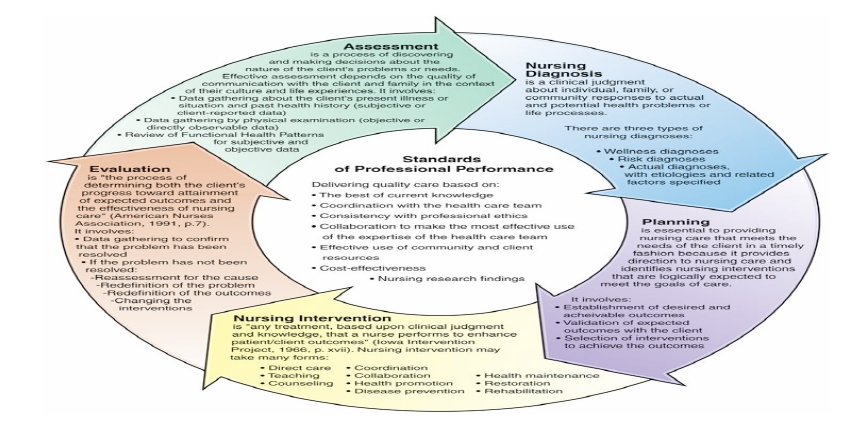
In Kenya, community health nursing has been in existence polices have been developed to increase commitment of community health [4]. Currently Community health nursing is integrated in the nursing curriculum, to enhance the application of community health nursing model see Figure 1 [5].
The deployment of nurses is mainly at the acute care setting making it difficult to assess, gather both subjective and objective data at the household and community, no diagnosis is made by community health nurses as required. Therefore, the data mainly available is on illness and treatment for those who seek services at health facility when ill and children attending to the child welfare clinic.
Figure 1: Community Health
Source: Adopted from American Nurses Association [3]
This strategy weakens the concept of effective use of community and client resources by assessing, diagnosing their capabilities at household level. To unable teaching, counseling, collaboration and co-ordinations appropriately.
Objective of the Study
To determine the existing capacity of community in addressing the issues of social determinants of health amongst vulnerable children.
MATERIALS AND METHODS
Descriptive cross sectional survey design was used to determine the capacity of communities in addressing social determinants of health. Qualitative and quantitative methods of research was applied; the research was carried out at two levels first step involved quantitative research through household survey.
Sampling Techniques and Sample Size Determination
Multistage sampling was carried out, Suba sub County has five divisions Central, Gwassi, Lambwe, Mbita and Mfangano. Stage one, out of the five, three divisions were selected using simple random sampling slips of papers having names of the divisons was placed in a cup and Mbita, Central and Gwassi was picked. Stage two in each division all the locations were written in slips of papers and placed in cup and picked in turns. In each division three locations were randomly selected, making a total of nine locations as shown in Table 1.
Table 1: Sampling Techniques and Sample Size Determination
Division
Location
Village
No of Households
Households With vulnerable children
Mbita
Gembe Central
Sinago
Sindo
42
49
34
37
Gembe East
Nyamrisia
Kakone B
51
62
41
55
Rusinga West
Wayando
71
66
Central
Kaksingri West
Mwirendia
Kisaku
64
73
57
62
Kaksingri East
Masawa
69
49
Kaksingri Central
Kalgone
62
54
Gwassi
Gwasii West
Andego
Nyadhi
43
67
36
55
Gwasii East
Apano
Miria
45
47
31
34
Gwasii central
Kibwer
49
36
3
9
14
794
647
Stage Three
Some location has three villages while others have 4 making a total of 28 villages that formed sampling frame.
Stage Four
For those with three villages one was randomly selected, while for those that had four 2 Villages were randomly selected using slips of papers having the names of the villages. These were placed in a cup and picked a total of fourteen villages chosen. The villages formed the cluster under study and gave a 50% representation.
Stage Five
Involved complete census of all 794 households in the 14 clusters. The final list of all households was serialized, accessed and surveyed, with each household within the clusters with equal probability of selection. Individual interviews with household heads was carried out Because of the nature of the study, random or stratified sampling could not be used. The population to be studied is hard-to-reach and/or hidden. Most Vulnerable children are due to HIV and AIDS. Either they are suffering from the disease, have been orphaned by the disease or the head of household is HIV positive. Such populations can be hard-to-reach and/or hidden because they exhibit some kind of social stigma, illicit or illegal behavior according to culture, or other trait that makes them atypical and/or socially marginalized.
Step one
With the help of field guides individual households were interviewed using a health information check list to establish if they had vulnerable children and determine the HIV status of the household head or children under their care, weight of the under-fives was also established in these households.
Step Two
Due to sensitivity of the study, the researcher asked the household heads if they would agree to take part in the study. The process continued until sufficient households were identified to meet the desired sample size.
Sample Size Determination
According to Homabay County strategic plan 2017-2030 there are 20,000 Vulnerable children. [5] sample size formula was used to calculate the minimum sample size for this study since the target population was estimated to be greater than 10,000. Fisher and colleagues’ sample size formula is as stated below:
Where,
n: Desired sample size where the population is >10,000
Z: Standard normal deviate, set at 1.96 which corresponds to 95% confidence level
p: Proportion in the target population estimated to have particular characteristic’s desired, usually estimated at 0.5
q: 1-p (Proportion in the target population not having the particular characteristic’s desired)
d: Degree of accuracy required, usually set at 0.05 level
In this study, proportion of target population with desired characteristics was set at 0.5 deviation standard, proportion of target population not having desired characteristics were also set at 0.5, Z is 1.96 and desired accuracy level set at 0.05 therefore in the sample size was calculated as:
Therefore, n = 384
However, the purposively sampled target population from household survey was determined as 673. Since this was below 10,000, the required sample size had to be smaller than the calculated 384. Therefore, a final sample estimate (nf) was calculated using the Fisher et al. formula:
nf = n
1+ (n/N)
Where,
nf: The desired sample size (where target population is below 10,000)
n: The desired sample size (when the population is more than 10,000)
Therefore:
nf = 384 = 384
1+ (384/673) 1+0.312195
Therefore, nf = 293
Guided by the calculated sample size 293 and attrition rate of 10% (n = 29), a total of 673 caregivers were expected to participate in the study. Ultimately, 647 respondents participated in the study, making the response rate to be 96%.
Sample Size Determination
Because of the nature of the study, random or stratified sampling could not be used as this would have needed longer time and resources to obtain the targeted sample size. Complete census of households was carried out in 14 villages and the 673 households identified using health Information checklist survey tool to identify household with vulnerable children and expected to participate in the study. Ultimately, 647 respondents participated in the study. The caregivers of vulnerable children were the main respondents in this study. According to records from the children’s department, administration, Ministry of Health there are no records on the type and number of vulnerable children. Purposive sampling was used to identify the caregivers of vulnerable children within households, 673 households identified as having vulnerable children and expected to participate in the study. Ultimately, 647 caregivers were the main respondents and participated in the study, making the response rate to 96% (Table 2).
Table 2: Sample Size Determination
Total no of groups
Suggested number in sample
Percentage
100 and below
15
15
200
20
10
500
50
10
1000
50
5
Source: Feuerstein, 1986, adopted from FAO, 1982
For qualitative data purposive sampling method was used to select convenient sample of 26 group, that accounted for 22% representation above the required 15% representation according to [6]. To determine the number of Community Based Organizations, Faith Based Organizations, women group and youth groups to be sampled where the members would be derived, a sampling formula for social groups was used as shown in Table 3.
Table 3: Characteristics and No. of Focus Groups Interviewed
Group
No. of groups
No. of Sampled
%
Community health workers
28
4
15
Women group
28
4
15
Children support groups
2
2
100
Support group of PLHIV
8
8
100
Youth Groups
12
2
15
Teachers
40
6
15
Total
118
26
22
Key informant interviews are qualitative in-depth interviews with people who know what is going on in the community. The purpose of key informant interviews is to collect information from a wide range of people including community leaders, professionals and residents who have first-hand knowledge about the community. Purposive sampling method was used to select a convenient sample of 15 key informants, who were interviewed and included the Table 4.
Table 4: Characteristics of Key Informants Interviewed
1
Chiefs
3
2
Education officer
1
3
District Public Health Nurse
1
4
Medical Officer of Health
1
5
Children’s Officer
1
6
Agriculture officer
1
7
Non-Governmental Organizations
4
8
Clan elders
3
Total
15
RESULTS
Capacity of the Community
Process of communities in addressing social determinants of health comprised of the Following; type housing; water source and storage; type of latrine; immunization against immunisable diseases amongst 0-1 years; weight for age amongst 0-5 years; schooling situation amongst vulnerable children and income of caregivers. In order to determine the capacity of communities in addressing the social determinants of health. Observation checklist was used to determine the latrine, type of houses, water sources and storage. Descriptive statistics were used to analyze quantitative data using tables whereas qualitative data were thematically analyzed and used to complement quantitative data. Although there was fair knowledge on the social determinants of health by 647 caregivers 68% cited health, 66 % education, 70% clean safe water, 71% clean and safe environment, 55% appropriate shelter. On the other hand, 46 % of caregivers did not know the care and support services offered by various government ministries towards vulnerable children (Table 5).
Table 5: Knowledge on Government Ministries Offering Care and Support Services to Vulnerable Children
Knows any government ministry offering care and support
Freq.
%
Yes
344
53.17
No
303
46.83
Total
647
100.00
This study further discovered that 58% (n = 376) of caregivers earned less than a dollar per day.
Revealed new knowledge by the experiences of age 15-19 years who earned more than a dollar against the elderly above 60 41% (n = 271) earned less than a dollar (Table 6).
Table 6: Age of Caregivers and Income Per Day
Age
<$
>$
Total
15-19
5(100.0)
0
5
20-24
15(57.69)
11(42.31)
26
25-29
46(88.46)
6(11.54)
52
30-34
24(36.36)
42 (63.64)
66
35-39
45(46.87)
51(53.13)
96
40-44
48(57.83)
35(42.17)
83
45-49
41(53.94)
35(46.06)
76
50-54
45(69.23)
20 (30.77)
65
55-59
47(73.43)
17(26.57)
64
60 +
60(52.63)
54(47.37)
114
Total
376 (58.11)
271(41.89)
647
The study observed through Key informant that those aged 15-19 years were mainly supported by women groups and when they worked for people, tend to pay them highly especially their relative. On the other hand, this study established that low income and difficult work lead to psychological distress amongst the elderly as illustrated below.
“If I remember how my children use to send me money for cultivation and weeding I stop digging and go to sleep in my house”.
Female Elderly Caregiver, Suba Sub County
The Study established that 65% (n = 424) of study population lived in temporary houses with poor lighting and ventilation (Table 7). 99% (n = 641) Used unprotected/non treated water, poor latrine coverage 98% (n = 634) had no latrines (Table 8,9) with 46% (n = 298) having less than 3 meals per day (Table 10).
Permanent (Bricks or, concrete, cement mixed wall, iron sheet or tiled roofs, adequate ventilation)
5 (0.78 %)
Total
647 (100%)
Table 8: Water Source and Safety
Water source
Treated /Protected
Not treated /non Protected
Total
Lake
-
135 (20.86)
135
River/Stream
2 (0.57)
347 (53.63)
349
Roof catchment
-
15 (2.31)
15
Well/Bore-hole
4 (2.70)
144 (22.25)
148
Total
6 (1.00%)
641 (99.00%)
647
Table 9: Latrine
Latrine
%
Total
Water closet
0
0
Permanent structure
2 (0.309%)
2
Temporary structure
15 (2.3%)
15
Open air
630 (97%)
630
Total
647 (99.6%)
647
Table 10: Association Between Land Size, Maize Harvested, Household Size and No. of Meals Per Day
Land Under cultivation
n = 647
>2
<2
401 (62 %)
246 (38 %)
Bags of Maize
>6
<6
501 (77%)
146 (23%)
No of meals per day
>3
<3
349 (54%)
298 (46%)
Household size
>6
<6
560 (86%)
87 (14%)
“Poor food security, low income has affected the capacity of communities in addressing the needs of vulnerable children this has forced care givers to introduce these children to labour, other especially girls have taken on to prostitution as boys look for older women who can take care of them”.
Clan Elder, Suba Sub County
These groups offer services on their own volition they are not donor funded. Women groups have established grain stores to support vulnerable children especially child headed households. The Support groups of PLHIV offer counseling services and ensure adherence to care and treatment to the affected households (Table 11).
Table 11: Services Rendered to Vulnerable Children and Their Caregivers by Community Groups
Parameters
Health
Food
Emotional Support
Information
Clothing
Shelter
Women Group (n = 4)
-
2
-
-
1
1
Support group of PLHIV (n = 4)
-
2
4
4
-
-
Community Health Workers (n = 4)
4
1
4
4
-
-
Youth Groups (n = 4)
-
-
-
4
-
-
Support Group of Children (n = 4)
-
-
4
-
-
-
Poor immunization coverage against immunizable diseases is evident especially in children under the care of those 60 years and above this could be associated with poor income and lack of information on child care (Table 12).
Table 12: Age of Care Giver and Number of VC 0-5 Years Immunized Against BCG: N = 1445: Specific Objective (d)
Age
BCG given
No BCG
Total
15-19
1 (14.28)
6 (85.72)
7
20-24
93 (39.91)
140 (60.09)
233
25-29
58 (55.23)
47 (44.77)
105
30-34
55 (41.67)
77 (58.33)
132
35-39
67 (61.90)
43 (39.09)
110
40-44
86 (62.31)
52 (37.69)
138
45-49
60 (40.81)
87 (59.19)
147
50-54
48 (38.09)
78 (61.91)
126
55-59
85 (35.86)
152 (64.14)
237
60 +
59 (27.81)
151 (72.19)
210
Total
575 (39.79)
870 (60.21)
1445
About 25.68 % have left school majority at 10 years in class 2 (5.33 %) and another 3.23 % left before completing class 8. Focus group discussion revealed that vulnerable children start schooling two years later age 9 than what is expected by Ministry of education age 7. Most caregivers have a feeling that at 7 years the children are too young and delicate to go to school. This is a result that majority had stuanted growth and appeared younger than their age, they also feel sick more often (Table 13).
Table 13: Summary Characteristics of Vulnerable Children and Situation of Schooling and School Drop Out
Age of VC years
Frequency
Education level
On
Left
F
M
9
180
Class 1
162
18
13
5
10
167
Class 2
134
33
19
14
11
83
Class 3
74
9
9
-
12
29
Class 4
16
13
9
4
13
22
Class 5
11
11
8
3
14
18
Class 6
9
9
7
2
15
17
Class 7
9
8
6
2
16
36
Class 8
10
26
18
8
17
37
Form 1
17
20
13
7
18
30
Form 2
18
12
7
5
619
460
159
109
50
The main reasons for school dropout 56% due to inability to afford school levies.
The most common causes of morbidities include acute respiratory infection 74.6 diarrhea 67.5% and malaria 54.2% (Table 14,15).
Table 14: Reasons for the Children Dropping Out of School
Reasons for children dropping out of school
Frequency
Percentage
Cum.
Early pregnancy/marriage
16
12.03
12
Health Reasons
19
14.29
26.3
Lack of school levies
75
56.39
82.7
Negative attitude towards school
10
7.52
90.2
Poor academic performance
2
1.5
91.7
Poverty at home
9
6.77
98.5
School policy
2
1.5
100
Total
133
100
Table 15: Association of Major VC Morbidities, Occurrences and Age of Caregiver (April 2015–April 2016) (N = 1445)
Age
HIV
ARI
Diarrhea
Malaria
Measles
15-19
2
3
3
4
1
20-24
13
200
109
95
50
25-29
15
85
93
89
34
30-34
9
76
82
72
27
35-39
11
84
66
63
34
40-44
13
69
67
82
18
45-49
10
65
114
87
18
50-54
25
108
130
74
50
55-59
32
165
138
97
67
60+
65
223
164
121
91
Total
195 (13.5)
1,078 (74.6)
976 (67.5)
784 (54.2)
390 (26.9)
“Poor food security, low income has affected the capacity of communities in addressing the basic needs of vulnerable children resulting to morbidities”.
Clan Elder, Suba Sub County
Total number of vulnerable children 2064 of which 1445 (70%) aged 0-5 years’ weight for age was used to determine their nutritional status. Majority 826 (57%) had wasting indicating chronic malnutrition, this category of children also presented with underweight and stuanting growth (Table 16,17).
Table 16: Percentage of Underweight, Stunting and Wasting in Study Population Amongst VC 0-5 Years
Percentile
Underweight 412 (28.512 )
Stunting 691 (47.820 )
Wasting 826 ( 57.162 )
M
F
Total
M
F
Total
M
F
Total
>97
71 (32.42)
24 (12.44)
95 (1.31)
102 (32.69)
123 (32.45)
225 (32.57)
57 (6.90)
78 (9.44)
135 (16.34)
3-97
83 (37.90)
98 (50.78)
181 (44.77)
78 (25.00)
107 (28.23)
185 (26.77)
105 (12.71)
86 (10.41)
191 (23.12)
< 3
65 (29.68)
71 (36.78)
136 (33.00)
132 (42.31)
149 (39.31)
281 (40.66)
289 (34.98)
211 (25.54)
500 (60.54)
Total
219 (53.16)
193 (46.84)
412
312 (53.56)
379 (46.44)
691
451 (54.60)
375 (45.40)
826
Table 17: Summary of Community Problems Towards Addressing Social Determinants of Health
Thematic areas
FGD PLHI (1)
FGD Community Health Workers (2)
FGD Other Community members (3)
FGD Children Support group
Declining of the volunteerism spirits
Expectation of returns after performing voluntary work
Mistrust between the community and its leaders.
Exclusion of majority of poor and marginalised people in the development process.
Lack of accountability and transparency among community leaders
Discrimination: some NGO take only one child per household to pay school levys and meet other requirements ,needs are generalized not based on individual child
Inadequate involvement of the community members in the development process
Absence of concept of participation of community members
Most community leaders are corrupt
Community leaders are used to top- down approach
Households not involved in identification of children’s needs
Poor environment for child growth
Some people are sick (HIV/AIDS)
Witchcraft beliefs among community members
No time to look after children Globalization and new technologies such as TV with unsuitable programs for our culture
Inadequate security .Children are left to sleep in the kitchen alone , incidents of rape and pregnancy have occured
Insecurity for community members and their assets
Poverty makes some people find ways to sustain their lives
Unemployment
Increasing cases of drug uses and criminal cases.
Community leaders are not performing their roles and disregard responsibilities
Due to this girl are encourage to go and look for fishermen by caregivers. To get money to buy items such as pads, body lotion and other basic needs
Table 17: Continue
Lack of effective strategies to combat poverty
Lack of capital
Inadequate
Bureaucratic credit services from financial institutions
Inadequate employment opportunities. space for businesses and lack of business skills
Caregivers do not have reasonable occupations that generate adequate income for households
Inadequate provision of basic human needs (Heath)
Shortage of health personnel
High costs for health services
High prevalence of diseases such as Malaria
Delay in being taken to hospital when sick. Take only meal per day leads to absentism from school
Economic situation
Lack of capital to start income generating activities
No support from the government
The poor engage in petty businesses
The government and financial Institutions concentrate on big business people
Caregivers do not have money for transport and to buy medicine and other basic needs
Climate change
High price of kerosene
Lack of agricultural skills
Myths and misconceptions on fertilizers
Lack of maize , millet and vegetables
Inadequate business/agriculture and livestock education
Lack of proper knowledge about economic activities
Extension workers do not provide enough support
Failure of government to support extension workers with necessary facilities
Maize always do well
Lack of Marketing skills
No priority to caregivers of VC
No strategy to promote marketing skills
Marketing skills being ignored
No customers to buy food items we take to the market
High price of fish
Government not protecting promoting local fishermen from middle men
Reliance on local fishing technology , which is too manual
Lack of local industry to process fish
We hardly eat fish unless during functions such as funerals , weddings
Inadequate space/business/agriculture activities
Poor planning
Community not benefitting from research outcomes from ICIPE to improve on crop production
Lack of supportive environment. Lack of patriotic strategies for the people
Lack of variety in produce for the market
Source: Study findings FGD
DISCUSSION
The purpose of the study was to determine the existing capacity of communities in addressing issues of social determinants of health amongst vulnerable children and their caregivers. Social determinants efforts use the knowledge of those most affected as well as the others in the Community according to [6]. In this study The abilities of communities are compromised by poverty there are unable to address the social determinants of health, resulting to poor health outcomes amongst the vulnerable children. From the study focus group discussion, it was reported that there is declining of the volunteerism spirits, majority of the community are poor the approach of top down approach by government make it impossible for sectors to enhance the abilities of communities and communities to communicate with government.
Chi-square test statistically confirmed significance between cases of morbidities due to the following social determinants of health. poor sanitation and malaria X2 (1, N = 1445) = 1400, p<0.001, similarly the relationship on unsafe water and incidences of diarrheal diseases amongst the vulnerable children was also statistically stands at X2 (1, N = 1445) = 1400, p<0.001. And relationship between cases of morbidities due to acute repiratory infection and type of housing statistically confirmed significant relationship X2 (2, N = 1445) = 166.73, p<0.001. Community involvement was reported as inadequate by 58% of respondents another 42 % stated that communities are disregarded within sectors that provide services to children.
“There is no link with households and most sectors provided services based on what they think is best for the community”.
Key Informant Suba –Sub County
Several studies established that to eliminate health inequalities capacity building amongst individuals, organizations and communities is critical [7]. Furthermore, there is need to build the capacity of rural communities to reduce unnecessary morbidities and mortalities. In this study the application of biomedical model is not adequate to establish the needs of caregivers and vulnerable children at household level .Even though the study by [8-10] conducted in the Asia and western part of the world this study conducted in Africa, findings concur with the authors that application of community health nursing model would enable diagnosing and appropriate interventions applied at household level in terms of teaching, counseling, collaboration and coordination that would address the social determinants of health issues.
CONCLUSION
The households are struggling on their own the community health systems is not well established. The dominance of biomedical model has lead to poor engagement with communities to establish their capacities. Generally, there is insufficient knowledge and effort to facilitate the capabilities of communities. Inadequate involvement of communities in the addressing social determinants of health has resulted to poor understanding of the needs of communities and vulnerable children for capacity building towards addressing social determinants of health.
Recommendation
There is need to review the community health nursing curriculum, strengthen the systems and structures of community health nursing practice for capacity building at household level. Policy makers and health leaders need to assess the health care systems by identifying how to develop capacities at household level towards addressing Social Determinants of health.
Acknowledgment
The idea of this research was derived from a Phd of Community Health Thesis by one of the authors “Misore Juliana. 2020, under the supervision of Orago Alloys Professor in the school of Public Health and Applied Human Sciences of Kenyatta University Kenya and Otengah Wilson Associate Professor Open and Distance Learning Rongo University Kenya. Existing structure that support community initiatives towards addressing the social determinants of health of vulnerable children. Unpublished PhD Dissertation, School of Public Health and Applied Human Sciences of Kenyatta University Kenya”. We are grateful to the community groups, children and Government officials, Kenyatta University students who participated and assisted in data collections.
REFERENCES
Jackson, C. “Addressing health and health care disparities: The role of a diverse workforce and the social determinants of health.” Public Health Review, 2014, pp. 57–61.
Abraham, J.H. “Community-oriented primary care strategy: Approaches and practices.” Public Health Review, 1988, pp. 35–39.
World Health Organization. Enhancing the Role of Community Health Nursing for Universal Health Coverage. World Health Organization, 2017, https://apps.who.int/iris/handle/10665/255047. Accessed January 2020.
Ministry of Health Kenya. Health Sector Human Resource Strategy 2014–2018. Ministry of Health Kenya, 2014–2018.
Homabay County Government. Homabay County Strategic Plan 2013–2018. 2014.
Solar, Orielle and Alec Irwin. A Conceptual Framework for Action on the Social Determinants of Health. Social Determinants of Health Discussion Paper 2 (Policy and Practice), World Health Organization, 2010.
Moore, T. and M. McDonald. “Early childhood development and social determinants of health inequities: A review of evidence.” 2015.
Global Health Sector Strategy 2011–2015. 2011–2015.
World Health Organization. “Reducing mortality.”WHO Media Centre, December 2013, www.who.int/mediacentre/factsheets. Accessed December 2020.
Marmot, M. “Medical care, social determinants of health and health equity.” World Medical and Health Policy, vol. 10, 2018, pp. 195–197, https://doi.org/10.1002/wmh3.261.
Recommended Articles
Research Article
Anti-SRP positive myositis following a SARS-CoV-2 vaccination
Josef Finsterer
Published: 30/05/2022
Download PDF
Research Article
Isolation and Molecular Characterization of Bacterial Pathogens Associated with Circumcision-Related Infections in Pediatric Patients
Ghanim A. Abbas
Published: 30/06/2025
Download PDF
Research Article
Quality of the Nursing Care Provided to Patients Diagnosed with Cerebrovascular Accident (CVA)
Qassim Jawell Odah Abed,
Hussein Abdulmohsin Dabis
Published: 30/03/2024
Download PDF
Research Article
Factors affecting pre hospital treatment delay in acute myocardial infarction patients
R. Jyoti Velmurugan,
Deepa Chugh
Published: 30/05/2022
Download PDF
PO Box 101, Nakuru
Kenya.
Email: office@iarconsortium.org
Editorial Office:
J.L Bhavan, Near Radison Blu Hotel,
Jalukbari, Guwahati-India
Misore, J. A., Orago, A. & Otengah, W. (2021). Capacity of Communities in Addressing Social Determinants of Health towards Care and Support of Vulnerable Children: Case of Suba –Sub County Nyanza Kenya. International Academic Journal of Advanced Practices in Nursing, 2(1), 1-8.
MLA
Misore, Juliana A., Alloys Orago and Wilson Otengah. "Capacity of Communities in Addressing Social Determinants of Health towards Care and Support of Vulnerable Children: Case of Suba –Sub County Nyanza Kenya." International Academic Journal of Advanced Practices in Nursing 2.1 (2021): 1-8.
Chicago
Misore, Juliana A., Alloys Orago and Wilson Otengah. "Capacity of Communities in Addressing Social Determinants of Health towards Care and Support of Vulnerable Children: Case of Suba –Sub County Nyanza Kenya." International Academic Journal of Advanced Practices in Nursing 2, no. 1 (2021): 1-8.
Harvard
Misore, J. A., Orago, A. and Otengah, W. (2021) 'Capacity of Communities in Addressing Social Determinants of Health towards Care and Support of Vulnerable Children: Case of Suba –Sub County Nyanza Kenya' International Academic Journal of Advanced Practices in Nursing 2(1), pp. 1-8.
Vancouver
Misore JA, Orago A, Otengah W. Capacity of Communities in Addressing Social Determinants of Health towards Care and Support of Vulnerable Children: Case of Suba –Sub County Nyanza Kenya. International Academic Journal of Advanced Practices in Nursing. 2021 Jan;2(1):1-8.



 Download PDF
 Download XML