Bioactivities of phytochemicals compounds from Acacia dealbata
Carla Sousa
1
,
Carla Moutinho
1
,
Carla Matos
1
,
Ana F. Vinha
2
1
FP-I3ID-Institute of Investigation, Innovation and Development Fernando Pessoa, University Fernando Pessoa, Faculty of Health Sciences, Porto, Portugal.
2
laqv/Requimte-Department of Chemical Sciences, Faculty of Pharmacy, University of Porto, Porto, Portugal
Natural product extracts are frequently used in drug discovery to screen for possible bioactive compounds. Acacia species are aggressive invaders that damage ecosystem integrity over the globe. Acacia dealbata L. is considered as one of the most aggressive species in Portugal. These plants are found in all portuguese regions and have the potential to invade farms and autochthonous woods, establishing monocultures, affecting ecosystem structure, and negatively influencing the economy. Acacia dealbata, commonly known as silver wattle or mimosa, has been traditionally used for various purposes, including traditional medicine, due to its bioactive properties. Although Acacia dealbata is an endemic species, one of the most aggressive invasive plants, the different morphological parts that compose it are rich in bio compounds, and little or no cytotoxic, which gives them potential to be used in nutraceutical or pharmaceutical applications. Nowadays, it is crucial to exploited new and greener methods to maximise the use of A. dealbata parts (wood, bark, leaves, and flowers), avoiding waste generation, and controlling this invasive shrub. When finding ways to apply an invasive plant, its proliferation and invasiveness are reduced. The different parts of A. dealbata present an interesting profile of bioactive compounds, namely flavonoids, terpenes, tannins, between others, allowing to affirm that, in a concept of ecological sustainability, this plant could have important applications.
Keywords
Acacia Dealbata
Invasive Plant
Botanical Characterization
Phytochemical Compounds
Biological Properties
Pharmaceutical Applications
INTRODUCTION
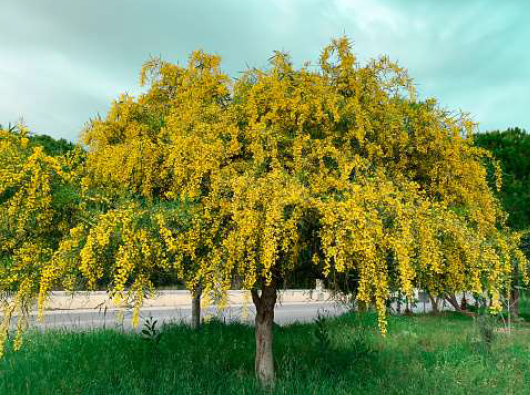
Acacia dealbata, also known by silver wattle or mimosa, is a small to medium-sized tree, native to southeastern Australia, with evergreen bipinnate gray-green leaves and yellow flowering in a cluster (Figure 1). It has been traditionally used for its timber, and for ornamental and medicinal purposes. The different parts of A. dealbata plants, especially the bark, were used in traditional medicine to treat various diseases [1], as bronchial infection [2], cold and cough, heal hounds and fungal infections [3], what is explained by the high concentration of secondary metabolites existing in this species.
Figure 1: The Mimosa Tree - Acacia Dealbata
Forest residues from Acacia dealbata Link, resulting from the invasive control strategy of this species, can be a renewable source of biomass [4]. In fact, the removal of this invasive species generates large amounts of waste, which are generally used for energy production. However, this plant is characterized by high levels of polysaccharides, which potentiates, after extracting the appropriate plant molecules, the production of various compounds by the chemical, food and pharmaceutical industries [5].
In recent years, natural products and their derivatives have shown their potential as therapeutic agents, with the finding that these correspond to approximately one third of the best-selling pharmaceutical products in the world. The pharmaceutical industry has explored the benefits of natural products, such as derivatives of plants or microorganisms, in the fight against several pathologies, namely microbial infection, cardiovascular diseases, diabetes, among others. Today's consumers, increasingly informed, have shown a preference for drugs of natural origin, which show good therapeutic efficacy, as well as lower side effects and lower price than synthetic products, that is reflected in an increase in the consumption of herbal medicines [6].
There has been an increasing interest in the bioactive properties of this plant in recent years, and on its potential benefits on treating diverse ailments. Phytochemical characterization of this plant involves the identification of various chemical compounds found in different parts of the plant (leaves, flowers, bark). The phytochemicals fond include polysaccharides, tannins, flavonoids and alkaloids. The different parts of the plant have been used in traditional medicine to treat various diseases, including respiratory infections, diarrhea and intestinal infections. This review paper aims to assess the role of Acacia dealbata in the field of medicine, describing its chemical composition and potential applications as antimicrobial, immunomodulatory, antioxidant, anticancer, antidiabetic and anti-inflammatory.
Morphology and Botanical Characterization
The genus Acacia is a member of family Mimosaceae. A. dealbata Link has an invasive behaviour in Southern Africa [7], Chile [8], and Southern Europe countries, namely Portugal, Spain, Italy and France [9], which implies the application of control measures in order to protect the invaded ecosystems. This tree has invaded protected sites such as coastal dunes, river courses, natural parks and biosphere reserves. The proliferation of an invasive species, such as Acacia Dealbata Link, results from its invasiveness, as well as the composition (biological, biochemical, climatic, ecological, geological, topographic, and land use properties) of the landscape [10]. A. dealbata has biological properties that give it the capacity to invasion, such as, ability to resprouting and seeding and to take benefits of disturbances, phenotypic plasticity, long fruiting period, vegetative reproduction, allelopathy, adaptation to burned areas, deforested and with few resources environments, and lack of enemies in invaded area [9,11].
In fact, this exotic species causes severe problems in economic, social and environmental fields as recurrent rural fires in Iberian Peninsula so this non-native tree is officially classified as invasive plant, being the measures adopted for their eradication/ control expensive [12].
In Portugal, A. dealbata is basically distributed across all provinces on the mainland and on the Madeira island (Figure 2.) (https://invasoras.pt/pt/planta-invasora/aca cia-dealbata).
Figure 2: Acacia Dealbata - Distribution Map in Portugal. Red/Black Squares Represent The Present, Spontaneous Distribution [13].
Phytochemical Characterization
Nowadays, thanks to increasingly developed analysis methods, and to the optimization of plant molecule extraction, it is possible to extract, identify and study the applicability of natural products, such as plants, fungi, algae and microorganisms. Phytochemical analysis of A. dealbata has revealed the presence of several bioactive compounds, including flavonoids, alkaloids, tannins and phenolic acids.
Since the composition of the different parts of Acacia dealbata (wood, bark, leaves and flowers) is different, its potential use is also diverse. For example, wood is essentially composed of cellulose and hemicelluloses, but also has important flavonoids, such as (-)-robinetinidol, (+)-catechin, (-)-epicatechin, (+)-gallocatechin and (-)-epigallocatechin [14]. Black dye can be obtained from bark, being the chalcones the main dye compounds, since these flavonoids have the chromophore -CO-CH = CH- group [15]. The chemical composition of aerial parts (wood, bark and leaves), determined by Luís et al. is glucose, xylose, acid insoluble lignin, acid soluble lignin and ash.
Oliveira et al. [16] determined, using gas chromatography-mass spectrometry (GC-MS), the chemical composition of lipophilic extracts from the bark, wood and leaves of A. dealbata. The results showed that the compounds existing in the extracts of the various plant tissues are terpenes, sterols, fatty acids, long-chain aliphatic alcohols, monoglycerides and aromatics. Terpene compounds predominate in bark and leaf extracts, while sterols dominate in wood. Within the scope of the same research, the cytotoxicity of the extracts was also studied, concluding that this is non-existent or very low. According to Özgenç et al. [17] the volatile organic compounds found in higher concentrations in tree barks grown in Turkey were sesquiterpene hydrocarbons (major constituents), aromadendrene, monoterpene hydrocarbons, oxygenated monoterpenes and aldehydes, with hexanal being the main. Rodrigues et al. [18] extracted triterpenoids of the lupane, ursane and oleanane families, from A. dealbata leaves, namely squalene, α-tocopherol, α-amirone, β-amirone, and lupenone. This is in agreement with Correia et al. [19], that detected from extracts of leaves and twigs mainly phytol and lupeol, beyond squalene, α-tocopherol, lupenone.
Abilleira et al. [20] extracted the tannins from the bark of Acacia dealbata, and have obtained a concentration of phenols and anthocyanin that depends on the extraction method, solvent and particle size. According to a study by Borges et al. [5], acetone was also the solvent that originated leaf extracts with the highest antioxidant potential, which may be related to its ability to dissolve hydrophilic and lipophilic compounds and thus extract phenolic compounds. Still according to the same authors, the antioxidant properties can be attributed to the presence of phenolic and flavonoids compounds.
The leaves and twigs of A. dealbata are rich in phenolic compounds, especially flavonoids and proanthocyanidins (also known as condensed tannins). Using 70% acetone as extraction solvent, Correia et al. [21] obtained a total phenolic content (TPC) between 345.8 and 478.4 mg gallic acid equivalent (GAE)/g leaf extract and 367.1 - 526.5 mg GAE/g twig extract. Likewise, the total flavonoid content (TFC) was higher in the twig extracts (153.0 - 198.4 mg catechin equivalents (CatE)/g extract) than in the leaf extracts (90.7 and 114.8 mg CatE/ g extract). The same trend was obtained regarding the content of total proanthocyanidins: 255.4 - 357.0 mg PycE/g leaf extract and 388.3 - 631.3 mg PycE/g twig extract. According to these results, it was found that the antioxidant activity of the twig extracts was higher than that of the leaf extracts, with phenolic compounds being the main responsible for the antioxidant properties. In fact, flavonoids and phenols are related with antioxidant activity towards free radicals, which is principally based on the redox properties of their phenolic hydroxyl groups, that allow them to act as reducing agents [22].
López-Hortas et al. [23] determined TPC and antioxidant capacity of the aqueous extract of flowers by two methods (hydrodiffusion and microwave gravity, at various irradiation powers, versus conventional distillation). The extracts obtained in the traditional way showed a higher phenolic content (about 0.20 mg GAE/g dry mass of the flower), as well as a higher content of antioxidant compounds (about 0.58 mg Trolox eq/g dry mass of the flower), but with a higher energy expenditure. In recent years there has been an attempt to replace conventional extraction methods, using organic solvents, with more ecological ones. According to Casa et al. [24], the crude ethanol extract of the flower has 27% of phenolics. A study carried out with flowers of A. dealbata from 2 Portuguese regions [25] showed that the highest values of TPC and TFC corresponded to hydroethanolic solutions and to the initial stage of flowering, that seems to be the most active, which may be related to the chalcone content. The existence of a double bond conjugated with the carbonyl functionality seems to be responsible for the biological properties of chalcones [15]. Consequently, the early flowering stage also demonstrated greater antioxidant activity. This finding is of great importance, as it allows the collection of flowers before the pollen disperses, which limits the propagation of this invasive species.
Yildiz et al. [26] compared the total phenolic and flavonoid contents of the bark, sapwood and heartwood of A. dealbata. The highest TPC was found in the bark, with a concentration about 160 times higher than in the sapwood, with the heartwood having an intermediate value. Likewise, the highest flavonoid content was found in the bark, six times higher than in the sapwood. The same study also showed that the heartwood and bark are rich in condensed tannins. In line with these results, and according to the ferric antioxidant reducing power value, the bark is richer in natural antioxidants than heartwood and sapwood. Flavonoids and tannins have shown to be able to inhibit α-glucosidase and α-amylase, which are the main enzymes related to the onset of type 2 diabetes, thus controlling the hyperglycemic process [27]. According to this, and since type 2 diabetes is an important risk factor for cardiovascular disease (CVD), consumption of condensed tannins is linked to a lower occurrence of hypertension and CVD, as well as a lower risk of some cancers (e.g. high-grade prostate cancer) [28]. According to Ganugapati et al. [29], epicatechin that exists in A. dealbata wood can act as an insulin receptor activator, reducing the damaging effects of diabetes.
Aerial parts of A. dealbata hidroalcoholic extract has a high amount of phenols (290.65±5.87 mg GAE / g of dry mass), while the flavonoids content is 13.46 ± 0.19 mg QE / g of dry mass. Alkaloids concentration range between 5.81±0.34 and 19.46±0.92 mg PNE / g of dry mass, depending on the extractor solvent. According to the same authors, the antioxidant power of A. dealbata tree aerial parts is very strong, regardless of the solvent used.
Seed oils were extracted from Acacia spp., with linoleic and oleic acids prevailing in the oil of seeds of many species. A. dealbata Most has 10% oil inside their seeds, with 31% oleic acid and 40% linoleic acid [30].
Gums are component produced in response to injury, stress, bacteria, insects, or fungal attacks on the plant as dispersible complex carbohydrates. Gum is hydro-soluble up to 50% by weight, resulting in a transparent mucilaginous solution with a low viscosity. Gum arabic, also known as gum Acacia, is seen as the main exudate extracted, with desired properties, such as thickener and stabilizer in the food industry [30].
Non-proteinous amino acids are usually found in leaves and seeds throughout the species of the subfamily Mimosoideae.
Table 1: Main Bioactive Componds and Pharmacological Properties ofAcacia Dealbata [16,21,19,31]
Compound
Plant organ
Examples
Main pharmacological activities
Phenolic compounds
Flavonoids
(flavonol, flavone, flavanone or isoflavone classes)
Antioxidant and Anti-inflammatory properties: Flavonoids, tannins, and alkaloids are the main compounds responsible for the anti-inflammatory properties of A. dealbata. Phenolic compounds, including flavonoids and tannins, are the main responsible for the antioxidant properties. The antioxidant activities of phenolic compounds are widely recognized for their ability to reduce the incidence of chronic diseases such as cancer, diabetes, and cardiovascular disease. These compounds also have anti-aging, anti-inflammatory and anti-proliferative properties, and lower the risk of metabolic syndrome and complications related to type 2 diabetes.
The study by Sowndhararajan et al. [1] showed that extracts from the bark of A. Dealbata in acetone positively regulate the expression of antioxidant enzymes superoxide dismutase (SOD), catalase (CAT) and glutathione peroxidase (GPx), through the elimination or neutralization of free radicals. These extracts were also responsible for a significant reduction in NO production in lipopolysaccharide-stimulated RAW 264.7 cells. The ability of this species to suppress the expression of inducible nitric oxide synthase (iNOS), cyclooxygenase 2 (COX-2) and tumour necrosis factor α (TNF-α) seems to be related to its high levels of phenolics and flavonoids [32]. Phenolic compounds can provide health benefits, preventing cell damage, as they are able to sequester reactive oxygen species (ROS), transfer electrons to free radicals, and activate antioxidant enzymes such as SOD, CAT and GPx. In effect, phenolic compounds have the potential to reduce, neutralize or repair damage resulting from oxidative stress and inflammation. Some flavonoids, namely from the flavonol, flavone, flavanone or isoflavone classes, which contain a 2,3 double bond, can preferentially inhibit COX-2, which gives them good anti-inflammatory activity and reduced gastrointestinal side effects [33]. In fact, flavonoids have been shown to be potent inhibitors of COX, but also of xanthine oxidase (XO), lipoxygenase, phosphoinositide 3-kinase, aldose reductase, phosphodiesterase, Ca2 ATPase, preventing also neurodegenerative diseases [34]. The inhibitory activity of XO, which appears to be related to the existence of a benzopyran ring in the basic nucleus of flavonoids, can be used in the prevention and treatment of gout and related inflammatory diseases. According to these evidences, A. dealbata bark extracts have potential as therapeutic agents in the treatment of diseases associated with oxidative stress, such as cancer, diabetes, cardiovascular or neurological disorders.
Flavonoids have the important capacity of acting as antioxidants, reducing highly oxidizing free radicals. In general, all classes of flavonoids have important antioxidant properties, although flavones and catechins seem to be the most effective in combating ROS. Flavonoids can directly eliminate free radicals, such as superoxides, through their oxidation by the latter, which originates a more stable and less reactive radical. Rutin and quercetin, for example, stand out for their effectiveness in eliminating ROS, which can be attributed to their XO inhibitory activity. In addition to their antioxidant activity, flavonoids show anti-inflammatory, antimutagenic, anti-thrombogenic and anticancer properties, which gives them potential in the prevention of chronic diseases. According to these properties, flavonoids are an important component in the composition of nutraceutical, pharmaceutical, medicinal and cosmetic products.
Anticancer Properties
Several studies have investigated the potential anticancer properties of some flavonoids and tannins extracted from A. dealbata.
According to patent no. US 8,124,137 B2, there are tree bark derivatives belonging to the genus Acacia, namely Acacia dealbata Link, with excellent anticancer activity, with potential for the prevention and/or treatment of benign or malignant tumors. The composition of these derivatives, namely polyphenols, shows antitumor action, for example, in the prevention or treatment of leukemia and breast cancer, among many others. The polyphenols responsible for the antitumor activity are condensed tannins in the form of polymers, in which flavonoids have flavan-3-ol as basic skeleton, such as (-)-fisetinidol, (-)-robinetinidol, (+)-catechin and (+)-gallocatechin, linked by C4-C8 or C4-C6 bonds. Bark extracts can be obtained with excellent antitumor activity, using water, ethanol or a combination of both as solvent extractor. Its composition proved to be safe, with less potential for adverse side effects, even if consumption occurs over a long period of time [35].
Casas et al. [24] studied the potential cytotoxicity of Acacia dealbata flower extracts in vitro, against lung adenocarcinoma epithelial cell line (A549), colon carcinoma (HCT-116), pancreatic adenocarcinoma (PSN1), and Caucasian human glioblastoma cells (T98G). All extracts showed similar cytotoxicity against the studied tumoral cell lines, with IC50 values of 250-500 μg/mL for all tested extracts, except for those in butanol. However, concentration of 500 μg/mL and higher were needed for PSN1 and T98G cells.
Antimicrobial Properties
With regard to antimicrobial activity, extracts from the bark, sapwood and heartwood of A. dealbata inhibited the growth of microorganisms S. aureus, K. pneumoniae and L. monocytogenes. The bark extract also inhibited P. aeruginosa, C. albicans and P. mirabilis [26]. Extracts from the flower, of Portuguese origin, were tested for their antimicrobial activity. The minimum inhibitory concentration was determined against Gram-negative bacteria (Escherichia coli ATCC 29998TM and Escherichia coli ESA37 cephalosporins-resistant), Gram-positive bacteria (Staphylococcus aureus ATCC 43300TM and Staphylococcus aureus ATCC ESA111) and the yeasts Candida albicans ATCC 10231TM and amphotericin B-resistant Candida albicans ESA100. All the extracts inhibited the growth of referred microorganisms, but the flower extract corresponding to early flowering stage showed the best activity [25]. Acacia dealbata leaves ethanolic extract showed moderate antimicrobial activity against bacteria E. coli and yeast species C. albicans and C. parapsilosis, but good efficacy against B. cereus [3]. In a study performed by Borges et al. [5], A. Dealbata leaf crude extracts were evaluated against both Gram-positive (Staphylococcus aureus) and Gram-negative (Escherichia coli) bacteria, proved to have antimicrobial activity, evidencing the potential of these natural products as a source of compounds with health benefits. According to Correia et al. [19] extracts from both leaves and twigs exhibited antimicrobial activities against Staphylococcus aureus, Staphylococcus epidermidis, methicillin resistant Staphylococcus aureus (MRSA), Enterococcus faecalis, Bacillus cereus, Streptococcus mutans, and Streptococcus mitis. The antimicrobial activity of A. dealbata seems to be related with secondary metabolites composition, such as phenolics and flavonoids [26].
Neiva et al. [36] studied the antimicrobial activities of n-hexane, ethanol and water extracts from A. dealbata barks. The n-hexane extracts had no limiting effect on the growth of most of the gram-negative bacteria. Polar extracts presented the best growth inhibition with water extracts being slightly better than ethanol extracts. Overall, the inhibitory effect was less effective for the gram-negative bacteria than for the gram-positive ones, showing lower inhibition diameters. The higher inhibition diameters were obtained by A. dealbata extracts for the L. monocytogenes (30.4 mm). For the yeasts, the results were more pronounced for n-hexane extracts than for polar ones.
Sesquiterpenes are characterized by their anticancer, antimetastatic, anti-inflammatory and antiplasmodial properties, and are even present in antimalarial drugs [37-38].
Antidiabetic Properties
Triterpenes have hypolipidemic, anti-obesity and antidiabetic activities. These compounds inhibit enzymes involved in glucose metabolism, which produces a hypoglycemic effect, and normalize plasma levels of glucose and insulin, preventing resistance to the latter [39]. Triterpenes, such as lupeol, also have anti-inflammatory activity [38].
Other Activities
Extracts from the yellow-gold flowers, characteristic of this species, can be used for personal care products, in flavor and perfumery industry, and others, since these have potential to be used as bioactive agents. López-Hortas et al. [23] incorporated A. dealbata extracts in an oil-in-thermal water emulsion, obtaining sunscreen creams with chemical properties similar to those prepared with the commercial antioxidants BHT or (±)-α-tocopherol. Casas et al [24] studied the potential of Acacia dealbata flower extracts in vitro, as bioactive agents. They concluded that some extracts showed antiradical activity, while others protected against oxidative burst of neutrophils. The authors measured of the ability of flower extracts to have anti-browning activity (ability of samples and extracts to inhibit the melanin production in murine melanoma B16-F10 cells, evaluated as the IC50 values of melanin production. However, some of these extracts were cytotoxic. Floral residues can also undergo bioconversion and be transformed into value-added products, like food products, as nutrients and additives.
Flower extracts from 2 Portuguese regions demonstrated the ability to inactivate the enzymes acetylcholinesterase, lipase and α-glucosidase enzymes. The inhibition of acetylcholinesterase confers therapeutic potential to these extracts, since, by inhibiting the metabolization of acetylcholine, it increases its concentration in the synaptic cleft, which may delay the evolution of neurodegenerative diseases [25]. This evidence could be related with flavonoids content, that play an important role in the central nervous system, namely through the prevention of neurodegeneration associated with Alzeimer' s and Parkinson's diseases [40-41].
CONCLUSION
Since Acacia dealbata is considered an invasive species in Portuguese and European territories, the recovery of its waste, generated from proliferation control operations, can bring environmental and economic benefits. This review covers the composition and main biological activities of different extracts of plant parts, such as flowers, bark, seeds, leaves, extracted by different solvents and techniques. The knowledge accumulated so far seems consistent as to whether A. dealbata has interesting pharmacological properties (antioxidant, antimicrobial, anti-inflammatory, anticancer, antidiabetic activities) and may have the potential to be used by the pharmaceutical industry, allowing greater use of the resulting biomass.
REFERENCE
Sowndhararajan, K. et al. “Effect of Acetone Extract from Stem Bark of Acacia Species on Antioxidant Enzymes Status in Hydrogen Peroxide-Induced HepG2 Cells.” Saudi Journal of Biological Sciences, vol. 22, no. 6, 2015, pp. 685–691. https://doi.org/10.1016/j.sjbs.2015.03.010.
Yadav, S. et al. “A Brief Review on Natural Dyes, Pigments: Recent Advances and Future Perspectives.” Results in Chemistry, vol. 5, 2023, pp. 100733. https://doi.org /10.1016/j.rechem.2022.100733.
Silva, E. et al. “Antimicrobial Activity of Aqueous, Ethanolic and Methanolic Leaf Extracts from Acacia spp. and Eucalyptus nicholii.” African Journal of Traditional, Complementary, and Alternative Medicines, vol. 13, no. 6, 2016, pp. 130–134. https://doi.org/10.210 10/ajtcam.v13i6.18.
Lopez-Hortas, L. et al. “Tools for a Multiproduct Biorefinery of Acacia dealbata Biomass.” Industrial Crops and Products, vol. 169, 2021, pp. 113655. https://doi.org/10.1016/j.in dcrop.2021.113655.
Borges, A. et al. “Comparison of Techniques and Solvents on the Antimicrobial and Antioxidant Potential of Extracts from Acacia dealbata and Olea europaea.” Antibiotics, vol. 9, no. 2, 2020, pp. 48. https://doi.org/10.3390/antibioti cs9020048.
Elkordy, A.A. et al. “An Overview on Natural Product Drug Formulations from Conventional Medicines to Nanomedicines: Past, Present and Future.” Journal of Drug Delivery Science and Technology, vol. 63, 2021, pp. 102459. https://doi.org/10.1016/j.jddst.2021.102459.
Hirsch, H. et al. “Ghosts from the Past: Even Comprehensive Sampling of the Native Range May Not Be Enough to Unravel the Introduction History of Invasive Species.” American Journal of Botany, vol. 106, 2019, pp. 352–362. https://doi.org/10.1002/ajb2.1244.
Langdon, B. et al. “Acacia dealbata Invasion in Chile: Surprises from Climatic Niche and Species Distribution Models.” Ecology and Evolution, vol. 9, 2019, pp. 7562–7573. https://doi.org/10.1002/ece3.5295.
Lorenzo, P. et al. “The Genus Acacia as Invader: The Characteristic Case of Acacia dealbata Link in Europe.” Annals of Forest Science, vol. 67, 2010, pp. 101. https://doi.org/10.1051/forest/2009082.
Gouws, A.J. et al. “A Spatio-Temporal, Landscape Perspective on Acacia dealbata Invasions.” Environmental Monitoring and Assessment, vol. 191, no. 2, 2019, pp. 74. https://doi.org/10.1007/s10661-019-7204-y.
Vieites-Blanco, C. et al. “Invasiveness, Ecological Impacts and Control of Acacias in Southwestern Europe.” Web Ecology, vol. 20, no. 2, 2020, pp. 33–51. https://doi.org/10.5194/we-20-33-2020.
Subhan, N. et al. “Phytochemistry, Ethnomedicine, and Pharmacology of Acacia.” Studies in Natural Products Chemistry, vol. 57, Elsevier, 2018, pp. 247–326.
Carapeto, A. et al. “Acacia dealbata Link—Mapa de Distribuição.” Flora-On: Flora de Portugal Interactiva, Sociedade Portuguesa de Botânica, 2023, www.flora-on.pt.
Roux, D.G. “The Biogenesis of Bark and Heartwood Tannins of Some Acacia spp.” South African Journal of Science, vol. 58, 1962, pp. 389–392.
Jaiswal, P. et al. “Chalcone and Their Heterocyclic Analogue: A Review Article.” Journal of Chemical and Pharmaceutical Research, vol. 10, no. 4, 2018, pp. 160–173.
Oliveira, C.S.D. et al. “Characterization and Cytotoxicity Assessment of the Lipophilic Fractions of Acacia dealbata.” International Journal of Molecular Sciences, vol. 21, no. 5, 2020, p. 1814. https://doi.org/10.3390/ijms21051814.
Özgenç, Ö. et al. “Comparative Phytochemical Analysis of Volatile Organic Compounds from Tree Bark Species.” South African Journal of Botany, vol. 113, 2017, pp. 23–28. https://doi.org/10.1016/j.sajb.2017.07.004.
Rodrigues, V.H. et al. “Experimental Optimization of Supercritical Fluid Extraction of Triterpenoids from Acacia dealbata Leaves.” Separation and Purification Technology, vol. 306, 2023, pp. 122637. https://doi.org/10.1016/j. sepp ur.2022.122637.
Correia, R. et al. “Chemical and Functional Characterization of Extracts from Leaves and Twigs of Acacia dealbata.” Processes, vol. 10, no. 11, 2022, pp. 2429. https://doi.org/10.3390/pr10112429.
Abilleira, F. et al. “Tannins Extraction from Pinus pinaster and Acacia dealbata Bark.” Industrial Crops and Products, vol. 164, 2021, pp. 113394. https://doi.org/10.1016/j. indcrop.2021.113394.
Correia, R. et al. “Insights for the Valorization of Biomass from Portuguese Invasive Acacia spp.” Forests, vol. 11, 2020, pp. 1342. https://doi.org/10.3390/f11121342.
Debib, A. et al. “Phenolic Content, Antioxidant and Antimicrobial Activities of Olea europaea Leaf Extracts.” International Journal of Pharmacology, Phytochemistry and Ethnomedicine, vol. 6, 2017, pp. 38–46. https://doi.org/10. 18052/www.scipress.com/IJPPE.6.38.
López-Hortas, L. et al. “Microwave Hydrodiffusion versus Conventional Distillation for Acacia dealbata Flowers.” Journal of Cleaner Production, vol. 274, 2020, pp. 123143. https://doi.org/10.1016/j.jclepro.2020.123143.
Casas, M.P. et al. “Bioactive Properties of Acacia dealbata Flower Extracts.” Waste and Biomass Valorization, vol. 11, 2020, pp. 2549–2557. https://doi.org/10.1007/s12649-019-00639-4.
Paula, V. et al. “Special Bioactivities of Phenolics from Acacia dealbata.” Applied Sciences, vol. 12, 2022, pp. 1022. https://doi.org/10.3390/app12031022.
Yildiz, S. et al. “Bioactive Properties of Acacia dealbata Extracts.” Drewno, vol. 61, 2018, pp. 202. https://doi.org/10.12841/wood.1644-3985.255.03.
Lin, D. et al. “An Overview of Plant Phenolic Compounds.” Molecules, vol. 21, no. 10, 2016, pp. 1374. https://doi. org/10.3390/molecules21101374.
Bladé, C. et al. “Proanthocyanidins in Health and Disease.” BioFactors, vol. 42, no. 1, 2016, pp. 5–12. https://doi.org/10.1002/biof.1249.
Ganugapati, J. et al. “Docking Studies of Green Tea Flavonoids as Insulin Mimetics.” International Journal of Computer Applications, vol. 30, 2011, pp. 48–52. https://doi.org/10.5120/3627-5063.
Batiha, G.E. et al. “Bioactive Compounds and Pharmacological Actions of Genus Acacia.” Molecules, vol. 27, no. 21, 2022, pp. 7340. https://doi.org/10.3 390/molecules27217340.
da Costa, R.M.F. et al. “Valorisation Potential of Invasive Acacia Species.” Molecules, vol. 27, 2022, pp. 7006. https://doi.org/10.3390/molecules27207006.
Sowndhararajan, K. et al. “Suppressive Effects of Acetone Extract from Acacia Species.” Asian Pacific Journal of Tropical Biomedicine, vol. 6, no. 8, 2016, pp. 658–664. https://doi.org/10.1016/j.apjtb.2016.06.005.
D’Mello, P. et al. “Modeling of COX-2 Inhibitory Activity of Flavonoids.” International Journal of Pharmacy and Pharmaceutical Sciences, vol. 3, 2011, pp. 33–40.
Panche, A.N. et al. “Flavonoids: An Overview.” Journal of Nutrition Science, vol. 5, 2016, e47. https://doi.or g/10.1017/jns.2016.41.
Nakamoto, Y. et al. “Composition for Prevention and/or Treatment of Tumors Containing Acacia Bark Derivative.” United States Patent, no. US 8,124,137 B2, 2012.
Neiva, D.M. et al. “Bark Residues Valorization Potential.” Wood Science and Technology, vol. 54, 2020, pp. 559–585. https://doi.org/10.1007/s00226-020-01168-3.
Chadwick, M. et al. “Sesquiterpenoid Lactones: Benefits to Plants and People.” International Journal of Molecular Sciences, vol. 14, no. 6, 2013, pp. 12780–12805. https://doi.org/10.3390/ijms140612780.
Cox-Georgian, D. et al. “Therapeutic and Medicinal Uses of Terpenes.” Medicinal Plants, 2019, pp. 333–359. https://doi.org/10.1007/978-3-030-31269-5_15.
Nazaruk, J. et al. “The Role of Triterpenes in the Management of Diabetes Mellitus.” Phytochemistry Reviews, vol. 14, no. 4, 2015, pp. 675–690. https://doi.org/10.1 007/s11101-014-9369-x.
Sheng, R. et al. “Design, Synthesis and Evaluation of Flavonoid Derivatives as Potent AChE Inhibitors.” Bioorganic & Medicinal Chemistry, vol. 17, 2009, pp. 6692–6698. https://doi.org/10.1016/j.bmc.2009.07.072.
Jager, A.K. et al. “Flavonoids and the CNS.” Molecules, vol. 16, 2011, pp. 1471–1485. https://doi.org/10.3390/m olecu les16021471
Recommended Articles
Research Article
Serum IL-22, miRNA-146a Expression and Total Antioxidant Status as Integrated Biomarkers in Rheumatoid Arthritis
Khalid R. Kareem
Published: 13/08/2026
Download PDF
Research Article
Electrochemical Comparative Studies On The Redox Behavior Of Cu(II) And Cr(II) Before And After Interactions With Ciprofloxacin In Solutions
H. M. Naseem Akhtar,
M. Q. Ehsan
Published: 10/08/2021
Download PDF
Research Article
A Rare Case Report of Waugh Syndrome in an Eight Months Old Male
Pielly Hanna,
...
Bassem Abou Merhi
Published: 10/03/2021
Download PDF
Research Article
Study on Prevalence and Etiology of Early Neonatal Deaths in Jasin district, Melaka from 2014-2017
Sujat a Khobragade,
...
Yadneshwar Khobragade
Published: 30/05/2021
Download PDF
PO Box 101, Nakuru
Kenya.
Email: office@iarconsortium.org
Editorial Office:
J.L Bhavan, Near Radison Blu Hotel,
Jalukbari, Guwahati-India
Sousa, C., Moutinho, C., Matos, C. & Vinha, A. F. (2023). Bioactivities of phytochemicals compounds from Acacia dealbata. International Academic Journal of Applied Bio-Medical Sciences, 4(2), 1-7.
MLA
Sousa, Carla, et al. "Bioactivities of phytochemicals compounds from Acacia dealbata." International Academic Journal of Applied Bio-Medical Sciences 4.2 (2023): 1-7.
Chicago
Sousa, Carla, Carla Moutinho, Carla Matos and Ana F. Vinha. "Bioactivities of phytochemicals compounds from Acacia dealbata." International Academic Journal of Applied Bio-Medical Sciences 4, no. 2 (2023): 1-7.
Harvard
Sousa, C., Moutinho, C., Matos, C. and Vinha, A. F. (2023) 'Bioactivities of phytochemicals compounds from Acacia dealbata' International Academic Journal of Applied Bio-Medical Sciences 4(2), pp. 1-7.
Vancouver
Sousa C, Moutinho C, Matos C, Vinha AF. Bioactivities of phytochemicals compounds from Acacia dealbata. International Academic Journal of Applied Bio-Medical Sciences. 2023 Jul;4(2):1-7.


 Download PDF
 Download XML