The Impact of Engagement Marketing and Brand Personality on Customer Retention: An Exploratory Study of a Sample Opinions of Middle East Investment Bank Customers
Ahmed Kadem Abed AL Aboudy
1
1
Department of Business Administration, University of Al-Qadisiyah, College of Administration and Economics, Iraq
A survey of a sample of Middle East Investment Bank customers was conducted to determine the influence of engagement marketing and brand personality on customer retention in the face of growing competition in the banking sector and the need to develop innovative marketing strategies to retain customers and encourage sustained engagement with the bank. A descriptive-analytical method was used, with data collected using a structured questionnaire distributed to the customers of the bank. To test the research hypotheses, the data were analyzed using suitable statistical methods such as correlation analysis and multiple regression analysis and the findings show that engagement marketing has a statistically significant positive effect on customer retention, brand personality plays a vital role in influencing customer attitudes and loyalty and the combined effect of engagement marketing and brand personality produces a synergistic effect that further enhances customer retention. The research suggests that banks should implement new marketing strategies and utilize new technologies to design engagement customer experiences and that they should also invest in reinforcing their brand image to align with customer values and aspirations to enhance loyalty and long-term engagement.
Keywords
Engagement Marketing
Brand Personality
Customer Retention
Middle East Investment Bank
INTRODUCTION
As technological developments, customer awareness and options have diversified, competition in the banking sector has intensified and the success of banks today is not only about providing traditional financial services but also about the marketing strategies to add value to the customer experience, create long-term relationships and engage customers in interactive and engaging experiences that build the connection with the brand. In this context, engagement marketing is a contemporary trend in marketing thought because it involves customers in interactive and engaging experiences that create stronger connections to the brand. Second, brand personality is an essential element of institutional image in the minds of customers and the personality of the bank can help differentiate the bank from competitors and create an emotional bond with customers. This research is an important theoretical and practical contribution as customer retention is one of the most important challenges for banking institutions and it is directly related to having sustainable relationships with customers and increasing the customer lifetime value. In addition, given the scarcity of previous studies on the Arab banking environment, investigating the effects of engagement marketing and brand personality on customer retention is a valuable contribution to the body of research in this field. Accordingly, this research seeks to shed light on the reality of applying engagement marketing in the Middle East Investment Bank and the role of brand personality in enhancing customer loyalty, with a particular focus on their combined impact on customer retention.
MATERIALS AND METHODS
Research Methodology and Previous Studies
Research Problem: With growing competition in the banking sector, increased customer awareness and the availability of multiple options, customer retention has become a strategic challenge for banks. Providing traditional banking services is no longer sufficient to build sustainable customer relationships; rather, adopting modern marketing methods that enhance the customer experience and foster a deeper connection with the brand is essential. Engagement marketing, through interactive and engaging experiences and brand personality, which reflects the bank’s identity and differentiates it from competitors, are critical factors that may strengthen customer loyalty and retention. However, the effectiveness of these factors within the local banking context remains unclear and requires in-depth field study. Accordingly, the research problem can be summarized in the following main question: What is the impact of engagement marketing and brand personality on customer retention?
Research Importance
This study is significant because it addresses a contemporary topic in the field of banking marketing: The impact of engagement marketing and brand personality on customer retention:
Theoretical Importance: The research contributes to enriching the scientific literature on modern marketing, particularly within the Arab context, where studies on engagement marketing remain limited. It also deepens the understanding of the role of brand personality in building sustainable customer relationships and strengthening loyalty
Practical Importance: The study provides the Middle East Investment Bank with valuable indicators and results that may help improve its marketing strategies by focusing on creating engagement experiences and reinforcing its brand identity. Such efforts can positively influence customer satisfaction, loyalty and long-term engagement. Moreover, the expected findings may guide decision-makers in banks toward more efficient allocation of resources to areas that have the greatest impact on customer retention
Research Objectives
The research aims to investigate the relationship between engagement marketing, brand personality and customer retention. The main objective is to examine the impact of these variables on customer loyalty and continued engagement with the bank, through an exploratory study of customer perceptions at the Middle East Investment Bank. Specific objectives include:
Identifying the level of application of engagement marketing strategies within the bank
Assessing customer perceptions of the bank’s brand personality
Exploring the relationship between engagement marketing, brand personality and customer retention
Providing practical recommendations to help the bank improve its marketing strategies, enhance its brand image, strengthen customer relationships and ensure long-term loyalty
Research Hypotheses
The research is based on two main hypotheses:
There is a significant correlation statistically between engagement marketing, brand personality and customer retention
There is a significant impact statistically of engagement marketing and brand personality on customer retention
Research Population and Sample
The research population consists of customers of the Middle East investment bank. A sample of 118 individuals was selected. A questionnaire consistent with the research objectives and hypotheses was distributed and 115 valid responses were collected and subjected to statistical analysis, representing a retrieval rate of 97.46%.
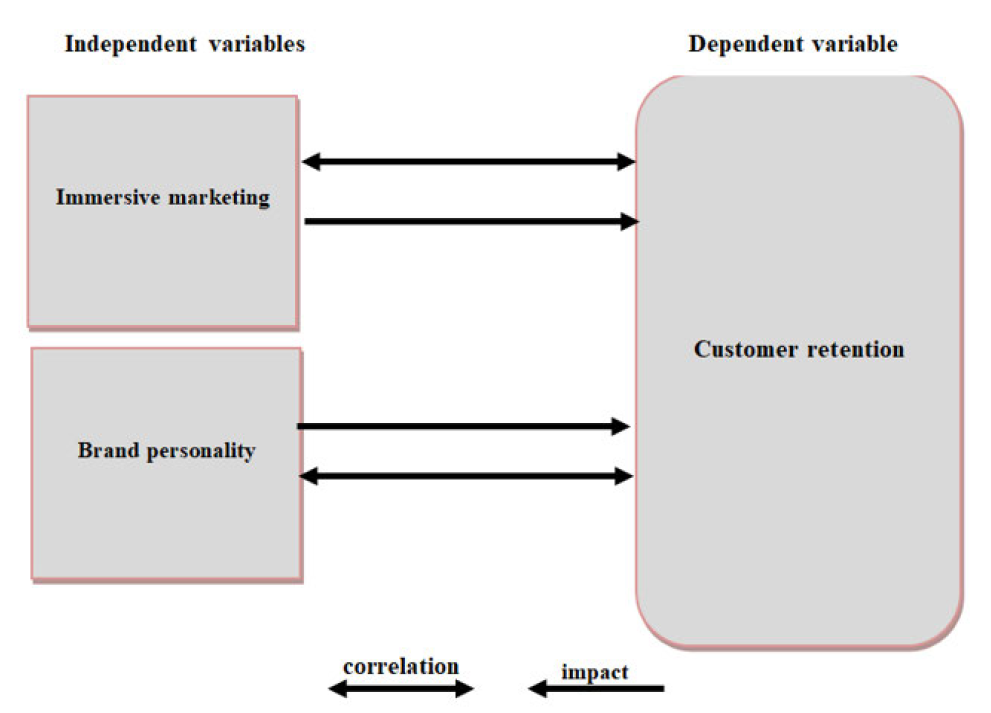
Hypothetical Research Framework
The research framework can be illustrated as Figure 1.
Previous Studies and Contribution of the Current Research: Loureiro et al. [1], “The Impact of Immersive Marketing Experiences on Customer Loyalty.” This study examined the influence of immersive marketing experiences on customer loyalty, analyzing the relationship between emotional interaction, satisfaction and continued engagement with brands. The research examined the impact of interactive experience design on customer-brand engagement and repeat purchasing and found that multi-sensory techniques have a positive effect on customer satisfaction and loyalty, reinforcing emotional connections with brands and increasing the likelihood of ongoing customer engagement and thus providing companies with a sustainable competitive advantage.
Bilgihan et al. [2],this study explored how immersive marketing affects customer engagement and retention in the financial sector and what factors contribute to positive customer participation. It found that immersive experiences have a significant effect on customer satisfaction and engagement with financial services, that higher engagement leads to increased loyalty and sustained customer relationships and that technological innovation plays a significant role in strengthening customer retention.
Matzler et al. [3] The study examined the impact of brand personality in digital environments on customer loyalty and how companies use digital brand characteristics to increase emotional and behavioral connections with customers, finding that brands with defined, distinctive personalities had greater levels of loyalty in digital spaces and that ongoing development and integration of brand personality into digital experiences leads to stronger customer relationships and increased loyalty.
Gao and Bai [4], This research examined the impact of the combination of immersive marketing and brand personality on customer retention in a competitive market to find that the combination of immersive experiences and a clear brand personality has a dual effect on customer loyalty and satisfaction and that companies providing immersive experiences that are consistent with their brand values have higher customer retention rates.
Kim et al. [5],The purpose of this study was to determine how immersive marketing and brand personality affect customer loyalty in financial institutions and to provide recommendations for how to improve retention through an integrated strategy and the results showed that immersive marketing and brand personality together strengthen loyalty more than either factor by itself and that combining immersive experiences with a strong brand identity increases emotional connections and increases the probability of continued customer engagement with financial institutions.
Figure 1: The Research Scheme
Contribution of the Current Research
This research seeks to deliver both academic and applied aids to the field of modern banking marketing by learning the impact of appointment advertising and brand character on customer holding.
Theoretical Contribution: This study contributes to the existing literature by providing new data on the relationship between engagement customer experiences, brand personality traits and customer loyalty in the Arab banking environment, which represents a clear research gap, as most prior research has focused on Western markets
Practical Contribution: This research provides an applied framework for the Middle East Investment Bank and other banking institutions to demonstrate how engagement marketing and the creation of a unique brand personality can strengthen customer loyalty and retention and provide practical recommendations for marketing managers to design engagement experiences that align with customer values and aspirations to build emotional connections, maintain enduring relationships and improve competitive performance and market presence
Theoretical Aspect
The Concept and Importance of Engagement Marketing: Engagement marketing is a marketing strategy that focuses on engaging customers in the brand experience by making them feel like active participants instead of passive recipients of products or services, using interactive, multi-sensory experiences to create an emotional and cognitive connection that strengthens loyalty and a sense of belonging [6].
Engagement marketing strategies are also key to increasing customer engagement because they involve more than one sense and provide rich, interactive content that increases attention, emotional connection and overall satisfaction, which helps create customer loyalty and more long-term customer relationships [7].
What makes engagement marketing unique is that it can combine entertainment, education and interaction into one experience, allowing the customer to experience the brand in an entertaining and informative manner. Engagement marketing goes beyond simply concentrating on the product and produces digital participation and interaction across various platforms that heightens perceived value and intensifies ongoing engagement [8].
Emerging technologies are key to the implementation of engagement marketing, as Virtual Reality (VR), Augmented Reality (AR) and other interactive tools enable the customer to experience brand environments more fully, emotionally and provide detailed data on customer behavior so that companies can adjust strategies and deliver experiences that meet customer expectations and needs [9]. After all, engagement marketing helps institutions become more competitive because they provide better experiences for customers, build loyalty and build positive impressions of the brand through integrated emotional, educational and entertaining experiences [10].
The Concept and Importance of Brand Personality
Brand personality refers to the set of human characteristics attributed to a brand, which allows customers to perceive and connect with it on emotional and psychological levels. It helps distinguish a brand from competitors and enables customers to interact with it in a more personal way, thereby enhancing loyalty and belonging. Establishing a strong and distinctive brand personality provides a sustainable competitive advantage by fostering customer understanding of the brand’s identity and mission [11].
Brand personality plays a vital role in shaping customer impressions, as personality traits influence how customers evaluate products and services. A strong and consistent personality enables customers to interact with the brand in a more sustainable and genuine way, reflecting shared values that build trust and foster long-term relationships [12].
Furthermore, a cohesive brand personality serves as an effective tool for communicating the brand’s message and aligning with customer expectations. Brands with strong identities influence customer behavior, encourage participation in marketing activities and enhance trust and loyalty. Emotional connections established through brand personality are decisive in retaining customers and reducing attrition rates [13].
The importance of brand personality is also evident in its ability to complement engagement marketing strategies. Brands with distinctive personalities can design engagement experiences that align with their traits, enhancing emotional interaction and customer engagement. This integration creates a unified customer experience and increases the likelihood of influencing purchase decisions and future preferences [14].
In competitive markets, a consistent brand personality not only differentiates the brand but also reinforces positive impressions and strengthens long-term loyalty. When a brand’s personality aligns with customer values and aspirations, it motivates continued engagement, fosters strong emotional bonds and contributes to sustained retention and enhanced marketing value for the institution [15].
The Relationship between Engagement Marketing and Customer Retention
Engagement marketing is a powerful tool for enhancing customer retention, as it creates interactive and engaging experiences that strengthen emotional and cognitive connections with the brand. Studies indicate that customers who participate in engagement experiences develop stronger connections and are more willing to maintain long-term relationships with the brand. The effectiveness of engagement marketing in customer retention depends largely on its ability to meet expectations and generate perceived value and benefits [16].
By delivering personalized and multi-sensory experiences, engagement marketing increases customer satisfaction and fosters feelings of appreciation and recognition. Research shows that satisfaction resulting from engagement experiences enhances loyalty, motivates repeat purchases and increases the likelihood of customer recommendations. Creative and innovative experiences also deepen positive impressions, thereby reinforcing retention [17].
Digital engaged tools, such as VR, AR and interactive simulations, further strengthen customer retention by creating engaging environments that make customers feel part of the marketing process. Studies have found that these digital experiences increase interaction levels and psychological motivation, supporting sustained customer relationships. Their impact is amplified when aligned with the brand’s values and identity [18].
The emotional dimension of engagement experiences plays a crucial role in customer retention, as carefully designed experiences that elicit positive emotions create stronger emotional bonds and reduce the likelihood of customer attrition [19].
Research also highlights that combining innovation in engagement marketing with a deep understanding of customer behavior strengthens retention and creates a competitive advantage. Customers who experience immersive engagement and resonate with brand personality develop a sense of belonging and loyalty, making them more likely to maintain relationships and share positive experiences with others [20].
The Relationship between Brand Personality and Customer Retention
Brand personality is considered one of the fundamental factors influencing customer behavior and continuity of engagement with the brand. Human traits attributed to brands foster emotional closeness and loyalty, ensuring long-term retention. Studies indicate that brands with strong and distinctive personalities create a shared identity with customers, which strengthens relationships and enhances retention rates [21].
A brand’s personality also shapes primary customer impressions, influencing expectations and future behaviors. Brands with consistent and clear personalities encourage stronger commitment, thereby reducing attrition and promoting sustained retention [22].
Customers who perceive brand personalities as compatible with their values and beliefs are more likely to continue engaging with those brands. This alignment raises loyalty levels and supports long-term retention while guiding expectations and strengthening perceptions of brand value [23].
Emotional connections play a decisive role in this relationship. Customers who feel that a brand reflects their personality or values are more inclined to remain loyal and repeat their interactions. Studies show that such emotional bonds foster long-term loyalty and enhance the brand’s influence on future purchase decisions [24].
Finally, a consistent and customer-aligned brand personality creates sustainable competitive advantages. Customers who interact with brands that maintain a clear personality experience stronger belonging and loyalty, positively impacting retention and increasing long-term market value for the institution [25].
The Applied Aspect
Research Population and Sample: The research population consists of customers of the Middle East Investment Bank, representing the targeted group capable of providing accurate and reliable data on the research subject.
Due to time and resource limitations, it was not feasible to study the entire population; therefore, a sample of 118 individuals was selected. A structured questionnaire was designed in alignment with the research objectives and hypotheses. It included key dimensions related to engagement marketing, brand personality and customer retention, ensuring clarity and ease of response to improve data quality. Out of the distributed questionnaires, 115 were retrieved and deemed valid for statistical analysis, representing a retrieval rate of 97.46%. This high response rate reflects strong participant engagement and data reliability, indicating the success of the questionnaire design and its suitability for the target population. The questionnaire was structured using a five-point Likert scale (ranging from 1 to 5), allowing responses to be converted into quantitative values. The apparent validity of the tool was tested using Cronbach’s Alpha coefficient, as shown in the following Table 1.
Table 1: Cronbach’s Alpha Coefficients
Variable
No. of Items
Cronbach's Alpha
Engagement Marketing
6
0.885
Brand Personality
6
0.854
Customer Retention
6
0.901
Average
6
0.880
Source: Prepared by the Researcher
Table 1 shows that all research variables achieved high values of Cronbach’s Alpha coefficients. Engagement marketing had 0.885, brand personality 0.854 and customer retention 0.901 and the overall average was 0.880, all showing that the questionnaire had high reliability and internal consistency, meaning that the items used to measure each variable were a homogeneous measure of the same construct, so the researcher could have confidence in the results and subsequent analyses and participants understood the items in the same way, a crucial prerequisite for validity of statistical conclusions.
Distribution of Questionnaire and Demographic Analysis
Demographic analysis describes the characteristics of the research sample, including the distribution of traits and patterns in the sample and provides insight for interpreting the results of a study as well as useful information for decision making related to the research variables and for forecasting future trends.
As shown in Table 2, a total of 118 questionnaires were distributed and 115 valid forms were retrieved and analyzed, which resulted in a retrieval rate of 97.46%, which is considered excellent in field studies, indicating that participants are eager to participate in the study and are interested in the study, which increases the reliability of the data, reduces the possibility of non-response bias and consequently strengthens the validity of the research conclusions.
The demographic physiognomies of the research example provide deeper visions into the structure of the defendants and allow for a better sympathetic of the study populace. These characteristics also help in understanding results and measuring the generalizability of the answers.
Table 2: Questionnaire Distributing
Statement
Count
%
Distributed Questionnaires
118
100
Returned and Valid Questionnaires
115
97.46
Unreturned Questionnaires
3
2.54
Source: Prepared by the Researcher
Table 3 displays the demographic characteristics of the research sample by age, gender, education and the number of years dealing with the bank. The majority of the respondents were between 30–50 years old (73.9%), approximately equally divided by gender (56.5% male and 43.5% female) and approximately equally divided by education (60.9% with a bachelor’s degree), with the number of years dealing with the bank concentrated primarily between 5–15 years (78.3%). This diversity strengthens the representativeness of the sample for the research population and allows for more generalizable conclusions regarding the bank’s customers.
Table 3: Analysis of the Demographic Characteristics of the Sample
Variable
Category
Count
%
Age
30–40 years
45
39.1
41–50 years
40
34.8
Above 50 years
30
26.1
Gender
Male
65
56.5
Female
50
43.5
Educational Qualification
Diploma or less
20
17.4
Bachelor
70
60.9
Master or above
25
21.7
Years of dealing with the Bank
5–10 years
50
43.5
11–15 years
40
34.8
More than 15 years
25
21.7
Source: Prepared by the researcher
Descriptive Statistics
The descriptive statistics for the marketing engagement variable (the main independent variable in this research) can be explained in terms of arithmetic mean, percentage and standard deviation, as shown in the Table 4.
The results in Table 4 indicate that all items of the engagement marketing variable obtained high mean values (4.10-4.32), reflecting participants’ positive evaluation of their engagement experiences with the brand.
Highest means were for items related to interaction and recommendation of the brand, whereas lowest means were for items related to use of technology, suggesting that while technology is an element of engagement, it is not the dominant factor and the relatively low standard deviations (0.61-0.75) show that participants were in agreement on their evaluation of the engagement marketing experience.
Table 4: Descriptive Statistics for the Engagement Marketing
Statement
Mean
%
Standard Deviation
I find that the marketing experiences provided by the brand make me more engaged with it.
4.32
86.4
0.61
I feel an emotional connection to the brand when I participate in engagement marketing experiences.
4.25
85.0
0.65
Immersive brand experiences increase my interest in the offered products and services.
4.18
83.6
0.72
I find that using technology in marketing enhances my experience and increases my satisfaction with the brand.
4.10
82.0
0.75
Multi-sensory interactive experiences make me continuously engage with the brand.
4.20
84.0
0.68
Engagement marketing of the brand makes me more likely to recommend it to others.
4.28
85.6
0.64
Overall Mean
4.22
84.4
0.68
Source: Prepared by the researcher
The descriptive statistics of the brand personality variable were described in terms of arithmetic mean, percentage and standard deviation, as presented in Table 5.
Table 5 shows that participants also rated the brand personality positively (M = 4.18–4.35), indicating that the brand had a clear and distinct personality and the items that received the highest ratings were related to the clarity of the personality and the ability to build loyalty (standard deviations of 0.60–0.70), validating the role of brand personality in building long-term emotional relationships with customers.
Table 5: Descriptive Statistics for the Brand Personality
Statement
Mean
%
SD
I find that the brand has a clear and distinctive personality that reflects its values.
4.35
87.0
0.60
The brand’s personality makes me feel a sense of belonging and emotional engagement.
4.28
85.6
0.63
Having a strong brand personality increases my trust and motivates my loyalty.
4.22
84.4
0.68
I believe the brand personality aligns with my personal values and interests.
4.18
83.6
0.70
The brand personality encourages me to continue engaging with it in the long term.
4.25
85.0
0.65
The brand personality makes me prefer it over competitors.
4.30
86.0
0.62
Overall Mean
4.26
85.6
0.65
Source: Prepared by the Researcheable 6: Descriptive Statistics for the Customer Retention
The descriptive statistics for the customer retention variable-the dependent variable in this research can be explained in terms of arithmetic mean, percentage and standard deviation, as presented in the Table 6.
Table 6 shows that participants expressed a high level of customer retention, with mean values ranging between 4.25 and 4.40. The highest-rated items were related to continuity of dealing with the brand as a result of positive experiences and overall satisfaction. The relatively low standard deviations (0.57-0.64) indicate consistency among participants’ responses, which highlights the strength of the relationship between customers and the brand. These findings support the research hypothesis that engagement marketing and brand personality contribute significantly to enhancing customer retention.
Table 6: Descriptive Statistics for the Customer Retention
Statement
Mean
%
SD
I find myself continuing to engage with the brand because of my positive experience with it
4.40
88.0
0.58
The brand motivates me to maintain engagement through loyalty programs or customized offers
4.28
85.6
0.62
Customer experiences with the brand make me less likely to switch to another competitor
4.25
85.0
0.64
The brand pays attention to my needs, which increases my continued engagement
4.32
86.4
0.61
I feel overall satisfaction with the brand, motivating me to remain a loyal customer
4.35
87.0
0.59
The relationship with the brand reflects appreciation and care for me as a customer, enhancing my loyalty
4.38
87.6
0.57
Overall Mean
4.33
86.2
0.60
Source: Prepared by the Researcher
Testing the Correlation of the Research Variables
The Pearson correlation coefficients among the research variables are presented in the Table 7.
Table 7 shows strong, positive and statistically significant correlations between the main research variables, reflecting the interconnectedness of the studied elements:
The correlation between engagement marketing and customer retention is 0.78, indicating a strong relationship. Customers who engage in engagement marketing experiences are more likely to continue dealing with the bank, exhibiting higher loyalty and ongoing interaction
The correlation between brand personality and customer retention is 0.75, showing that a clear and distinctive brand personality enhances emotional attachment, motivates customers to remain loyal and reduces the likelihood of switching to competitors
The correlation between engagement marketing and brand personality is 0.72, suggesting that a well-defined brand personality allows the bank to design more effective engagement marketing experiences, thereby amplifying the impact on customers
Table 7: Pearson Correlation Coefficients
Correlations
Variable
Details
Engagement Marketing
Brand Personality
Customer Retention
Engagement Marketing
Pearson Correlation
1
0.72
0.78
Sig. (2-tailed)
—
0.000
0.000
n
115
115
115
Brand Personality
Pearson Correlation
0.72
1
0.75
Sig. (2-tailed)
0.000
—
0.000
n
115
115
115
Customer Retention
Pearson Correlation
0.78
0.75
1
Sig. (2-tailed)
0.000
0.000
—
n
115
115
115
*Correlation is significant at the 0.01 level (2-tailed)
Source: Prepared by the researcher
All correlations are statistically significant at the 0.01 level, confirming that these relationships are real and not due to chance. These findings indicate that investing in improving engagement marketing and reinforcing brand personality directly strengthens customer loyalty, encourages ongoing banking transactions and builds long-term relationships based on trust and emotional connection, providing the bank with a clear competitive advantage.
Testing the Impact of Research Variables
The impact of the independent variables on customer retention can be tested using regression analysis. The results are summarized in the Table 8:
Table 8: Testing the Impact of Independent Variables on Customer Retention
Independent Variables
R
R²
F
Sig. F
Dependent Variable
β
T
Sig. T
Engagement Marketing
0.780
0.610
179.2
0.000
Customer Retention
0.714
13.4
0.000
Brand Personality
0.750
0.560
145.7
0.000
0.698
12.1
0.000
Source: Prepared by the researcher
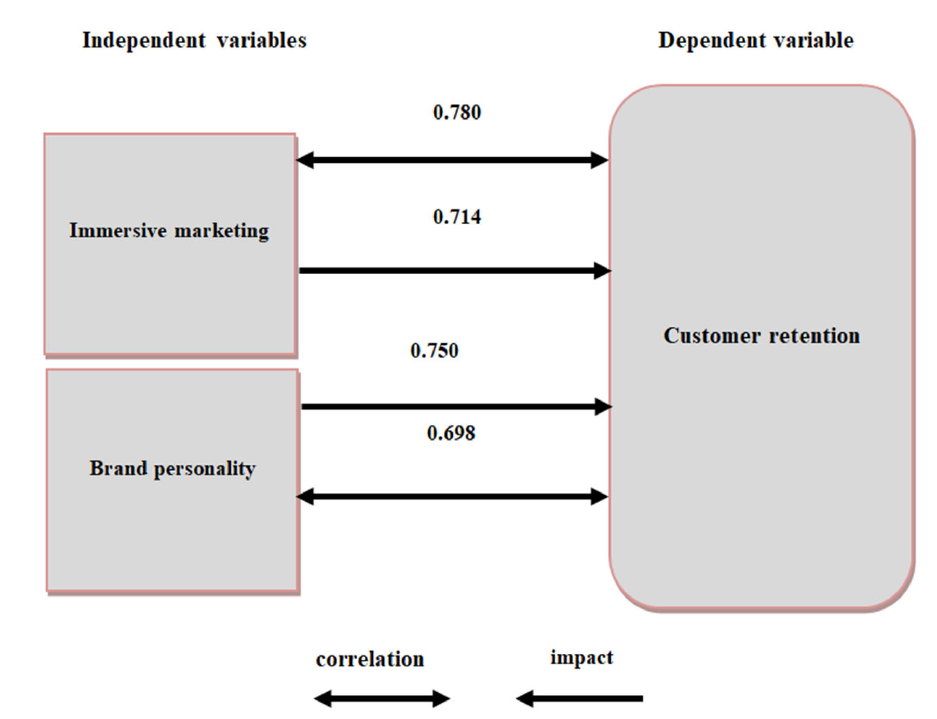
The regression analysis demonstrates that both engagement marketing and brand personality have a positive and statistically significant impact on customer retention:
Engagement Marketing: β = 0.714, t = 13.4, Sig. = 0.000, with R² = 0.61
Brand Personality: β = 0.698, t = 12.1, Sig. = 0.000, with R² = 0.56
These results indicate that both variables explain a substantial proportion of the variance in customer retention. Specifically, engagement marketing accounts for 61% of the variation, while brand personality explains 56%, highlighting the significant role of both factors in retaining customers.
The findings underscore the importance of integrating engagement marketing strategies with the development of a strong and distinctive brand personality to enhance customer loyalty. A synergistic approach between these variables strengthens emotional connections with customers, encourages long-term engagement and contributes to sustained competitive advantage for the bank (Figure 2).
Figure 2: Results of Correlation and Impact Relationships
The research hypothesis centers on the relationship between engagement marketing and brand personality on one side and customer retention on the other, examining their impact on customer loyalty and continuity with the bank. The results indicate that engagement marketing has a strong positive correlation with customer retention (r = 0.78, p<0.01) and regression analysis confirms a significant positive impact (β = 0.714, t = 13.4, Sig. = 0.000, R² = 0.61). This demonstrates that customers who experience engagement marketing feel a stronger sense of loyalty and continuity in their dealings with the bank, supporting the first research hypothesis. Similarly, brand personality is positively related to customer retention (r = 0.75, p<0.01), with a significant positive impact (β = 0.698, t = 12.1, Sig. = 0.000, R² = 0.56). A clear and distinctive brand personality strengthens emotional attachment and motivates customers to remain loyal, confirming the second research hypothesis. The correlation between engagement marketing and brand personality (r = 0.72) indicates that a well-defined brand personality enhances the effectiveness of engagement marketing experiences, amplifying their impact on customer loyalty. All results are statistically significant at the 0.01 level, confirming that the observed relationships are real and reliable. These findings emphasize the strategic importance of investing in engagement marketing strategies and developing a strong, distinctive brand personality to enhance customer loyalty and retention.
CONCLUSION
Engagement marketing that includes multi-sensory interactions, interactive content and modern technology contributes directly to strengthening customer engagement with the brand. Customers who participate in engagement experiences perceive higher value in products and services and are more likely to continue their relationship with the bank, highlighting the effectiveness of innovative engagement marketing strategies in building long-term loyalty.
A clear and distinctive brand personality strengthens customers’ emotional attachment and fosters shared identity, which facilitates trust-building and reduces the probability of switching to competitors. Developing a cohesive and influential brand personality is therefore a key strategic tool for customer retention.
The integration of engagement marketing and brand personality has a dual impact on customer loyalty and retention. This combination allows for engagement experiences aligned with brand values, enhancing emotional connection and increasing continuity, proving that their combined impact is more effective than either factor individually.
Descriptive statistics show that customers exposed to engagement marketing and a clear brand personality report high satisfaction. This satisfaction extends beyond immediate appreciation of services, influencing long-term behavior, encouraging ongoing engagement and increasing the likelihood of recommendations, there by amplifying marketing impact.
All statistical results confirm that both engagement marketing and brand personality have a strong direct impact on customer retention (p<0.01). This validates the research hypotheses and demonstrates the practical importance of investing in engagement marketing experiences and building a distinctive brand identity as effective strategies to enhance loyalty and market value.
Recommendations
The bank should c marketing experiences that engage multiple senses, including augmented reality, virtual reality and interactive digital experiences. These strategies enhance emotional and cognitive interaction with the brand, strengthen loyalty and encourage continuity. Programs should be customized according to customer preferences to deepen the experience and increase satisfaction and likelihood of recommendations
A solid brand personality should be crafted to convey the bank values and message and should be consistent across marketing channels and services, making the customers feel like they belong and that the bank is trustworthy enough to make them stay loyal; employees should be trained to communicate the brand values and highlight the brand personality in campaigns and digital content
As engagement marketing and brand personality have a greater effect on customer retention, the bank should create engagement experiences that reflect the brand personality, such as interactive events, workshops, or digital competitions that resonate with the brand personality to deliver an integrated and connected customer experience
Recommend that the bank continuously collects and analyzes customer data to understand preferences and behaviors so that the bank can customize and improve engagement marketing to refine messaging and align with customer needs to increase satisfaction and retention
Ensure that the bank implements loyalty programs and continuous engagement initiatives that resonate with the brand personality, such as offers, interactive content, or benefits for loyal customers, to strengthen emotional attachment, increase the probability of continued engagement and turn loyal customers into brand ambassadors for long-term marketing strategy
REFERENCES
Loureiro, S.M.C. et al. “The impact of immersive marketing experiences on customer loyalty.” Journal of Retailing and Consumer Services, vol. 54, 2020, article 102020.
Bilgihan, A. et al. “Immersive marketing and customer engagement in financial services.” International Journal of Bank Marketing, vol. 39, no. 1, 2021, pp. 70–88.
Matzler, K. et al. “Brand personality in the digital era: Effects on customer loyalty.” Journal of Business Research, vol. 136, 2021, pp. 456–467.
Gao, Y. and X. Bai. “The role of immersive experiences and brand personality in customer retention.” Journal of Service Theory and Practice, vol. 32, no. 1, 2022, pp. 85–104.
Kim, H. et al. “Immersive marketing, brand personality and loyalty in financial institutions.” Journal of Financial Services Marketing, vol. 28, no. 2, 2023, pp. 120–135.
Pine, B.J. and J.H. Gilmore. The Experience Economy: Competing for Customer Time, Attention and Money. Harvard Business Review Press, 2020.
Jung, T. et al. “Virtual reality and immersive experiences in marketing: A consumer perspective.” Journal of Retailing and Consumer Services, vol. 58, 2021, pp. 210–220.
Hilken, T. et al. “Augmenting the eye of the beholder: Exploring the strategic potential of augmented reality to enhance online service experiences.” Journal of the Academy of Marketing Science, vol. 48, 2020, pp. 1–22.
Flavián, C. et al. “The impact of virtual, augmented and mixed reality technologies on the customer experience.” Journal of Business Research, vol. 132, 2021, pp. 1012–1026.
Pantano, E. et al. “Competing during a pandemic? retailers’ ups and downs during the COVID-19 outbreak.” Journal of Business Research, vol. 116, 2020, pp. 230–233.
Aaker, J. Brand Personality: How to Make Your Brand Stand Out. Free Press, 2020.
Kapferer, J.N. The New Strategic Brand Management: Advanced Insights and Strategic Thinking. Kogan Page, 2021.
Muniz, A.M. and T.C. O’Guinn. “Brand community.” Journal of Consumer Research, vol. 27, no. 4, 2020, pp. 412–432.
Hudson, S. et al. “The influence of social media interactions on consumer-brand relationships: A brand personality perspective.” Journal of Retailing, vol. 97, no. 3, 2021, pp. 330–345.
Swaminathan, V. et al. “The impact of brand personality on loyalty: Evidence from multiple industries.” Journal of Marketing, vol. 86, no. 1, 2022, pp. 47–65.
Hollebeek, L. et al. “Customer engagement in immersive marketing experiences: Implications for loyalty.” Journal of Marketing Management, vol. 36, no. 2, 2020, pp. 150–170.
Schroeder, J. et al. “Immersive marketing and customer satisfaction: The role of multi-sensory experiences.” Journal of Consumer Behavior, vol. 20, no. 1, 2021, pp. 89–103.
Huang, T. and S. Liao. “Virtual and augmented reality applications in customer engagement and retention.” Journal of Business Research, vol. 132, 2021, pp. 132–145.
Verma, R. and P. Tiwari. “Emotional engagement in immersive marketing and its effect on customer retention.” International Journal of Bank Marketing, vol. 40, no. 1, 2022, pp. 47–63.
Lemon, K.N. and P.C. Verhoef. “Understanding customer experience throughout the customer journey.” Journal of Marketing, vol. 85, no. 1, 2021, pp. 220–241.
Plummer, J.T. “How personality makes a difference: Brand personality and consumer loyalty.” Journal of Brand Management, vol. 27, no. 1, 2020, pp. 55–70.
John, D.R. “Consumer socialization of children: A retrospective look at twenty-five years of research.” Journal of Consumer Research, vol. 46, no. 2, 2020, pp. 210–225.
Sirgy, M.J. “Branding and well-being: How brand personality shapes customer loyalty and satisfaction.” Journal of Business Research, vol. 134, 2021, pp. 95–105.
Zarantonello, L. and B. Schmitt. “The impact of brand experience on consumer loyalty: The moderating role of brand personality.” Journal of Brand Strategy, vol. 9, no. 2, 2020, pp. 60–72.
Appendices
Questionnaire form
Dear Respected Respondent,
Your participation in this survey is part of a research project titled: "The Effect of Engagement Marketing and Brand Personality on Customer Retention: An Exploratory Study of Customer Opinions at Middle East Investment Bank." This information will remain confidential and anonymous (you do not need to provide your name). Your answers will reflect your experience and knowledge in the field, and your responses will be accurate and objective, contributing to the integrity of the analysis and the reliability of the results. Thank you for your opinions and participation.
General data
Age
…………………………… years
Gender
Male ……. Female …….
Certificate/Qualification
……………………………
Years of dealing with the Bank
…………………………… years
Survey Instructions
Please home a check mark (X) in the suitable box to answer each query.
No.
Statements
Strongly Agree
Agree
Neutral
Disagree
Strongly Disagree
Engagement Marketing
1
I find that the marketing experiences provided by the brand make me more engaged with it.
2
I feel an emotional connection to the brand when I participate in engagement marketing experiences.
3
Immersive brand experiences increase my interest in the offered products and services.
4
I find that using technology in marketing enhances my experience and increases my satisfaction with the brand.
5
Multi-sensory interactive experiences make me continuously engage with the brand.
6
Engagement marketing of the brand makes me more likely to recommend it to others.
Brand Personality
1
I find that the brand has a clear and distinctive personality that reflects its values.
2
The brand’s personality makes me feel a sense of belonging and emotional engagement.
3
Having a strong brand personality increases my trust and motivates my loyalty.
4
I believe the brand personality aligns with my personal values and interests.
5
The brand personality encourages me to continue engaging with it in the long term.
6
The brand personality makes me prefer it over competitors.
Customer Retention
1
I find myself continuing to engage with the brand because of my positive experience with it.
2
The brand motivates me to maintain engagement through loyalty programs or customized offers.
3
Customer experiences with the brand make me less likely to switch to another competitor.
4
The brand pays attention to my needs, which increases my continued engagement.
5
I feel overall satisfaction with the brand, motivating me to remain a loyal customer.
6
The relationship with the brand reflects appreciation and care for me as a customer, enhancing my loyalty.
Recommended Articles
Research Article
Agentic AI in Information Systems: Toward Autonomous Decision-Making in Organizations
Duoha Suhail Najm
Published: 30/07/2026
Download PDF
Research Article
A Comparative Study of Online Fashion Promotion: Hennes & Mauritz (H&M) and Label in India
Riya Jamble
Published: 20/07/2021
Download PDF
Research Article
Developing Social Media Marketing Visual Contents to Increase Engagement Rate (A Case Study of Healthy Tails Animal Clinic in Malang City)
Aditya Nirwana,
...
Felicia Joscelind Verrel
Published: 20/11/2022
Download PDF
Research Article
The Determinants of the Financial Behaviour of SMEs: Empirical Evidence from an Emerging Economy
Santiago Hernandez,
...
Remo Roscigno
Published: 20/03/2022
Download PDF
PO Box 101, Nakuru
Kenya.
Email: office@iarconsortium.org
Editorial Office:
J.L Bhavan, Near Radison Blu Hotel,
Jalukbari, Guwahati-India
Abed AL Aboudy, A. K. (2025). The Impact of Engagement Marketing and Brand Personality on Customer Retention: An Exploratory Study of a Sample Opinions of Middle East Investment Bank Customers. IAR Journal of Business Management, 6(2), 1-10.
MLA
Abed AL Aboudy, Ahmed Kadem. "The Impact of Engagement Marketing and Brand Personality on Customer Retention: An Exploratory Study of a Sample Opinions of Middle East Investment Bank Customers." IAR Journal of Business Management 6.2 (2025): 1-10.
Chicago
Abed AL Aboudy, Ahmed Kadem. "The Impact of Engagement Marketing and Brand Personality on Customer Retention: An Exploratory Study of a Sample Opinions of Middle East Investment Bank Customers." IAR Journal of Business Management 6, no. 2 (2025): 1-10.
Harvard
Abed AL Aboudy, A. K. (2025) 'The Impact of Engagement Marketing and Brand Personality on Customer Retention: An Exploratory Study of a Sample Opinions of Middle East Investment Bank Customers' IAR Journal of Business Management 6(2), pp. 1-10.
Vancouver
Abed AL Aboudy AK. The Impact of Engagement Marketing and Brand Personality on Customer Retention: An Exploratory Study of a Sample Opinions of Middle East Investment Bank Customers. IAR Journal of Business Management. 2025 Jul;6(2):1-10.


 Download PDF
 Download XML